The Nigeria Labour Congress has stopped hinting and started talking plainly. Organised labour is preparing for what its leadership now openly calls a “major national struggle” over the minimum wage, and the tone coming out of Abuja this week suggests nobody at NLC headquarters expects this fight to end quietly.
NLC President Comrade Joe Ajaero laid it out during the commissioning of the Comrade Godwin Abumisi Pensioners Legacy House and Multipurpose Hall in Abuja on Saturday. He didn’t soften it. The Congress, he said, is battle-ready for a comprehensive review of the national minimum wage, and this time the fight won’t stop at serving workers alone. Retired workers are joining the demand list too, with the NLC now pushing for a national minimum pension alongside a new wage figure.
A Wage That Already Feels Like History
Here’s the uncomfortable math nobody at the negotiating table wants to say out loud: the ₦70,000 minimum wage, approved by President Bola Tinubu in July 2024 after months of tense back-and-forth with labour, is barely two years old and already treated by many workers as a relic. Inflation didn’t wait for the ink to dry. Fuel prices, transport costs, food prices, all of it kept climbing while the wage stood still.
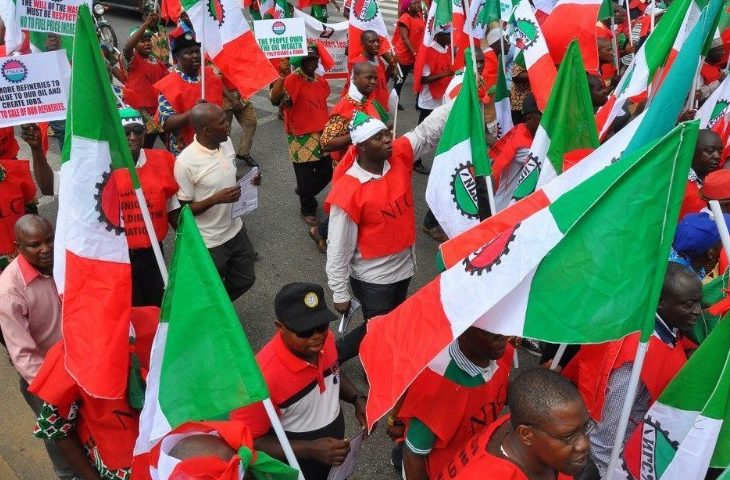
By May Day 2026, the frustration had boiled over into something organised labour hadn’t done in years. Instead of the usual stadium parades and ceremonial speeches, the NLC and the Trade Union Congress sent workers into the streets. Their new number: ₦154,000. More than double the current minimum wage, and a figure labour leaders argue simply reflects what it now costs to keep a family fed, housed and moving in Nigeria’s cities.
Joe Ajaero and TUC President Festus Osifo made the demand jointly at Eagle Square, and it wasn’t just about the naira figure. They wanted something else too, full payment of 100 percent of basic salaries while any new negotiation is ongoing, so workers aren’t left waiting empty-handed through another drawn-out review process.
Why “2026” Keeps Coming Up
The 2024 National Minimum Wage Act didn’t just fix a number. It also shortened the review cycle from five years down to three, which on paper sounds like a win for workers. In practice, it means the clock on renegotiation started ticking almost immediately.
Labour has been signalling this fight since the start of the year. In his New Year address, Ajaero told workers that 2025 had exposed real vulnerabilities and that income “must guarantee life, not mere survival.” That framing, a living wage versus a survival wage, has become the backbone of everything the NLC has said since. By July, at the joint May Day address, the unions confirmed the process for renegotiating the national minimum wage would begin before the current wage’s early-2027 expiry, with talks targeted to start by July 2026, specifically to avoid what they called “the painful delays of the past.”
It’s Not Just About the Number
What’s changed in the NLC’s messaging over the past year isn’t just the size of the demand, it’s the scope of it. Ajaero has been explicit that labour will no longer campaign for better wages while ignoring the people who already gave their working years to the system. At the pensioners’ hall commissioning, he insisted it’s “no longer acceptable” to discuss workers’ welfare without also discussing the welfare of retirees, and confirmed the NLC will now push for a national minimum pension to run alongside the wage fight.
There’s also an insecurity angle that keeps surfacing in labour’s statements, and it’s worth taking seriously. The unions have warned that kidnappings, attacks and general insecurity are making it dangerous for workers simply to get to their jobs, and floated the possibility of advising members in the worst-hit areas to limit movement altogether. Whether that ever becomes formal guidance is another matter, but it shows how far the conversation has drifted from a straightforward wage negotiation into something closer to a broader survival campaign.
The States That Never Paid Up
Add another layer of frustration to this: nearly two years after the ₦70,000 wage was signed into law, close to 20 states are still not paying it in full, according to labour’s own tally. Some governors have skipped the “consequential adjustments” owed to senior civil servants and local government staff entirely. So even the wage that labour now considers inadequate hasn’t actually reached every worker it was meant to protect.
That’s part of why Ajaero’s language has hardened. This isn’t only a negotiation with the Federal Government over a fresh number, it’s also a compliance fight with state governments that quietly ignored the last one.
What Comes Next
Labour hasn’t set a strike date, and nothing suggests one is imminent. But the language has shifted from persuasion to preparation. “Our struggle does not pause for ceremonies,” Ajaero said back in May, and that line has more or less become the Congress’s operating principle through 2026.
With negotiations expected to open around July, and organised labour walking in with a ₦154,000 target, a demand for full pay pending the outcome, and a parallel push for a national pension, the Federal Government is looking at a labour movement that isn’t just asking for a raise. It’s asking for a reset, on wages, on pensions, and on how seriously state governments treat agreements they’ve already signed.
Whether that translates into another round of tense, months-long negotiations like 2024, or something that spills into the streets again, depends largely on how quickly the government is willing to come to the table. Judging by the NLC’s own words, they’re not planning to wait quietly for an invitation.