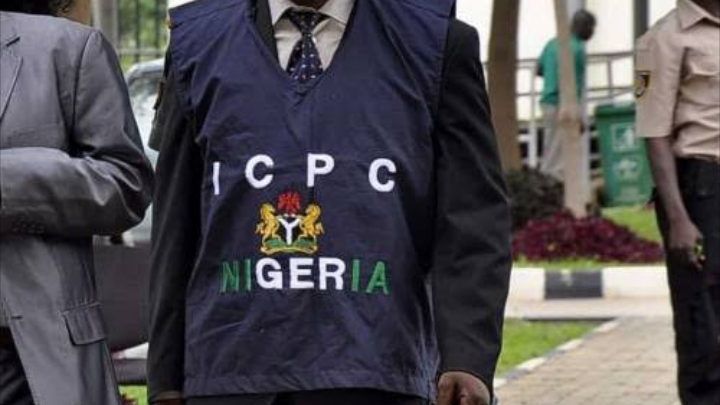
The Independent Corrupt Practices and Other Related Offences Commission (ICPC) on Wednesday, July 22 disclosed that it has uncovered 908 suspected ghost workers across at least 50 federal ministries, departments and agencies (MDAs), with the Nigeria Police Force recording the highest number.
This disclosure was made by the ICPC Chairman, Musa Adamu Aliyu, while providing an update on the commission’s ongoing investigation into payroll fraud in federal institutions.
According to Aliyu, the payroll verification exercise led to the recovery of about N942 million allegedly paid as fraudulent salaries.
He further disclosed that investigators also uncovered a case in which a suspect allegedly enrolled his wife, son and mother-in-law on the government payroll while collecting the salaries of 12 other workers.
Here are 12 key facts about the ICPC’s investigation which unraveled ghost workers that you probably did not know:
1. The investigation stems from a comprehensive 2023 System Study conducted by the ICPC. The audit flagged widespread payroll anomalies and non-existent personnel embedded in the civil service.
2. Following the preliminary findings, President Bola Ahmed Tinubu authorized a full joint audit of the IPPIS platform involving the ICPC and the Office of the Accountant-General of the Federation (OAGF).
3. The joint task force uncovered fictitious profiles and illegal account mappings tied to 587 to over 900 suspect accounts across multiple Ministries, Departments, and Agencies (MDAs).
4. Under court direction, the ICPC formally published a roster listing over 900 suspect profiles across major national dailies (including Daily Trust and The Nation) to allow legitimate civil servants to verify their status.
5. Following a physical and administrative verification exercise in 2025, 120 civil servants cleared their names, proving their employment status, and were subsequently restored to the active IPPIS payroll
6. After the verification process, 467 bank accounts remained completely unverified and abandoned, with no individuals coming forward to claim ownership.
7. Scammers created completely fake IPPIS identities, mapped them to real bank accounts (often belonging to third parties or shell companies), and received monthly salary deposits over extended periods.
8. Investigators observed that in several cases, multiple fictitious worker identities on the IPPIS platform were routing salary payments into a single bank account.
9. In July 2026, Hon. Justice Binta Nyako of the Federal High Court in Abuja ordered the final forfeiture of ₦941,994,079.86. The court declared these funds to be verified proceeds of unlawful activities from the IPPIS payroll scam.
10. This operation builds on broader anti-corruption drives by ICPC Chairman Dr. Musa Adamu Aliyu (SAN), who reported recovering over ₦20 billion in siphoned funds from fraudulent ghost worker pension schemes in recent periods.
11. The success of the investigation relied on data sharing between the ICPC, the Office of the Accountant-General of the Federation (OAGF), commercial banks, and the Nigerian Financial Intelligence Unit (NFIU).
12. While the ₦941.9M was forfeited to the state, the ICPC’s prosecution department continues to track down and prosecute internal insiders, IT administrators, and accomplices who facilitated the insertion of fake identities into the IPPIS infrastructure.