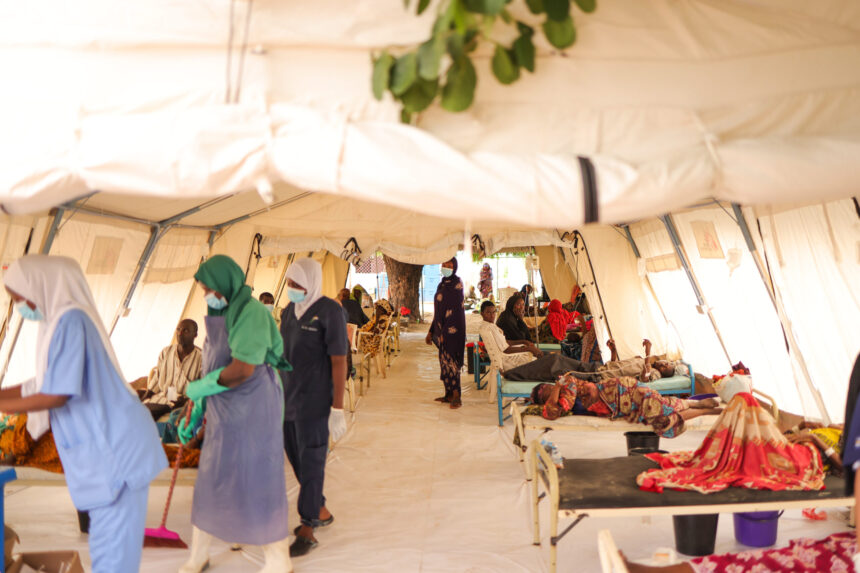
Médecins Sans Frontières, also known as Doctors Without Borders, has raised the alarm over a worsening cholera outbreak in Borno State.
According to MSF, suspected cases have surged past 35,500, with 198 deaths recorded. The scale of infections is putting severe strain on healthcare facilities and stretching emergency response efforts.
It also confirmed that the outbreak has spread beyond Borno to neighbouring Plateau State, where health authorities have reported 102 suspected cases.
Here are 10 Key Things to Know About the Borno Cholera Outbreak:
1. Case numbers have crossed 7,000
As of 7 June 2026, the Borno State Ministry of Health recorded 7,850 suspected cholera cases across 14 LGAs and 50 wards. MSF reported treating 7,439 patients between 1 May and 7 June. A later UN update put infections at more than 12,000. Recently, MSF said suspected cases have jumped past 35,500 cases.
2. At least 74 deaths have been reported
Officials confirmed 74 deaths at both facility and community levels as of 7 June. The UN said the death toll later rose to 90. Recently, MSF disclosed that 198 deaths have been recorded.
3. It started on 1 May 2026 and is spreading quickly
The first suspected case was reported on 1 May 2026. Numbers have been climbing daily, with a sharp jump of 3,646 new cases and 35 new deaths in just one week between 1-7 June.
4. 14 local government areas are affected
The outbreak is not limited to Maiduguri. 14 of Borno’s 27 LGAs have reported cases, including areas hit hardest by displacement and poor infrastructure.
5. Health facilities are under severe strain
MSF’s Cholera Treatment Centre in Ngarannam, Maiduguri, had to expand from 121 to 271 beds. A new 20-bed Cholera Treatment Unit was also opened in Dalaram. On 5 June alone, MSF received more than 500 patients with acute watery diarrhoea — the highest single-day number so far.
6. Cholera outbreak has overwhelmed Borno’s health system
Borno’s health system is already fragile after 17 years of insurgency. Overcrowding in IDP camps, limited safe water, and the onset of the rainy season are increasing contamination of water sources. Open defecation is also making transmission worse.
7. Who is most affected?
Adults aged 21–50 are the most affected group, followed by adolescents 11–20 and children 3–10. Males and females are affected equally.
8. Response is scaling up on the ground
MSF, the State Ministry of Health, Save the Children, and FHI360 are running multiple CTCs/CTUs: 270 beds in Bolori, 200 beds at Njimtilo, 60 beds in Ngala, plus smaller units in Monguno, Dalaram, Bama, and Kwaya Kusar. UNICEF has also kicked off activities and received CERF Rapid Response funding.
9. Vaccination and WASH are part of the plan
Authorities are planning a cholera vaccination campaign. Aid agencies are also scaling up treatment, surveillance, hygiene promotion, and access to clean water. OCHA released $4 million to support the emergency response, but says more resources are urgently needed.
10. Why cholera thrives here
Cholera is a waterborne disease that spreads fast where clean water and sanitation are lacking. Nationally only 14% of Nigerians have access to safely managed drinking water, and in Borno the situation is worse in both densely populated Maiduguri and remote communities with poor hygiene.