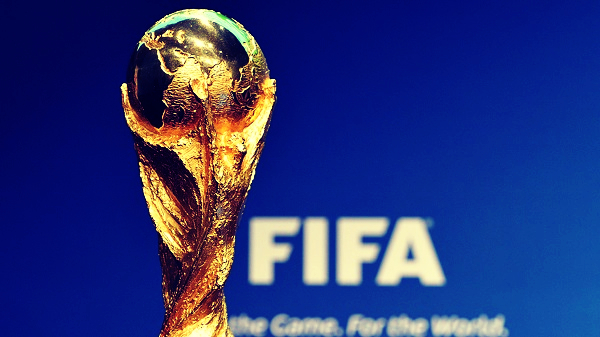
The 2026 World Cup final whistle had barely gone quiet before attention shifted to the next edition. Six countries have already booked their tickets to the 2030 FIFA World Cup, and none of them had to kick a ball to get there.
FIFA confirmed the unusual arrangement during an Extraordinary Congress held virtually back in December 2024, where all 211 member associations signed off on a hosting plan spread across three continents. The same meeting settled the 2034 World Cup host too, handing that tournament to Saudi Arabia. But it’s the 2030 edition that carries the bigger story, because for the first time, a World Cup will open in one hemisphere and finish in another.
The 6 countries already qualified for 2030
Here’s the full list, broken down by how each nation earned its spot.
Morocco, Portugal and Spain will serve as the primary hosts and stage the bulk of the tournament, including the final. Their qualification came through the standard route host nations have always used at World Cups: automatic entry granted by FIFA once the bid was approved. Spain arrives as reigning world champions after their run through the 2026 tournament, while Morocco and Portugal both reached the knockout stages in North America this past summer.
Uruguay, Argentina and Paraguay hold their spots for a different reason entirely. FIFA built a centenary celebration into the tournament to mark 100 years since the very first World Cup, played in Uruguay in 1930. Montevideo will host the official commemoration ceremony, recognising Uruguay’s status as both host and champion of that inaugural competition. Argentina’s inclusion honours their place as runners-up in 1930, and Paraguay rounds out the trio as the country that houses CONMEBOL, South America’s governing football body.
Between them, these six nations have already locked in roughly 12.5 percent of a potential 48-team field, years before a single qualifier has kicked off.
Why the format looks so unusual
Under the plan FIFA has laid out, the tournament opens with celebratory matches in South America before shifting entirely to Morocco, Portugal and Spain for the main event and closing ceremony. The opening games in Uruguay, Argentina and Paraguay are pencilled in for June 8 and 9, 2030, with the tournament proper then relocating across the Atlantic. The final is scheduled for July 21, 2030.
To make that logistics puzzle work, FIFA says it has built extended rest and travel windows into the calendar specifically for the six competing nations, all while keeping everything inside the existing international match calendar. In theory, that means clubs won’t need to release players for any additional period beyond what’s already agreed.
Eight countries already ruled out
While six teams have their places sorted, another group of nations already knows they won’t be there, and it has nothing to do with form or results. Vatican City, Monaco, Kiribati, Tuvalu, Palau, Nauru, the Marshall Islands and the Federated States of Micronesia are not FIFA members, which rules them out of any sanctioned competition regardless of format.
Most of these are small nations without the infrastructure to sustain an independent football association. Monaco is the clearest example: its lone professional club plays in France’s Ligue 1 rather than a domestic league, which is part of why the principality has never joined UEFA or FIFA as a standalone member.
What this means for everyone else
For the remaining FIFA members, including Nigeria, qualifying for 2030 still runs through the normal continental process, and that process hasn’t started yet. Qualifiers aren’t scheduled to begin until the September–October 2027 international window, giving federations across Africa, Asia, Europe, North America and Oceania roughly a year to prepare.
There’s also a bigger question hanging over the whole competition: will FIFA push ahead with expanding the field from 48 to 64 teams? The idea has been floated for a while, and it picked up unexpected momentum recently when the president of Paraguay’s football association appeared to confirm it in a social media post. Nothing is official yet, but if it happens, it would mean more qualification slots across every confederation, Africa included.
That prospect matters a great deal to countries like Nigeria. The Super Eagles have missed recent World Cups and would, in theory, benefit from extra African slots in an expanded format. FIFA has reportedly reached out with confidence that Nigeria can return to the tournament, though officials have stressed that stability within the federation and the team setup will be key. A bigger field removes some of the old excuses. It doesn’t guarantee anything.
Six countries are through to the 2030 World Cup without playing a single qualifying match: Spain, Portugal and Morocco as hosts, and Uruguay, Argentina and Paraguay as centenary celebration hosts. Eight nations are already out simply because they aren’t FIFA members. Everyone else, including Nigeria and the rest of Africa’s hopefuls, will have to earn their place the usual way once qualifying opens in late 2027.
Expect more clarity on format, slot allocation and the expansion debate as FIFA moves through the coming months. For now, the 2030 picture is only a small fraction complete, but it’s already shaping up to be the most geographically ambitious World Cup ever staged.