Babatunde, 45, walked out of his ward’s PVC collection centre in Osun frustrated. In February, the freelance broadcaster transferred his voter’s card from Kwara to Osun after relocating for work. He was counting on voting in the Osun gubernatorial election scheduled for August 15, 2026.
For three days he went to the centre in his ward, but left empty-handed. His name and card were not on the voters’ register.
The story of Tosin Babatunde mirrors that of many residents across the state who carried out voter card transfers or took part in the Continuous Voter Registration (CVR) exercise, but have not been able to collect their Permanent Voter Cards (PVCs). The delays have effectively disenfranchised them ahead of the August 15, 2026 elections.
At the PVC collection centre in Iloro community, 38-year-old Selimot Jimoh waited for hours under the scorching sun clutching a crumpled temporary registration slip from the CVR exercise.
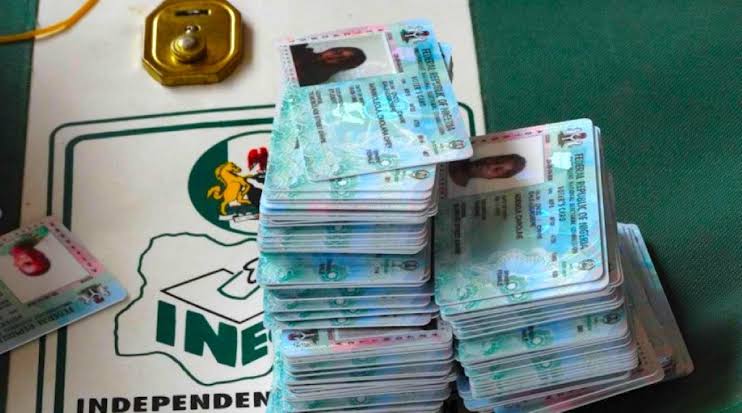
A local chemist, Selimot told WITHIN NIGERIA that she has visited the centre since PVC distribution began. Each time, INEC officials search through piles of newly delivered cards and tell her to return the next day.
“I was frustrated and sad. I and a few others who came to the centre were asked to come back the next day. I shut my shop for three days and still could not get my PVC,” Selimot said.
The 38-year-old chemist said she is worried about her missing card. She confirmed that she registered and had her biometrics and other details captured during the CVR.
“They can’t find my card after I spent days in line for registration and collection. I am very sad,” she added.
Another resident, Tunji, applied for a polling unit transfer after relocating from Edo to Osun. He told WITHIN NIGERIA that he has visited the collection centre for three days without success.
According to him, the process is frustrating. Hundreds of people are still waiting to collect their voter cards.
Tunji said some people have eventually collected theirs, “but they went through hell.”
He called on the Independent National Electoral Commission (INEC) to find better ways to make PVC collection seamless.
Tunji also decried the delay despite starting his online voter transfer early in the CVR window in March.
“I completed my physical re-validation and got confirmation that my transfer to a local polling unit was approved. I waited for collection to begin. I am sad that INEC officials still could not find my card after I scaled through the large crowd,” a visibly disturbed Tunji said.
In Osogbo, 35-year-old tailor Mujidat visited her ward collection centre expecting to pick up her card and leave. Two days later, she was still trying.
Hundreds of residents were seen around the premises, waiting without direction.
A friend had told Mujidat she saw her PVC the previous day while INEC officials were rearranging packs of cards. Though Mujidat’s name is on the final register, getting the physical card has been an uphill task.
“I have abandoned my shop for two days. Other women here did the same. Only a few were able to get their PVCs. INEC needs to find easier ways to distribute these cards,” she said.
Mujidat looked down at her worn registration slip again and asked:
“Is this a deliberate move to deny or limit voter participation on election day?”
Reacting to the development, human rights activist Rasheed Tijani urged the electoral commission to take urgent corrective measures before the collection window closes.
Tijani also called for an extension of the deadline, saying administrative lapses must not disenfranchise eligible citizens who met all legal requirements.
He recommended that INEC set up “Help Desks” at every local government office to fast-track transfer disputes, and extend daily PVC collection hours to reduce the crowds.