The race to build a cleaner, more sustainable future is creating new opportunities for young Nigerians who are ready to turn environmental challenges into practical solutions. Across Lagos, where issues such as waste management, flooding, energy demands, and pollution continue to affect everyday life, a new generation of innovators is exploring ways to solve problems while building businesses that can survive in the growing green economy.
Behind the growing attention around this opportunity is a structured programme focused on more than financial support. It is designed around skills, innovation, mentorship, and entrepreneurship, creating a pathway for young people who want to develop climate focused ideas into real ventures. The funding attached to the initiative has attracted interest because it offers selected innovators the chance to receive capital that can help transform promising concepts into working solutions.
The ₦20 million Lagos green grant initiative has raised important questions among young Nigerians looking for opportunities in renewable energy, recycling, agriculture, environmental technology, and sustainable businesses. Understanding how the programme works, who qualifies, how beneficiaries are selected, and what applicants need before submitting their ideas is important for anyone hoping to benefit from the opportunity.
The Growing Interest Around Lagos Green Funding Opportunity
The Green Youth Upskilling Programme, commonly known as GYUP, was introduced as part of efforts to prepare young Nigerians for opportunities emerging within the climate economy. The programme focuses on developing practical skills that can help participants create solutions for environmental challenges while improving their chances of building sustainable businesses.
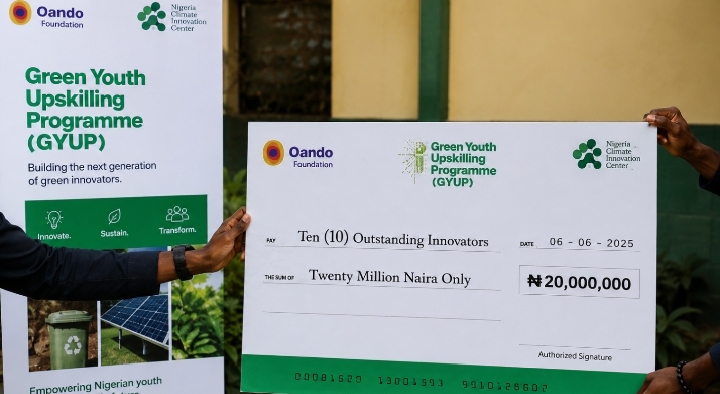
The initiative gained attention after 10 young innovators from the first cohort received a combined grant support of ₦20 million. The funding was structured as seed capital to help selected participants expand their climate related enterprises after completing training and receiving guidance through the programme.
Rather than functioning like a traditional cash distribution scheme, the programme combines education, technical development, business support, and funding opportunities. Participants are expected to demonstrate commitment, develop useful ideas, and show how their solutions can contribute to environmental improvement.
The increasing focus on green innovation comes at a time when climate challenges are becoming more visible across Nigerian cities. Lagos, as one of Africa’s largest urban centres, continues to deal with environmental pressures linked to population growth, waste generation, flooding risks, and rising energy consumption.
How The ₦20 Million Grant Structure Works
The funding arrangement connected to the programme involved a total grant pool of ₦20 million awarded to 10 outstanding innovators from the first cohort. Each beneficiary received support averaging about ₦2 million to strengthen their green businesses or climate solutions.
The funding was not presented as an automatic payment available to every participant. Instead, young Nigerians went through a structured process that included training, evaluation, and selection before the final beneficiaries were chosen.
The purpose of the grant was to provide early stage support for businesses and ideas that could create measurable environmental impact. For many young entrepreneurs, accessing startup funding remains one of the biggest challenges when attempting to move from an idea stage into actual implementation.
The grant aimed to close part of that gap by giving selected innovators financial resources alongside knowledge and mentorship needed to improve their projects.
Organisations Behind The Climate Innovation Programme
The Green Youth Upskilling Programme was developed through collaboration involving private sector organisations and climate focused institutions. The grant support was provided by Oando Plc through the Oando Foundation in partnership with the Nigeria Climate Innovation Center.
The partnership reflects a growing interest from businesses and development organisations in supporting Nigeria’s transition towards a greener economy. The focus is not only on reducing environmental problems but also on creating employment pathways for young Nigerians who can contribute to climate related industries.
The Nigeria Climate Innovation Center has been involved in supporting entrepreneurs working on climate solutions by providing training, innovation support, and business development opportunities.
Through partnerships like this, young innovators are introduced to sectors where demand is expected to grow, including clean energy, recycling, sustainable agriculture, and environmental technology.
Who Can Apply For The Lagos Green Grant Opportunity
The programme targets young Nigerians interested in developing careers or businesses connected to the green economy. Applicants are expected to meet specific requirements before they can be considered for participation.
Eligible applicants generally include Nigerian citizens within the targeted youth age range of around 20 to 35 years who have completed at least secondary education and are willing to participate in technical and entrepreneurship training.
The programme is designed for individuals who have interest in practical climate solutions rather than applicants looking for general financial assistance.
Young people with backgrounds or interests in areas such as solar installation, electrical work, mechanical skills, recycling, agriculture, waste management, and environmental technology may find the programme particularly relevant.
However, technical experience is not always the only consideration. Applicants who demonstrate commitment, willingness to learn, and a clear understanding of the environmental problem they want to solve may also have opportunities to participate.
Areas Of Innovation That Can Receive Support
The climate economy covers several industries, giving young Nigerians different pathways to develop ideas that address environmental problems.
Renewable energy remains one of the major areas receiving attention. Ideas involving solar power systems, affordable clean energy products, energy saving solutions, and solar based businesses can contribute to reducing dependence on traditional energy sources.
Waste management is another important area because of the growing challenge of waste generation in Nigerian cities. Innovative recycling businesses, plastic recovery systems, waste collection platforms, and waste to value solutions are examples of ideas that can create both environmental benefits and business opportunities.
Agriculture is also becoming increasingly connected to climate innovation. Young entrepreneurs are exploring climate smart farming methods, water efficient agricultural systems, sustainable food production models, and technology driven farming solutions.
Environmental technology presents another opportunity for innovators. Digital tools such as flood monitoring platforms, environmental data systems, climate education applications, and awareness technologies can help communities better respond to environmental challenges.
The Training Stage Before Funding
The structure of the programme shows that funding comes after development rather than before. Participants first receive training designed to improve their technical abilities, business knowledge, and understanding of climate focused entrepreneurship.
The training component helps participants understand how to develop ideas into practical solutions. This includes learning about business planning, market opportunities, technical skills, and ways to create projects that can continue beyond the programme.
The pilot phase trained 25 young Nigerians, providing participants with exposure to renewable energy, waste management, and green enterprise development.
After training, participants are evaluated based on their ideas, commitment, potential impact, and ability to develop sustainable ventures. The strongest ideas receive enterprise support through funding opportunities.
This approach helps ensure that financial support goes towards projects with clear goals rather than ideas without practical implementation plans.
Why Lagos Is Becoming A Focus For Climate Innovation
Lagos faces several environmental challenges that have increased the need for creative solutions. The city’s rapid growth has placed pressure on infrastructure, waste systems, drainage networks, and energy supply.
Flooding remains one of the major concerns affecting different parts of the city, especially during periods of heavy rainfall. Poor waste disposal practices can also contribute to blocked drainage channels, increasing environmental risks.
The demand for reliable energy solutions has created opportunities for renewable energy businesses that can provide cleaner alternatives for homes, businesses, and communities.
These challenges have encouraged public and private sector organisations to support young people who can develop solutions while creating employment opportunities.
The green economy is increasingly viewed as a space where environmental protection can connect with entrepreneurship, innovation, and job creation.
The Difference Between A Grant Opportunity, A Cash Giveaway
One of the biggest misunderstandings surrounding the Lagos climate grant opportunity is the idea that it is a general cash programme where every applicant receives money.
The ₦20 million funding was connected to a structured innovation programme where participants were trained, assessed, and selected before receiving financial support.
Applicants are expected to contribute ideas, develop skills, and demonstrate how their projects can create environmental value.
The programme’s main goal is to support young Nigerians who are building solutions that can address climate challenges while creating businesses capable of long term growth.
Understanding this process helps applicants prepare better and avoid approaching the opportunity as a simple financial reward scheme.
How The Application Process Works For Interested Young Nigerians
Young Nigerians interested in the Lagos green funding opportunity need to understand that preparation plays a major role in improving their chances of selection. The programme focuses on individuals who can show genuine interest in solving environmental problems while demonstrating the ability to develop practical solutions.
The application process is expected to involve submitting personal details, educational background, area of interest, and information about the climate solution the applicant wants to develop. Applicants may also be required to explain the environmental challenge they are addressing, how their idea works, and the impact it can create.
A strong application is usually built around clarity. Rather than presenting a general idea about protecting the environment, applicants need to show the specific problem they want to solve and why their solution can make a difference.
For example, an applicant interested in recycling may need to explain the type of waste they want to manage, the community they want to serve, how the recycling process will operate, and how the business can remain sustainable.
Young entrepreneurs interested in renewable energy may need to explain whether their idea focuses on solar installations, affordable energy products, energy access solutions, or another clean energy approach.
The programme’s structure means applicants should prepare themselves for more than completing a form. They should be ready to develop their ideas, learn new skills, receive feedback, and improve their projects during the training period.
Important Areas Applicants Need To Understand Before Applying
Many young Nigerians have creative ideas, but turning those ideas into successful climate ventures requires understanding the market, the problem, and the people who will benefit from the solution.
A climate innovation project needs to address a real challenge. An idea that connects directly with communities, businesses, or industries facing environmental problems has a stronger foundation.
Applicants should also consider how their solution can continue operating after receiving support. Grant funding can help start or improve a project, but long term success depends on planning, customer demand, partnerships, and effective management.
A recycling idea, for example, should consider where materials will be collected, how processing will happen, who will buy the recycled products, and how the operation can generate income.
A solar energy project should consider installation costs, maintenance, customer needs, and accessibility for the people it intends to serve.
The strongest climate businesses are often those that combine environmental impact with realistic business models.
Skills Young Participants Can Gain Through The Programme
The Green Youth Upskilling Programme focuses heavily on building skills that can help participants compete in the growing green economy.
Technical training is one of the major components because many climate solutions require practical knowledge. Participants interested in renewable energy may learn skills connected to solar systems, electrical installation, and energy solutions.
Those interested in waste management may gain knowledge about recycling processes, waste collection systems, and circular economy approaches.
Beyond technical knowledge, participants also develop entrepreneurship skills. Running a climate focused business requires understanding customers, managing finances, promoting services, and building partnerships.
The programme also provides exposure to mentorship opportunities where participants can learn from professionals who understand climate innovation, business development, and environmental challenges.
These skills can become valuable even beyond the grant programme because they create pathways into industries expected to expand as Nigeria and other countries increase investment in sustainable development.
The Growing Importance Of The Green Economy For Nigerian Youth
The global economy is gradually creating more opportunities around climate related industries. As countries invest in cleaner energy, environmental protection, and sustainable production, demand for skilled workers and innovative businesses continues to increase.
Nigeria, with its large youth population and environmental challenges, has significant opportunities in this emerging sector.
Young Nigerians entering the green economy can participate in different areas including renewable energy services, sustainable agriculture, recycling businesses, environmental technology, and climate education.
The growth of this sector means climate solutions are no longer viewed only as environmental projects. They are also becoming business opportunities capable of creating jobs and generating income.
For many young people searching for alternatives in a difficult employment environment, developing skills connected to climate innovation could provide another pathway.
Climate Challenges Creating Opportunities For Innovation
Environmental problems across Nigeria have created a need for creative solutions that can come from young entrepreneurs.
Waste remains one of the biggest challenges in major cities. Large amounts of plastic, household waste, and industrial materials require better collection, recycling, and management systems.
Flooding has also increased demand for solutions that improve drainage management, early warning systems, and community preparedness.
Energy access continues to influence daily life for many Nigerians, creating opportunities for affordable renewable energy solutions.
Agriculture is another area where climate innovation is becoming important. Changing weather patterns, water challenges, and rising production costs are encouraging farmers and entrepreneurs to explore smarter methods of food production.
These challenges create spaces where young innovators can build businesses while contributing to solutions that improve communities.
Common Mistakes Applicants Should Avoid
One major mistake applicants make when seeking funding opportunities is presenting ideas without clearly explaining the problem they solve.
A good climate project should begin with identifying a challenge. The applicant should understand who is affected, why the issue exists, and how the proposed solution can provide improvement.
Another mistake is focusing only on the funding rather than the purpose of the programme. The grant is designed to support innovation, not simply provide financial assistance.
Applicants should also avoid presenting unrealistic plans without considering practical details. A strong idea needs achievable goals, clear steps, and an understanding of available resources.
Poor communication can also affect applications. Even a promising idea may struggle if the applicant cannot clearly explain its value, impact, and potential growth.
Preparing a detailed explanation of the idea before applying can help applicants present stronger submissions.
How Young Nigerians Can Prepare Before The Next Application Window
Young Nigerians interested in future climate funding opportunities can begin preparing before applications open.
Learning basic skills related to their chosen area can provide an advantage. Someone interested in solar energy can begin understanding renewable energy systems, while someone interested in recycling can study waste management methods and business opportunities.
Building a small pilot project can also help demonstrate commitment. A simple community recycling effort, environmental awareness campaign, or small renewable energy experiment can provide practical experience.
Applicants should also research climate challenges within their communities. Solutions connected to real local problems often have stronger potential because they address needs people already experience.
Networking with environmental organisations, entrepreneurs, and professionals can provide valuable knowledge about opportunities within the sector.
Preparation allows applicants to move quickly when new funding opportunities become available.
Other Climate Funding Opportunities Nigerians Can Watch
The Lagos green grant opportunity is part of a wider movement supporting young people working on environmental solutions.
Across Nigeria and internationally, different organisations continue to create programmes focused on climate entrepreneurship, renewable energy, sustainable agriculture, and environmental technology.
Young innovators can monitor opportunities from climate accelerators, green startup competitions, entrepreneurship programmes, and development organisations supporting youth led solutions.
Some programmes provide funding, while others focus on mentorship, training, networking, or business development support.
The important step for young entrepreneurs is identifying opportunities that match their skills, interests, and project stage.
A person with an early idea may benefit more from training and mentorship, while someone with an existing business may need investment support to expand.
The Future Of Youth Driven Climate Solutions In Lagos
The interest around the ₦20 million Lagos green grant reflects a wider conversation about the role young Nigerians can play in solving environmental challenges.
Climate innovation is becoming an area where creativity, technology, and entrepreneurship meet. Young people who understand community problems and develop practical solutions can contribute to building cleaner cities and stronger businesses.
Lagos, with its population size, economic activity, and environmental challenges, provides a major testing ground for climate ideas that can later expand to other parts of Nigeria.
The success of programmes like GYUP will depend on how effectively trained innovators can transform their knowledge into solutions that create measurable impact.
For aspiring applicants, the opportunity represents more than financial support. It represents access to skills, networks, and a chance to participate in a growing sector shaping the future of business and environmental development.
Final Takeaway
The ₦20 million Lagos green grant opportunity is designed for young Nigerians who want to build solutions around climate challenges while developing skills for the future economy.
The programme’s focus on renewable energy, waste management, recycling, agriculture, and environmental technology shows that climate innovation is becoming an important pathway for entrepreneurship.
The funding awarded to 10 innovators from the first cohort demonstrates how targeted support can help promising ideas move closer to implementation.
For anyone interested in applying, the most important preparation is understanding the problem, developing a practical solution, gaining relevant skills, and being ready to learn through the programme process.
As Lagos continues facing environmental challenges, young innovators with useful ideas may find growing opportunities to create businesses that protect the environment while improving lives.