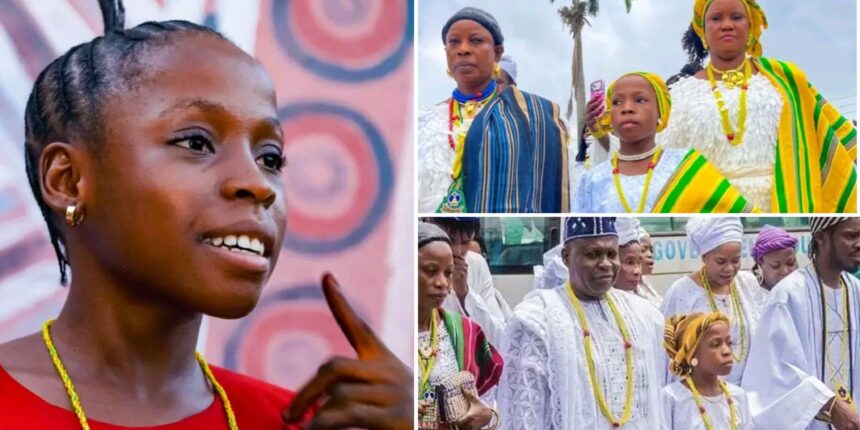
Every year, one ancient tradition quietly captures the attention of people far beyond Osun State, drawing cultural enthusiasts, historians, tourists, researchers, traditional worshippers, photographers, diplomats, curious observers across Nigeria. While colourful displays, royal processions, spiritual ceremonies usually dominate conversations surrounding the Osun Osogbo Festival, one sacred figure often becomes the centre of widespread interest without uttering a single word throughout the grand celebration.
This year’s edition has once again brought that centuries old institution into national focus after the emergence of 10 year old Princess Alimot Moredeke Ajoke Osunbunmi as the new Arugba. Her selection has stirred fresh curiosity about a position that remains one of the most revered within Yoruba traditional religion, raising fresh interest about the customs, responsibilities, sacred expectations attached to the office. Behind the colourful celebration lies a deeply guarded tradition whose significance stretches across generations, making the story of the new Arugba far more profound than many first imagine.
Ancient Tradition: Sacred Institution
The Osun Osogbo Festival remains one of Africa’s most recognised cultural celebrations, bringing together spirituality, history, royalty, tradition, cultural identity within a festival that has endured for centuries. Celebrated annually in Osogbo, Osun State, the festival serves as a period when devotees honour Osun, the revered river goddess believed within Yoruba traditional religion to represent fertility, healing, protection, prosperity, motherhood, abundance. Rather than existing merely as entertainment, the festival represents a sacred covenant between the people of Osogbo, the Osun deity, preserving customs handed down from one generation to another.
Preparations begin several days before the grand procession, with different traditional rites performed according to customs that have survived the passage of time. Each ceremony carries its own significance, reflecting the belief that every stage contributes to the spiritual success of the annual celebration. Traditional chiefs, priestesses, worshippers, members of the royal family each perform assigned responsibilities, ensuring that no aspect of the sacred programme is neglected before the climax arrives.
Celebrated from July 27 to August 7, 2026, this year’s festival is themed Preserving Heritage, Inspiring the Future. Organisers expect close to 500000 participants from different parts of Nigeria alongside visitors from Africa, Europe, the Americas, Asia, making the event one of the country’s largest cultural gatherings. Beyond tourism, the festival remains an enduring symbol of Yoruba civilisation, attracting scholars eager to understand traditions that continue to flourish despite rapid modernisation.
Young Princess Steps Into Sacred History

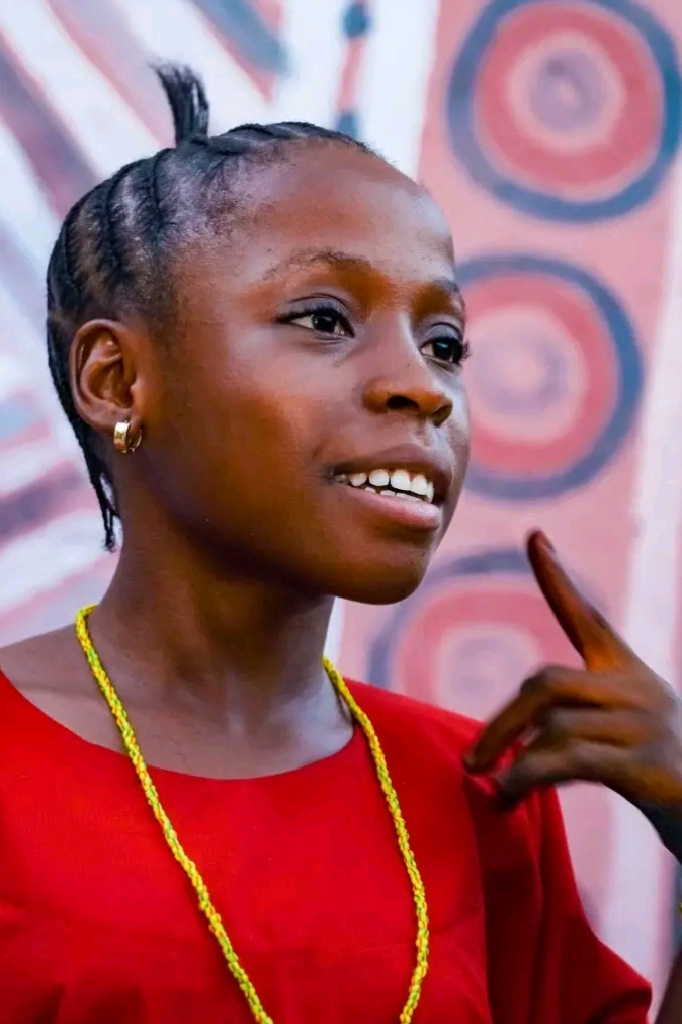
National attention quickly turned toward Princess Alimot Moredeke Ajoke Osunbunmi after she emerged as the new Arugba for the 2026 festival. At just 10 years old, she instantly became one of the youngest girls in recent memory to assume the sacred office, prompting widespread interest about how such an important spiritual responsibility could be entrusted to someone of her age.
Princess Alimot belongs to the royal household of the Ataoja of Osogbo, making her eligible under longstanding traditional requirements. Her emergence did not result from public nomination, family influence or royal appointment. Rather, her selection followed the traditional process recognised by custodians of the Osun worship tradition, reinforcing the belief that the office remains guided by spiritual authority rather than human preference.
Traditional records indicate that she was identified through Ifa divination in March 2025, when she was about 9 years old. Although officially recognised as the next Arugba from that moment, her public role gradually unfolded during subsequent festival activities as traditional leaders carefully introduced her into the sacred responsibilities associated with the office.
Meaning Behind The Title Arugba
Many people hear the word Arugba during the annual festival without fully understanding its meaning or significance. Within Yoruba tradition, Arugba literally translates as the calabash carrier, a title that immediately reflects her most recognised responsibility during the annual procession to the Osun Sacred Grove.
Yet the position extends far beyond physically carrying a sacred object. The Arugba serves as a living symbol of purity, hope, spiritual continuity, prosperity, peace, reflecting the sacred relationship between the people of Osogbo, the Osun deity. Every appearance she makes during the festival carries ceremonial significance, while every movement follows customs carefully preserved across generations.
Rather than functioning as a performer within a cultural parade, the Arugba occupies one of the highest ritual positions throughout the celebration. Her participation represents an essential aspect of ceremonies that many devotees consider indispensable to the successful observance of the annual festival.
Ifa Divination Determines The Choice
Public discussions often create the impression that the Ataoja personally selects whoever becomes the Arugba or that the position automatically passes from one royal household member to another. Yoruba tradition, however, provides a very different process that places spiritual consultation above personal preference.
Selection begins through Ifa divination, one of the most respected traditional systems within Yoruba spirituality. During this sacred consultation, the Ifa oracle determines the maiden chosen to occupy the office according to spiritual guidance recognised by traditional custodians. Human influence is therefore regarded as secondary to what the oracle reveals.
Eligibility nevertheless remains restricted to girls from the royal family of the Ataoja of Osogbo. Even among eligible princesses, only the individual identified through Ifa divination eventually assumes the sacred office. This combination of royal lineage, spiritual consultation, traditional qualifications distinguishes the institution from ordinary ceremonial appointments.
Royal Lineage Carries Great Importance
Royal ancestry remains an indispensable qualification for anyone aspiring to become the Arugba. Centuries of tradition establish that only princesses belonging to the royal family of the Ataoja may be considered eligible for the sacred responsibility. This requirement preserves continuity between the throne of Osogbo, the Osun deity, the spiritual heritage associated with the annual festival.
Membership within the royal household alone does not guarantee selection. Several eligible princesses may exist at any given time, yet only one eventually emerges following the guidance provided through Ifa divination. This careful process underscores the belief that divine direction ultimately determines who assumes the office.

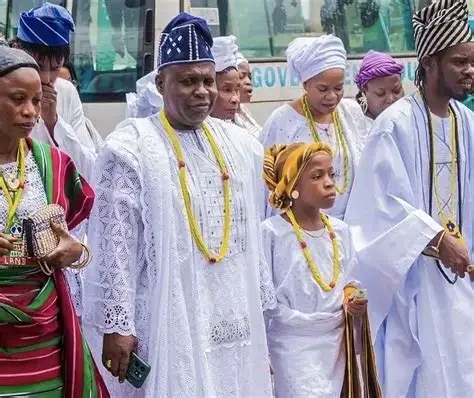
Princess Alimot’s emergence therefore reflects both her royal heritage, the outcome of traditional spiritual consultation. Together these qualifications reinforce customs that have remained central to the institution for generations.
Sacred Purity Remains Central
Among every qualification attached to the office, none attracts greater attention than the requirement that the Arugba must remain a virgin throughout her period of service. Within Yoruba traditional belief, ritual purity forms the spiritual foundation upon which the sacred responsibilities of the office rest.
Traditional custodians regard this requirement as essential because the Arugba represents purity before carrying or leading the sacred offerings presented to the Osun deity. Her role symbolises spiritual cleanliness rather than ordinary social status, making the expectation inseparable from the office itself.
Marriage automatically brings an Arugba’s service to an end according to long established custom. Rather than serving for life, each Arugba completes her responsibilities until marriage, after which another eligible royal maiden is chosen through Ifa divination to continue the sacred tradition.
Previous Arugba Completed Her Service
Princess Alimot succeeded Osuntomi Ewatomi, whose tenure concluded following her marriage. This transition reflects one of the most consistent customs associated with the institution, demonstrating that personal milestones naturally determine when an Arugba’s service reaches completion.
Each transition preserves continuity without disrupting the annual festival. Once an Arugba’s tenure ends, traditional processes begin to identify another qualified royal maiden capable of assuming the sacred responsibility according to established customs.
Rather than representing competition between individuals, succession within the institution reflects obedience to tradition. Every Arugba performs her responsibilities during the period assigned before gracefully handing the sacred role to her successor.
Why Her Age Captured National Attention
Age became one of the defining talking points following Princess Alimot’s emergence because many observers expected an older teenager to occupy such a spiritually significant office. Seeing a 10 year old entrusted with responsibilities deeply rooted in centuries of tradition naturally generated widespread curiosity.
Traditional leaders, however, consistently emphasise that age has never served as the determining factor during selection. According to established customs, Ifa divination alone identifies the chosen maiden, while every other consideration remains secondary to the spiritual decision communicated through the oracle.

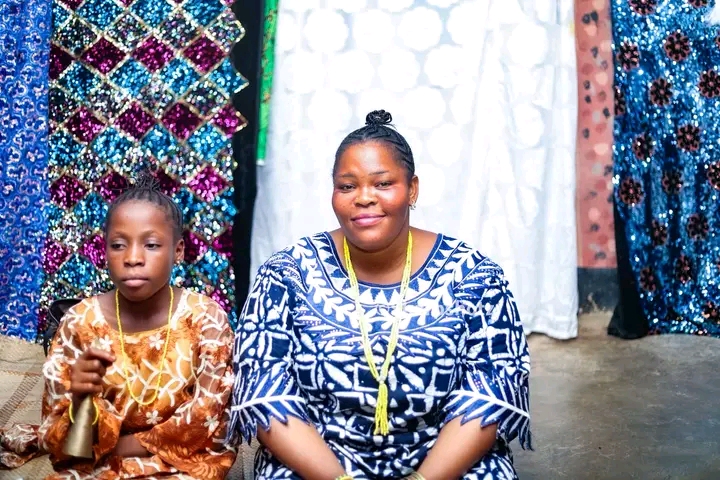
Her emergence therefore illustrates how traditional institutions continue to prioritise long established customs above modern expectations. Rather than adjusting requirements to satisfy public opinion, custodians insist that sacred traditions must remain faithful to inherited practice.
Why She Did Not Carry The Sacred Calabash During 2025
Despite being identified as the next Arugba during March 2025, Princess Alimot did not physically carry the sacred calabash throughout that year’s grand procession. This decision immediately generated questions among many observers unfamiliar with the practical considerations surrounding her introduction into the office.
Traditional custodians explained that her young age made carrying the sacred calabash throughout the lengthy procession physically demanding. Rather than exposing her to unnecessary strain, they permitted her to lead the sacred procession while Baba Osun, Chief Priest Adesina, carried the ritual calabash on behalf of the institution.
This arrangement allowed the newly selected Arugba to begin fulfilling ceremonial responsibilities while gradually preparing for fuller participation as she grows older. Traditional authorities expect her to eventually undertake every responsibility personally once she reaches appropriate physical maturity.
Sacred Procession Reaches Its Climax
Perhaps no aspect of the Osun Osogbo Festival attracts greater anticipation than the grand procession leading worshippers toward the Osun Sacred Grove. Thousands accompany the sacred journey, creating an atmosphere where spirituality, royalty, culture, music, traditional worship merge into one remarkable public celebration.
Leading the procession are the Ataoja of Osogbo, the Arugba, priestesses, traditional chiefs, devotees carrying ritual items prepared for presentation to the Osun deity. Every stage follows customs refined across generations, ensuring that sacred procedures remain carefully observed from beginning to end.
Arrival at the Sacred Grove marks the climax of the annual celebration, where prayers, ritual offerings, traditional ceremonies conclude weeks of carefully organised religious activities dedicated to honouring the river goddess.
Sequence Of Festival Activities
Several traditional ceremonies unfold before the grand procession finally reaches the Sacred Grove. Each event performs a distinct spiritual function within the broader festival, preserving customs that continue to define the identity of Osogbo.
Iwopopo traditionally opens the sacred programme through ceremonial cleansing of the ancient town. This rite symbolically prepares the community for the sacred celebrations that follow, reflecting beliefs concerning spiritual purification before major religious observances.
Another important ceremony involves lighting the 16 point sacred lamp, representing continuity, spiritual illumination, preservation of ancestral traditions. Iboriade also occupies an important position, bringing together the sacred crowns of former Ataojas in recognition of royal heritage that continues shaping Osogbo’s traditional identity.
Cultural performances, traditional music, masquerade displays, worship ceremonies continue throughout the festival before the concluding procession gathers thousands of participants for the climactic journey toward the Sacred Grove.
UNESCO Recognition Elevated Global Interest
Recognition by UNESCO significantly increased international awareness surrounding the Osun Sacred Grove. During 2005, the sacred forest received World Heritage status because of its remarkable cultural, historical, spiritual significance, preserving one of the last surviving sacred forests across Yorubaland.
This recognition strengthened global appreciation for Yoruba civilisation while encouraging greater efforts toward protecting the grove’s unique heritage. Scholars, conservationists, historians, cultural organisations increasingly acknowledge the site as an invaluable record of indigenous African religious traditions.
Every annual festival therefore serves both spiritual, cultural purposes while also showcasing Nigeria’s heritage before an international audience eager to witness traditions that continue flourishing within their original setting.
More Than A Festival
Although colourful cultural displays frequently dominate photographs shared across social media, the Osun Osogbo Festival represents much more than an annual tourist attraction. Devotees participate because they regard the ceremonies as sacred expressions of faith, thanksgiving, renewal, spiritual commitment reaching back through countless generations.
Families travel from different locations specifically to honour ancestral traditions maintained by their forebears. Visitors equally arrive seeking cultural understanding, academic knowledge, historical appreciation, making the festival a unique meeting point between religion, heritage, tourism, education.
Every ritual therefore carries deeper meaning beyond its outward appearance, reminding participants that living traditions continue shaping communities despite changing times.
Why The New Arugba’s Story Matters
Princess Alimot Moredeke Ajoke Osunbunmi’s emergence as the new Arugba represents far more than the selection of another ceremonial participant. Her appointment reflects the continued preservation of an institution that remains deeply respected within Yoruba traditional religion, demonstrating how ancient customs continue guiding important cultural responsibilities today.
Her story also highlights the enduring authority of Ifa divination within traditional decision making, showing that sacred offices continue following established customs rather than contemporary expectations. Through her emergence, another generation becomes entrusted with protecting traditions that have survived centuries of political, social, cultural transformation.

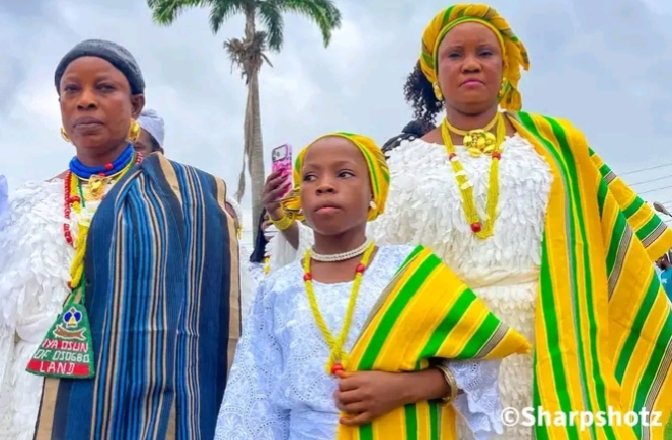
As the 2026 Osun Osogbo Festival unfolds, the young princess stands not merely as a child participating in a famous celebration but as the latest custodian of one of Yoruba culture’s most sacred institutions. Her journey offers a powerful reminder that heritage survives because every generation faithfully receives, protects, passes forward the traditions entrusted to its care, ensuring that one of Nigeria’s richest cultural legacies continues inspiring future generations.