Donald Trump isn’t done fighting over who gets to be American at birth.
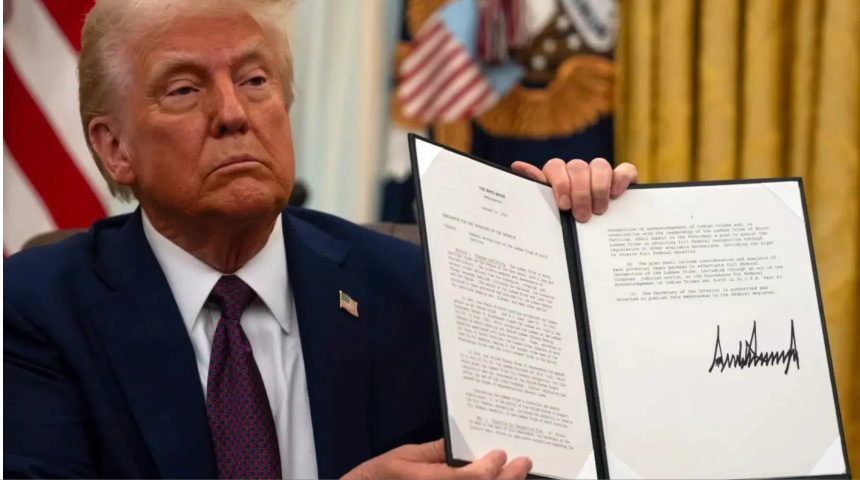
On Thursday, August 6, 2026, the president signed two fresh executive orders targeting birthright citizenship, just five weeks after the Supreme Court struck down his original attempt to gut it. Standing in the Oval Office alongside deputy chief of staff Stephen Miller and Commerce Secretary Howard Lutnick, Trump made no effort to hide his frustration with the court that had just handed him one of the more lopsided defeats of his second term.
“We had a very unfortunate decision in the Supreme Court concerning birthright, it was close,” he said. “But a very, very unfortunate decision. So we’re making adjustments.”
It wasn’t close. It was 6-3.
What the Supreme Court Actually Said
Back on June 30, the Court ruled in Trump v. Barbara that Trump’s January 2025 executive order, the one that tried to deny automatic citizenship to babies born to undocumented or temporarily present parents, violated the 14th Amendment outright. Chief Justice John Roberts wrote the majority opinion, joined by Justices Kagan, Sotomayor, Barrett, and Jackson, and didn’t leave much room for interpretation: children born on U.S. soil to parents who are here unlawfully or temporarily are still “subject to the jurisdiction” of the United States, and are citizens the moment they’re born.
Roberts leaned on two cases most Americans have never heard of but that constitutional lawyers know by heart. He revisited Dred Scott, the notorious 1857 ruling that denied citizenship to Black Americans, to show what the 14th Amendment’s framers were trying to permanently bury. Then he pointed to United States v. Wong Kim Ark, the 1898 case that confirmed a child born in San Francisco to Chinese immigrant parents was, in fact, American. That precedent has held for over a century.
Even Justice Kavanaugh, who dissented on the constitutional question, agreed the order couldn’t stand — just on statutory grounds instead, citing the federal law that codifies birthright citizenship, 8 U.S.C. §1401(a).
The bottom line the Court left behind: birthright citizenship stays exactly as it’s always been. No appeal, no do-over. It’s final.
So What Did Trump Just Sign?
Rather than take the loss and move on, the administration went looking for a narrower opening. The two new orders don’t try to rewrite the 14th Amendment wholesale, they carve at the edges instead.
The first order goes after “birth tourism.” Miller described it as cracking down on people who enter the U.S. on tourist visas with the real intention of giving birth here and locking in citizenship for their child before leaving. “The idea that people come here pretending to be a tourist, pretending to be a visitor, saying they want to go to Disneyland or they want to go visit a monument or go to a national park, but the real reason they’re here is to have a child,” Miller said, arguing it hands families access to “welfare benefits” and eventually “the voting booth.”
The second order widens who counts as ineligible for automatic citizenship, reportedly including children born to foreign nationals who lobby on behalf of foreign governments, a category that reads less like an immigration policy and more like a shot at a very specific, very small slice of people.
As of this writing, the White House hasn’t released the actual text of either order, so the operational details, how enforcement would work, which agencies get involved, what documentation parents would need, are still unknown. Axios broke the story first, ahead of the signing.
Why Trump Keeps Trying
Trump has never hidden his belief that the 14th Amendment’s citizenship clause was written for a much narrower purpose than how courts have applied it for 125-plus years. On Thursday he repeated a version of an argument he’s made before: “This was done right after the Civil War. This was for the babies of slaves.”
It’s true the amendment was ratified in 1868 to secure citizenship for formerly enslaved people after Dred Scott. What Trump leaves out is that the Supreme Court settled the broader question decades ago in Wong Kim Ark, the clause was never limited to that one group, and it has applied to children of immigrants, visitors, and everyone else born on U.S. soil ever since.
Who Could Actually Be Affected This Time
Given how narrowly these new orders are drawn, at least based on what’s been described publicly, the practical reach looks much smaller than the 2025 order, which would have swept in the U.S.-born children of millions of undocumented immigrants. This round appears aimed at:
- Foreign nationals who travel to the U.S. specifically to give birth, often through paid “birth tourism” packages
- Children of individuals working as unregistered or foreign agents lobbying for other governments
- Possibly, depending on the final text, broader categories the administration tries to fold into the “not subject to U.S. jurisdiction” argument
Immigration attorneys will almost certainly challenge these orders too, and given the Court’s June ruling was unambiguous about the constitutional question, any order that tries to reach beyond birth tourism and into the citizenship of children born to undocumented or temporarily present parents is on shaky legal ground before it’s even enforced.
What Happens Next
Expect lawsuits within days, not weeks. The same coalition that won Trump v. Barbara, the ACLU, the Legal Defense Fund, the Asian Law Caucus, and others, has already signaled it will keep watching for exactly this kind of follow-up move. Given the Supreme Court just ruled definitively on the core constitutional question five weeks ago, courts reviewing these new orders won’t be starting from scratch.
For now, nothing changes for anyone born in the United States. If you’re born here, you’re a citizen, that’s still the law, regardless of your parents’ immigration status. Whether these narrower orders survive their inevitable day in court is a different story, and one that’s likely to play out over months, not days.