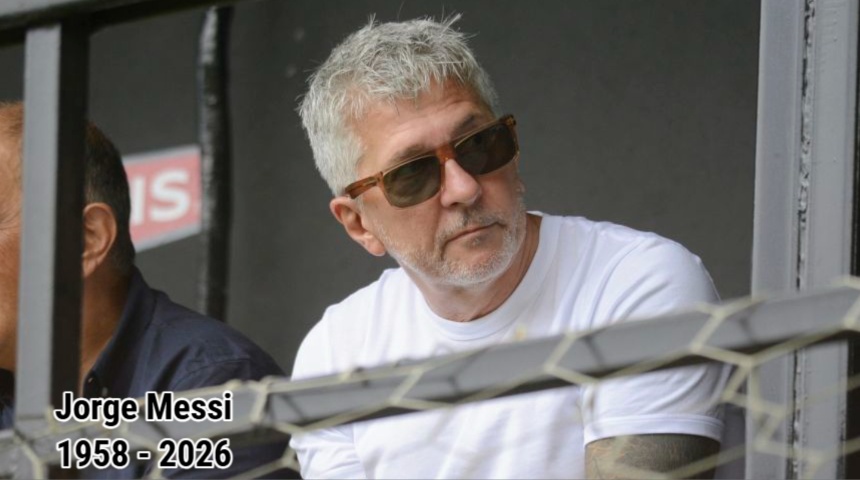
Jorge Horacio Messi, the father, first coach and longtime agent of Lionel Messi, died on Saturday at Sanatorio Centro in Rosario after months of declining health. He was 68.
The confirmation came from the medical centre where he’d been receiving treatment, and within hours tributes poured in from Newell’s Old Boys, FC Barcelona, Real Madrid, UNICEF and the Spanish Football Federation. Dr. Carlos Mackey, the hospital’s medical director, said no further details on the cause of death would be released, out of respect for the family’s privacy.
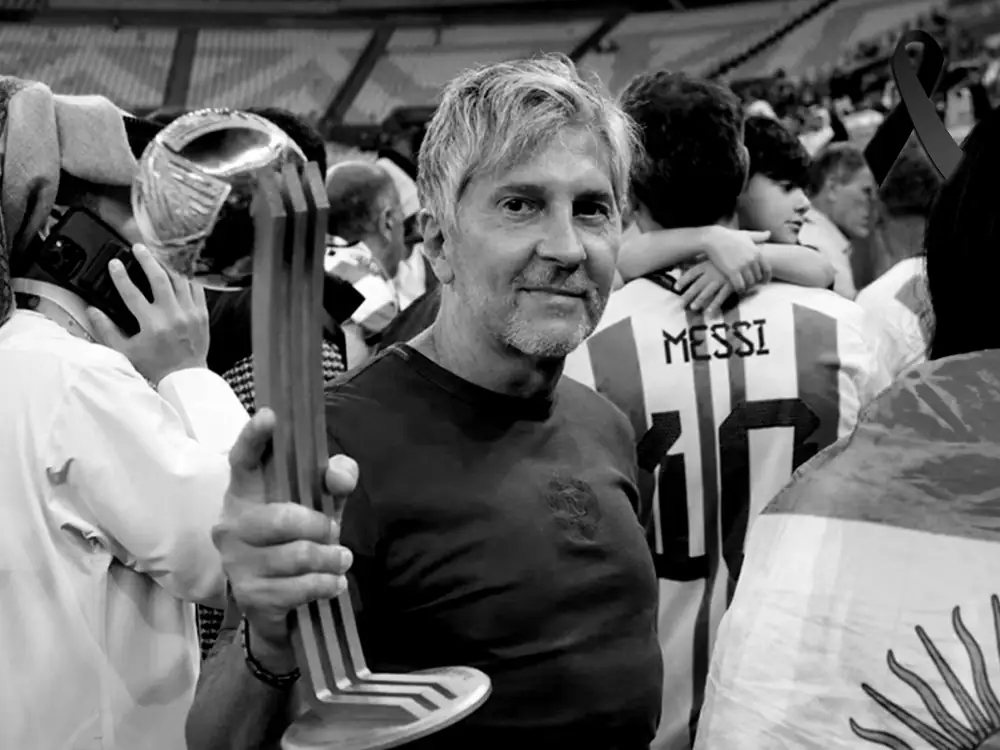
For most of the world, Jorge Messi was a name attached to someone else’s fame, the man standing a few feet behind his son in a hundred trophy photos, rarely the one holding the microphone. But the story people are now retelling, in newsrooms from Buenos Aires to Barcelona, is of a factory supervisor who bet everything on an undersized kid from Rosario and turned out to be right.

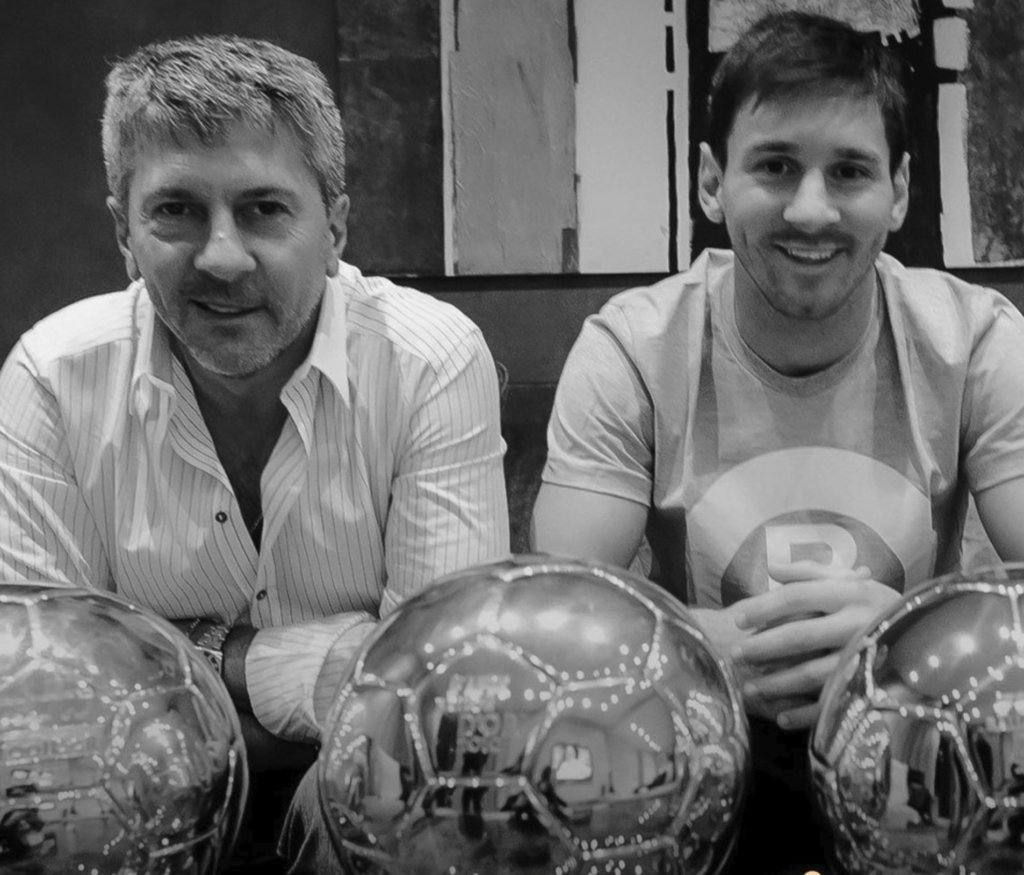
Who Was Jorge Messi?
Jorge Horacio Messi was born in Rosario in 1958. Football was in his life early; he played as a midfielder in Newell’s Old Boys’ youth system, though it never became a career. After his military service, he trained as a chemical technician and went to work at Acindar, one of Argentina’s major steel producers, eventually working his way up to a managerial post.
He married Celia María Cuccittini, and the two raised four children in Rosario: Rodrigo, Matías, María Sol, and the youngest, Lionel, born in 1987. By every account, it was an unremarkable working-class household. Nobody in it was thinking about global stardom.
The Coach Who Spotted Something
Jorge got his first real look at what his youngest son could do on the pitch at Grandoli, a neighbourhood club, where he coached the kids’ team Lionel played on. He later followed him to Newell’s Old Boys, showing up at training and matches so often that people who watched Lionel as a boy still remember Jorge’s whistle cutting through the noise from the stands — his way of getting his son’s attention mid-game.
Lionel Messi has talked about how demanding his father was in those years. “My father helped me enormously. He is very critical of me. That made me always want to push myself further,” he told DirecTV Sports in 2022. It wasn’t gentle encouragement. It was pressure, applied by someone who clearly believed there was something worth pushing.

The Diagnosis That Changed Everything
Around age 10 or 11, Lionel was diagnosed with a growth hormone deficiency. He was smaller than nearly everyone he played against, and the treatment to correct it was expensive, expensive enough that Newell’s, which had been helping cover some of the cost, eventually pulled back. For a family living on a factory salary, that was close to a dead end.
Jorge didn’t accept it. In September 2000, he took his 13-year-old son to Spain for a trial at Barcelona’s La Masia academy. Carles Rexach, the club’s technical secretary, watched the boy train and didn’t need long to make up his mind. But Barcelona’s board was slower, money was tight, and nobody wanted to commit to paying for a young player’s medical bills on top of a transfer.
So Jorge pushed. He let it be known that Real Madrid and Atlético Madrid were both interested, and Rexach, worried the club might lose him, reportedly grabbed the nearest piece of paper, a napkin, according to the story that’s been told for two decades, and wrote down Barcelona’s commitment on the spot. It’s remembered now as one of the most famous handshake deals in football, and it happened because a father who wasn’t a lawyer, an executive or an agent refused to let a “no” from an accountant be the final word.
Messi later described what those first months in Barcelona actually felt like, away from the mythology: “When we arrived in Barcelona, I used to lock myself in my room to cry alone, and my father did the same, either without me seeing him or thinking I didn’t see him. We pretended we were both fine, but we were struggling.” At one point, he says, Jorge asked him directly whether he wanted to keep going or go home. Lionel chose to stay. Jorge stayed with him.
From Father to Full-Time Agent
Once the family settled in Barcelona, Jorge left the steel industry behind for good and became his son’s agent — a role he held for the rest of Lionel’s career, spanning Barcelona, Paris Saint-Germain and Inter Miami, plus every national team cycle in between, including this year’s World Cup.
That side of the job wasn’t without controversy. In 2016, Spanish prosecutors pursued a tax fraud case against Jorge over roughly €4 million in unpaid taxes on Lionel’s image rights between 2007 and 2009; Lionel was cleared of wrongdoing, but his father faced a prison sentence, later settled with a fine. A second, separate investigation opened in Spain in 2019 involving alleged tax offences and money laundering tied to the Leo Messi Foundation, that case was dismissed in 2021.
None of it seems to have dented the trust between them. Jorge kept negotiating Lionel’s contracts, right through to Inter Miami, and remained his primary representative until his death.
Health Struggles and a Difficult 2026 World Cup
Rumours about Jorge’s health had been circulating since well before this year’s World Cup, and they weren’t always handled responsibly. Back in June, Argentine TV host Florencia Peña wrongly announced on air that Jorge had died, information she later said was fed to her through a faulty earpiece. She resigned over the mistake and publicly took partial responsibility.
The real situation, according to a family statement at the time, was that Jorge was “dealing with a health issue” and was “under medical supervision, recovering, and showing favourable progress given his condition.” Lionel didn’t talk about it much publicly, but the toll showed. During Argentina’s World Cup opener against Algeria this year, he was visibly emotional after scoring a hat-trick, and admitted afterward that his mind had been on things away from the pitch.
Jorge was well enough at one stage to spend time with his son after the tournament, before Lionel rejoined Inter Miami. According to Newell’s Old Boys, he spent his final months moving between Sanatorio Centro and his home in Rosario, with Celia and his children by his side.

Tributes From Football’s Biggest Clubs
Newell’s Old Boys, the club where an eight-year-old Lionel first started turning heads, led the tributes: “Jorge was the pillar and the person who, with vision, rigour and affection, supported the career of the best player of all time, alongside his wife, Celia Cuccittini.” The club also credited him with instilling the connection to Newell’s colours that Lionel has carried his whole career.
Barcelona thanked him “for his commitment to our Club, for entrusting us with the beginnings and the most glorious years of his son Leo’s football career.” Real Madrid and the Spanish Football Federation both sent condolences, as did UNICEF, which noted Jorge’s support for the Leo Messi Foundation’s work with children over the years.
Why His Role Mattered So Much
Strip away the trophies and the transfer fees, and Jorge Messi’s story is fairly simple: a father who coached his kid at a neighbourhood club, refused to let a hormone deficiency end his career before it started, and then spent the next two decades managing the business side of a career that grew far bigger than either of them could have planned for in Rosario.
Lionel Messi is 39 now, coming off a runner-up finish with Argentina at this year’s World Cup and back with Inter Miami. He hasn’t publicly commented on his father’s death yet. Given how private the family kept Jorge’s illness, that’s not surprising, but the outpouring from clubs and federations across two continents says something about how large a footprint the man behind the scenes actually left.
Jorge Messi is survived by his wife, Celia Cuccittini, and his four children: Rodrigo, Matías, Lionel and María Sol.