On August 5, 2026 the Economic and Financial Crimes Commission directed that no money be withdrawn from the Osun State Government’s statutory allocation account.
According to the anti-graft agency, this is part of an ongoing investigation of the administration of Ademola Adeleke.
In a letter dated August 5, 2026, and signed by the Assistant Commander of the EFCC, Adenike Babalola, for the Director of Investigation, instructed the bank to place a post-no-debit restriction on the account pending the conclusion of the probe.
WITHIN NIGERIA findings showed that the letter, referenced 3000/EFCC/ABJ/HQ/PFS/TA/OSUN/VOL.17/666, was addressed to the Managing Director of First Bank, with attention to the Chief Compliance Officer.
The said letter identified the affected account as “Osun State Government Statutory Allocation” with account number 2017170947.
The commission stated that the directive followed an earlier correspondence dated April 15, 2026.


EFCC said that the request was made pursuant to Section 38(1) and (2) of the Economic and Financial Crimes Commission (Establishment) Act, 2004, and Section 24 of the Money Laundering (Prevention and Prohibition) Act, 2022.
The letter partly read thus; “Refer to our letter CR:3000/EFCC/ABJ/HQ/PFS/TA/OSUN/VOL.17/165 dated 15th April, 2026 on the above subject.
“In furtherance to the above, you are kindly requested to place a Post-No-Debit on the account. This request is made pursuant to Section 38 (1) & (2) of the Economic and Financial Crimes Commission (Establishment) Act, 2004 and Section 24 of the Money Laundering (Prevention and Prohibition) Act, 2022.
“Thank you for your usual cooperation, please,” the letter read.
In any case, since the incident was brought to the public domain, it has continued to draw public reactions both in favour and against the anti-graft agency.
One of the arguments against the blocking of the account stems from the fact that it was ill-timed.
Why would the EFCC place PND(Post No Debit) on the account of a state that was about to hold a crucial election in less than a month? From where will the state get the fund to pay salaries of civil servants, pay contractors and run the state? Many analysts argue that move will no doubt draw the wrath of the citizens against the sitting governor who is seeking a second tenure.
President Tinubu Intervenes
However, as the backlash continues to generate more tension, President Bola Tinubu has directed the Economic and Financial Crimes Commission to immediately return to court and vacate the order freezing the accounts.
In a statement issued by the State House on Thursday, said he was not opposed to the EFCC’s exercise of its statutory powers but expressed concern over the timing of the action.
“It has come to my notice that the Economic and Financial Crimes Commission (EFCC) obtained a court order on August 5, 2026, freezing the accounts of the Osun State Government.
“I must state that I feel deeply embarrassed not by the EFCC’s exercise of its mandate backed by a court order, but by the timing of the agency’s action,” the President said.
“This is so because every action taken by an institution of State, especially at the Federal level, is always credited to me, as the President, even when I may not have had any prior knowledge of the action,” he stated.
“Since assuming office, I have consistently maintained that anti-corruption and law enforcement agencies must be allowed to discharge their statutory responsibilities independently, professionally, without fear or favour, or political interference,” Tinubu said.
He added that he had deliberately avoided directing or interfering in the operational activities of the EFCC or other investigative agencies because of his belief in strong democratic institutions.
“I have therefore deliberately refrained from directing or interfering in the operational activities of the EFCC or any other investigative or prosecutorial agency because I firmly believe that strong democratic institutions, operating within the confines of the law, are indispensable to democratic good governance and the rule of law,” he said.

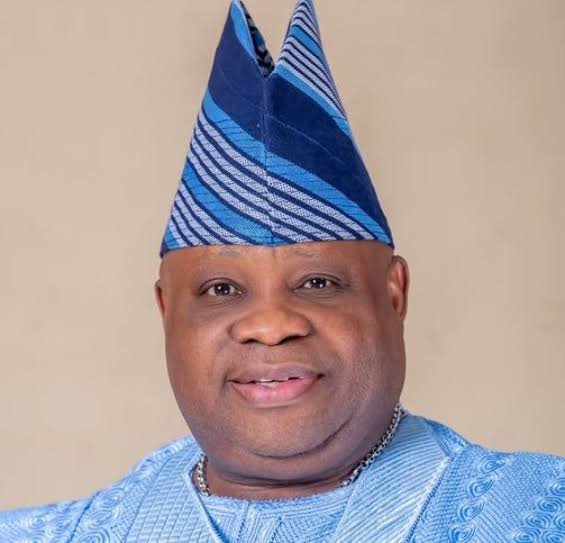
Tinubu noted that although he was yet to be fully briefed on the facts that informed the EFCC’s decision to seek the court order, the timing of the action required his intervention.
“Osun State is only a few days away from its gubernatorial election. Therefore, nothing ought to be done to give an impression that the EFCC or indeed any other agency of the federal government is being used to interfere with the election,” Tinubu added.
Ondo state government drags EFCC to court
However, as the incident continued to generate more arguments and concern, the Ondo state government dragged the Anti-graft agency to court.
The Adeleke’s administration is demanding N2bn as damages.
WITHIN NIGERIA gathered that cited as first to third defendants in the originating summons entered before the Federal High Court in Abuja are the EFCC, its chairman, and First Bank Nigeria Limited.
Also listed in the suit was the Attorney General of Osun State, as well as the Accountant General of the state as second and third plaintiffs, respectively.
Cited as first to third defendants in the originating summons entered before the Federal High Court in Abuja by a team of lawyers led by M. T. Adekilekun, SAN, are the EFCC, its chairman, and First Bank Nigeria Limited.
The state government posed several legal issues for the court to determine which include;
“Whether, having regard to the express provisions of sections 1, 6, 36, 44 and 162 of the Constitution of the Federal Republic of Nigeria, 1999 (as amended), and Section 34 of the Economic and Financial Crimes Commission Establishment Act, 2004, the 1st and 2nd Defendants possess the lawful authority to freeze, restrict, block, place a ‘post no debit’ order on, or otherwise interfere with the Osun State Statutory Account maintained with the this Defendant, without regard to due process of law.
“Whether, having regard to the combined express provisions of Section 7(6) of the Money Laundering (Prevention and Prohibition) Act, 2022, and Section 34 of the Economic and Financial Crimes Commission Establishment Act, 2004, the 1st and 2nd Defendants possess the lawful authority to freeze, restrict, block, place a ‘post no debit’ order on, or otherwise interfere with the Osun State Government Federal Statutory Allocation Account, Number 2017170947, maintained with the 3rd Defendant, without first obtaining and serving a valid, subsisting, and specific order of a court of competent jurisdiction.
“Whether, having regard to the combined express provisions of Section 7(6) of the Money Laundering (Prevention and Prohibition) Act, 2022, and Section 34 of the Economic and Financial Crimes Commission Establishment Act, 2004, the directive of the 1st Defendant to the 3rd Defendant ordering the freezing or restriction of the Osun State Statutory Account No. 2017170947, maintained with the 3rd Defendant, vide its letter with Reference No. CR:3000/EFCC/ABJ/HQ/PFS/TA/OSUN/VOL.17/666 dated 5th August 2026 and authored by ACE I Adenike S. Babalola (for: Director, Investigation), without any prior or concurrent court order sought, obtained and served on the third Defendant, does not constitute an egregious act of executive lawlessness, an unlawful resort to self-help, a flagrant abuse of statutory powers, an unlawful suppression of the constitutional powers and functions of the Plaintiffs, a threat to the constitutional and corporate existence of Osun State, a brazen and unlawful denial of the democratic rights and dividends of the people of Osun State, and a direct violation of the fundamental constitutional principles of due process, the rule of law, and the financial autonomy of a federating unit.
“Whether, having regard to the combined express provisions of Section 7(6) of the Money Laundering (Prevention and Prohibition) Act, 2022, and Section 34 of the Economic and Financial Crimes Commission Establishment Act, 2004, the third Defendant, being the banker to the Government of Osun State in respect of the said statutory account, can lawfully freeze or continue to freeze, restrict, block, or deny the Government of Osun State unrestricted access to the said account merely upon an administrative directive, letter, request, instruction, or communication from the first and/or second Defendants in the manner done herein, in the absence of a valid, subsisting, and specific order of a court of competent jurisdiction.
“Whether, having regard to the effect of the combined express provisions of Section 7(6) of the Money Laundering (Prevention and Prohibition) Act, 2022, and Section 34 of the Economic and Financial Crimes Commission Establishment Act, 2004, and in the absence of an order of a court of competent jurisdiction, this Honourable Court ought not to forthwith set aside the directive given by the first Defendant to the third Defendant in a letter dated 5th August 2026 ordering the freezing, restriction, blocking, or placing of a post-no-debit instruction on the Osun State Statutory Account with the third Defendant, given that such action was allegedly taken in violation of due process, and in a manner demonstrably capable of crippling the constitutional and statutory obligations of the Government to the people of Osun State.”
Again “Whether, having regard to the effect of the combined express provisions of Section 7(6) of the Money Laundering (Prevention and Prohibition) Act, 2022, and Section 34 of the Economic and Financial Crimes Commission Establishment Act, 2004, and in the absence of an order of a court of competent jurisdiction, the 3rd Defendant did not breach the duty of care owed to the Osun State Government when, on the purported directive of the first and second Defendants, it placed a restriction on the Osun State Statutory Account with the third Defendant, given that such action was allegedly taken without a court order, in violation of due process, and in a manner demonstrably capable of crippling the constitutional and statutory obligations and rights of the Government and people of Osun State.”
Upon determination of the issues, the plaintiffs, among other things, urged the court to declare the actions the defendants took with respect to the Osun State account as “unlawful, unconstitutional, ultra vires their powers, null and void, and of no effect whatsoever.”
They sought “An order setting aside, vacating, and nullifying the freezing, restriction, blocking, post-no-debit instruction, or any other restraint placed on the Osun State Statutory Account maintained with the 3rd Defendant vide its letter with Reference No. CR:3000/EFCC/ABJ/HQ/PFS/TA/OSUN/VOL.17/666 dated 5th August 2026 and authored by ACE I Adenike S. Babalola (for: Director, Investigation), for being unlawful, unconstitutional, and without legal basis.
“An order mandating the third Defendant to forthwith unfreeze, unblock, and remove all restrictions, and to allow the Government of Osun State immediate and unrestricted access to and operation of the said Osun State Statutory Account.
“An order of perpetual injunction restraining the first and second Defendants, whether by themselves, their officers, agents, servants, privies, or any person acting on their behalf, from freezing, restricting, blocking, placing a post-no-debit instruction on, or otherwise interfering with the Osun State Statutory Account or any other account of the Government of Osun State without following due process of the law.
“An order of perpetual injunction restraining the 3rd Defendant, whether by itself, its officers, agents, servants, privies, or any person acting on its behalf, from acting on any directive, letter, instruction, or request from the first and/or second Defendants to freeze, restrict, block, or deny access to the Osun State Statutory Account, except in the manner stipulated by law.”

They also prayed the court to award ₦2 billion against the defendants to serve as “exemplary and aggravated damages for the unlawful interference with public funds,” as well as an order directing the defendants to pay the costs of the litigation.
Meanwhile, no date has been fixed for the suit, which was filed shortly after President Bola Tinubu directed the EFCC to immediately approach the court to unfreeze the Osun State Federal Statutory Allocation Account.
The EFCC had on Wednesday confirmed that it froze the state government’s bank account, saying the action was taken to prevent the alleged movement of public funds under investigation and was not connected to the forthcoming election.
The agency said it had been busy investigating the Osun State Government since March, 2026, “regarding alleged fraudulent handling of Ecology Funds, Intervention Funds and Federal Account Allocation Committee (FAAC) account to the tune of ₦11,000,000,000 only”.
But Adeleke described the action as unconstitutional.
Amid the controversy, President Bola Tinubu directed the EFCC to vacate a court order freezing an account belonging to the state government.
In a statement he personally issued on Thursday, Tinubu said he feels “deeply embarrassed not by the EFCC’s exercise of its mandate backed by a court order, but by the timing of the agency’s action.”
Femi Falana backs EFCC
Human rights lawyer and Senior Advocate of Nigeria, Femi Falana, has said the Economic and Financial Crimes Commission has not acted illegally by freezing the Osun State Government’s account.
Falana said the EFCC had the legal authority to freeze the account of a state government, provided it obtained a court order within the stipulated period.
He stated this on Friday while speaking on Channels Television’s Politics Today.
The SAN said the legality of the commission’s powers had been settled by the courts, citing a 2022 Court of Appeal judgment in a case involving the Benue State Government and the EFCC.
In his words, “ as far as the law is concerned, the EFCC has not acted illegally. As a matter of fact, that came out in the statement of the President: ‘We are… I’m not questioning your mandate and the exercise of your power. However, I’m embarrassed,’” Falana said.
He explained that the EFCC could place a Post No Debit restriction on a government account for not more than 72 hours before obtaining a court order.
“Under the law, the EFCC has the power to freeze the account of the federal government or of any state or local government in Nigeria,” he said.
Falana recalled that in 2019, the Federal High Court in Benue State had ruled that the EFCC lacked the power to freeze the state’s account and awarded N50m in damages against the commission.
He said the EFCC appealed the decision and that the Court of Appeal, in a judgment delivered in September 2022, held that the commission had the power to freeze the account and place a PND restriction for not more than 72 hours before obtaining a court order.
“That remains the law in Nigeria today,” he said.
The SAN also cited a 2024 Supreme Court judgment arising from a challenge by the Kogi State Government and other states to the powers of anti-corruption agencies to investigate state accounts.
“In 2024, the Kogi State government, joined by many state governments, challenged the investigation—probing of state accounts by EFCC, ICPC, or NFIU. And in a historic judgment, the Supreme Court examined all the relevant laws and came to the conclusion that these agencies have the power to probe the accounts of any organization, either at the federal, state, or local government [level]. That remains the law in Nigeria,” he said.
Falana said anyone seeking a change to the existing legal position should approach the National Assembly.
“If Nigerians—those who are concerned—want the law changed, they can go to the National Assembly. But for now, as of today, EFCC has the power to freeze the account of any state and, in not more than 72 hours, has to go to court,” he said.
According to him, the EFCC went to court in the Osun case, and the Federal High Court acted on information provided by the commission.
“In this instance, the EFCC went to court, and the Federal High Court intervened based on information provided by the EFCC,” he said.
The comments come amid controversy over the EFCC’s restriction of an Osun State statutory allocation account.
The commission said the action followed suspicious movement of funds during an ongoing investigation into the alleged fraudulent handling of about ₦11 billion in Ecology Funds, Intervention Funds and Federation Account Allocation Committee allocations.
It maintained the restriction was temporary, limited to one account, and based on its powers under the EFCC Act and the Money Laundering (Prevention and Prohibition) Act, 2022.
President Tinubu later directed the EFCC to approach the court to vacate the order and discontinue the action, citing the inappropriate timing so close to the August 15 Osun governorship election.
Falana said the Osun State Government had challenged the legality and validity of the court order, rather than its timing.
“The President referred to the order obtained by the EFCC. And as should be done, the Osun State government has challenged the legality, the validity of the order, not the timing,” he said.
He cautioned against creating the impression that anti-corruption agencies should suspend investigations whenever elections are approaching.
“Because we must also be very careful that we don’t give a dangerous impression that when elections are 10 days away, 20 days away, 30 days away, the anti-graft agencies must turn the other eye—’Don’t look at the state or the federal government.’ And so if funds are being moved to the tune of billions of naira, ‘Don’t look at them—I mean, don’t look at those funds because elections are coming.’ It’s a very dangerous impression that is being created,” Falana said.
Deji Adeyanju frowns at President Tinubu’s intervention
In the same vein, Human rights lawyer and activist, Deji Adeyanju, has faulted President Bola Tinubu’s directive ordering the Economic and Financial Crimes Commission (EFCC) to vacate the court-backed freezing of Osun State Government accounts.
Adeyanju described the President’s intervention as unconstitutional and a dangerous assault on the independence of public institutions.
He made this known on the Mic On podcast, anchored and hosted by Seun Okinbaloye of Channels Tv.
Adeyanju further argued that while the EFCC acted within the powers granted to it by law in obtaining an ex parte court order to freeze the accounts, the timing of the action, coming days before the Osun State governorship election, was “extremely suspicious” and inevitably created the impression of political interference.
He stressed that the controversy surrounding the account freeze should not obscure the legal question of whether the anti-graft agency possessed the statutory authority to act.
In his words, “EFCC has the powers to freeze the accounts of the Federal Government, state governments and local governments under its Establishment Act and the Money Laundering Act,” he said.
The legal luminary stated that the commission could even freeze an account temporarily before obtaining a court order in certain circumstances.
He added that in the Osun case, the agency went further by first securing judicial approval.
“If they had done so without a court order, they would still be within their rights. However, it is the timing. The timing is suspicious. Why are you doing it now? On the eve of an election? That is why many people believe it is political,” he said.
The lawyer noted that the EFCC had previously frozen accounts belonging to state governments, including Edo State, as well as accounts linked to federal government agencies, insisting that the agency’s action was not unprecedented.
He, however, frowned at President Tinubu’s subsequent intervention directing that the freeze be unfrozen.
Adeyanju said the President does not have the constitutional power or authority ask EFCC to vacate a subsisting judicial order.
“The directive is laughable. It is insulting. The President acted ultra vires his powers. He cannot, by executive fiat, direct the EFCC or the court to vacate a freezing order. That order should subsist until the Osun State Government approaches the court to set it aside,” he said.
“The President is not a judge, and the EFCC is an independent agency of government.”
Adeyanju said such presidential intervention would create a dangerous precedent capable of undermining every independent institution in Nigeria.
“If this stands, one day the President could direct INEC to deregister a political party. Tomorrow somebody may ask the President to direct the Chief Justice of Nigeria to reverse a court judgment. That is not how constitutional democracy works,” he said.
“What the President has done simply tells Nigerians that institutions are weak and that he controls them. He has taken away the independence of the commission.”
“If EFCC discovered suspicious transfers, it should have told Nigerians what it found. Was it billions? Was it millions? Who was receiving the money? Where was the money going? Nigerians deserved to know because that would have helped people understand why the commission approached the court,” he said.
He added that if the agency suspected attempts to divert public funds or finance vote-buying ahead of the election, greater transparency would have reduced public suspicion.