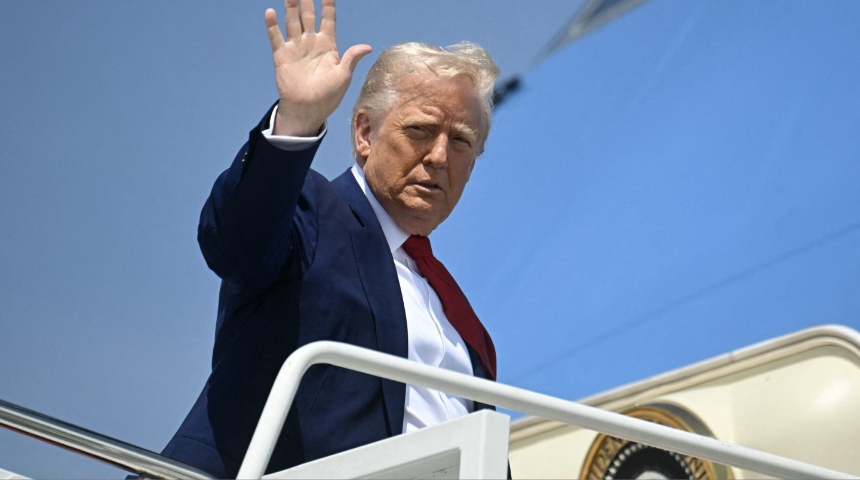
Air Force One touched down in Turkey with the president on board. It took off again for the United Kingdom with a different man occupying his seat, or rather, no man at all, just closed window shades and a planeload of reporters told not to look outside.
By the time anyone outside a small circle of officials worked out what had happened, Donald Trump was already back on US soil, and the elaborate switch that got him there had stayed hidden for weeks.
What actually happened in Ankara
Trump flew into Turkey in July 2026 for the NATO summit in Ankara, arriving on the newer, Qatari-donated Boeing 747-8 that has taken over some of the ceremonial duties of the traditional Air Force One. Before he left, though, US officials grew concerned about a specific threat against him tied to the ongoing conflict with Iran.
So the Secret Service, working with military planners, built a workaround. Trump would be quietly moved onto a catering truck, the kind that normally hauls meal trays and supply containers to the aircraft galley, and driven across the tarmac to a much smaller Air Force C-32A jet, out of view of the press pack and most of his own staff.
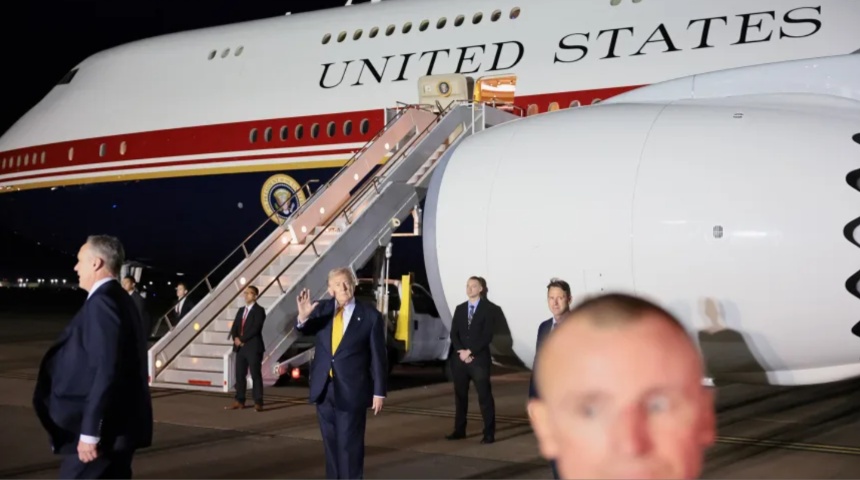
The old, traditional Air Force One left Ankara that evening carrying the traveling press and a chunk of the White House team, officially departing at 8:43 p.m. local time. Reporters on board were told to keep their window shades down. As far as anyone watching from outside could tell, the president was on that flight, sealed away behind the shutters like always.
He wasn’t. Trump had already been driven off in the catering truck and slipped aboard the C-32A, a much smaller jet typically used for VIP transport rather than presidential travel. From Ankara, that plane flew him to RAF Mildenhall, a US military base in the UK. Once there, he got off quietly again, re-boarded the legacy Air Force One, and only then reappeared in public, walking across the tarmac toward the newer 747-8, the plane everyone assumed he’d been on the whole time.
Who was in on it
The switch wasn’t a solo move. A handful of Trump’s closest aides went with him on the smaller jet, including Natalie Harp, who regularly travels with the president as an executive assistant; deputy chief of staff Dan Scavino; and Walt Nauta, who runs day-to-day Oval Office operations. Several Cabinet officials, including Secretary of State Marco Rubio, stayed behind on the legacy Air Force One and flew home without knowing the president wasn’t with them.
Trump had spent the night before at a hotel in downtown Ankara, shuttling back and forth to the summit venue. Officials briefed on the threat said it was taken seriously in part because of how specifically it appeared to track Trump’s actual schedule and movements in Turkey, not just his general presence in the country.
Why it stayed quiet for so long
None of this came out at the time. The Washington Post broke the story in mid-August, more than a month after it happened, and other outlets, ABC News, NBC News, CNN, confirmed the details through their own sources shortly after. The White House hasn’t disputed the substance of the reporting.
At the time, Trump gave reporters in Ankara a different explanation for why he was flying home on the older jet rather than the new one: he said the 747-8 was headed to a UK air base for a separate showing, and that switching planes had nothing to do with security. He also repeated a line he’s used before, that he considers himself “number one on the kill list for Iran.”
Once the full story surfaced, he denied there had been any real problem with the newer plane’s security setup that would have forced the swap.
Not the first time
Decoy tactics around Air Force One aren’t new for Trump. Fox News has traced the pattern back to at least 2018, when a plane-spotting hobbyist in the UK noticed inconsistencies pointing to a secret Trump trip to Iraq that hadn’t been announced. Presidents before him have used similar misdirection, too — George W. Bush was famously taken to what the White House only described as an “undisclosed location” after 9/11, later revealed to be a military site in Nebraska. Bill Clinton pulled a quieter version of the same trick in Pakistan in 2000, stepping off an unmarked plane that had trailed the real Air Force One the whole way.
What made the Ankara operation different is the level of detail that’s since come out, and how long it took to reach the public.
The reaction
Not everyone is comfortable with how it was handled. One reporter told the Washington Post that concealing the president’s location from the traveling press crossed a line their job doesn’t ask them to cross. “That’s not my job,” the reporter said. “I cover the president. Reporters take risks as part of the job but not on behalf of the president.”
Democrats have pushed back too. Senator Richard Blumenthal of Connecticut called the whole situation “downright scary” in comments to CNN, pointing to the fact that a sitting president’s security team felt the threat was credible enough to warrant hiding him from his own staff, not just the public.
Set aside the theatrics of the catering truck for a second, and what’s left is a fairly blunt signal: US officials believed the threat against Trump in Turkey was specific and real enough to justify an operation this elaborate. Whether the secrecy was proportionate to the risk, or whether it says something uncomfortable about how thin the line has gotten between protecting a president and misleading the people who cover him, is the part people are still arguing about.
For now, Trump is back in Washington, the newer Air Force One is still headed for its debut at that UK air base, and the smaller jet that quietly carried a sitting president across a war-adjacent region has gone back to being just another plane in the fleet, until the next time someone needs it to disappear.