It started as the kind of moment nobody remembers filming. A graduation ceremony, a queue of beaming young bankers, a chairman working the room. Then one trainee opened her mouth, and by Thursday night half of Nigerian Twitter had an opinion about it.
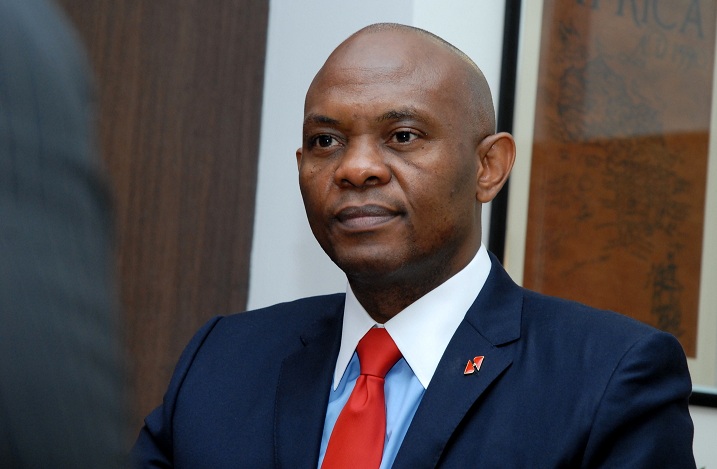
The setting was the graduation ceremony for United Bank for Africa’s Graduate Management Accelerated Programme (GMAP) 2026, an event built to celebrate 374 young professionals who had just completed the bank’s flagship training scheme. It should have been a straightforward photo-op day. Instead, one exchange between UBA Group Chairman Tony Elumelu and a female graduate has ended up dominating the news cycle, dragged into debates about respect, generational change, and what Nigerians have started calling “Oyinbo life.”
“Good Morning, Tony”
During an interactive session at the ceremony, the young trainee stood to greet the billionaire businessman. What came out was casual, familiar, and to a lot of viewers, completely unremarkable: “Good morning, Tony.”
Elumelu’s first reaction wasn’t a correction at all. He seemed to mishear her, or maybe just needed a second to process it. “Toyin? Toyin?” he asked, tilting his head. It’s the kind of pause that, on video, reads like genuine confusion.
She cleared it up. She had indeed said “Tony.” No mishearing involved.
That’s when the tone shifted, though not into anger. Elumelu’s response, calm and unhurried, has since been quoted across dozens of Nigerian outlets in slightly different phrasings, but the gist stayed consistent everywhere: no, she would not be calling him Tony. She could call him Mr Elumelu, or TOE, his long-used initials, or Chairman. Not Tony.
Then came the line that gave the story its life on social media. He explained that he doesn’t “subscribe to that kind of Oyinbo life”, a reference to what he sees as an imported, overly casual Western habit of addressing senior figures by first name, one he wasn’t interested in importing into his own bank.
The trainee adjusted immediately. She greeted him again, this time properly, “Good morning, Mr Elumelu,” and moved on to ask her question. By most accounts of people who were in the room, the whole thing lasted under a minute and nobody there seemed to think much of it. It was the clip, not the room, that turned it into a story.
Why a 60-Second Clip Became a National Conversation
The video hit X, Instagram, and WhatsApp groups within hours, and it split opinion almost immediately.
One camp sided firmly with Elumelu. To them, this was simply a 63-year-old billionaire, one of Africa’s most recognised businessmen, asserting a basic standard of workplace courtesy that plenty of young Nigerians have started to drop. Commentators pointed out that in Nigerian corporate culture, addressing a chairman by first name, unprompted, in public, has traditionally been seen as overstepping. Elumelu wasn’t inventing a rule; he was enforcing an old one.
The other camp pushed back. Some saw the correction as unnecessarily public, arguing that if a young graduate slipped up socially, a private word afterward would have done the job without turning her into a viral punchline. Others took issue with the framing itself, questioning why formality gets coded as “African values” and casualness gets coded as “Oyinbo,” when in truth plenty of Western boardrooms are just as rank-conscious as Nigerian ones.
Nigerian commentator Japheth Omojuwa, whose post on the incident picked up traction of its own, weighed in with a story about meeting a senior executive who insisted on being addressed by initials, and choosing to call him “Mr [Surname]” anyway. His point, echoed by many others online, boiled down to a simple piece of professional caution: when unsure how casual you’re allowed to be with someone senior, it costs nothing to default to formality.

Who Is Tony Elumelu, and Why Does the Title Matter So Much?
For anyone encountering the name for the first time through a meme, some context helps explain why this became such a big deal.
Elumelu isn’t just a bank chairman. He’s the founder of the Tony Elumelu Foundation, the philanthropic vehicle behind one of the largest entrepreneurship programmes on the continent, having funded thousands of young African business founders since it launched. He built his reputation partly on the philosophy he calls “Africapitalism,” the idea that private investment, properly directed, can do more for African development than aid ever has. He chairs Heirs Holdings and Transcorp Plc alongside UBA, and in 2020 Time magazine named him one of the world’s 100 most influential people.
He has also, in recent months, made headlines for reasons that have nothing to do with etiquette. His investment vehicle, Heirs Energies, took a controlling stake in Seplat Energy earlier this year, a deal that has reportedly delivered returns running into the hundreds of billions of naira as the share price climbed.
In other words, this is a man who has spent four decades building a very particular public image: rigorous, formal, deliberate. Watching him correct a junior staffer on a title, in that context, reads less like a random flash of ego and more like a man protecting the version of professional culture he has spent his career constructing.
The Bigger Question the Clip Raised
Strip away the virality, and what’s left is a conversation Nigerian workplaces have been having quietly for years: how much formality does hierarchy actually require, and who gets to decide when the rules bend?
Younger employees, raised on flatter, more Silicon-Valley-influenced ideas about workplace culture, often see first-name familiarity as a sign of approachability, not disrespect. Older executives, particularly in Nigeria’s more conservative banking and corporate sectors, tend to view titles as a small but meaningful marker of earned seniority. Elumelu’s response made clear which side of that line he stands on, and did it in front of a camera that made sure everyone else got to weigh in too.
Whether the trainee walked away from the encounter embarrassed or simply better informed, nobody outside that room can really say. What’s certain is that “TOE” now has a much wider audience than it did last week, and a fresh generation of UBA graduates has just been handed a lesson in office etiquette they’re unlikely to forget in a hurry.