Elections are often presented as contests between candidates, parties and political structures, but the Osun governorship election offered a different reminder: even the strongest political machinery can struggle when voters begin to interpret its actions through a narrative of pressure, interference and resistance.
The All Progressives Congress (APC) entered the election believing its principal task was to defeat Governor Ademola Adeleke. In the end, however, it had to contend with something more difficult: a growing perception that the incumbent was being pressured by forces larger than his administration.
The result was decisive. Adeleke, contesting under the Accord Party, polled 511,067 votes against the APC’s Bola Oyebamiji, who secured 444,815 votes. Adeleke won 19 of Osun’s 30 local government areas and secured a second term.
It would be easy to attribute the victory to Adeleke’s popularity, celebrity appeal, dancing or the influence of the Adeleke family. Those may have helped, but they do not adequately explain the result. The APC itself contributed to the political environment in which Adeleke became increasingly difficult to dislodge.
The party had formidable advantages: the backing of the federal government, a strong political structure, influential figures and a candidate it presented as experienced and technocratic. What it failed to do consistently was keep the election focused on Adeleke’s record.
The Economic and Financial Crimes Commission’s restriction of the Osun State Government accounts became one of the campaign’s defining controversies. The action came only days before the election, prompting Adeleke to accuse the commission of trying to weaken his administration, while the APC alleged financial misconduct and called for an investigation.
There may have been legal grounds for the EFCC’s action, but politics is rarely judged on legal grounds alone. The timing gave Adeleke an opportunity to portray himself as an incumbent under pressure from the Federal Government.
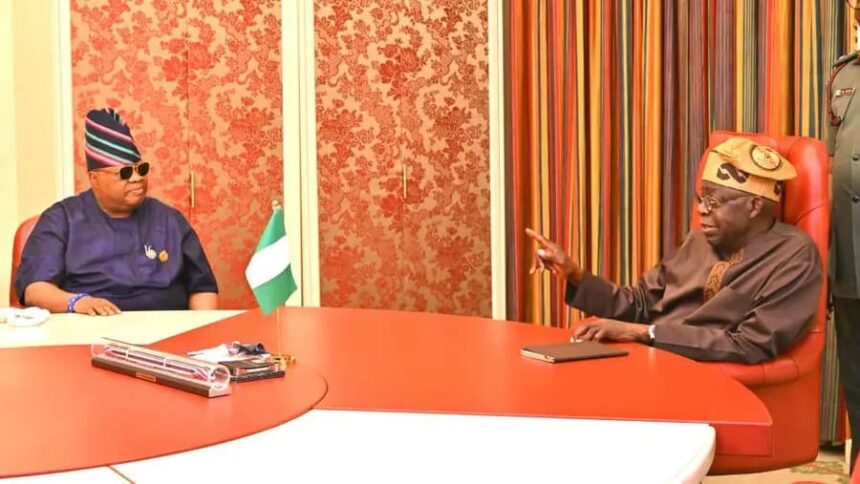
President Bola Tinubu’s subsequent decision to order the lifting of the restriction only complicated matters. It inevitably raised a political question: if the restriction was necessary, why was it reversed so close to the election, and if it was not necessary, why was it imposed?
Whatever the legal explanation, the political consequence was clear. Adeleke had been handed a narrative of resistance, and the APC struggled to take it away from him.
Religion provided another complication. Oyebamiji held meetings with Muslim clerics and organisations, some of which publicly endorsed him. There was nothing inherently wrong with seeking religious support, but Osun’s religious diversity made the development politically sensitive.
The campaign consequently became vulnerable to interpretations that had little to do with roads, schools, healthcare, employment or security. Once religious identity entered the political conversation, the APC had another issue to defend rather than one more reason for voters to examine Adeleke’s record.
The party’s argument for federal alignment also proved less effective than it might have expected. The promise of an APC governor working with an APC-led Federal Government had an obvious appeal, but it could also sound like an argument that Osun should support the party because Abuja controls the levers of power.
Adeleke had every reason to turn that around. The more the APC emphasised federal influence, the easier it became for him to frame the election as a choice between Osun’s political independence and Abuja’s reach.
Remarks attributed to prominent APC figures, including Senator Francis Fadahunsi, further added to the controversy, with opposition voices describing some statements as inflammatory or threatening. The PDP publicly condemned what it called “hurtful rhetorics”.
Whether every remark was fairly reported or interpreted is another matter. But campaigns are judged by public perception, and political statements can travel far beyond the setting in which they were made.
All of this produced perhaps the APC’s biggest strategic mistake: it allowed an incumbent to campaign like an underdog.
A governor seeking re-election should ordinarily be defending his record. The opposition should be asking whether he has delivered enough to deserve another term. Adeleke had vulnerabilities that the APC could have exploited, including controversies surrounding his administration and his decision to leave the PDP and contest under the Accord Party.
Instead, the election gradually became less about those issues and more about the APC.
The party could have made the contest a simple referendum on Adeleke’s stewardship of Osun. It could have asked voters what had changed under his administration, whether employment and security had improved, the condition of schools and hospitals, the state of its finances and how much of his promises had been fulfilled.
It did not sustain that argument strongly enough.
By election day, Adeleke had become more than an incumbent seeking another term. He had become the candidate presenting himself as a defender of Osun against political pressure from the centre.
That distinction matters because elections are not won by political machinery alone. They are also won by the story voters believe about what is happening around them.
The APC’s experience in Osun should therefore matter beyond the immediate defeat, particularly as the country approaches 2027. President Tinubu’s political influence is considerable, but Osun demonstrated that it is not unlimited.
Federal backing does not automatically become electoral support. A presidential endorsement does not become a voter’s obligation. Political structures can organise rallies and mobilise supporters, but they cannot determine how citizens mark their ballots.
Osun voters showed that they could distinguish between the president and his party’s candidate. They could recognise the power of the Federal Government and still reject its preferred candidate for governor.
The APC’s more important question, therefore, is not simply how Adeleke defeated Oyebamiji. It is why voters were prepared to reject a party that entered the election with so many advantages.
Adeleke won by 66,252 votes. That is too substantial a margin to dismiss as the product of dancing, celebrity or family name. It was a political verdict.
The verdict also carries a warning for Adeleke.
The sympathy that helped an incumbent present himself as an underdog cannot govern Osun. The voters who rejected the APC will eventually judge Adeleke by his own record — by infrastructure, healthcare, security, employment, education and accountable government.
If he fails, the same electorate will have no obligation to preserve him because it once rejected his opponent.
For now, however, Osun has delivered a message that the APC, and perhaps the wider political establishment, should not ignore: presidential influence can shape an election, political machinery can strengthen a campaign and federal power can open doors, but none of them can guarantee what happens inside the polling booth.
In Osun, the voter had the final word, and that is where Tinubu’s influence, powerful as it may be, meets its ceiling.
Abdulsalam Abdullah is a Nigerian journalist.
The opinions expressed by contributors are their own and do not necessarily reflect the views of WITHIN NIGERIA.