Many Nigerians are, at best, genuinely baffled and, at worst, unsettled by what they believe is the governor’s needless and worrisome veneration of the president after his victory, wondering if such brazen and explicit deference does not undermine and call into question his victory
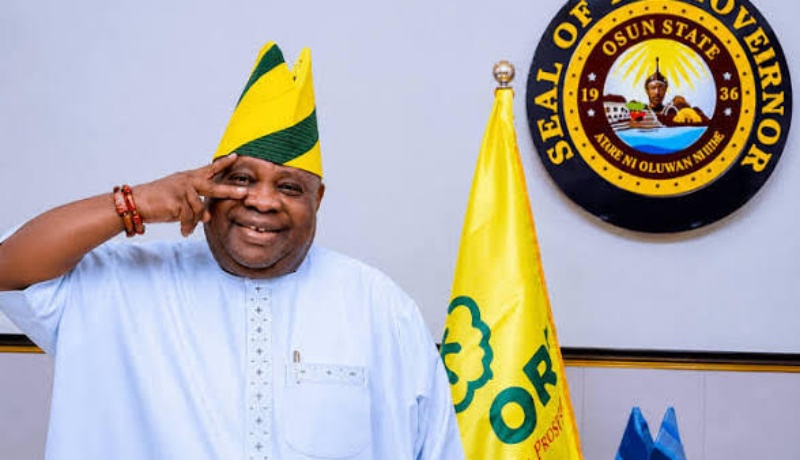
The highly anticipated, tense and frenetic Osun State gubernatorial election has come and gone with the incumbent governor, Ademola Adeleke, emerging victorious. Despite the blood-chilling violence, killings and chaos, the election has been dubbed by some observers as a win for the nation’s democracy, which has ostensibly come under relentless assault by some nefarious actors who seek to turn their unsettling disposition and creed into normal and acceptable socio-political conventions.
If the slew of troubling events in the state during the electioneering period, which left many distressed and enraged, characterised the build-up to the gubernatorial election, the governor’s public utterances after his victory have overshadowed the aftermath. After the Independent National Electoral Commission (INEC) declared him winner, the governor did not waste time in obsequiously praising the president for his victory, paying scant regard to the ordinary residents of the state who stood against the sheer force and intimidation of the All Progressives Congress (APC), put their lives on the line, some losing theirs in the process, to ensure that he won the election.
He reiterated his support for Tinubu’s second term and vowed to rally and galvanise the support of Osun people for his victory in next year’s presidential election. The fawning and genuflection of Adeleke before the president is not necessitated by his victory at the poll; it is a behaviour that has been on for a while, long before the governorship election. What many, however, find disconcerting and patently absurd is the excessive adulation of the president after the election and largely attributing his victory to him. For many, Adeleke’s victory was despite Tinubu and not because of him.
Many top APC members, especially those holding public office, have latched onto the governor’s statement and presented it as evidence of Tinubu’s government’s benevolence, magnanimity and grace to let Adeleke win instead of forcefully taking the state because they are sure the governor will reciprocate the gesture during next year’s general elections by going all out for the president. This is perfectly captured by the cheeky but loaded reaction of the Minister of Aviation, Festus Keyamo, to Adeleke’s attribution of his victory to Tinubu, in which he wrote: “agreement is agreement”. This framing undermines the efforts of the people of Osun, who did everything to ensure their will was not subverted, and also portrays the APC as an invincible political force that cannot be defeated at the polls and will always win any election unless it decides to gift the opposition a victory whenever it feels like it.
Many Nigerians are at best genuinely baffled and at worst unsettled by what they believe is the governor’s unworthy and worrisome veneration of the president after his victory, wondering if such brazen and explicit deference does not undermine and call into question his victory. Some believe Adeleke’s praise of Tinubu is not entirely out of place given the nature of Nigeria’s election and judiciary system. In Nigeria, particularly since the APC came to power, the odds are heavily stacked against opposition during elections, and they have to go above and beyond and do way more than the ruling party if they are to stand a chance at the polls. And if an opposition wins an election, that is the first hurdle in what could be a long, draining and expensive election petition to overturn their victory in court, which happens often.
The cynics believe the governor does not necessarily mean everything he said, and he is merely trying to massage the ego of the president, ingratiate himself with him to stave off any potential threat to his hard-earned victory, and the best way to do that is to loudly and publicly pledge his unalloyed loyalty and commitment to Tinubu’s re-election in Tinubu. They believe Adeleke’s remarks are nothing more than perfunctory political statements aimed at appeasing Tinubu to avert any disturbance and distraction that could make the state ungovernable for him if he finds himself outside Tinubu’s good graces.
The worry for many here is that, while Adeleke has the right to support whoever he wants, his obsequiousness and deference to Tinubu does more harm to our democracy than good; that is, if it does any good at all. Our politics is already replete with uninspiring, pliant, spineless and pusillanimous character who stands for nothing but their stomach; having a governor morph into a similar personality does not bode well for the state as a whole. Such behaviour reeks of sycophancy and a lack of an independent mind.
A system where a sitting governor feels he owes his victory at the polls not to the people who elected him into office but to a president whose performance has been abysmal, and whom he lacks the courage and temerity to call out and tell how terrible his administration is, is not the type that we can build a nation that the citizens can be proud of. If everyone, including sitting governors, has to kowtow, show fealty, and if everyone must bend, flatter or risk unimaginable consequences. What we have is a civilian dictatorship and not an elected president. And that is a miserable way to run a country.
Even if Governor Adeleke’s unflinching support for Tinubu is a show of real fealty, it remains to be seen how he planned to market an utterly unpopular candidate like Tinubu to the residents of the state who have been impoverished and brutally scared by his neoliberal economic policies. Just as the people spoke with their votes and made their voices heard by electing for a second term in office despite all the hurdles and obstacles in their path, the people will also decide if President Tinubu deserves a second term.