Since his foray into governance and public administration more than three decades ago, President Bola Tinubu’s life has been overshadowed by conflict narratives, conspiracy theories and scandalous disclosures about his past. Every election cycle, he has had to confront questions about his past and antecedents, ranging from the authenticity of his familial provenance and academic qualifications to work history and source of wealth.
Of all the scandals and controversies that have dogged him, only one has proven far more damning and damaging to him, particularly as a president, partly because he has not been able to use the influence and power he has at home to dictate events and bend realities to his will on the matter because there is an external actor involved. This matter has to do with his time in Chicago, United States, in the 70s and 80s, and it involves his alleged involvement in drug trafficking.
During the 2023 presidential election campaign, the electioneering was dominated by allegations against the president, Tinubu, who was the presidential candidate of the All Progressives Congress at the time, of drug trafficking during his time in the United States. He reportedly forfeited over $400,000 in drug-related proceedings to escape prosecution. After the election, the legal push was initiated by investigative journalist David Hundeyin to get authorities, particularly the Federal Bureau of Investigation (FBI), the Department of Justice and the Drug Enforcement Agency (DEA) in the United States, to release the record of Tinubu, but the request has been stonewalled.
As we head into the 2027 presidential election, the matter of his alleged drug trafficking record has come to the fore again and is at the front burner of public discourse. Von Batten-Montague-York L.L.C, a lobbying firm based in Washington, D.C, is leading the drive and campaign for the public disclosure of Tinubu’s record with the FBI. The firm is said to have been contracted by former vice president, Atiku Abubakar, who is also the presidential candidate of the African Democratic Congress (ADC).
The firm in recent weeks has been informing the public on the progress it has made in getting the United States government to release President Tinubu’s record.
We cannot release Tinubu’s record – FBI
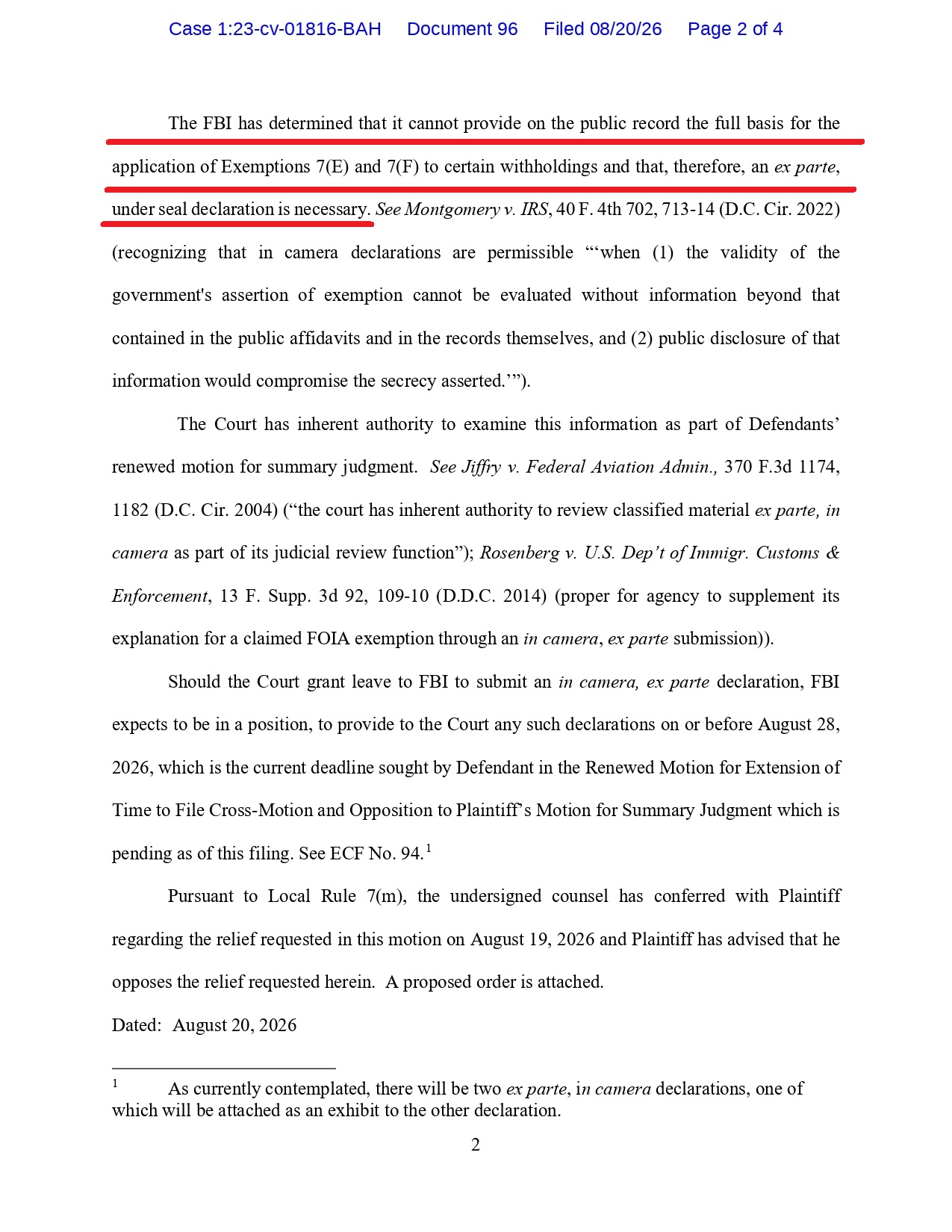
On Thursday, the firm published a court document in which the FBI requested private disclosure of files relating to Tinubu’s narcotic trafficking allegations to the court. According to the court document, the FBI stated under oath that it “cannot publicly reveal why it cannot release these files” and it can only tell the judge why via sealed oath.
The firm wrote: “Update: We just received the attached new court records, which explain why the FBI is asking Judge Beryl Howell for permission to privately provide her with highly sensitive information concerning FBI files related to the DOJ heroin-trafficking allegations involving Nigerian President Bola Tinubu. It seems Tinubu is afraid for his life.
“The main FBI claim is that disclosure “could reasonably be expected to endanger the life or physical safety of any individual.” We can only surmise from this that Nigerian President Bola Tinubu (@officialABAT) is now telling the #FBI that his life would be in danger if the files are released. Nigerians, this is the man asking you to re-elect him next year. More to come.”
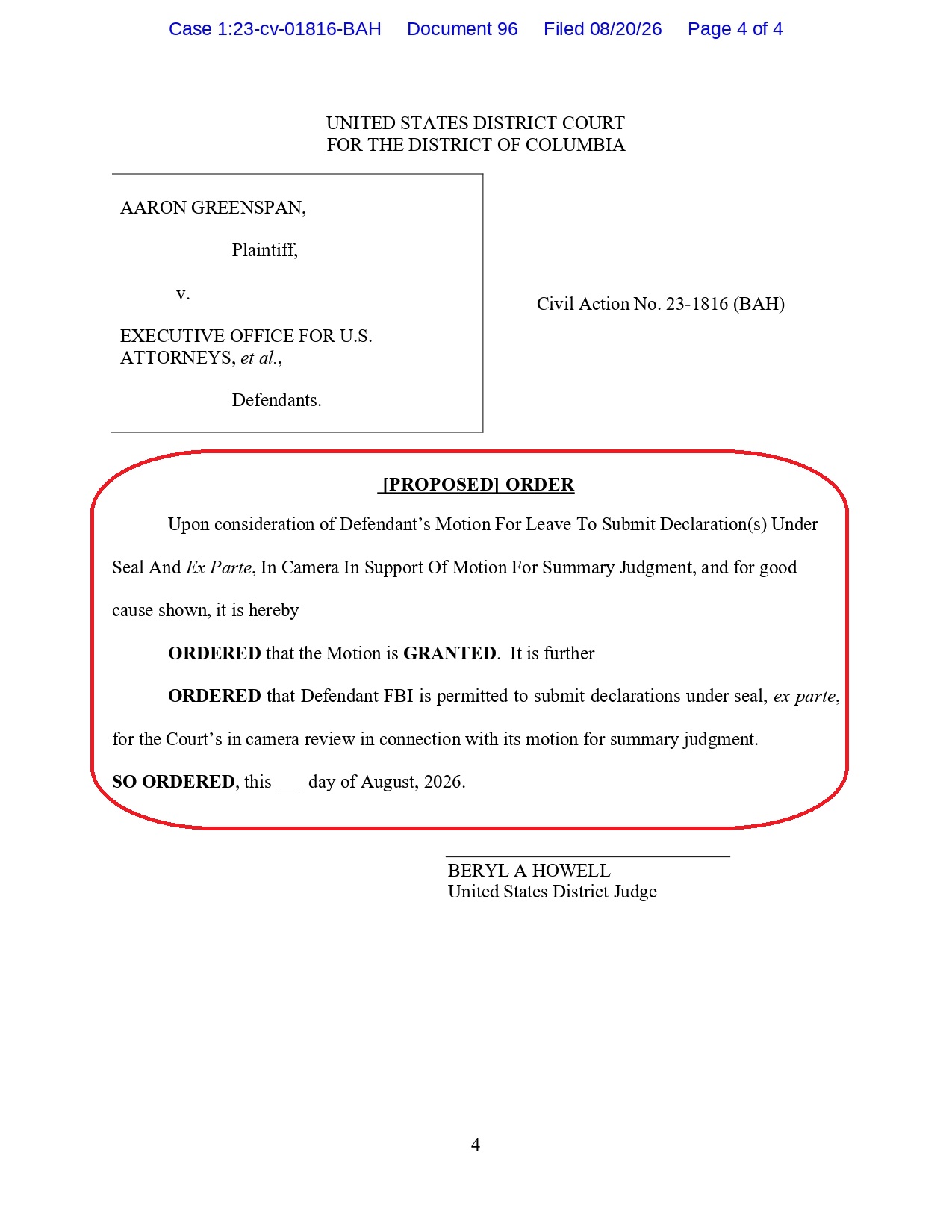

On Friday, Judge Beryl Howell granted the request of the FBI for private release of Tinubu’s alleged drug trafficking record to the court. According to a post on the firm’s X page, any government agency, establishment and individual who is opposed to the release of the files has until August 28 to contest the release of the files and explain why it should stay secret.
“We have now been informed that @uscourts Judge Howell this morning granted the @FBI permission to provide the court with the documents in private and has given the @FBI, @DEAHQ, @TheJusticeDept, and Nigerian President Bola Tinubu (@officialABAT) until August 28, 2026 (“and no later”), to file their opposition to the release of Tinubu’s alleged drug-trafficking records. I stress the judge’s “no later” comment because the court has reached its limit and is making it clear that the FBI must now convince the court why the documents are too sensitive to be released,” the firm disclosed in an update on the matter on Saturday.
It noted that the request by the FBI to privately release the files that indicted Tinubu in drug trafficking is an indication that Tinubu likely sold out his fellow drug traffickers to evade trial and prosecution, and the agency is trying to protect a criminal asset and informant. It noted that the FBI admission of having highly sensitive information linking Tinubu to alleged drug dealings also showed that Tinubu’s claim that the case was simply about civil forfeiture is false.
“The FBI does not deem civil cases highly sensitive and seeks to present the evidence to the judge in private. This is usually done in high-level drug cases where the goal is to protect the agency’s dealings with the criminal informant. This ties into the allegation that President #Tinubu ratted out his alleged co-drug traffickers in exchange for immunity from prosecution.
“The FBI admitting in court that it has sensitive information on President #Tinubu and requiring the court to review the documents privately before any court order ordering their release is given aligns with what our friend in the Trump Administration has told us: We will follow the law, but we do not protect drug traffickers. The FBI is following standard procedures for protecting informants, but is also openly communicating that President Tinubu’s claim of innocence is far from the truth. We thank President Trump and the White House senior staff for moving this case forward after three years of stalling and for being fully transparent, unlike the Biden DOJ, which did not acknowledge it had sensitive information on Tinubu,” it said.