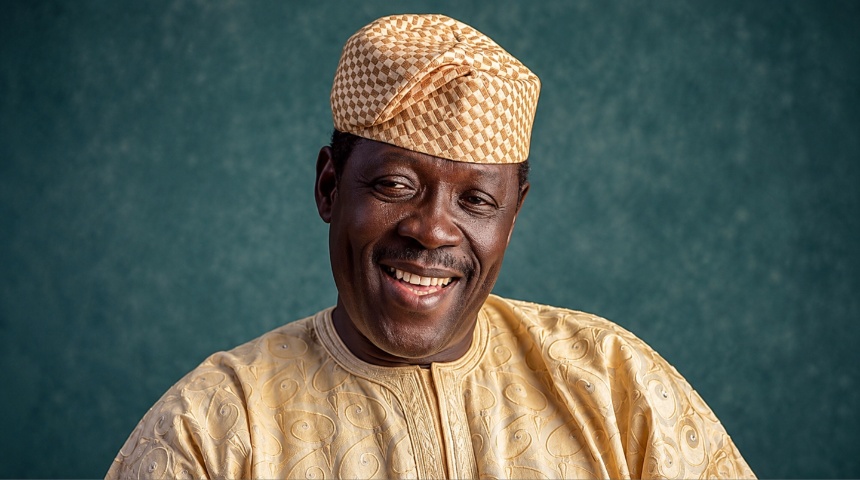
Taiwo Hassan, who was widely known as Ogogo, was one of the most well-known figures in Nigeria’s Yoruba-language film sector. Over a period of more than forty years he was active in theatre, film production, television and cinema and earned a reputation which extended well beyond the roles he performed on screen. It is therefore a significant loss to Nollywood that he died on Sunday, August 23, 2026, at the age of 66, especially since the Yoruba film community saw him as one of its lasting pillars. The illness, which was advanced cancer, led to a difficult time during which members of his family called for immediate medical help.
- Who was Taiwo Hassan Ogogo?
- How Taiwo Hassan Started His Acting Career
- What was the reason for Taiwo Hassan being called Ogogo?
- Taiwo Hassan’s Rise in Yoruba Nollywood
- Taiwo Hassan and Aníkúlápó
- Taiwo Hassan’s Family and Children
- Taiwo Hassan’s Personal Life
- Taiwo Hassan’s Health Battle
- When did Taiwo Hassan die?
- What caused the death of Taiwo Hassan?
- Taiwo Hassan’s Burial Arrangements
- Tributes to Taiwo Hassan
- Ogogo’s Legacy in Yoruba Cinema
Before he became a well-known figure, he had a job as an automobile mechanic and then spent several years with the Lagos State Water Corporation while at the same time pursuing a career in acting. He finally quit his government post in 1994 in order to devote himself entirely to the entertainment industry, and that decision was transformative since the Nigerian film industry was at that time going through a period of rapid change.
Who was Taiwo Hassan Ogogo?
Taiwo Hassan was born in Ilaro, in Ogun State, on October 31, 1959, and became one of the most respected actors in the field of Yoruba cinema.
For many people in Nigeria, however, the name Ogogo was more well-known than Taiwo Hassan. The nickname became part and parcel of his public image and his work in films, and eventually turned into almost a brand in itself. Because of his imposing physical appearance, his unique voice, and his skill in playing characters who are involved in family disputes, traditional institutions, crime, positions of authority and social struggles, he was immediately recognised. In an industry in which actors usually end up being associated with specific roles, Ogogo achieved something greater: he became linked with an entire era in Yoruba cinema.
Taiwo Hassan’s Early Life and Birth
Hassan had strong ties to Ilaro in Ogun State and it always stayed a significant aspect of his identity. The experiences from his childhood contributed to the cultural background which later appeared in his acting, especially in relation to the Yoruba language, customs, praise poetry and traditional storytelling. According to the Guardian, he was born into a family which had links to the traditional masquerade culture and picked up some of the Yoruba praise phrases, or oriki, from that environment.
His path in terms of education and career was also unlike the usual way of getting into the entertainment industry. He first studied Automobile Engineering at the Federal Technical College, Akoka, in Yaba, Lagos, before entering the job market. This technical background is an interesting aspect of his life since the man who was later celebrated by Nigerians as a veteran actor had initially been trained for a completely different job. His case therefore shows how a career can develop when a person’s talent and passion lead them in a different direction.
From Automobile Mechanic to Actor
Before acting became his main job, Taiwo Hassan was employed as an automobile mechanic and afterwards joined the Lagos State Water Corporation. According to the Guardian, he worked for the corporation for approximately 13 years during which time he acquired an interest and some experience in acting. Instead of suddenly giving up one career to take up another, Hassan managed to combine his employment with his increasing passion for theatre.
When looking at his eventual success, that period is especially significant. Ogogo’s rise to fame was not something that happened suddenly; he had to learn his trade, perform in front of audiences, work alongside experienced theatre professionals and slowly build up his reputation. The fact that his path led from being a mechanic and a government employee to becoming a well-known actor also included a quality which struck a chord with many Nigerians—that talent can arise from unexpected sources if discipline and perseverance come together with opportunity.
How Taiwo Hassan Started His Acting Career
Taiwo Hassan’s career in acting started in 1981, the year when he was still engaged in his other activities. Although he began his acting career in the theatre rather than in the kind of celebrity-oriented atmosphere that is characteristic of Nollywood nowadays, his very first role on stage was said to be that of Akiigbe, an ewi chanter, in a play at the National Museum in Onikan, Lagos. This role provided him with the chance to show off the performance skills which had up to then remained mostly unexplored.
It is impossible to overestimate the role of theatre in Ogogo’s development. Back then, actors had to master voice projection, movement, timing, characterisation and engaging the audience without relying on the technological advantages that are available to film actors today. The theatrical experience that Hassan had in his early years laid the foundation for the strong on-screen presence which later became one of his notable features. He did not merely appear before a camera; rather, he came from a tradition of performance in which actors were required to hold an audience’s attention by means of their skills and personal qualities.
His First Stage Performance
The production of the play at the National Museum marked a significant turning point. Although Hassan had already shown an interest in acting, it was the performance that enabled him to go from having a personal desire to express himself in a public way. The fact that he played the role of an ewi performer was especially suitable considering his background and his knowledge of Yoruba cultural expression.
Leaving the Lagos State Water Corporation
By 1994 Hassan had come to a stage where acting required his full attention and so he gave up his job with the Lagos State Water Corporation to concentrate on the entertainment industry. The fact that this happened was important since Nigeria’s home-video industry was at a stage where it was beginning to change the way films were produced, distributed and consumed.
It would have taken a great deal of confidence to leave a secure government job for a career in acting. However, Hassan’s choice did eventually prove worthwhile. He became one of the leading figures in the Yoruba film movement and built up a body of work that secured for him the status of a veteran rather than merely that of a popular actor.
What was the reason for Taiwo Hassan being called Ogogo?
Because the name Ogogo was linked so closely with Taiwo Hassan, many Nigerians knew the nickname before they knew his given name; it became his professional identity and was frequently used by fans, colleagues and the media. As time went on, the moment someone said “Ogogo” they would immediately think of the experienced Yoruba actor and the particular way of performing for which he was known.
Taiwo Hassan’s Rise in Yoruba Nollywood
Taiwo Hassan became one of the key figures in Nollywood’s Yoruba-language sector, an industry that has its own traditions, well-known stars, audience base and methods of storytelling. Part of his popularity stemmed from his ability to portray strong, authoritative and at times complex characters; whenever he played the role of a traditional ruler, a father, an antagonist or any other major character, he gave his performances a physical and emotional intensity that made them memorable.
Notable Films and Productions
Ogogo took part in a great many films, such as Owo Blow, Agbelebu, Omo Ghetto, Omin, Tenant of the House, Bank Alert and Aníkúlápó, which shows that the variety of his career did not limit itself to a single type of Nigerian film.
To older viewers he was a well-known figure from the earlier days of the traditional Yoruba movie industry, while for younger viewers his later appearances gave them a chance to become acquainted with a seasoned performer whose career had come before their own engagement with Nigerian cinema. This ability to span generations is one of the best indications of his influence.
Ogogo’s Work as Producer and Director
To call Taiwo Hassan merely an actor would overlook a significant aspect of his contributions; he also served as a producer, director, and screenwriter, which enabled him to take part in the storytelling process beyond just acting. This wider involvement meant that his influence reached the creative decisions made regarding the productions as well as the performances that the audience eventually saw on screen.
It is important to make this distinction since the fact that someone is successful at screen acting does not mean that they have expertise in filmmaking. The fact that Ogogo was able to work in a number of different fields showed that he had an understanding of the entertainment business as a whole ecosystem.
Taiwo Hassan and Aníkúlápó
A later highlight of Taiwo Hassan’s career was his involvement in Kunle Afolayan’s film Aníkúlápó. Through this Netflix movie, Ogogo’s work was made known to a new generation of viewers and he was cast among a younger group which featured Kunle Remi, Bimbo Ademoye, Sola Sobowale and other well-known actors. According to the Guardian, the role he played as Alaafin Ademuyiwa secured him a nomination for Best Supporting Actor at the 2023 Africa Magic Viewers’ Choice Awards.
The importance of Aníkúlápó extended well beyond just one film credit, since it showed that an experienced actor could still stay relevant in an industry that is increasingly influenced by streaming services and global audiences. Ogogo was not merely a star from the traditional Yoruba home-video period; his participation in a major streaming production enabled international viewers to see his work. In this respect, Aníkúlápó represented another chapter in a career that had time and again adjusted to changes in the Nigerian entertainment sector.
Taiwo Hassan’s Family and Children
Family played an important role in Taiwo Hassan’s public narrative, especially in the last phase of his life. It was his daughters, Lima Taiwo and Kira Taiwo, who became the voices available to the Nigerian public so that they could become aware of the seriousness of his health situation in August 2026. The emotional appeals for medical help that they made drew the private family difficulties into the open and caused an immense reaction from fans, colleagues and well-wishers.
He also gave public statements at various times on the subject of fatherhood and on parental responsibility. According to the Guardian, Hassan had clear opinions regarding the duties that fathers have towards their children; his family thus stayed a part of his public image, even though he usually kept his professional celebrity separate from his private family life.
Taiwo Hassan’s Personal Life
People were interested in Ogogo’s private life in part due to the length of his career and his position as one of the major film stars of Yoruba origin. There have been various reports regarding his family life, but the most significant recent public information came from his daughters when he was ill; the statements they made revealed a family which was coping with a very painful experience at the same time as it tried to deal with the huge amount of attention that resulted from his diagnosis.
Taiwo Hassan’s Health Battle
In August 2026 the last chapter of Taiwo Hassan’s life developed quickly. His daughters made it public that he was suffering from stage-four cancer and called for immediate medical help. Lima and Kira Taiwo stated that the family had only very recently become fully aware of the seriousness of his illness and had therefore asked for access to specialists and facilities which might be of any assistance to him.
The incident caused great public concern since it suddenly came to light for a large number of fans. When the family made their appeal it was primarily aimed at obtaining medical help rather than asking for donations. During the same time, the medical commentary concerning the case highlighted the fact that advanced cancer treatment can involve making difficult decisions, such as moving from chemotherapy or other treatment directed at the disease to palliative care when it is appropriate.
Family’s Emotional Appeal for Medical Help
On August 17 and 18 the actor’s daughters made moving appeals on social media. They requested that medical practitioners, hospitals and anyone with access to specialised cancer treatment should help them to find possible options. The appeals received replies from celebrities, public figures, medical professionals and other members of the general public.
It is reported that the response was so great that the experienced actor Jide Kosoko stated that hundreds of people had provided help. The problem, though, was deciding which of the offers were medically sound and how to arrange the assistance without unnecessarily transferring the very ill patient from his hospital.
When did Taiwo Hassan die?
Taiwo Hassan Ogogo passed away on Sunday, 23 August 2026, when he was 66 years old. The veteran actor Jide Kosoko stated that Hassan died about 3:00 p.m. on that Sunday. The family also confirmed his death, Kira Taiwo being one of them, following a previous false report which had been spread online a few days earlier.
The fact that the death occurred so soon after Nigerians had come to support the actor in response to his family’s appeal for medical assistance was especially touching. On August 18 his daughter Lima had firmly rejected the viral claim that he had already died, referring to the report as fake. Five days later the news was sadly confirmed.
What caused the death of Taiwo Hassan?
Taiwo Hassan died as a result of his struggle with cancer, it being reported that his illness had reached its fourth stage; his daughters had made known the serious nature of the disease a short time before his death and stated that the medical team looking after him was no longer able to give him chemotherapy.
It is necessary to differentiate between established information and the speculation concerning the last days of his illness. A medical professional has cast doubt on the idea that hospitals had merely ‘refused’ to treat him, pointing out that when disease-directed therapies are no longer suitable, advanced cancer patients can be transferred to palliative care. Yet that explanation does not reduce the family’s anguish; on the contrary, it offers a reason for why treatment decisions can become especially difficult in later stages of illness.
Taiwo Hassan’s Burial Arrangements
After he died, plans were put in place to have Hassan go back to his home town of Ilaro in Ogun State, where he was to be buried in accordance with Islamic rites on Monday, 24 August 2026. Jide Kosoko stated that a laying-in-state ceremony would be held at the Pavilion in Ilaro at 11 a.m.
The burial has symbolic significance since Ilaro was not only the place of Hassan’s birth but also a part of his identity throughout his career. Officials from Ogun State referred to him as a significant cultural ambassador who had helped promote the Yoruba language, traditions and values via theatre, television and film.
Tributes to Taiwo Hassan
Tributes came from all over Nollywood after it was announced that Ogogo had died. Several actors, such as Odunlade Adekola, Femi Adebayo, Saidi Balogun and Bolanle Ninalowo, paid public homage to the veteran, calling him a legend and a significant figure in Yoruba cinema. The Ogun State authorities also voiced their sorrow at his death, and the entertainment industry took time to reflect on his many decades of contribution.
The extent of his influence is shown by the way the tributes described him. Younger actors who had acted alongside him regarded him as a pioneer, whereas those of his own generation considered him to be one of the performers who had helped keep Yoruba cinema alive over several generations. The expression “pillar of Yoruba cinema” was used many times since his career showed continuity—he had been part of the traditional theatre world yet was still present in modern film.
Ogogo’s Legacy in Yoruba Cinema
The most significant contribution of Taiwo Hassan might be the fact that he never became confined to a single period. Starting in the early 1980s, he worked in theatre and on traditional Yoruba productions, moved into the home-video era, became a producer and director, and later took part in a major streaming production like Aníkúlápó. It is rare for a career to show so clearly the changes that have taken place in Nigerian entertainment over four decades.
His contribution also relates to cultural representation, since Yoruba cinema has for a long time been more than just a source of entertainment; it has passed on to audiences in Nigeria and elsewhere language, names, traditions, proverbs, family structures, historical memory and social values. Through his work Ogogo helped ensure that these elements remained visible on screen as the industry has changed. It is therefore not only the death of an actor that is significant, but also the end of another chapter in the history of Nigerian popular culture.
For audiences who grew up watching Yoruba films, Ogogo’s face will remain attached to countless memories. For younger viewers who discovered him through films such as Aníkúlápó, his work provides a connection to an earlier generation of performers.