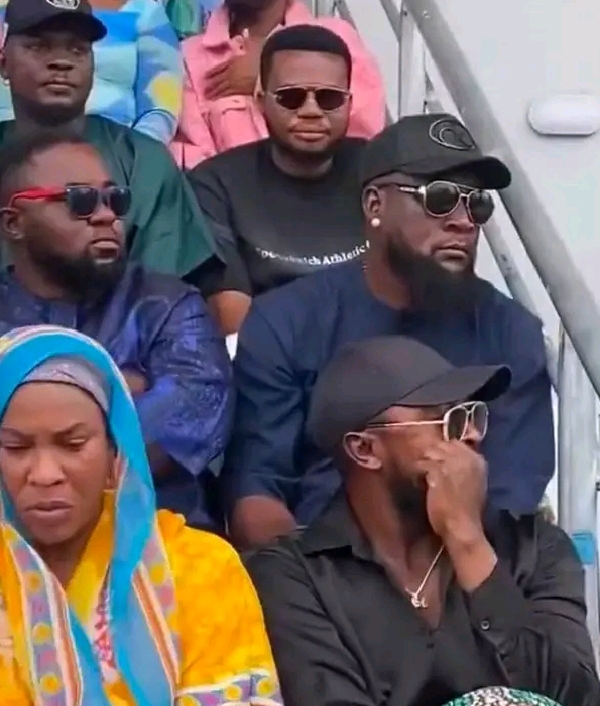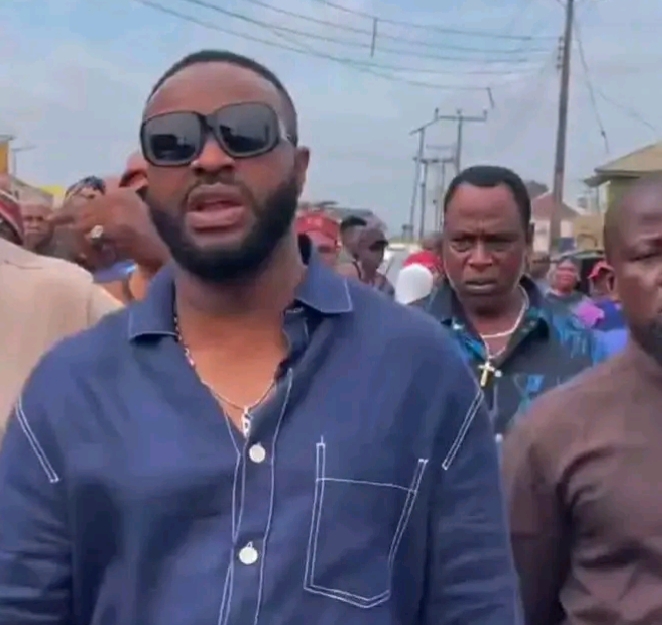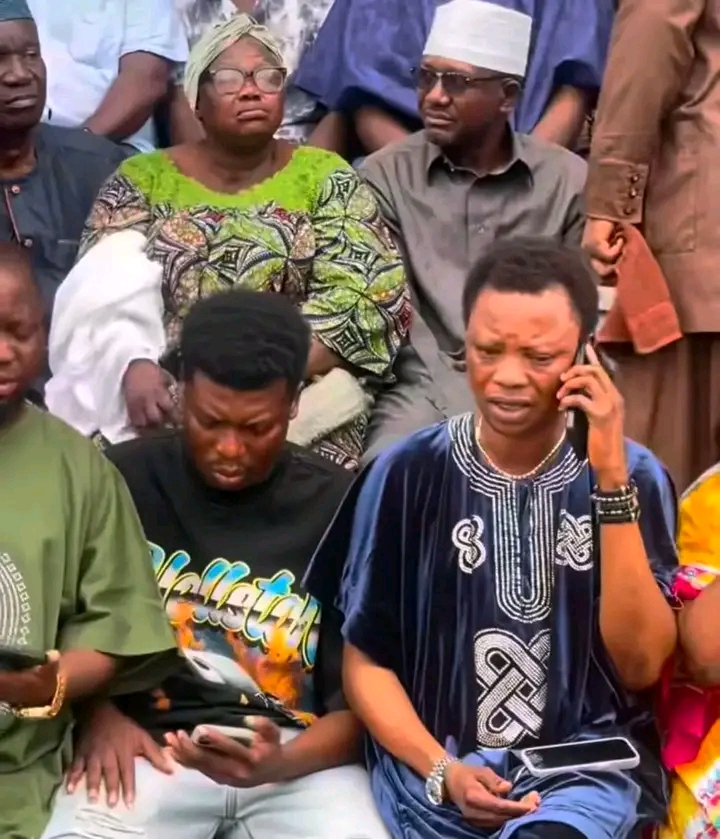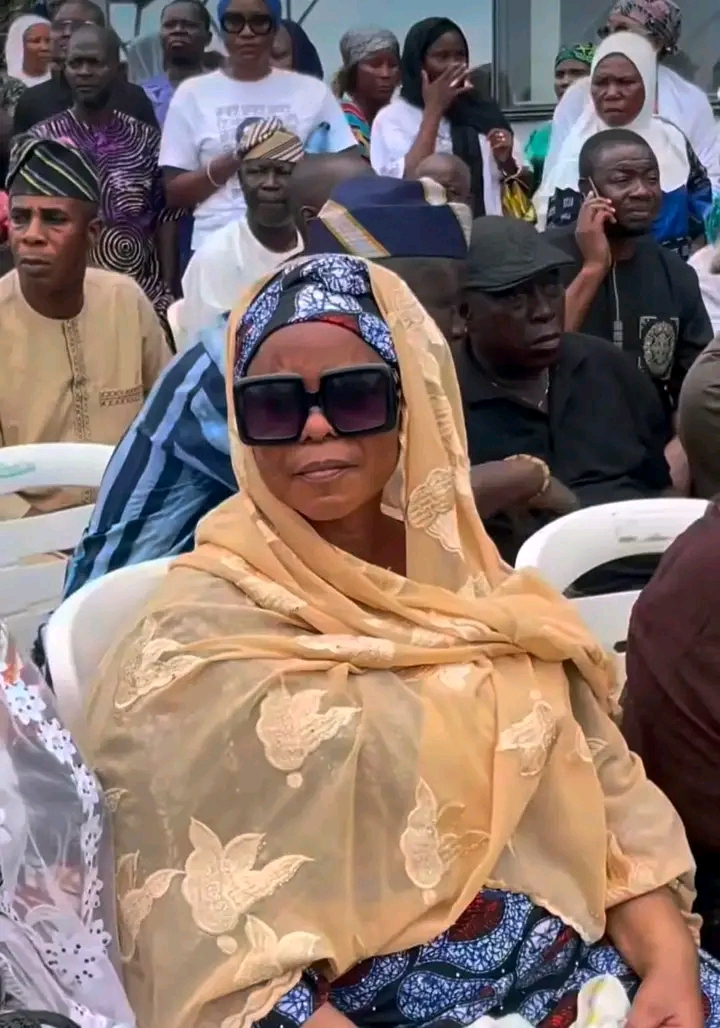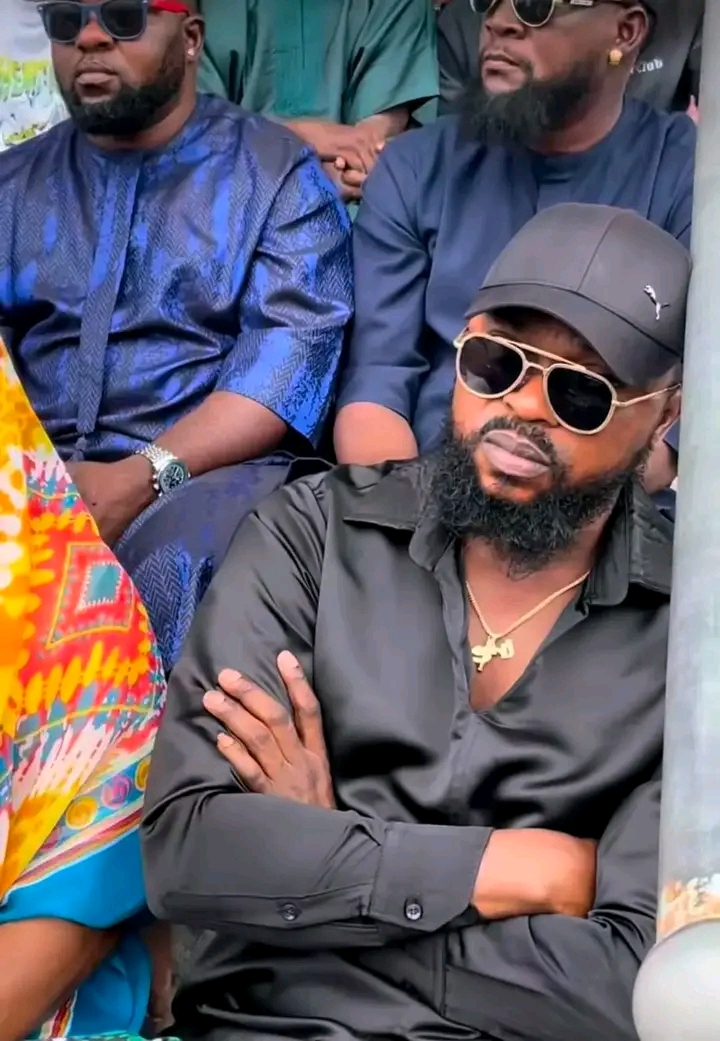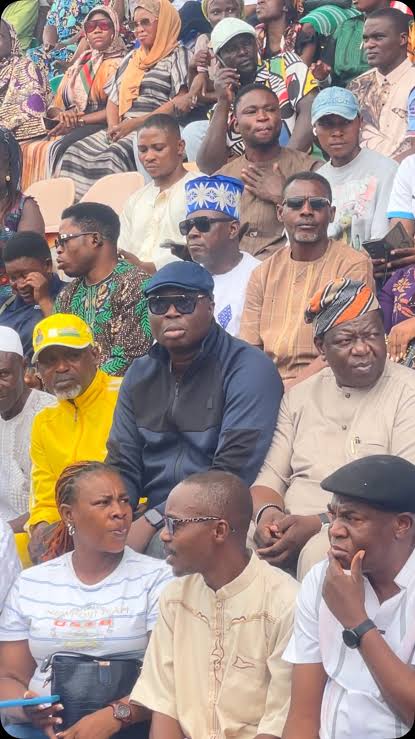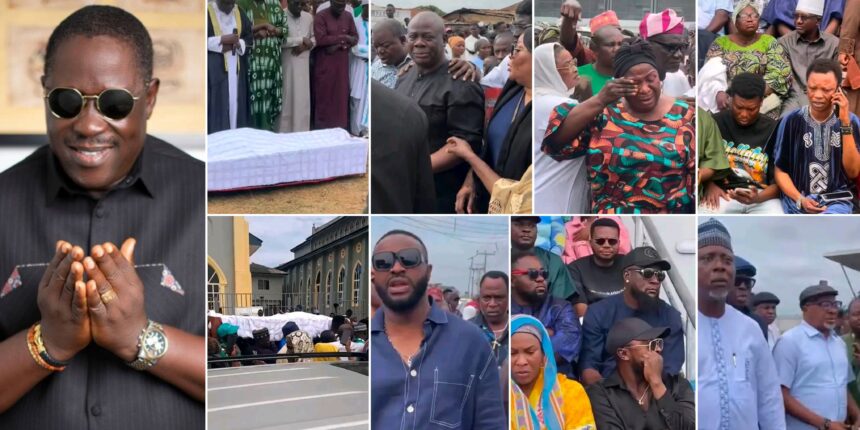
The road back to Ilaro carried more than the remains of a celebrated actor on Monday, August 24, 2026, it carried the weight of a career that had stretched across generations, friendships that had survived decades in the Yoruba film industry and the memories of a man whose face became familiar to millions of Nigerians long before the latest chapter of his life arrived. Across the quiet hometown where Taiwo Hassan, popularly known as Ogogo, was born and raised, family members, friends, residents and colleagues gathered for a farewell that quickly became bigger than a private funeral, with familiar faces from the entertainment world making their way to Ilaro to honour one of Yoruba cinema’s enduring figures.
The morning carried a mixture of grief, disbelief and deep respect, while the simplicity of the Islamic burial rites stood beside the remarkable story of a performer whose journey had taken him from automobile mechanics into theatre, film production, directing, screenwriting and acting, creating a career that would eventually make his name inseparable from Yoruba entertainment. By the time the final rites began, the significance of the gathering was already clear, Ogogo had returned to the place where his story began, surrounded by people who had shared different chapters of his extraordinary journey.
Ogogo’s Return To Ilaro
Taiwo Hassan died on Sunday, August 23, 2026, at the age of 66, bringing an abrupt end to a career that had remained closely connected to Yoruba theatre and Nollywood for more than 4 decades. His death was confirmed by his daughter, Kira Taiwo, during an emotional Instagram Live session, after reports had emerged about his deteriorating health. The news travelled quickly across Nigeria, with actors, filmmakers, fans and colleagues mourning a performer who had remained active and recognisable across generations. By Monday morning, the attention had moved from the shock of his death to Ilaro, Ogun State, where arrangements were already underway for his final journey.

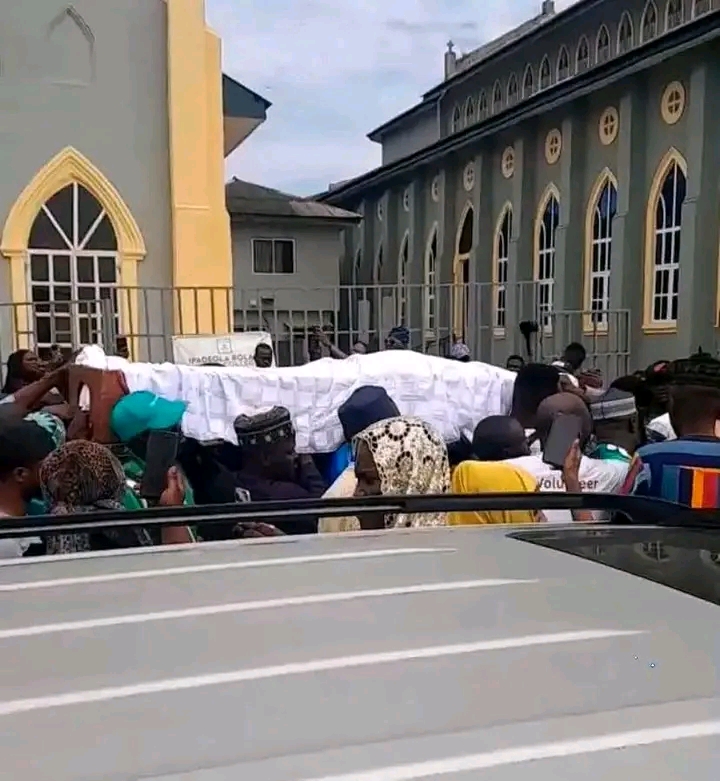
His remains were taken from Lagos to Ilaro, his hometown in Yewa South Local Government Area of Ogun State, for the burial rites. The decision to return him to Ilaro gave the funeral a deeply personal dimension because the town was not simply the location chosen for his burial, it was the community connected to his birth, childhood and identity. Ogogo was born in Ilaro on October 31, 1959, meaning that the same town that witnessed the beginning of his life became the setting for his final farewell. Family members, friends and residents gathered as his remains arrived, while members of the Yoruba entertainment community began making their way into the town.
The atmosphere surrounding the gathering reflected the suddenness of the loss, particularly because news of Ogogo’s death had emerged just a day earlier. There was little time for the extended period of preparation often associated with celebrity funerals, with Islamic burial practice requiring the deceased to be buried promptly. That timetable meant that colleagues who had spent Sunday processing the news were travelling to Ilaro on Monday to pay their respects. The result was a funeral that felt immediate and deeply personal, with mourners moving from disbelief into the solemnity of the burial rites within hours.
The Morning Burial Rites
The burial programme announced by veteran actor Jide Kosoko placed the funeral prayer in Ilaro on Monday morning, August 24, 2026. Reports surrounding the programme referenced the Asade Agunloye Pavilion Ground as the location for the prayer, with different announcements circulating around the timing of the wider gathering. The morning therefore became the central period for family members, friends, colleagues and residents to come together before the final burial.
By around 9 a.m., mourners had begun gathering, creating a solemn scene around the venue as people arrived to honour the late actor. The funeral prayer was expected around 10 a.m., while some programme information had referenced an 11 a.m. gathering connected to the wider funeral activities. The movement of mourners into the venue reflected the importance of the occasion, particularly for those who had known Ogogo personally or had worked alongside him during the formative years of Yoruba theatre and cinema.

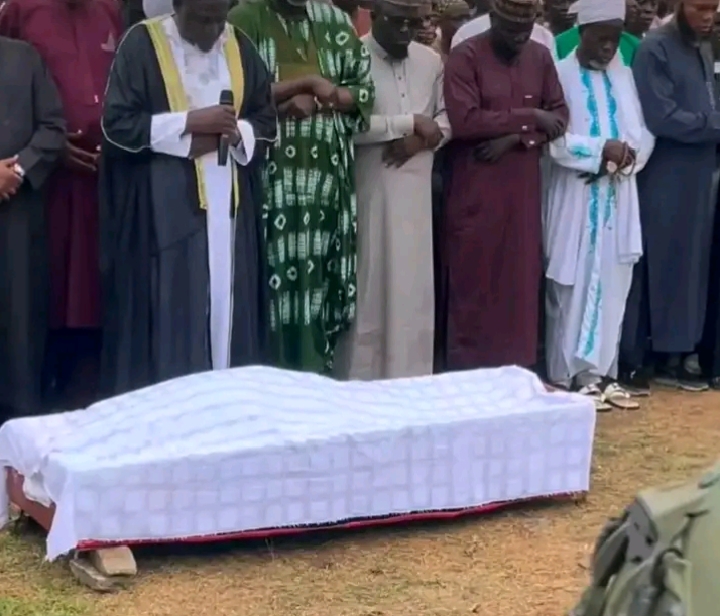
Among those who arrived were familiar names from the Yoruba entertainment industry, people whose own careers had developed alongside Ogogo’s. Their attendance transformed the gathering into a meeting point for a generation of performers who had spent decades building an entertainment culture that would eventually become one of the most influential branches of Nigerian cinema. The mood remained sombre as the mourners gathered, with the simplicity of the religious rites providing the structure for a farewell that carried enormous emotional weight.
Yinka Quadri Reaches Ilaro

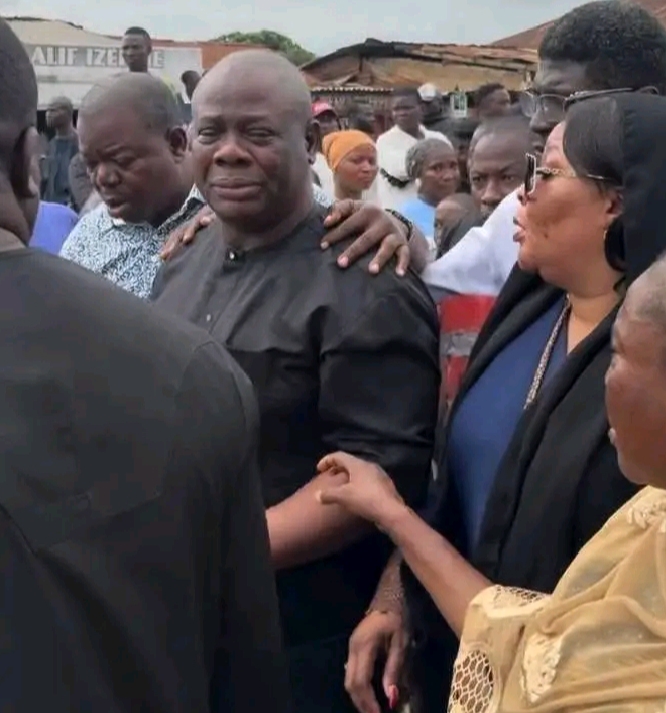
The arrival of Yinka Quadri was one of the notable moments of the funeral because of the long relationship between the 2 veterans. Quadri and Ogogo belonged to a generation whose work helped carry Yoruba theatre from traditional performance spaces into the expanding world of Nigerian home video and modern cinema. Their careers crossed paths through years of productions, friendships and professional relationships, making Quadri’s presence in Ilaro especially meaningful.
Jide Kosoko also travelled to Ilaro to pay his final respects, adding another major veteran to the gathering. Kosoko had been closely involved in communicating the burial arrangements after Ogogo’s death, and his attendance placed him among the familiar figures who stood with the family during the final rites. Their presence reflected the depth of the connections Ogogo formed during a career that lasted more than 4 decades.
Toyosi Adesanya was also identified among the colleagues who travelled to Ilaro, while reports from the funeral mentioned Femi Adebayo among other Nollywood personalities who came to mourn the actor. Their attendance demonstrated the breadth of Ogogo’s professional relationships, stretching from veterans of Yoruba theatre to actors representing a younger generation of the industry.
Yinka Quadri’s Emotional Moment
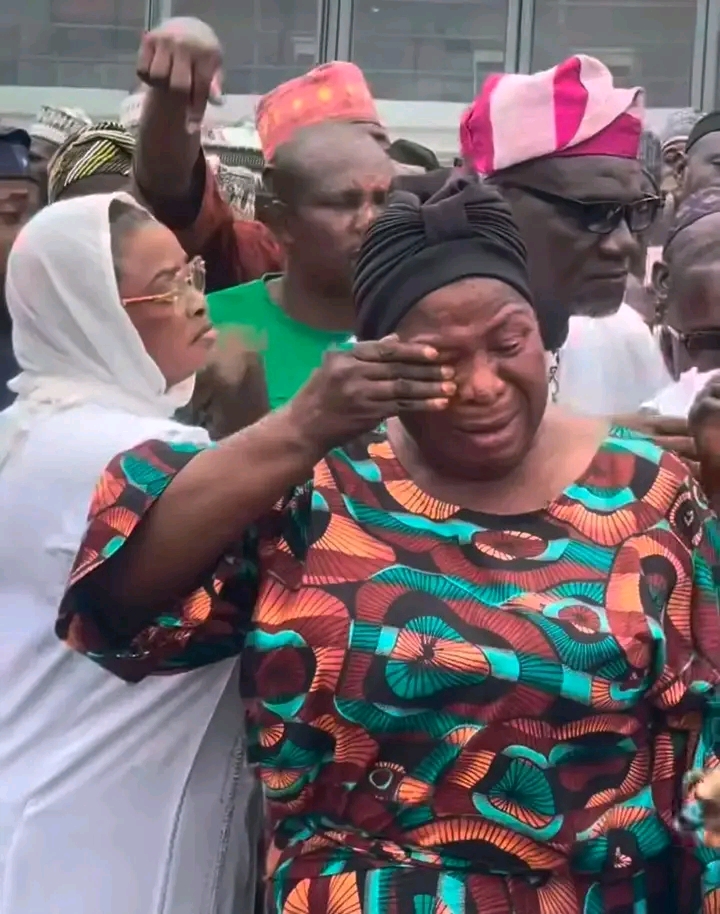
One of the most emotional scenes from the funeral involved Yinka Quadri, who was reported to have broken down in tears while mourning his longtime friend and colleague. The moment carried particular weight because Quadri and Ogogo were not simply actors who happened to work in the same industry, they belonged to a generation that experienced the transformation of Yoruba performance from travelling theatre into a major force in Nigerian film.
Quadri’s grief offered a glimpse into the personal side of the loss, where decades of shared experiences could not be separated from the formal proceedings taking place around them. For those gathered in Ilaro, the funeral was not merely a ceremony marking the death of a famous actor, it was the farewell of a colleague, friend and contemporary whose life had been intertwined with the history of the profession they built together.
The tears also captured the suddenness of the moment. Ogogo had remained a recognisable figure in Yoruba entertainment for decades, and his death at 66 meant that many of the people mourning him had known him through several stages of his professional life. Quadri’s reaction therefore became one of the clearest human moments from the gathering, revealing the depth of the relationship beneath the public image of 2 celebrated actors.
Ireti Osayemi Joins The Mourners

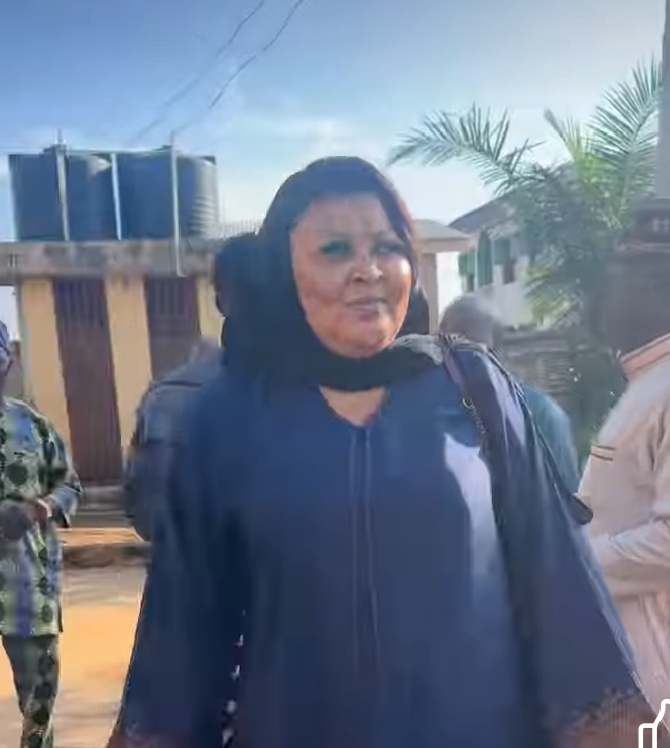
Actress Ireti Osayemi Bakare was among the Nollywood personalities reported at the funeral in Ilaro. Her arrival added another familiar face to a gathering that was steadily drawing members of the Yoruba film community. She was reported to have joined the mourners as the funeral proceedings unfolded, standing alongside colleagues who had travelled to the town to honour Ogogo.
Her presence reflected how quickly the Yoruba entertainment community mobilised after the news of his death. The timing was especially striking because Ogogo died on Sunday, August 23, while the burial took place the following day. Within that short period, colleagues had to move from mourning privately to travelling to Ilaro for the final rites.
The gathering therefore brought together people who represented different parts of Ogogo’s professional life, from established veterans who knew him during the early years of his career to younger performers who came to know him as one of the respected figures of Yoruba Nollywood. Their presence created a visual reminder of the generations connected by the industry Ogogo spent decades serving.
Dele Odule Speak, others present At Ogogo’s Funeral
Dele Odule’s moment at the funeral became one of the most emotional parts of Ogogo’s final rites in Ilaro. The veteran actor, who shared a long friendship and professional history with Taiwo Hassan, was visibly overcome while speaking about the deceased in front of family members, colleagues and mourners. Footage from the gathering showed Odule trembling and struggling to hold back his tears as he addressed those present, revealing just how deeply the death had affected someone who had known Ogogo for decades. His reaction added a deeply personal dimension to the farewell, moving the focus beyond Ogogo’s fame to the friendship and shared history that existed between members of the older generation of Yoruba cinema.

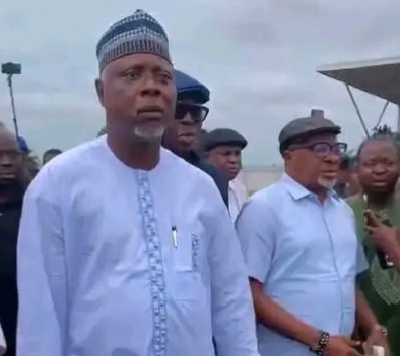
Odule was not simply another actor attending the ceremony, he was part of the generation that worked alongside Ogogo through the growth of Yoruba theatre and film. Their relationship stretched across years of professional collaboration and personal friendship, making his speech particularly significant during a funeral where many of Ogogo’s closest colleagues had gathered. The emotional strain was visible as he spoke, with reports describing him as struggling to contain his tears while remembering his late colleague.
His arrival in Ilaro had already been reported alongside other veteran entertainers, including Mr Latin, Olaiya Igwe, Fathia Balogun and Kolawole Ajeyemi. Their presence showed the breadth of the Yoruba film community’s response to Ogogo’s death, with several respected figures travelling to his hometown shortly after news of his passing. The group joined other prominent colleagues such as Jide Kosoko, Yinka Quadri and Femi Adebayo, creating a gathering filled with people who had shared different chapters of Ogogo’s career.
The speeches and reactions at the gathering carried the weight of a generation saying goodbye to one of its own. Ogogo had spent more than 4 decades in theatre and film, and many of the people gathered in Ilaro had known him long before he became the veteran actor recognised across Nigeria. Their words and emotions reflected years of friendship, professional encounters and memories built around the Yoruba entertainment industry. Odule’s visibly emotional address stood out because it showed the personal pain behind the public farewell, while the presence of other veterans reinforced the sense that an important chapter of their shared journey had come to an end.
The gathering therefore became more than a roll call of Nollywood names. Dele Odule’s speech, Yinka Quadri’s tears and the arrival of veterans such as Jide Kosoko, Mr Latin, Olaiya Igwe and Fathia Balogun revealed the depth of the relationships Ogogo built throughout his career. Their presence in Ilaro placed familiar faces around his final rites and gave the funeral an unmistakable sense of a generation coming together to honour one of its most recognisable members.
Islamic Final Rites
The speed of Ogogo’s burial was closely connected to Islamic burial practice, under which the deceased is generally buried as soon as reasonably possible after death. His death on Sunday, August 23, was followed by the funeral on Monday, August 24, meaning that less than 24 hours separated his death from his burial.
That sequence gave the funeral a different character from the elaborate ceremonies often associated with the deaths of prominent entertainers. Rather than a prolonged public period before burial, the focus quickly moved towards prayer, family, religious obligations and the final return of the deceased to the earth. The process was simple in its religious structure even though the person being mourned was one of the most recognisable figures in Yoruba entertainment.
For Ogogo’s family, the religious rites provided a clear path through an exceptionally difficult period. His remains were returned to Ilaro, mourners gathered for the prayer and colleagues stood beside the family as the final stages of his life were completed. The solemnity of the proceedings was reinforced by the knowledge that the actor’s decades of public visibility had ultimately led back to a private and spiritual farewell in his hometown.
The News That Preceded His Death
Ogogo’s death came after his family revealed that he had been battling stage 4 cancer. The disclosure emerged only days before his death, when the family appealed for urgent medical assistance as his condition became more serious. For many Nigerians who had known Ogogo primarily through his work, the revelation was difficult to process because it came shortly before the announcement of his death.
His daughter, Kira Taiwo, later confirmed the death during an emotional Instagram Live session on Sunday. The announcement turned what had been concern over his health into mourning across the entertainment industry. Colleagues and fans began sharing memories of the actor, while tributes spread across social media and through Nigerian entertainment platforms.
The short period between the public disclosure of his health condition and his death added to the shock surrounding the funeral. People who had only just learnt that Ogogo was seriously ill were suddenly confronted with images of his burial in Ilaro the following morning. That sequence explains much of the emotional atmosphere surrounding the gathering, particularly among colleagues who had known him for many years.
The Journey From Mechanic To Actor
Ogogo’s story remains remarkable because acting was not the first profession through which he made his way in life. Before becoming a full time actor, he reportedly trained and worked as an automobile mechanic. That early experience formed part of a journey that eventually took him into theatre and transformed him into one of the most recognisable personalities in Yoruba cinema.
His career later expanded beyond acting, with Ogogo working as a producer, director and screenwriter. Over more than 4 decades, he became part of the machinery behind numerous Yoruba productions while also establishing himself as a performer whose name could attract audiences. His career reflected the evolution of Nigerian entertainment itself, particularly the movement from theatre based performance into the home video era and eventually the modern Nollywood industry.
That background makes the images from Ilaro more significant. The man being buried had lived several professional lives before becoming the veteran audiences came to know as Ogogo. His journey was not built overnight, and his position within Yoruba entertainment came through years of work, relationships and participation in a cultural tradition that had already been developing long before the modern Nigerian film industry took its present shape.
Ogogo’s Connection To Hubert Ogunde
One of the most striking historical details surrounding Ogogo’s story is his connection to Hubert Ogunde, one of the foundational figures of Nigerian theatre and Yoruba performance. According to reports, Ogogo participated in the oriki chanting at Ogunde’s burial in 1990.
The detail creates an extraordinary connection across time. Ogunde died in April 1990, and decades later, Ogogo himself would become one of the veterans whose career was shaped by the theatrical tradition Ogunde helped establish. The young performer who once participated in honouring a major pioneer eventually became a veteran whose own passing brought together another generation of Yoruba entertainers.
The connection gives Ogogo’s burial a deeper place within the history of Yoruba entertainment. His funeral in Ilaro was not simply the end of an individual career, it represented another chapter closing in a long tradition of theatre, storytelling and performance. Those who gathered around his grave were themselves part of the history that Ogunde and earlier generations had helped create.
Ilaro’s Farewell To A Famous Son
Ilaro occupied a special place in Ogogo’s life long before it became the location of his funeral. Born there on October 31, 1959, he remained connected to the community even after his career took him across Nigeria and into the centre of the entertainment industry. Returning his remains to Ilaro therefore gave his final journey a strong sense of homecoming.
The significance of that return was visible in the way residents and mourners gathered around the funeral. Ogogo was not being buried in an unfamiliar location after a lifetime spent elsewhere, he was returning to the community that had witnessed the beginning of his story. The town therefore became both the starting point and the closing setting of a life that eventually reached millions of people through film and theatre.
For residents of Ilaro, the funeral also represented the loss of a prominent son whose career had carried the town’s name into the wider Nigerian entertainment landscape. His identity remained closely tied to his roots, making the decision to conduct his final rites there a natural continuation of the relationship he had maintained with the community throughout his life.
A Gathering Of Yoruba Nollywood Veterans
The funeral brought together several names associated with different stages of Yoruba cinema, creating a gathering that was as much about friendship as it was about professional history. Yinka Quadri, Jide Kosoko, Ireti Osayemi Bakare, Toyosi Adesanya, Femi Adebayo and other Nollywood personalities were among those connected to the mourning process.
Each person carried a different relationship with Ogogo, but together their presence illustrated the reach of his career. Veterans who had shared the industry with him for decades stood alongside younger entertainers who had grown within the system that his generation helped establish. The gathering therefore showed how one career could connect people separated by age, experience and different periods of Nigerian cinema.
Ogogo’s funeral also offered a rare moment when different generations of Yoruba entertainment were gathered in the same place for a single purpose. The occasion was solemn rather than celebratory, but it still revealed the strength of the professional community around him. His colleagues did not simply remember an actor whose films they had watched, they came to Ilaro to honour someone whose working life had intersected with theirs.
More Than 4 Decades On Screen
A career lasting more than 4 decades is difficult to measure simply through the number of films an actor has appeared in. Ogogo’s contribution extended across several phases of Yoruba entertainment, beginning with theatre and later developing through film, production, directing and screenwriting. He remained part of the industry long enough to witness major changes in the way Nigerian stories were produced, distributed and consumed.
His generation played an important role in making Yoruba language cinema visible to audiences across Nigeria and beyond. Performers from that era carried traditions from theatre into film, adapting established performance styles to the growing home video market. Ogogo became one of the recognisable faces of that transition, building a reputation that continued long after the industry itself had changed.
The longevity of his career also explains why his death resonated so widely. Many viewers encountered Ogogo at different points in their lives, while younger audiences could still recognise him through later productions. His work therefore crossed generational boundaries, giving his career an unusually long public life.
The Final Journey
The final journey from Lagos to Ilaro was therefore more than the movement of a body from one city to another. It marked the return of a son to his birthplace, the return of a veteran performer to the community that knew him before fame and the return of a respected figure to the cultural environment that helped shape his identity.
The journey unfolded quickly because Ogogo died at approximately 3 p.m. on Sunday, August 23, 2026. By the following morning, his family, religious community, friends and colleagues were preparing for the burial. That short period gave the proceedings an intensity that was felt by those who travelled to Ilaro to stand with the family.
As the funeral progressed, the focus remained on the religious rites and the solemn farewell. The presence of famous actors did not change the essential nature of the ceremony, rather it showed how many people considered Ogogo important enough to interrupt their own schedules and travel to his hometown to honour him.
The Meaning Of His Final Farewell
Ogogo’s funeral in Ilaro has become a defining moment in the story of a career that began decades ago and remained active across changing generations of Nigerian entertainment. His burial brought together family members, residents, religious mourners and colleagues from the Yoruba film industry, creating a farewell that reflected both his private roots and his public legacy.
The emotional scenes surrounding Yinka Quadri, the arrival of Jide Kosoko, the attendance of Ireti Osayemi Bakare and other Nollywood personalities all formed part of the human story unfolding in Ilaro. These were not simply famous faces attending a celebrity funeral, they were colleagues returning to honour one of their own.
The historical connection to Hubert Ogunde adds another powerful layer to the story. Ogogo once stood among those honouring Ogunde at his burial in 1990, and 36 years later, another generation stood around Ogogo’s own final rites. That passage of time captures the changing face of Yoruba entertainment more vividly than any career statistic could.
A Career That Came Home
Taiwo Hassan Ogogo’s final journey ended where his life began, in Ilaro, Ogun State, on Monday, August 24, 2026. His death on Sunday, August 23, at the age of 66 brought an end to more than 4 decades of involvement in theatre and Nigerian cinema, while the speed of his burial reflected the Islamic rites observed by his family.
The funeral also provided a final gathering for a generation of Yoruba entertainers whose careers were connected through years of shared work. Yinka Quadri and Jide Kosoko stood among the prominent veterans who travelled to Ilaro, while Ireti Osayemi Bakare, Toyosi Adesanya, Femi Adebayo and other members of the Nollywood community were also linked to the mourning.
For Ilaro, the significance was even closer to home. The town welcomed back one of its most famous sons, a man born there on October 31, 1959, who went on to build a career that reached far beyond Ogun State. His path from automobile mechanics into theatre, film, production, directing and screenwriting became part of the larger story of Yoruba entertainment.
The final images from Ilaro therefore carry a simple but powerful meaning. After decades spent creating characters, telling stories and working alongside some of the most recognisable names in Yoruba cinema, Ogogo’s own story has reached its final chapter. The industry he helped build gathered around him, his hometown received him back and the people who shared his journey stood together for one last farewell.
SEE MORE PICTURES FROM OGOGO’S FUNERAL