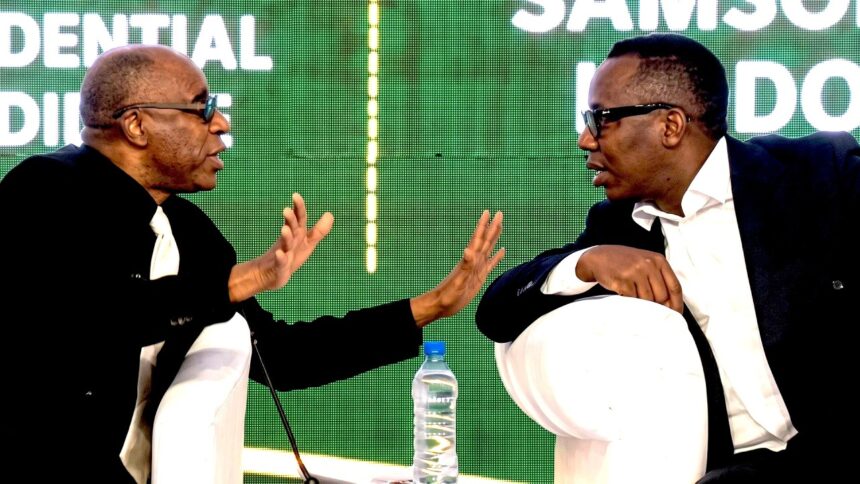
The political conversation at the Nigerian Bar Association conference in Port Harcourt was already carrying the weight of Nigeria’s most familiar arguments when 2 men found themselves locked in a sharper exchange that quickly drew attention beyond the conference hall, with the discussion moving from fuel subsidy to public transportation, from the record of former office holders to the value of political experience, then gradually into a direct confrontation over projects, governance, education and the question of who has earned the right to ask Nigerians for another opportunity, what followed was not simply another campaign style exchange between politicians preparing for 2027, because the arguments touched on records that could be checked, promises that Nigerians have heard before and decisions that continue to affect daily life, leaving the audience with a much more revealing picture of how the emerging political contest may be fought.
The Port Harcourt Political Session
The exchange took place on Monday, August 24, 2026, during the 66th Annual General Conference of the Nigerian Bar Association in Port Harcourt, Rivers State, where politicians linked to the 2027 presidential race gathered for a political discussion under the broader conference theme, “Beyond Limits: Redefining the Practice of Law”, the panel brought together figures with very different political histories, including Omoyele Sowore, Peter Obi, Adewale Adebayo and Donald Duke, while former Rivers State governor and former Minister of Transportation Rotimi Amaechi participated as the ADC vice presidential candidate, creating a setting where questions about Nigeria’s past leadership naturally became questions about who should be trusted with the country’s future.
The conversation did not begin as a personal fight between Sowore and Amaechi, with the participants discussing issues that have remained central to political arguments across Nigeria, particularly fuel subsidy, transportation, insecurity, governance and the performance of previous administrations, but the atmosphere changed when the discussion moved towards politicians who had already held important government positions, because Sowore seized on an argument he attributed to Amaechi and used it to make a wider point about former office holders seeking another opportunity to govern.
Sowore Raises The First Challenge

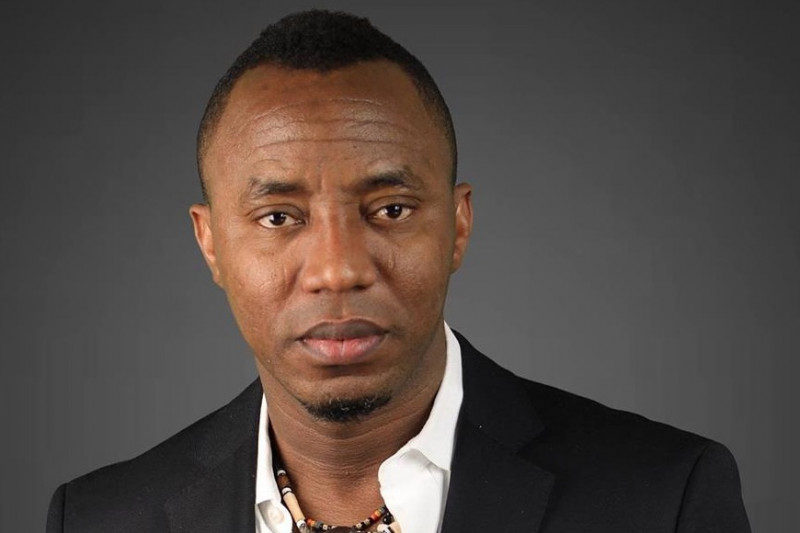
Sowore told the audience that he liked an earlier point attributed to Amaechi concerning politicians who had already been in government, before turning the argument back towards those same politicians and saying they should be apologising to Nigerians rather than asking for another opportunity, the comment was pointed because it placed Amaechi among the established political figures whose records should be examined before they are allowed to present themselves as solutions to problems that existed during their previous periods in office.
“I love one thing that Amaechi said,” Sowore said, before explaining that politicians who had been in government and failed had no business simply coming back to seek another opportunity, he added that such politicians should be apologising to Nigerians, making it clear that his attack was not limited to Amaechi personally but was part of a larger argument against the return of politicians who had already occupied public office.
Amaechi immediately objected to Sowore’s interpretation, responding with the words, “Stop lying, Sowore, stop lying, Sowore”, before clarifying the position he said he had actually expressed, according to Amaechi, his argument had been that Nigerians should judge politicians based on their achievements rather than dismissing them simply because they had previously served in government, that response changed the direction of the conversation because Amaechi was no longer allowing his record to be discussed only through Sowore’s framing.
The Argument Moves Towards Records
Amaechi’s response brought the central question into sharper focus, should a former governor or minister be judged primarily by the problems that remained unresolved after leaving office, or should the projects completed during that period form the basis of the judgement, Sowore leaned heavily towards the first argument while Amaechi defended the second, creating a clash between political accountability and political experience.
Sowore then moved into one of the most recognisable areas of Amaechi’s public record, his role in Nigeria’s railway development during his time as Minister of Transportation, with transportation forming part of the wider subsidy discussion because Sowore argued that an effective public transport system could reduce the pressure that high fuel prices place on ordinary Nigerians, the railway therefore became more than a project mentioned in passing, it became a test of whether Amaechi’s record matched the claims being made about experience and achievement.
“We have a former governor of Rivers State here, Amaechi, who built a rail line that went nowhere,” Sowore said, bringing the railway issue directly into the confrontation, he continued by arguing that the country could not ignore the records of people who had previously governed, particularly when the discussion was about finding solutions to Nigeria’s present problems.
The railway criticism was significant because Amaechi had spent years defending the development of rail transportation as one of the major achievements associated with his tenure at the Ministry of Transportation, meaning that Sowore had chosen a subject on which Amaechi was unlikely to remain silent, the disagreement therefore became a direct contest between one politician questioning the usefulness of a major project and another politician defending that project as evidence of what his administration achieved.
Amaechi Defends The Railways
Amaechi responded by pointing to the Lagos Ibadan railway, asking the audience whether the project was working and stressing that it was functioning during his time as minister, he also referred to the Abuja Kaduna railway while defending his record, using the projects as examples of infrastructure that could be placed before Nigerians when assessing his period in office.

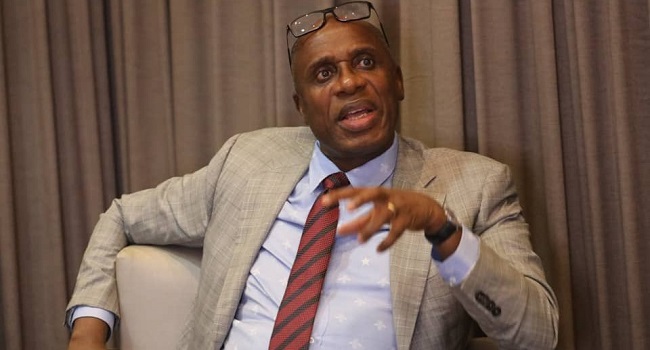
“Is the Lagos Ibadan railway working or not? In my time, it was working,” Amaechi said, turning the conversation towards projects that he believed offered a measurable basis for judging his performance, the argument was simple, if Nigerians wanted to assess whether a former public official had achieved anything, they should look at what was built, completed or made operational rather than relying entirely on political accusations.
The exchange created one of the clearest contrasts of the session, Sowore was questioning the practical value of infrastructure and the broader performance of political leaders, while Amaechi was presenting specific projects as evidence that his time in government produced tangible results, neither side was discussing politics in the abstract anymore because the argument had reached roads, railways, schools and other government projects.
Amaechi then widened his response by asking the audience to consider the work he said he had done as governor of Rivers State, pointing to roads and primary schools that he said he built during his tenure, the former governor was effectively asking the audience to judge his political career through the accumulated record of projects rather than through Sowore’s description of his time in office.
The Question Of Experience
The confrontation became more personal when Amaechi turned the attention towards Sowore himself, rather than continuing to answer questions about his own record, he challenged Sowore to explain his own experience, creating a moment where the argument was no longer simply about what Amaechi had done but also about what Sowore could point to from his own political career.
“Where are Rivers lawyers? Please take Sowore around,” Amaechi said, before continuing to list projects he said he completed while governor, including roads and primary schools, he then asked the question that became one of the central lines of the exchange, “Sowore, what is your experience?”
The question carried a clear political meaning because Sowore has contested for the presidency but has never governed a state or served as a federal minister, while Amaechi has occupied major elected and appointed positions, including governor of Rivers State and Minister of Transportation, Amaechi was therefore presenting executive experience as a legitimate measure of political credibility.
Sowore’s argument, however, was built around a different idea of credibility, his position was that experience in government should not automatically become a shield against criticism, particularly when the people involved have already had the opportunity to influence public policy, the clash therefore went beyond personalities because the 2 men were effectively offering Nigerians 2 different ways of judging political leadership.
The Moment That Changed The Exchange
The most widely discussed moment came when the argument became increasingly difficult to contain, with Sowore attempting to respond while Amaechi was speaking, Amaechi eventually told him, “When politicians are talking, close your mouth”, another account carried the fuller version as, “Moreover, Sowore, when politicians are talking, close your mouth”, turning an already tense political disagreement into a moment that quickly became the defining clip from the conference.
The remark stood out because it came after several exchanges over political experience, Amaechi’s record as governor, railway projects and the performance of former office holders, it was not the opening line of the disagreement but the point at which the tension became unmistakably personal, which helps explain why the moment attracted far more attention than some of the policy arguments discussed during the same session.
Sowore had challenged Amaechi’s record, Amaechi had challenged the accuracy of Sowore’s interpretation, then defended the railways before questioning Sowore’s own experience, the exchange had therefore built gradually rather than appearing from nowhere, with each response creating another opening for the next challenge.
The sequence also mattered because the political session was taking place in front of lawyers gathered for the NBA conference, rather than at a conventional campaign rally, meaning that the exchange unfolded within a serious public discussion where policy, accountability and governance were already expected to receive close attention, the confrontation simply gave those broader issues a more dramatic human face.
Fuel Subsidy Starts The Wider Debate
Fuel subsidy remained the larger issue underneath the confrontation, with Sowore arguing strongly against the way subsidy removal had affected Nigerians and questioning who had truly benefited from the policy, he argued that ordinary people had continued to carry the burden through higher transportation costs, higher living expenses and the wider economic pressure that followed the removal of the subsidy.
Sowore was quoted as saying, “The question about subsidy is, who are you subsidising? You are subsidising the elites. You are subsidising the governors”, his argument was that government policy should not be designed in a way that leaves ordinary Nigerians bearing the consequences while political elites receive the benefits.
Transportation became important to that argument because Nigerians who depend on commercial vehicles feel the effect of fuel prices almost immediately, Sowore therefore connected the subsidy question to public transportation and used the railway system as an example of the kind of infrastructure that could provide an alternative for citizens while reducing dependence on petrol powered transportation.
That connection brought Amaechi directly into the discussion because of his former role as Minister of Transportation, allowing Sowore to question whether the railway investments made during Amaechi’s tenure had delivered the kind of practical benefit that could be felt widely by Nigerians, Amaechi responded by defending the operational record of the Lagos Ibadan railway and the Abuja Kaduna railway, making transportation the bridge between the subsidy argument and their personal confrontation.
Amaechi’s Position On Subsidy
Amaechi’s position was more complicated than a simple defence of subsidy removal, with reports from the session indicating that he argued against a policy arrangement that leaves poor Nigerians exposed while richer Nigerians benefit, he maintained that government intervention should focus on protecting people who genuinely need assistance rather than allowing subsidies to become another route through which wealthier groups benefit from public resources.
“I will not remove subsidy because the poor in Nigeria need to be subsidised instead of the rich,” Amaechi said, presenting his position around protection of poor Nigerians rather than simply defending the status quo, this gave the subsidy debate another dimension because it showed that the disagreement among the politicians was not necessarily about whether government should intervene but about who should benefit from that intervention.
Sowore’s criticism focused on the political class and the impact of government decisions on ordinary citizens, while Amaechi’s position placed greater emphasis on protecting poor Nigerians through targeted support, the difference became particularly important because subsidy has remained one of the most emotionally charged economic issues in Nigeria, with fuel prices affecting transportation, food prices, household expenses and businesses.
The discussion therefore created a natural opening for the politicians to defend their records because every argument about subsidy eventually leads back to a broader question of governance, if a government removes a subsidy, Nigerians want to know where the savings go, if a government keeps a subsidy, Nigerians want to know who benefits, and if politicians propose a new system, they must explain why Nigerians should trust them to implement it.
Peter Obi Enters The Conversation
Peter Obi also became part of the exchange as the politicians began examining the records of former governors, with Amaechi challenging Obi’s performance during his time as governor of Anambra State, particularly in relation to education and industrial action, the argument placed another former governor under the same level of scrutiny that Amaechi had just faced from Sowore.

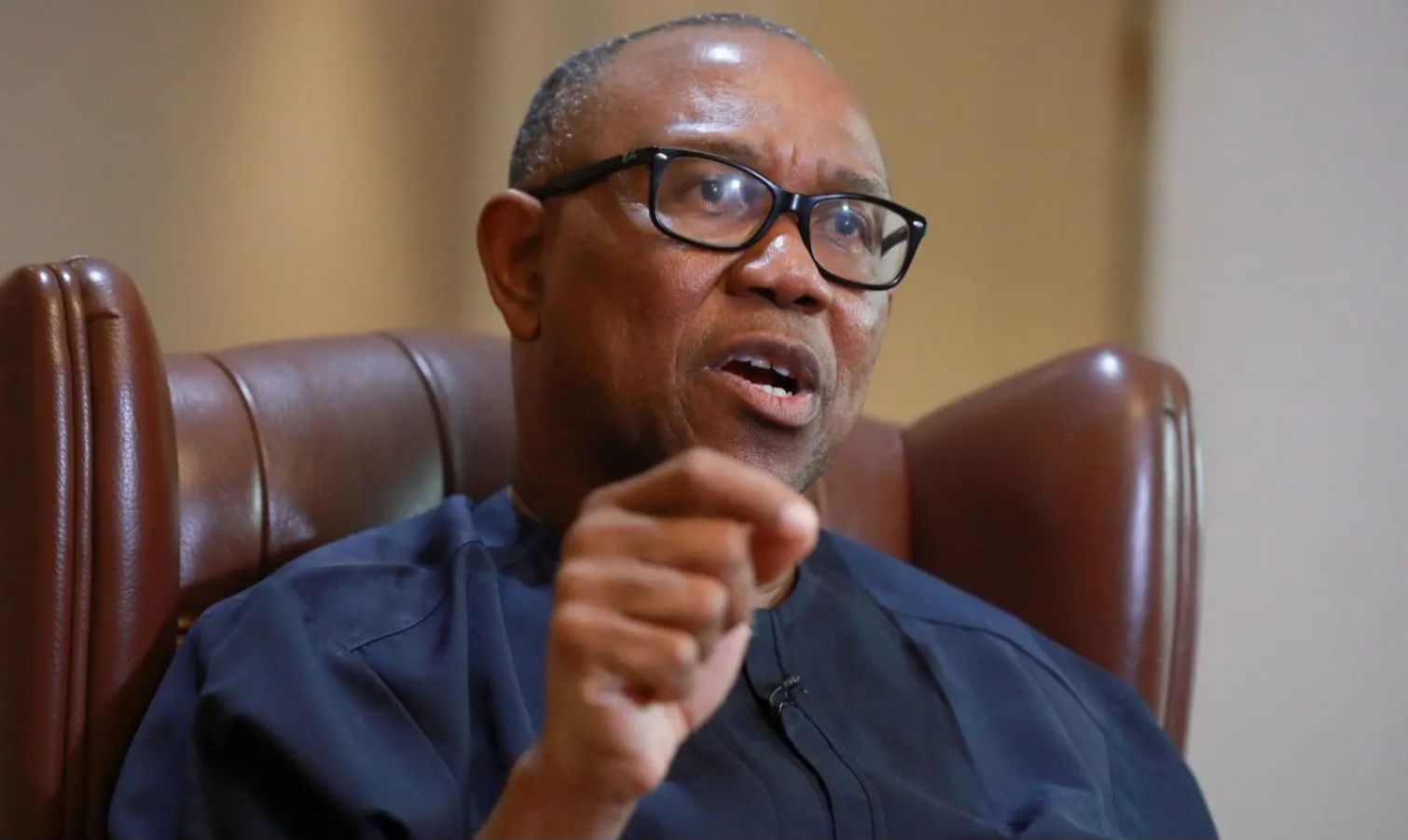
Amaechi alleged that lecturers and doctors went on strike for 13 months during Obi’s tenure and argued that education was not adequately subsidised in the state, he told the audience, “Peter Obi did not subsidise education in his state. Lecturers and doctors went on strike for 13 months. You may like him as a person, but he did not perform as a governor”, turning the discussion towards the records of another politician associated with the 2027 race.
Obi’s response was notably less confrontational, with his central position being that his record was available for Nigerians to examine rather than something that needed to be settled through verbal exchanges on the stage, he said, “My records are there to verify”, a response that shifted the focus back to evidence and away from the immediate tension between the politicians.
The presence of Obi added another layer to the political discussion because the panel was not simply comparing personalities, it was putting the records of former governors, ministers and presidential contenders into the same conversation, allowing the audience to hear competing claims about what happened during different periods of government.
Obi’s Different View On Subsidy
Obi also disagreed with Sowore on the question of subsidy removal, although his position came with a strong qualification concerning how the proceeds should be used, he said he supported the removal of fuel subsidy but argued that the resources saved should have been redirected towards programmes that directly improve the lives of Nigerians.
“I subscribe and I maintain that you need to remove subsidy,” Obi said, making his position clear, but he also criticised the handling of the resources connected to the policy, arguing that government should have invested more aggressively in healthcare and other social interventions that could provide Nigerians with tangible benefits.
That created 3 distinct positions within the same discussion, Sowore strongly challenged the current approach to subsidy removal and argued for stronger protection of ordinary Nigerians, Obi supported subsidy removal but wanted the savings redirected into social development, while Amaechi argued that poor Nigerians should be subsidised rather than allowing benefits to flow primarily towards the rich.
The differences were important because they showed that the disagreement at the NBA conference was not simply a matter of political rivalry, the politicians were presenting different ideas about how government should manage public resources, who should receive support and how Nigerians should measure the success of policies that affect millions of people.
The Records Become The Real Battlefield
Once the discussion moved into the records of former office holders, the arguments became much harder to separate from the 2027 political contest, Sowore was essentially challenging the established political class to explain why Nigerians should return to leaders who had already governed, while Amaechi was arguing that previous office holders should be assessed based on what they actually delivered.
Amaechi’s defence rested heavily on projects, with roads, primary schools, the Lagos Ibadan railway and the Abuja Kaduna railway forming part of the achievements he placed before the audience, Sowore’s criticism focused on whether those achievements were sufficient and whether they addressed the wider problems facing Nigerians, particularly the pressure on ordinary citizens.
The railway argument therefore became symbolic of the wider disagreement, Amaechi saw the projects as evidence of achievement, while Sowore questioned their effectiveness and relevance to the everyday struggles of Nigerians, both men were speaking about the same infrastructure but drawing very different political conclusions from it.
The disagreement over Rivers State also carried its own significance because Amaechi was defending his record in the same state where he served as governor, while Sowore was challenging that record in Port Harcourt before an audience largely familiar with the political history of Rivers State, making the exchange more direct than a generic debate about national infrastructure.
From Policy Debate To Personal Exchange
The progression of the confrontation can be followed clearly, the discussion began with fuel subsidy and government policy, moved towards the question of politicians returning to office, then shifted into Amaechi’s record as governor and minister, before railway projects became the immediate point of dispute, Amaechi then challenged Sowore’s own experience before the exchange reached its most memorable moment.
Sowore’s criticism was therefore not simply that Amaechi had served in government, it was that previous service should make politicians more accountable because they had already been given opportunities to influence the country, Amaechi’s response was that service itself should not disqualify a politician and that achievements should be the basis for judgement.
That difference explains why the exchange became heated so quickly, Sowore was questioning the value of experience without satisfactory results, while Amaechi was defending experience by pointing towards projects he believed demonstrated results, the 2 positions could hardly have been further apart, particularly when both men were standing before an audience listening to them discuss the country’s future.
The confrontation also demonstrated how quickly a policy discussion can become personal when political records are placed on the table, once Sowore mentioned Amaechi’s railway record, Amaechi had a direct reason to respond, once Amaechi questioned Sowore’s experience, Sowore had an equally direct reason to push back, and the exchange continued until Amaechi delivered the “close your mouth” remark that later became the most circulated moment.
Why The Railway Remark Matters
The railway issue matters because it represents one of the clearest examples of how political achievements are interpreted differently depending on who is doing the judging, Amaechi can point to railway projects and argue that they represent progress, while Sowore can question whether those projects have produced enough practical benefits for Nigerians to justify the political claims attached to them.
The Lagos Ibadan railway and Abuja Kaduna railway were therefore not merely names mentioned during an argument, they became evidence used by Amaechi to support his claim that Nigerians should judge him by his achievements, while Sowore’s criticism challenged the idea that the existence of a project automatically settles the question of whether the government performed well.
That distinction is important when looking at the confrontation because it explains why Amaechi did not simply respond to Sowore with another political accusation, he returned repeatedly to projects, asking the audience to consider what he had built, what he had delivered and what could be physically identified as part of his record.
Sowore, however, was looking at the same record through the lens of outcomes and public benefit, which is why the railway became such a powerful point of disagreement, the argument was no longer about whether a project existed but whether its existence was enough to prove effective governance.
The NBA Conference Becomes A Political Stage
The events of August 24, 2026 showed how the NBA conference has become more than a professional gathering when major political figures are invited to debate issues ahead of an election year, the presence of presidential contenders and prominent political actors naturally transformed the session into a forum where records, policies and political ambitions could be tested in public.
Sowore came into the discussion with a familiar challenge to the political establishment, asking Nigerians to look beyond familiar names and question why people who have already occupied public office should be trusted again, Amaechi responded from the position of someone who has occupied major government offices and believes that experience can produce measurable achievements.
The disagreement was therefore inevitable once the discussion reached the question of political records, with Sowore questioning the past and Amaechi defending it, the audience was effectively watching 2 competing arguments about Nigeria’s political future being made through the records of the past.
The presence of Peter Obi, Adewale Adebayo and Donald Duke further broadened the discussion, while Amaechi’s participation as the ADC vice presidential candidate placed the conversation firmly within the emerging 2027 political landscape, making the session an important public test for politicians who will increasingly have to defend their records and policy positions before Nigerians.
The Sequence That Produced The Viral Moment
The sequence is what gives the Sowore and Amaechi confrontation its real meaning, because the “close your mouth” remark did not appear at the beginning of the session, it came after Sowore had challenged Amaechi’s interpretation of his earlier statement, attacked the record of former office holders, criticised the railway projects and questioned aspects of governance in Rivers State..
Amaechi answered by defending his achievements, pointing to roads and primary schools from his period as governor and railway projects from his time as minister, he then turned the question towards Sowore by asking what experience he had, creating the direct confrontation that eventually produced the remark that dominated social media and news coverage.
The moment was therefore the culmination of several arguments rather than an isolated clash, each stage built towards the next, first came the question of political failure, then came the defence of achievements, then the railway debate, followed by the question of experience, and finally the instruction to Sowore to stop speaking while politicians were talking.
That sequence also explains why the confrontation resonated beyond the conference itself, Nigerians watching the exchange were not simply hearing 2 politicians disagree about each other, they were hearing a familiar argument about whether political experience should be treated as an asset, a burden or simply something that must be judged by results.
What The Exchange Leaves Behind
By the end of the discussion, the most memorable line may have been Amaechi’s instruction to Sowore to close his mouth, but the substance of the exchange was considerably wider, the politicians had debated fuel subsidy, public transportation, infrastructure, education, government records, political experience and the question of whether former office holders deserve another opportunity.
Sowore’s central challenge remained clear, politicians who have already governed should be prepared to account for what happened during their time in office before asking Nigerians to trust them again, Amaechi’s response was equally clear, previous service should not automatically disqualify anyone because achievements provide a basis for judgement.
The railway became the point where those 2 arguments collided most visibly, Sowore questioned the value of Amaechi’s railway record, while Amaechi pointed to the Lagos Ibadan and Abuja Kaduna lines as evidence of what he achieved as Minister of Transportation, that disagreement then opened the door to the more personal question of Sowore’s own experience.
The wider subsidy debate gave the confrontation its policy foundation, with Sowore questioning who benefits from government decisions, Obi arguing that subsidy removal could be justified if the savings were properly invested in Nigerians, and Amaechi insisting that poor Nigerians should receive protection rather than allowing the benefits of subsidy arrangements to flow towards richer Nigerians.
For the audience at the 66th NBA Annual General Conference on Monday, August 24, 2026, the session offered something more revealing than a routine political discussion, it showed how quickly the 2027 contest can move from policy to records, from records to personal experience and from personal experience to direct confrontation, with Sowore and Amaechi providing the clearest example of that progression in Port Harcourt.
The exchange may be remembered for the words “close your mouth”, but the argument underneath those words was much bigger, it was about whether Nigerians should judge politicians by what they promise next, what they achieved before, or what remained unresolved after they left office, and with the 2027 political contest drawing closer, that question is unlikely to disappear anytime soon.