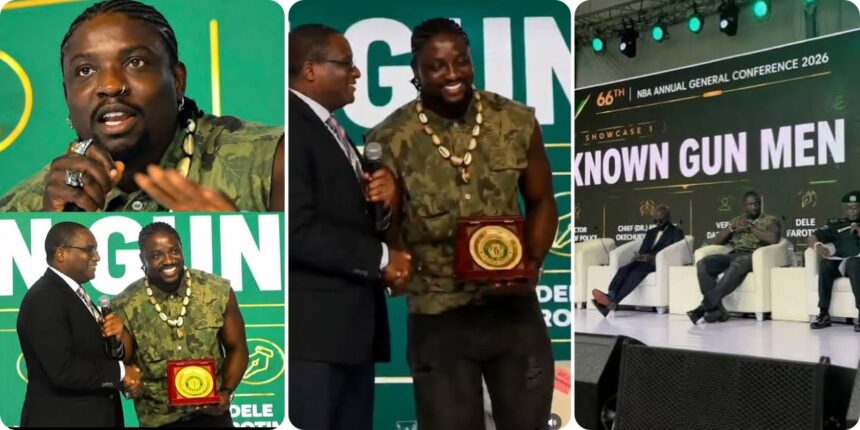
The Nigerian Bar Association’s 66th Annual General Conference took an unexpected turn on Tuesday, August 25, 2026, when social media activist Martins Vincent Otse, popularly known as VeryDarkMan (VDM), took the stage alongside senior lawyers and security officials.
VDM’s presence at the conference had already attracted attention before he spoke. His invitation to an event largely associated with legal professionals sparked questions about why the NBA chose a social media commentator to speak to lawyers.
When he eventually took the microphone, VDM did not shy away from the controversy. His comments also drew a response from a military representative, while the NBA later presented him with a recognition award.
Here are eight major talking points from VDM’s appearance at the NBA conference.

1. The unusual invitation that started the conversation
VDM’s appearance at the NBA conference became a talking point even before his panel session.
The NBA’s 66th Annual General Conference is taking place in Port Harcourt, Rivers State, from August 21 to 28, 2026, bringing together lawyers, judges, policymakers and other stakeholders to discuss issues around law, justice and national development. Against that background, the decision to have VDM as a panellist stood out.
His public profile is largely built around social media activism and commentary on governance, insecurity and accountability rather than formal legal practice. That led to criticism from some lawyers and netizens who questioned the decision to give him a platform at such a gathering.
The criticism became part of the story itself, because by the time VeryDarkMan arrived at the conference on Tuesday, August 25, the discussion was not only about what he would say about insecurity. Many were also interested in hearing him explain why the NBA had invited him in the first place.
2. “I’m not here to teach you people law”
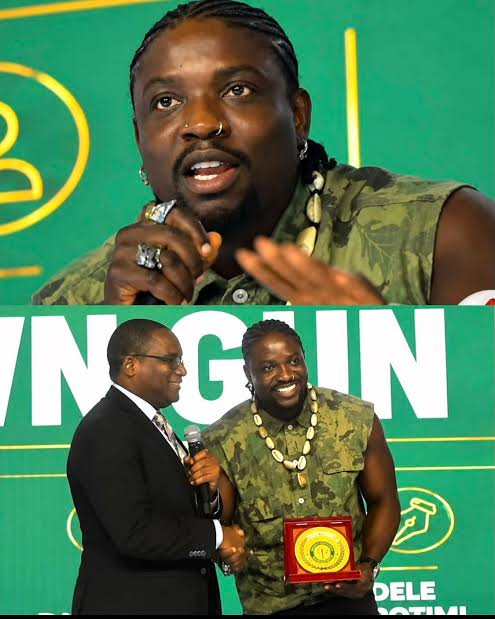
VDM addressed the criticism almost immediately. Speaking during the plenary session, he said there had been considerable debate about his invitation, but explained that the NBA did not bring him there to teach lawyers about their profession. In his words:
“There has been a lot of debate about why I was invited to this NBA conference. I’m not here to teach you people law; I’m here to share experience.”
For VDM, his relevance to the conversation came from what he claimed to have personally experienced while responding to violent incidents across Nigeria. He presented himself not as a legal expert, but as someone who had seen the effects of insecurity at close range.
3. His “unknown gunmen” argument
The session was centred on insecurity and titled “Known Gun Men”, and VDM used the opportunity to challenge the familiar description of perpetrators of violent attacks as “unknown gunmen.”
He questioned how perpetrators could continue to be described as unknown when security agencies have access to intelligence and information across the country.
Addressing security officials at the event, VDM alleged that authorities know more about the identities and locations of some of those responsible for attacks than the public is led to believe.
“There are no unknown gunmen anywhere,” he said, before making a sweeping allegation that security agencies themselves know who the perpetrators are but have failed to act.
4. The gun licence suggestion
Perhaps the most controversial part of VDM’s speech was his call for Nigerians to have easier access to guns for self-defence.
He argued that the country’s security agencies are not sufficiently staffed to protect every citizen and that ordinary Nigerians should therefore be given a legal means of protecting themselves. He said:
“They need to make provisions for citizens to protect themselves. Make it easy for us to get guns because right now they are understaffed. They can’t protect everybody.”
The argument came from his broader frustration with the country’s security situation. Rather than relying entirely on government security agencies, VDM said citizens should have some means of protecting themselves when help is not immediately available.
The suggestion immediately stood out because it moved the discussion from simply identifying the causes of insecurity to asking what ordinary Nigerians should be allowed to do when faced with violent attacks.
5. “Your lords are being kidnapped”
VDM also brought the insecurity debate directly into the legal profession. He argued that insecurity is no longer an issue that lawyers can discuss from a distance because members of the judiciary are also becoming victims. He said:
“This is not a topic of ‘may I, my lord’ because your lords are being kidnapped.”
He referred to the reported abduction of a judge travelling from Sokoto State, who was kidnapped in Kebbi State on July 26 and released about a week later.
For VDM, the incident showed that insecurity had reached institutions and individuals that Nigerians traditionally expect to be protected by the state. His point was that lawyers and judges were not separated from the insecurity affecting other Nigerians. They were experiencing it too.
6. Why Yelwata remained central to his argument
Another major part of VDM’s presentation was his account of what he had witnessed at violent scenes. He specifically mentioned the June 2025 attack in Yelwata, Guma Local Government Area of Benue State.
VDM described himself as a “first respondent” at Yelwata and said he had also been present after other violent incidents.
“I’ve seen blood and seen people burnt alive,” he said while describing his experiences.
He also gave his account of what led to the Yelwata attack, saying it was carried out in retaliation after a Fulani boy was killed.
The attack has remained one of the major examples used in discussions about Nigeria’s insecurity crisis. Reports have put the death toll at around 150, while other accounts have reported higher figures. Nine suspects have faced terrorism-related proceedings over the incident.
By bringing Yelwata into the discussion, VDM was able to connect his criticism of insecurity to an event he said he had personally witnessed rather than one he had only read about online.
7. His criticism of the media and politics around insecurity
VDM did not limit his criticism to security agencies. He also accused the media of failing to give sufficient attention to killings and violent attacks across the country.
He argued that Nigerians do not always get sustained coverage of attacks after the initial reports, particularly when it comes to the consequences of violence and the people affected. He also linked the persistence of insecurity to political interests.
During his presentation, VDM alleged that people and institutions benefiting from the crisis have reasons to allow it to continue. He made claims involving political interests, government officials and parts of the security establishment, as well as allegations concerning cattle-related businesses.
Those claims were among the areas that attracted pushback at the conference. Rather than allowing the allegations to pass without challenge, a military representative cautioned VDM over making serious accusations without evidence and stressed the need for claims against institutions to be properly supported.
8. From controversial guest to NBA award recipient

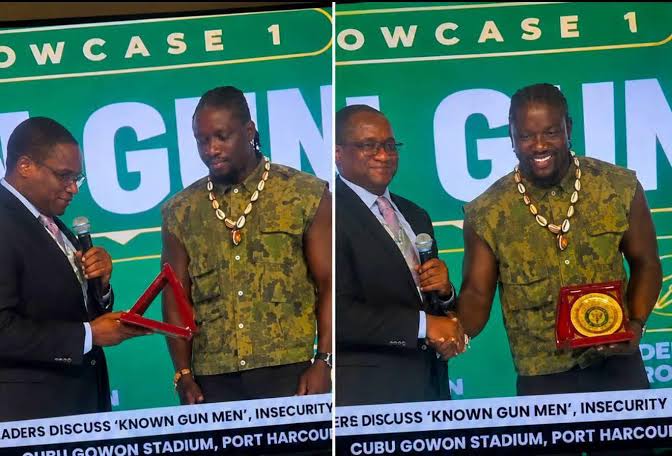
After all the controversy surrounding his invitation and the issues raised during the session, VDM left the conference with something few people might have expected when the debate over his invitation began: a recognition award from the NBA.
Following his appearance as a panellist, the association presented him with a special recognition award for attending and sharing his experiences with participants.
The presentation did not mean the NBA endorsed every claim he made. In fact, the moderator used the moment to give VDM a different piece of advice. While presenting the award on behalf of the NBA president and members, he urged VDM not to take the law into his own hands if attacked, telling him to report such incidents to the police.