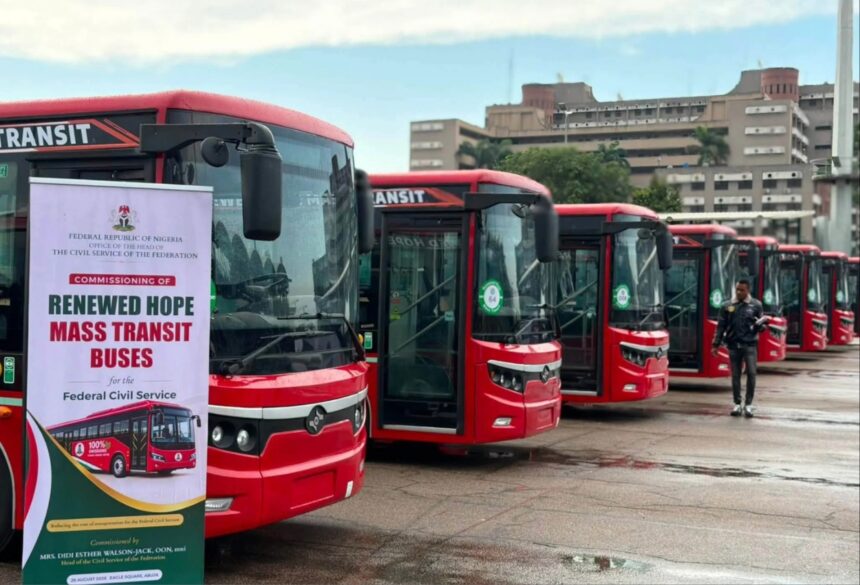
Nigeria’s federal civil servants got a new commuting option this week, and it doesn’t run on petrol. On Wednesday, the Federal Government commissioned the first 37 units of a promised 100 electric buses at Eagle Square, Abuja, kicking off a mass transit scheme that officials say is meant to cut transport costs for government workers while nudging the country’s automotive industry toward local EV production.
The programme has a name that sounds more like a policy paper than a bus service, the Renewed Hope Mass Transit Programme, but the idea behind it is simple. Civil servants in Abuja have been spending a growing share of their salaries just getting to the office. These buses are supposed to change that math.
What actually happened at Eagle Square
The outgoing Head of the Civil Service of the Federation, Didi Esther Walson-Jack, presided over the commissioning less than 24 hours before her tenure officially ended, and she made sure everyone in the room knew it. She called the handover her “parting gift” to federal workers, which is either a genuinely touching send-off or a very well-timed piece of political theatre, possibly both.
Beyond the sentiment, the numbers are straightforward. Thirty-seven buses are on the road now. The remaining 63 are expected to arrive in batches, with the full fleet of 100 slated for delivery by December 2026, according to officials at the event. The buses were paid for through the Renewed Hope Infrastructure Development Fund, and a Special Purpose Vehicle has reportedly been set up specifically to manage day-to-day operations, maintenance and the long-term upkeep of the fleet, a detail that matters more than it sounds, because plenty of Nigerian public transport schemes have stalled not at launch but at the maintenance stage.
How the routes will work
Here’s what civil servants actually want to know: where do these things go?
For now, the buses will run a pilot phase on selected routes within the Federal Capital Territory, connecting major residential corridors to the federal secretariat complex, the daily route thousands of workers already make by okada, keke, or overcrowded commercial buses. Officials haven’t published a fixed route map publicly yet, and Walson-Jack herself pushed for “clearly defined routes and schedules” as the pilot gets underway, which suggests the finer details are still being worked out rather than locked in.
Once the pilot proves itself, the plan is to expand beyond the FCT to Federal Secretariats in other states, giving civil servants outside Abuja a shot at the same benefit. No firm state-by-state timeline has been given for that stage; it’s tied to how the pilot performs and how quickly the remaining buses roll in.
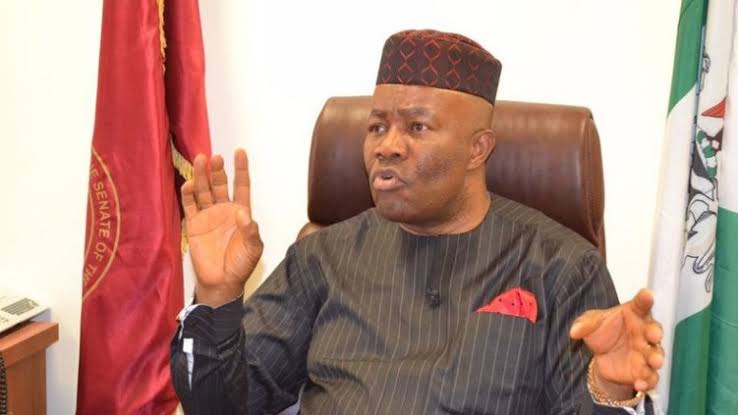
On capacity, the Minister of State for Industry, Trade and Investment, Senator John Owan Enoh, gave the figures that matter for planning purposes: each bus can carry up to 200 passengers and travel at least 200 kilometres on a single charge. That’s a solid range for intra-city commuting, assuming the charging infrastructure keeps pace; more on that below.
Why this matters for civil servants’ pockets
Walson-Jack framed the whole initiative around one line that’s hard to argue with: the daily commute shapes a worker’s finances, safety, punctuality, and ultimately their productivity. It’s the kind of statement that could sound like filler in a speech, except that for a lot of federal workers earning modest salaries, transport really is one of the biggest recurring costs eating into take-home pay.
The pitch is that a subsidised, reliable bus service takes that pressure off. Workers spend less, arrive on time more consistently, and, in theory, show up to the office less frazzled. Whether that translates into measurable productivity gains is genuinely hard to say this early, but the logic isn’t controversial. Reliable transport tends to help.
The bigger play: getting Nigeria into the EV business
There’s a second story running underneath the bus commissioning, and it’s arguably the more consequential one long-term. The National Automotive Design and Development Council, led by Director-General Olu Osanipin, has been pushing this project as much more than a transport handout; it’s positioned as a proof of concept for local electric vehicle manufacturing.
Osanipin has said the buses are being sourced from local assemblers specifically to strengthen domestic manufacturing capacity, and that government has already procured charging infrastructure for installation in parts of the country. There’s also a plan on the table for a Nnewi Automotive Development Park in Anambra State, meant to give manufacturers and component producers shared infrastructure rather than each firm building from scratch.
Enoh, for his part, urged local manufacturers to “invest in production facilities, increase local content and develop products capable of competing in the global market”, the kind of ambition every Nigerian industrial policy announcement carries, though this one at least comes with an actual fleet of vehicles on the ground as evidence of intent.
This isn’t Nigeria’s first attempt at greening its public transport. The government has previously rolled out CNG-powered buses and tricycles as part of the same broader energy transition push, and the Federal Executive Council approved funding for CNG, solar and electric vehicles back in 2024. The electric bus programme is essentially the next visible chapter of that plan.
The part nobody’s glossing over: power and charging
Here’s where I’ll be honest about the obvious catch. Electric buses are only as reliable as the electricity behind them, and Nigeria’s grid isn’t exactly known for consistency. Running a fleet that needs to charge repeatedly throughout the day, every day, puts real pressure on charging infrastructure and power availability, pressure that’s a lot higher for buses in constant service than it is for a single EV parked overnight at someone’s house.
Officials seem aware of this. The phased rollout, starting with a small pilot before scaling up, looks partly designed to generate real operating data, how the buses hold up, how often charging becomes a bottleneck, what maintenance actually costs in Nigerian conditions, before committing the full fleet. That’s a sensible way to de-risk a programme this size, assuming the lessons from the pilot actually get applied rather than shelved once the political moment has passed.
The immediate next steps are straightforward: the pilot routes go live in Abuja, the Special Purpose Vehicle takes over day-to-day management, and the remaining 63 buses arrive in phases through the rest of the year, with December 2026 as the target for full deployment. Whether the programme expands smoothly to Federal Secretariats nationwide will depend heavily on how those first few months in Abuja go, and on whether the charging infrastructure keeps up with the buses rather than the other way around.
For now, 37 electric buses are moving federal workers around Abuja that weren’t there last week. That’s a small, concrete win in a policy space that usually produces a lot more announcements than actual vehicles on the road.