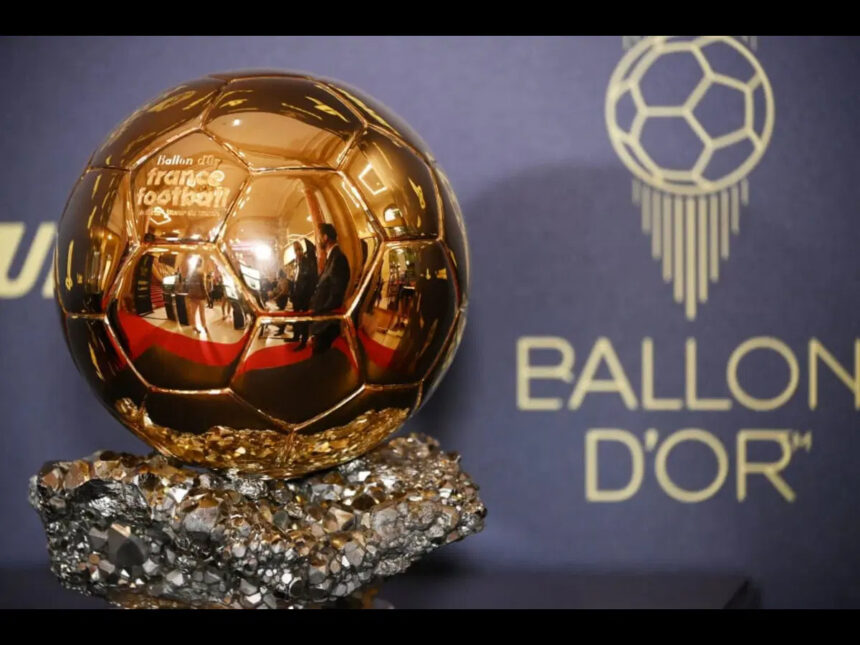
Football fans have circled two dates on their calendars this autumn, and neither of them involves a match. September 8 is when France Football finally lifts the lid on the shortlists for the 2026 Ballon d’Or, and October 26 is when the winners walk away with the game’s most coveted individual prize, for the first time ever, on English soil.
- When Will the Ballon d’Or 2026 Nominees Be Announced?
- The 12 Ballon d’Or Categories — And How Many Players Make Each List
- Why This Year’s Race Feels So Wide Open
- Who’s Expected to Lead the Men’s Shortlist
- The Women’s Ballon d’Or Race
- A Quick Reminder of Where the Trophy Currently Sits
- What to Expect Between Now and the Ceremony
With the World Cup dust barely settled in North America and a new European season already up and running, the race for the Golden Ball has rarely felt this unpredictable. There is no runaway favourite the way there sometimes has been in years past. Instead, there’s a genuine cluster of contenders, each with a case strong enough to argue over in a bar until closing time. Here’s everything currently known about the nominees list, how the categories break down, and who’s shaping up to dominate the conversation once the shortlist drops.
When Will the Ballon d’Or 2026 Nominees Be Announced?
Mark it down: September 8, 2026 is the day the official nominees for all 12 Ballon d’Or categories go live on the award’s official website. That announcement effectively fires the starting gun on seven weeks of debate, punditry and last-minute campaigning before the winners are crowned.
The ceremony itself lands on Monday, October 26, 2026, and for the first time in the award’s history, it won’t be held in Paris. London has been named host city, a symbolic nod to England’s growing weight in the modern game and a first for the 70-year-old prize. Kickoff time hasn’t been confirmed yet, but early reporting points to a start around 7:00 PM UK time (8:00 PM CET), in keeping with previous years’ gala format.
The 12 Ballon d’Or Categories — And How Many Players Make Each List
One thing that often trips people up is assuming the “Ballon d’Or nominees list” refers to a single shortlist. It doesn’t. France Football splits the night across 12 separate awards, each with its own nominee count, honouring everyone from the game’s biggest superstars to its best young talents, goalkeepers, strikers, coaches and even clubs. Here’s the full breakdown confirmed ahead of the September 8 reveal:
| Category | Number of Nominees |
|---|---|
| Men’s Ballon d’Or | 30 players |
| Women’s Ballon d’Or | 30 players |
| Men’s Young Talent of the Year (Kopa Trophy) | 10 players |
| Women’s Young Talent of the Year | 5 players |
| Men’s Goalkeeper of the Year (Yashin Trophy) | 10 players |
| Women’s Goalkeeper of the Year | 5 players |
| Men’s Striker of the Year (Gerd Müller Trophy) | 10 players |
| Women’s Striker of the Year | 5 players |
| Men’s Coach of the Year | 5 coaches |
| Women’s Coach of the Year | 5 coaches |
| Men’s Club of the Year | 5 clubs |
| Women’s Club of the Year | 5 clubs |
Notice how top-heavy the men’s and women’s Ballon d’Or shortlists are compared to everything else. Thirty names is a wide net, wide enough to capture squad players who had one outstanding European night as well as the household names expected to duke it out for the trophy itself. The smaller categories, by contrast, tend to be far more predictable, usually filled by players who already dominate headlines in their specific role.
Why This Year’s Race Feels So Wide Open
Every Ballon d’Or cycle has its own storyline, and this one has an unusually good excuse: the calendar. For the fourth time in the award’s history, voting is based on a full season (2025–26) rather than a calendar year, and that season happened to end with a World Cup. Throw in Champions League football, five major European leagues and a month of knockout drama in North America, and you get a voting pool stuffed with legitimate cases.
Spain’s World Cup triumph over Argentina in July looms especially large. It’s not just that La Roja lifted the trophy, it’s that so many of their players were already having career-best club seasons before the tournament even started. Meanwhile, Bayern Munich’s Harry Kane quietly put together one of the most productive individual seasons in recent memory, and Paris Saint-Germain’s continued domination of French and European football means their dressing room alone could fill several categories on its own.
Who’s Expected to Lead the Men’s Shortlist
While the official 30-man list won’t be public until September 8, months of club form, World Cup performances and bookmaker odds have already sketched out a fairly clear picture of who’s fighting for the actual trophy. Here’s how the betting markets and power rankings currently see the race shaping up.
| Rank | Player | Club / Country | Case for the Award |
|---|---|---|---|
| 1 | Harry Kane | Bayern Munich / England | 61 club goals in 2025–26, Bundesliga and DFB-Pokal double, six World Cup goals |
| 2 | Lamine Yamal | Barcelona / Spain | 24 goals, 18 assists, back-to-back La Liga titles, World Cup winner |
| 3 | Rodri | Manchester City / Spain | Anchored Spain’s World Cup-winning midfield, named tournament’s outstanding player |
| 4 | Kylian Mbappé | Real Madrid / France | World Cup’s all-time top scorer (22 goals), 42 club goals, but no major trophy |
| 5 | Khvicha Kvaratskhelia | PSG / Georgia | 19 goals, 11 assists, decisive in PSG’s Champions League run |
| 6 | Pau Cubarsí | Barcelona / Spain | World Cup-winning centre-back, La Liga champion, just 19 years old |
| 7 | Ousmane Dembélé | PSG / France | Defending champion, 20 goals as PSG retained Ligue 1 and the Champions League |
| 8 | Lionel Messi | Inter Miami / Argentina | Eight World Cup goals, 43 club goals, MLS Cup winner in his final international tournament |
| 9 | Fabián Ruiz | PSG / Spain | Only player to win both the Champions League and World Cup this cycle |
| 10 | Jude Bellingham | Real Madrid / England | Inspired England’s run to the World Cup semi-finals despite an injury-hit club season |
Kane’s case is built almost entirely on sheer output, few players in Europe have ever scored the way he did for Bayern Munich this season, though his quiet night against Argentina in the World Cup semi-final has left some wondering whether it will cost him votes. Yamal, still only 19, has the numbers and the trophies but a relatively modest World Cup by his own standards. Rodri’s storyline is the neatest of all: the same player who controversially edged out Messi for the 2024 award now returns with a World Cup winner’s medal and a case that’s difficult to argue against.
Elsewhere, keep an eye on names like Erling Haaland, who inspired Norway to a stunning World Cup quarter-final run in the country’s first appearance at the tournament since 1998, and Michael Olise, who topped the World Cup’s assist charts and was named Bundesliga Player of the Season. Neither is considered a frontrunner for the trophy itself, but both are near-certainties for a place on the 30-man shortlist.
The Women’s Ballon d’Or Race
With no major women’s international tournament played in 2026, the women’s award is shaping up as a more club-driven contest than the men’s race. Barcelona’s dominance in Spain and Europe means their players are, once again, expected to fill much of the shortlist.
Alexia Putellas has emerged as an early favourite, with Barcelona teammate Claudia Pina pushing close behind her after a breakout campaign. Three-time reigning champion Aitana Bonmatí remains in contention but faces a tougher path after injury disrupted part of her season, which would make a fourth consecutive win, something no player, male or female, has ever achieved, a genuinely historic story if she manages it. Ewa Pajor, Caroline Graham Hansen and Patri Guijarro round out a group of players expected to feature prominently once the 30-name list is confirmed.
A Quick Reminder of Where the Trophy Currently Sits
Ousmane Dembélé arrives as the man defending the crown, having won the 2025 Ballon d’Or off the back of PSG’s first-ever Champions League title. He backed that up with another strong campaign in 2025–26, scoring 20 goals as PSG retained both their domestic league and European titles, meaning he walks into this year’s ceremony with a genuine case for back-to-back honours, something only a handful of players have managed in the award’s history.
On the women’s side, Bonmatí’s bid for a historic fourth straight win adds an extra layer of intrigue to a category that otherwise looks wide open.
What to Expect Between Now and the Ceremony
Once the nominees drop on September 8, expect the usual wave of reaction: complaints about snubs, debates over whether defenders and goalkeepers get a fair shake, and no shortage of campaigning from clubs and pundits alike. Voting is typically carried out by a global panel of journalists, one per eligible country, and results are kept under wraps until the night itself.
For now, all that’s confirmed is the date, the venue, and the category breakdown. The names that will actually contend for the Golden Ball in London this October are still six days away from becoming official, but based on everything that’s unfolded across an extraordinary 2025–26 season, this looks set to be one of the closest, most fiercely debated races in years.