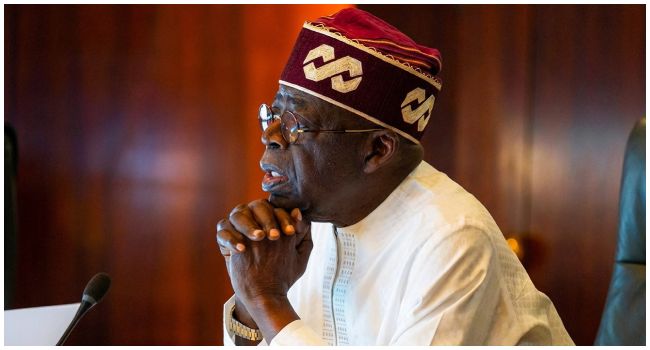
A Washington, D.C. courtroom has become the unlikely stage for one of the most sensitive fights involving Nigeria’s presidency in years, and the FBI just raised the stakes considerably.
In a filing submitted late last week, the Bureau told a federal judge that releasing certain records connected to President Bola Tinubu could expose its informants and agents to “violent retaliation.” That’s not a phrase federal agencies use lightly, and it’s why a decades-old Freedom of Information Act (FOIA) case has suddenly become front-page news in Nigeria and beyond.
At the center of it all sits a straightforward but explosive question: what, exactly, is in the FBI and DEA’s files on the man who now leads Africa’s most populous country, and why has releasing them dragged on for more than three years?
How This Started: One Man’s FOIA Requests
The case traces back to Aaron Greenspan, an American transparency activist and founder of the legal records platform PlainSite. Between 2022 and 2023, Greenspan filed a dozen separate FOIA requests with six U.S. federal agencies, the FBI, DEA, IRS, State Department, and U.S. Attorneys’ offices in Illinois and Indiana, along with the CIA.
His target: records tied to four men allegedly connected to a Chicago drug and money-laundering network that federal investigators looked into in the early 1990s. Bola Tinubu was one of the four names on that list, alongside Lee Andrew Edwards, Mueez Abegboyega Akande, and Abiodun Agbele.
Rather than confirm or deny that such records existed, most of the agencies gave Greenspan what’s known in FOIA law as a “Glomar response”, essentially a refusal to say whether the files exist at all. Unsatisfied, Greenspan pushed the matter through the DOJ’s internal appeals process and, when that didn’t move the needle, filed a lawsuit in June 2023 before Judge Beryl Howell of the U.S. District Court for the District of Columbia.
The Court Forces the Agencies’ Hand
For nearly two years, the case crawled along with the usual back-and-forth of federal litigation. Then, in April 2025, Judge Howell delivered a ruling that changed everything: she found that the FBI and DEA hadn’t adequately justified their refusal to confirm or deny the existence of the requested records, and she ordered both agencies to search their files and start producing whatever wasn’t legally exempt.
The CIA came out of that ruling differently, its Glomar response was upheld, meaning the agency still doesn’t have to say whether it holds anything on Tinubu.
The FBI and DEA were initially given until May 2, 2025, to comply. That deadline came and went. A day before it was due, the two agencies asked for a 90-day extension, telling the court they needed more time to complete their searches. Months later, thousands of documents had been produced, many of them redacted, along with a Vaughn index, a legal document that explains, line by line, why certain material is being withheld.
Greenspan wasn’t satisfied with what he got. He’s since asked the court to compel the agencies to release more, arguing the disclosures fell well short of what his original requests demanded.
Why the FBI Is Pushing Back Now
That brings us to last week’s filing, arguably the most dramatic development in the case so far.
In a submission made on the FBI’s behalf by Jeanine Pirro, the U.S. Attorney for the District of Columbia, the Bureau leaned on two specific FOIA exemptions: 7(E), which protects law-enforcement techniques and procedures from disclosure, and 7(F), which shields records whose release “could reasonably be expected to endanger the life or physical safety of any individual.”
The FBI’s argument goes like this: some of the people named or referenced in the drug-trafficking investigation files could view the material as damaging or incriminating. Whether those individuals cooperated with investigators, provided tips, or worked the case as law-enforcement personnel, the Bureau contends they could become targets, either from people connected to the original criminal network or from members of the public reacting to what the records reveal.
Because explaining exactly why certain material is dangerous would, in the FBI’s telling, risk exposing the very information it’s trying to protect, the Bureau asked Judge Howell for permission to lay out its full reasoning privately, under seal, rather than in a public filing. The judge granted that request, meaning a fuller account of what’s in these files, and why the FBI wants them kept quiet — will be reviewed behind closed doors rather than argued out in open court.
Tinubu’s Own Legal Team Steps In
The FBI isn’t the only party trying to keep a lid on this. President Tinubu, participating in the case as an intervenor rather than a defendant, filed his own response the same week through lawyers Christopher W. Carmichael, Victor P. Henderson, and Oluwole O. Afolabi.
In a 16-page filing, Tinubu’s legal team asked the court to reject Greenspan’s motion for summary judgment and to let the existing redactions in already-released FBI and DEA documents stand. Their central argument rests on privacy: they say releasing more detail , including material connected to a 1993 civil forfeiture case involving roughly $460,000 allegedly tied to Tinubu, would violate his personal privacy rights, even though some information about the case has already become public over the years.
To back that up, Tinubu’s lawyers pointed to the U.S. Supreme Court’s Reporters Committee precedent, which holds that individuals can retain a privacy interest in government records even after portions of those records have entered the public domain. They also cited a 2012 Judicial Watch case involving similar disclosure disputes.
Speaking on the matter, senior legal counsel Wole Afolabi, SAN, explained that the president’s objection isn’t about hiding wrongdoing but about protecting information that goes beyond what has already been publicly established in the decades-old forfeiture proceeding.
Tinubu has consistently denied any wrongdoing connected to the underlying 1990s drug investigation.
What Happens Next
For now, the case sits with Judge Howell, who must weigh Greenspan’s push for fuller disclosure against the FBI’s safety-based objections and Tinubu’s privacy arguments. The sealed material the FBI submitted will factor heavily into that decision, even though the public won’t see it directly.
There’s no fixed date for a ruling, and given how long this case has already dragged on, more than three years since the first FOIA requests were filed, nobody involved is expecting a quick resolution. What is clear is that the outcome will set an important marker for how much the U.S. government is willing to disclose about a sitting foreign head of state’s decades-old brush with American law enforcement, and how far agencies can go in citing agent safety to keep records sealed.
Until then, the closest thing to a straight answer sits in a judge’s private files, and in a legal fight that shows no sign of ending soon.