For years, gospel music has occupied a curious position in Nigeria’s music industry.
It can dominate churches, concerts, streaming platforms and social media conversations. Its biggest songs can become widely known beyond Christian audiences. Yet when major music awards arrive, faith-based records are sometimes placed in a separate category, away from some of the industry’s biggest prizes.
Now, that question has landed squarely at the door of The Headies.
Afrogospel artiste Gaise Baba has challenged the organisers of Nigeria’s most prominent music awards over what he described as the marginalisation of faith-based music in major award categories.
The Headies has rejected the claim, and that response has created a more complicated question: if gospel artistes are technically eligible for mainstream awards, does that necessarily mean they are receiving equal consideration?
That is the issue at the heart of the latest Headies controversy.
How the controversy started
On August 28, 2026, Gaise Baba published an open letter addressed to The Headies organisers.
His intervention came shortly after the nominees for the 18th edition of the awards were announced.
Gaise Baba argued that faith-based musicians should not be judged primarily through a religious or inspirational classification. Instead, he believes their work should compete according to its musical qualities, genre, creativity and cultural impact.
His argument was particularly pointed when he discussed rap.
According to Gaise Baba, a rap song does not stop being rap because its lyrics are about faith.


Whether the subject is money, relationships, social issues or Christianity, he argues, the elements that make the record rap remain the same: the writing, flow, cadence, delivery and overall craft.
That argument goes beyond gospel music. It challenges the way award organisers determine where a song belongs when genre and message overlap.
The sentence that captured the debate
The phrase at the centre of Gaise Baba’s argument was simple:
“A rap record is a rap record.”
His point was that a faith-based rap song should be able to compete in a rap category if it meets the requirements.
The same principle, by extension, could apply to an R&B song with Christian themes, an Afrobeats record about faith or a pop song built around spiritual themes.
For Gaise Baba, the religious message should not automatically determine the award category.
He believes the music should first be judged as music.
Why the Inspirational category matters
The Headies introduced the Best Inspirational Single category in 2022.
The category was intended to recognise inspirational and faith-based music, giving such records a dedicated place within the awards.
That development was not necessarily the problem for Gaise Baba. In fact, he acknowledged the creation of the category as a positive development.
The concern is what happens if the category becomes the primary destination for faith-based records.
The official 18th Headies nomination list describes Best Inspirational Single as a voting category for the most outstanding inspirational or faith-based song.
This year, the nominees are Sunmisola Agbebi and Yinka Okeleye’s “Amioluwa,” Lawrence Oyor’s “Favour,” Sinach’s “Idinma (You Are Good),” EmmaOMG’s “Korin Iyin (I Will Praise You),” Gaise Baba and Lawrence Oyor’s “No Turning Back 2,” and Mercy Chinwo’s “We Move.”
On paper, that looks like recognition, but Gaise Baba’s question is whether it is enough.
The experience that brought the issue closer to home
Gaise Baba’s criticism is also connected to his own experience at The Headies.
At the 17th Headies, he was nominated for Best Inspirational Single for “Particularly,” featuring Tope Alabi.
The official Headies records list the song among the nominees alongside works by Anendlessocean, Mercy Chinwo, Dunsin Oyekan and Limoblaze. Mercy Chinwo eventually won the category with “You Do This One.”
Gaise Baba recalled that the Inspirational category was not called during the main ceremony.
He said his team had participated in media activities, the pre-award reception and the ceremony itself, only for the category not to be presented on stage.
He described the situation as a disregard for the creatives nominated in the category.
But there is an important qualification. Gaise Baba himself noted that the Inspirational category was not the only category left uncalled.
That matters because it weakens any straightforward interpretation that the omission was specifically targeted at gospel music.
Then The Headies pushed back
The organisers did not accept the suggestion that gospel artistes are being excluded from major categories.
Their response was built around one major piece of evidence:
The history of The Headies itself.
The organisers cited gospel and faith-based artistes including Lara George, Kefee, Nikki Laoye and Timi Dakolo, pointing to their nominations and victories in general categories.
That historical record is important.
It means there is no obvious basis for saying that gospel artistes are formally banned from mainstream Headies categories.
In fact, some have competed successfully against artistes outside gospel music.
The Timi Dakolo example
Timi Dakolo is perhaps the strongest example used in The Headies’ defence.

His career at the awards includes major general-category recognition, including Recording of the Year, Best Vocal Performance (Male) and Best R&B Single.
That directly challenges the idea that a faith-based artiste must remain within an inspirational category.
The Headies therefore argues that its record demonstrates that gospel and inspirational musicians have not been locked out of mainstream recognition.
Lara George, Kefee and Nikki Laoye are also cited by the organisers as examples of faith-based musicians who have won or competed successfully outside a dedicated gospel category.
So what exactly is Gaise Baba challenging?
This is where the story becomes more interesting.
Gaise Baba is not simply saying:
“Gospel artistes cannot win mainstream awards.”
The historical record makes that claim difficult to sustain.
His argument is closer to:
“Why should a faith-based song be treated differently from another song in the same musical genre?”
That is a much broader question. It separates eligibility from consideration.
The Headies says faith-based artistes are eligible. Gaise Baba wants to know whether that eligibility translates into genuine consideration across the major categories.
Those are not necessarily the same thing.
The difference between eligibility and recognition
Imagine a faith-based artiste releases a rap song.
The song has strong lyrics, impressive flow, quality production and significant cultural impact.
If it is considered for Best Inspirational Single but not Best Rap Single, what determined that decision?
Was it the sound?
Was it the song’s message?
Was it the artiste’s identity?
Was it the Academy’s interpretation of the genre?
Or simply the competitive field in that particular year?
That is the question Gaise Baba’s argument places under the microscope.
And there is currently no public statistical analysis from The Headies demonstrating how frequently faith-based records are submitted for and considered across mainstream categories compared with other records.
The 18th Headies makes the question timely
The debate is unfolding as The Headies prepares for its 18th edition.
The awards are scheduled for October 25, 2026, in Toronto, Canada, under the theme “Africa to the World.”
The eligibility period covers music released between August 1, 2024 and April 30, 2026.
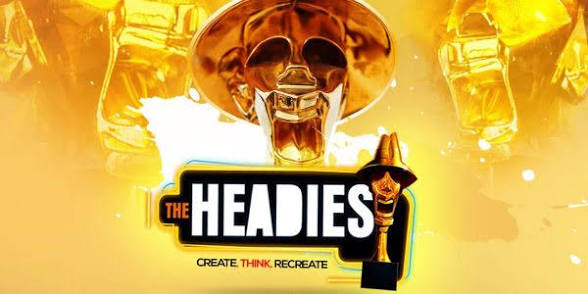
The official list contains mainstream categories including Best Recording of the Year, Best R&B Single, Best Rap Single, Afrobeats Single of the Year, Song of the Year, Album of the Year, Best Male Artiste and Best Female Artiste, alongside Best Inspirational Single.
That structure is precisely why Gaise Baba’s argument has attracted attention.
The Inspirational category exists. But so do the mainstream categories.
The question is where faith-based records should fit when they qualify for both.
What about “No Turning Back 2”?
The debate becomes even more relevant because Gaise Baba is himself among this year’s Best Inspirational Single nominees.
His collaboration with Lawrence Oyor, “No Turning Back 2,” is competing in the category.
Lawrence Oyor’s “Favour” is also nominated.
Both records demonstrate the continuing visibility of faith-based music within The Headies’ current framework.
But Gaise Baba’s broader challenge remains:
Should successful faith-based records also be considered for awards such as Song of the Year or relevant genre categories when they satisfy those categories’ criteria?
That question has not been conclusively answered by either side.
The Headies says the Inspirational category is about inclusion
The organisers have strongly defended the purpose of the dedicated category.
Their argument is that creating Best Inspirational Single was not an attempt to isolate gospel artistes.
It was intended to give inspirational and faith-based music additional recognition. That distinction is central to their response.
From The Headies’ perspective, having a dedicated category does not mean faith-based artistes cannot compete elsewhere.
Instead, it means they have another opportunity to receive recognition. But Gaise Baba sees a possible problem.
The concern is not necessarily what the category was created to achieve. It is what the category could become over time. A dedicated category can be valuable.
But if music is consistently directed there because of its religious message, rather than its musical characteristics, the category could unintentionally become a boundary.
That is the distinction Gaise Baba wants the industry to examine.
What does the official Headies rulebook show?
The available official 18th Headies nomination information does not state that faith-based artistes are prohibited from mainstream categories.
In fact, the organisation defines Best Rap Single as the award for the best rap song released during the eligibility period, while Best R&B Single is similarly defined around R&B music.
There is no published rule on that nomination page saying:
“A gospel song cannot compete in this category.”
That is significant. It means the allegation of a formal exclusion policy is not supported by the published category descriptions.
But rules are one thing. How those rules are interpreted is another. The ceremony controversy adds another layer
There is also the question of presentation. Gaise Baba argued that nominees deserve proper recognition when their category is created and included in the awards.
The Headies, however, has explained that its awards have expanded considerably and that not every category can necessarily be presented during the main live broadcast.
That explanation is important because the previous ceremony involved other categories as well.
So the evidence does not establish that the Inspirational category was deliberately removed from the stage because it was a gospel category.
Still, the incident helped create the perception that faith-based nominees were receiving less visibility.
And perception matters at an awards ceremony.
Is this really about gospel music?
Perhaps not entirely. At its deepest level, this is a debate about how music is judged.
Music genres are built around sound, structure, performance and production. Religion is about message and identity.
The two can overlap;
A Christian artiste can make rap.
A Muslim artiste can make R&B.
A secular artiste can release a spiritual song.
An Afrobeats song can discuss faith.
So where should an awards body draw the line?
Should classification follow the sound?
Should it follow the message?
Or should both factors matter?
What the evidence establishes
Several facts are already clear.
First: Gaise Baba publicly criticised The Headies on August 28, 2026 over the treatment of faith-based music.
Second: he argued that gospel records should be judged on musical quality, creativity and impact and should not automatically be confined to inspirational categories.
Third: The Headies rejected the suggestion that gospel artistes are excluded from mainstream categories.
Fourth: the organisers cited previous mainstream successes by artistes including Lara George, Kefee, Nikki Laoye and Timi Dakolo.
Fifth: the official 18th Headies categories do not contain a published prohibition preventing faith-based music from competing in mainstream genre categories.
Sixth: the Best Inspirational Single category continues to exist and includes six nominees in the 18th edition.
What remains unanswered?
The most difficult question is still open. How often are faith-based songs actually considered for major mainstream categories when they meet the relevant musical criteria?
Answering that would require more than individual examples. It would require years of nomination data.
It would require examining eligible gospel and faith-based releases, their genres, submissions, nominations and eventual outcomes.
Without that information, neither side can conclusively prove the broader claim that the system either systematically sidelines gospel music or treats it exactly like every other form of music.
For now, both sides have defensible positions.
The Headies has history on its side
The organisers can point to real winners.
Faith-based artistes have won mainstream awards.
That makes a blanket claim of exclusion difficult to sustain. Gaise Baba has a different question
His argument is about whether the existence of those past victories should be enough to prove that the current system is fair.
It is a subtle but important distinction. A door can be open without everyone having the same experience once they enter.
That is why this debate is unlikely to disappear simply because The Headies has produced examples of previous gospel winners.
The real test may come on October 25
The 18th Headies will provide another opportunity to observe how faith-based music is recognised.
Will the Inspirational category remain the main space for gospel records?
Will faith-based artistes appear prominently in broader categories?
Will any of the current Inspirational nominees cross into the biggest awards?
And, perhaps most importantly, will the results convince critics that the industry’s largest awards platform is judging music primarily on craft, genre and impact rather than religious identity?
Those questions remain unanswered. For now, the evidence does not show that The Headies has formally banned gospel artistes from major categories.
But Gaise Baba has succeeded in raising a more difficult question, one that cannot be settled simply by producing a list of past winners.
Is being eligible enough, or should faith-based music be demonstrably competing on equal terms across the Nigerian music industry’s biggest stage?
The answer may not come from the statements issued this week. It may come from the nominations, the winners and the decisions made when the 18th Headies finally takes the stage in Toronto.