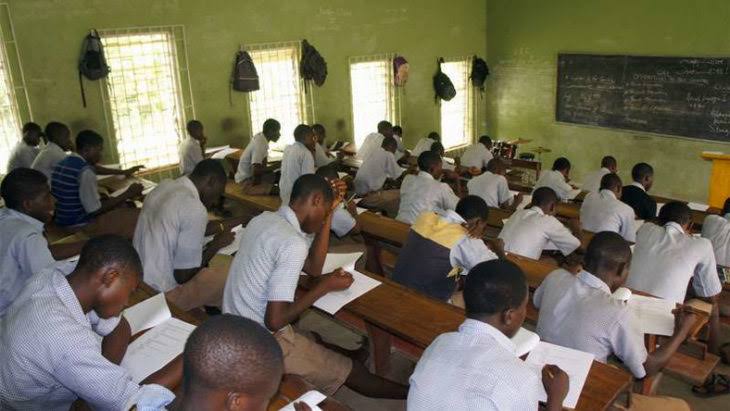
The Joint Admissions and Matriculation Board (JAMB) has released the 2026 Unified Tertiary Matriculation Examination (UTME) results for underage candidates.
The result, however, is released only for viewing purposes and to let candidates and their parents know their children’s performance.
JAMB’s Public Communication Adviser, Dr Fabian Benjamin, made this known in a statement on Saturday in Abuja.
What candidates and parents must know
The release of the results did not automatically confer eligibility for admission on all underage candidates, Benjamin noted.
Only those who meet its stringent conditions and requirements for exceptional consideration would gain admission into tertiary institutions.
Who is considered an underage candidate
According to JAMB, any candidate who would be less than 16 years old as at September 30, 2026, is an underage candidate for the 2026 admission exercise.
Benjamin stated that such results cannot be used for admission or any other official purpose, except in respect of candidates who satisfy the requirements prescribed for exceptionally performing underage candidates.
How underage candidates can check their results
He disclosed that candidates could check their results by sending “RESULT” to 55019 or 66019 using the same SIM card with which they registered for the UTME.
What underage candidates must know
Benjamin said the Board had earlier made it clear that only exceptionally performing underage candidates who satisfied the prescribed conditions would be eligible for admission.
Candidates who did not satisfy the requirements for admission consideration are therefore warned to refrain from presenting their results to any institution or individual for the purpose of securing admission.
The spokesperson noted that the examination body deliberately set the standard for exceptional admission high and made the process rigorous. The admission process involved multiple stages of assessment to ensure that only candidates who showed the required academic maturity and remarkable ability were considered.
What are the admission eligibility requirements for underage candidates
Benjamin said one of the requirements for consideration is the underage candidate’s UTME score. A candidate is expected to have a minimum UTME score of 320. The candidate is also expected to obtain a minimum of 80 per cent performance in relevant Senior Secondary School Certificate Examination (SSCE) subjects, where applicable.
“Such candidates are also required to meet the relevant Post-UTME requirements of their chosen institutions and undergo the prescribed final assessment by experts,” he said.
Benjamin explained that the process was designed to differentiate genuinely exceptional underage candidates from those who might have merely performed well in the UTME.
He said the admission process for exceptionally performing underage candidates was still ongoing, adding that all necessary stages of assessment and verification had not been concluded.
Why the admission process is still ongoing
He said one of the reasons why the admission process is still open was because the National Examinations Council (NECO) results were not out, and it would be unfair to conclude the process without allowing candidates awaiting their NECO results to present them for verification.
“The NECO results are yet to be released, and the Board would therefore await their release before proceeding to the final stage of the assessment process,” he said.
Bethat njamin disclosed that the Board would announce a date for the final stage of the assessment of the exceptionally performing underage candidates as soon as the NECO results were released,
He stressed that the ongoing process was not merely based on UTME performance but involved a broader assessment to ensure that only candidates who genuinely met all the prescribed requirements were considered for admission.
The spokesperson implored parents, guardians, candidates and members of the public to exercise caution and avoid patronising individuals who claimed to have the capacity to secure admission for underage candidates outside the established process.
He reiterated that participation in the UTME and the release of a candidate’s result did not, in themselves, guarantee admission, particularly for candidates who had not attained the prescribed admission age.
Benjamin assured the public that the process for exceptionally performing underage candidates would remain transparent, rigorous and merit-based.
He reiterated the Board’s commitment to protecting the integrity of the admission process and ensuring that only candidates who satisfied the established requirements were admitted.