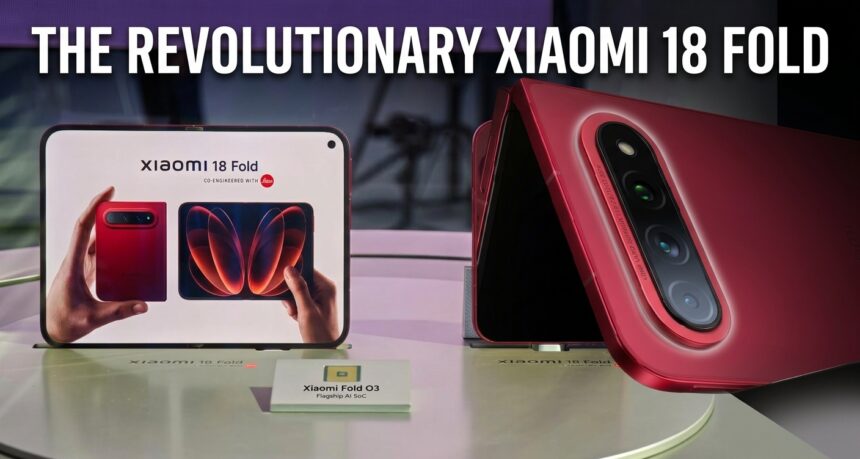
Xiaomi has locked in September 7 as the date its most anticipated foldable phone of the year finally goes official, and the company has spent the past two weeks feeding the hype machine with just enough detail to keep the internet talking. The Xiaomi 18 Fold headlines an autumn event in China that will also introduce the Xiaomi Pad 9 Pro Max tablet and three new Sky Nomad range-extended SUVs, but it’s the foldable that’s pulling most of the attention, not least because Xiaomi has timed the launch to land two days before Apple is expected to unveil its own book-style foldable, the rumoured iPhone Ultra.
For a company that has never sold a single Mix Fold outside China, that timing feels deliberate. Xiaomi wants the conversation about wide-format foldables to start with its name in the headline, not Apple’s.
When and where
The event kicks off at 7 p.m. Beijing time on September 7. It’s a China-only launch, at least for now, and there’s been no confirmation from Xiaomi that the 18 Fold will get any kind of global rollout. Every Mix Fold before it stayed a domestic product, and industry watchers aren’t expecting that pattern to break this time either, even with all the fresh engineering packed into this one.
A new name, a wider body
The “18 Fold” naming is itself a small story. Earlier leaks referred to the device as the Mix Fold 5, but Xiaomi appears to have dropped that lineage in favour of a name that ties it directly to the numbered Xiaomi 18 series. Company president Lu Weibing has been the one fronting most of the reveals, posting official renders and a walkthrough video on Weibo that show the phone in a deep “Nishino Red” finish, alongside a hinge breakdown that Xiaomi clearly wants people to notice.
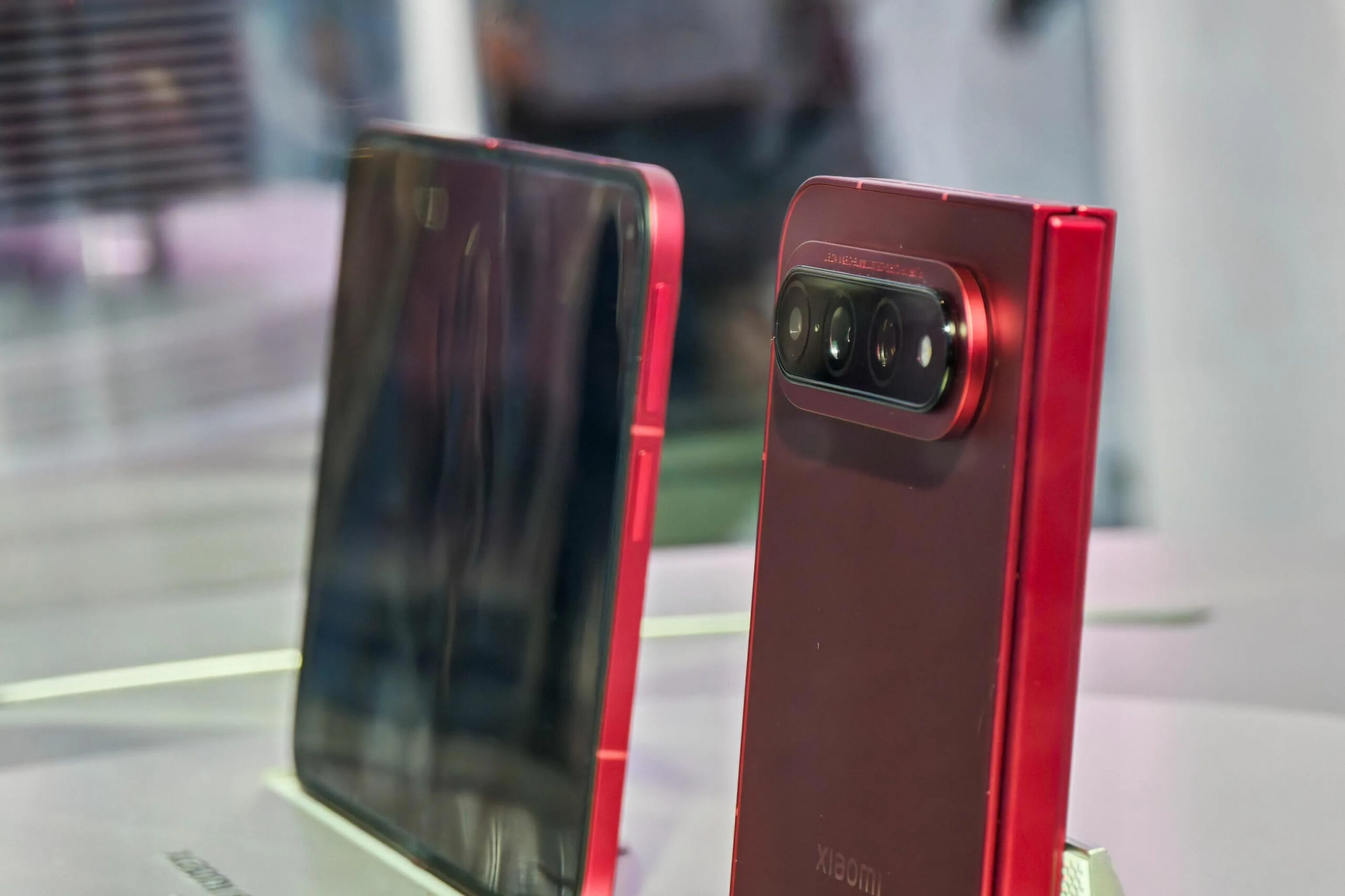
The design itself marks a real departure from the Mix Fold 4. Xiaomi is calling it a “mid-fold” architecture, wider than a traditional book-style foldable, closer in proportions to what’s been rumoured for Samsung’s Galaxy Z Fold 8 and Apple’s foldable iPhone. Large super-elliptical corners, ultra-thin bezels and a flat, wraparound chassis give it a boxier, more tablet-like footprint than the narrower Mix Fold generation that came before it.
Flip it over and the biggest visual change is around the back: a horizontal, racetrack-shaped camera bar houses three lenses and an LED flash, a layout that several leakers have pointed out bears a passing resemblance to render leaks of Apple’s own foldable. Whether that’s coincidence or convergent design thinking is anyone’s guess, but it’s clearly meant to be noticed.

Key design and display details
| Feature | Xiaomi 18 Fold |
|---|---|
| Cover display | 5.38-inch OLED |
| Inner display | 7.58-inch foldable OLED, near 4:3 ratio |
| Body style | Wide “mid-fold,” flat wraparound chassis |
| Front and back glass | Dragon Crystal Glass 3.0 |
| Frame | Aerospace-grade 7-series aluminium alloy |
| Hinge | New-generation Dragon Bone Hinge, three-stage linkage |
| Launch colour shown | Nishino Red |
| Cameras | Punch-hole on both cover and inner screens |
Xring O3: Xiaomi’s biggest chip bet yet
The headline act under the hood is the Xring O3, Xiaomi’s in-house flagship processor and the reason this launch matters well beyond foldable-phone fans. This is Xiaomi’s first attempt to put a self-designed chip into a true flagship device, stepping away from its usual reliance on Qualcomm and MediaTek silicon for top-tier phones.
Built on a 3-nanometre process, the Xring O3 is a 10-core, all-big-core CPU clocked up to 4.35GHz, paired with a 16-core G2-Ultra NX GPU. Xiaomi says that GPU delivers roughly 85 percent better performance than its predecessor while cutting power draw by around 64 percent, bold figures that, as with any manufacturer’s own benchmarks, are worth treating as a starting point rather than gospel until independent reviewers get their hands on the phone. The company has also claimed lab-controlled AnTuTu scores approaching 5 million points under low-temperature testing conditions, a number that will need real-world verification once units ship.
Feeding that chip is LPDDR6 memory sourced from ChangXin Memory Technologies (CXMT), a Chinese memory maker, meaning the 18 Fold pairs a domestically designed processor with domestically produced RAM. For Xiaomi, that combination is as much a statement about supply-chain independence as it is a performance spec.
Xring O3 at a glance
| Spec | Detail |
|---|---|
| Process node | 3nm |
| CPU | 10-core, all-big-core design |
| Max clock speed | 4.35GHz |
| GPU | 16-core G2-Ultra NX |
| GPU performance claim | Up to 85% faster than previous generation |
| Power efficiency claim | Up to 64% less power draw |
| Memory | LPDDR6 (ChangXin Memory Technologies) |
| Claimed AnTuTu (lab, low temp) | Up to 5 million points |
Camera: Leica optics, a 200MP main sensor and real zoom
Xiaomi is once again leaning on its co-engineering partnership with Leica, and the camera system on the 18 Fold looks like one of the more serious efforts on a foldable to date. Leading the setup is a 200-megapixel main sensor, reportedly a 1/1.56-inch unit, sitting behind a Leica Summilux lens, the same optics branding Xiaomi uses across its numbered flagship line. Backing it up are two 50-megapixel modules: a periscope telephoto offering 3.5x optical zoom, and an ultra-wide.
That telephoto detail is worth pausing on. A lot of rival foldables, including some very well-regarded ones, skip a proper periscope zoom lens to save internal space, so Xiaomi including one here is a genuine differentiator rather than a spec-sheet footnote.
Ahead of the official unveiling, CEO Lei Jun and Lu Weibing have already been sharing camera sample shots on Weibo, giving an early look at what the 200MP sensor and Leica tuning can produce straight out of the phone. Early impressions from the sample images point to Xiaomi’s familiar Leica colour science, warmer skin tones, contrast-heavy shadows, and the kind of punchy dynamic range the brand has built its imaging reputation on over the last few generations. As with any pre-launch sample gallery, it’s worth remembering these are curated shots meant to show the camera at its best; full review conditions will tell a fuller story after September 7.

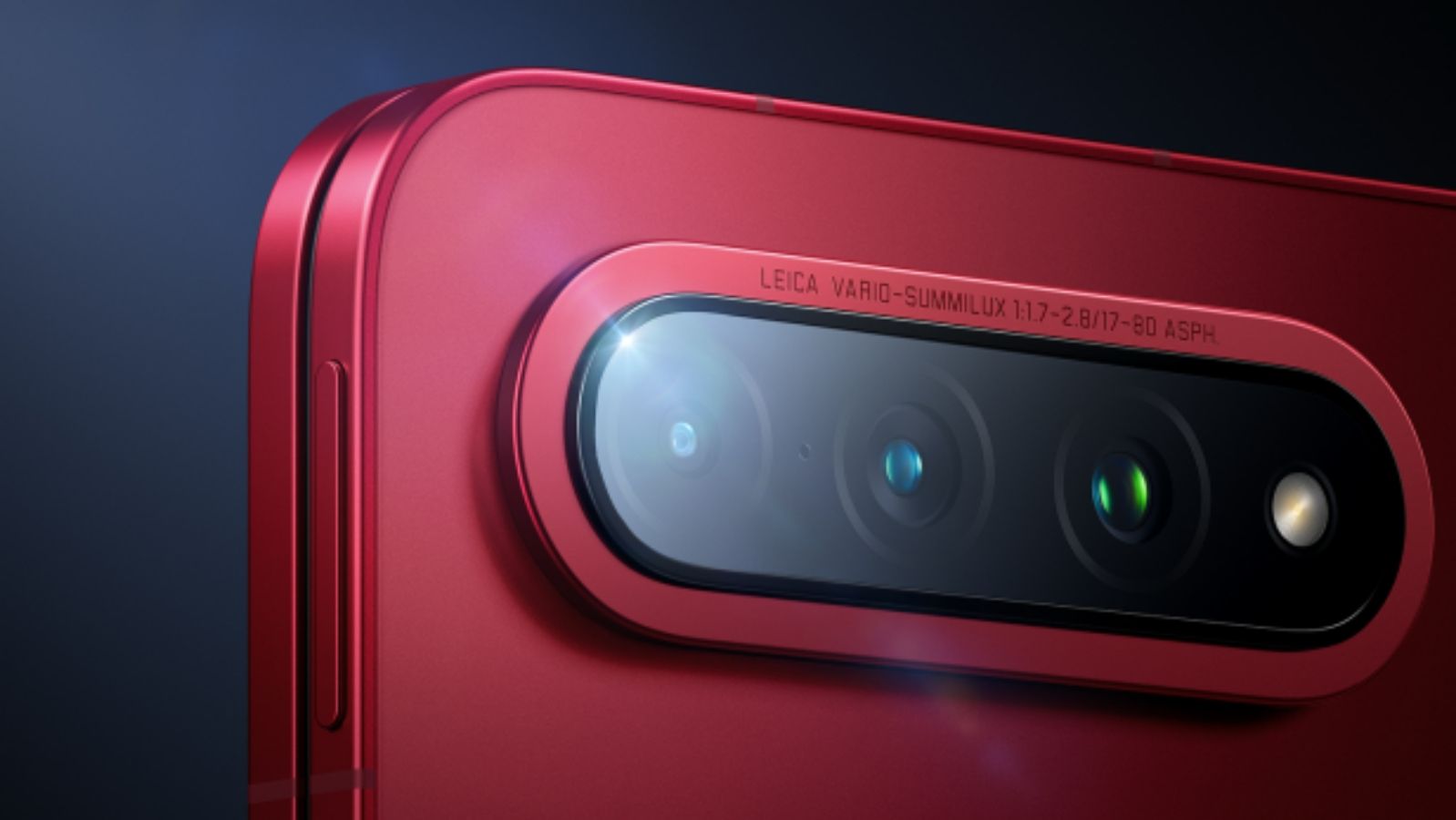
Rear camera system
| Lens | Resolution | Notes |
|---|---|---|
| Main | 200MP | 1/1.56-inch sensor, Leica Summilux optics |
| Telephoto | 50MP | Periscope design, 3.5x optical zoom |
| Ultra-wide | 50MP | — |
| Flash | LED | Housed in the horizontal camera bar |
Battery, software and everything else confirmed so far
Battery life on foldables is usually the trade-off nobody’s happy with, so Xiaomi’s decision to fit a 6,000mAh cell, a jump from the 5,100mAh battery in the Mix Fold 4, without thickening the phone stands out as one of the more genuinely useful upgrades here. Wireless charging is also confirmed, though Xiaomi hasn’t yet detailed wired charging speeds.
On the software side, the 18 Fold ships with HyperOS 4 running on top of Android 17, and it will introduce Super XiaoAI 2.0, Xiaomi’s next iteration of its on-device AI assistant. Xiaomi has been light on specifics here, saying only that more detail on the AI features will come at the launch event itself.
What’s confirmed vs. what’s still unconfirmed
| Confirmed | Still unconfirmed |
|---|---|
| September 7 launch date, China only | Full pricing across all storage tiers |
| 5.38-inch cover / 7.58-inch inner display | Global or international availability |
| Xring O3 chip, LPDDR6 memory | Exact wired charging speed |
| 200MP Leica triple camera system | IP rating for dust and water resistance |
| 6,000mAh battery, wireless charging | Full RAM/storage configuration lineup |
| HyperOS 4 on Android 17, Super XiaoAI 2.0 | Detailed AI feature breakdown |
| Dragon Bone Hinge, Dragon Crystal Glass 3.0 | Accessory ecosystem and case options |
Pricing and how it stacks up
Leaked pricing circulating ahead of launch puts the Xiaomi 18 Fold at around ¥12,000 in China, which converts to roughly $1,650. If that number holds, it would slot the phone between Samsung’s Galaxy Z Fold 8 and where Apple’s rumoured foldable iPhone is expected to land, a comfortable middle-ground price for a device with genuinely flagship-tier specs.
Because Xiaomi’s foldables have never officially left China, that price is really only meaningful for the domestic market. Anyone outside China hoping to buy one will, as with every Mix Fold before it, be looking at grey-market importers rather than an official retail channel.
Why this launch matters beyond the spec sheet
Strip away the camera numbers and battery capacity, and the more interesting story here is strategic. Xiaomi timing its biggest foldable of the year two days ahead of Apple’s own event isn’t subtle, it’s a company trying to own the narrative around wide-screen foldables just as the segment starts getting genuinely competitive, with Samsung’s Galaxy Z Fold 8 already out and Apple’s first foldable iPhone reportedly imminent.
The Xring O3 chip is arguably the bigger long-term story. If Xiaomi’s performance claims hold up under independent testing, it signals the company is serious about reducing its dependence on Qualcomm and MediaTek at the very top of its lineup, something that could reshape how Xiaomi prices and positions its flagship phones going forward, foldable or not.
For now, all of it, the hinge, the chip, the Leica glass, the price, stays theoretical until Xiaomi’s event on September 7. That’s when the sample shots, benchmark claims and leaked renders either hold up or get quietly revised.