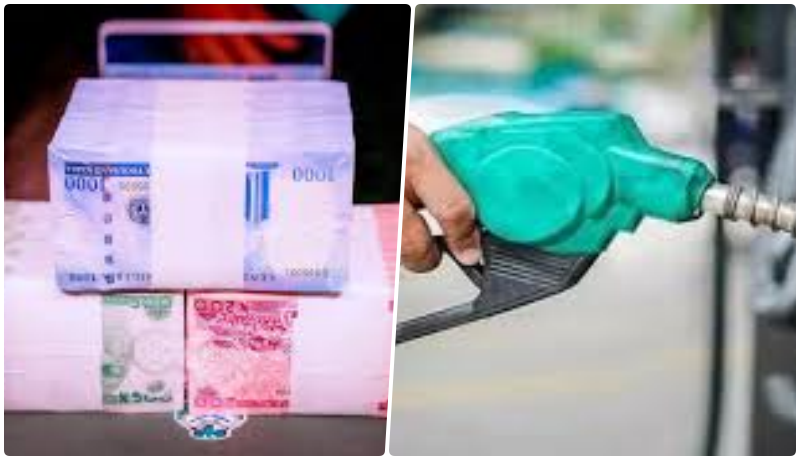
Recently, the former Vice President and presidential candidate of the African Democratic Congress (ADC), Atiku Abubakar has said that he will remove fuel subsidy if elected the president come 2027.
Atiku who has before now supported fuel subsidy removal made a U-turn saying he will go back to pre-May 2023 era in Nigeria where petrol was being subsidized.
The former vice president has made the restoration of petrol subsidy a major part of his 2027 campaign pitch, arguing that Nigerians have not seen sufficient benefits from the policy’s removal.
Atiku made this declaration during an interview on Wednesday, questioning the whereabouts of funds generated following the decision by President Tinubu to end the petrol subsidy in May 2023.
“I did not oppose the removal of the oil subsidy, but where is the money? Where did it go? It was intended to reduce poverty and help children attend school. Where is the money now? It seems they are just stealing it,” Atiku said in Hausa.
“If elected, I will bring back the oil subsidy, and whoever stole the money must refund it.”
Atiku’s declaration comes just as the Federal Government has recently provided a fresh estimate of the financial gains from the subsidy reform.
Recall that on Wednesday Minister of finance, Taiwo Oyedele said that the removal of the subsidy generated N15.8 trillion in resources for the federation between June 2023 and December 2025.
According to Oyedele the figure reflected increased revenue mobilisation, including the effect of the naira value of dollar-denominated transactions following the government’s exchange-rate reforms.
However, Atiku has disputed the government’s presentation of the gains from the reforms.
In a separate statement on Wednesday, his camp challenged the Tinubu administration to account for approximately N30 trillion in federation revenues, deductions, savings and transfers which it said required transparent reconciliation.
“The government successfully removed the subsidy, but we do not know where the money went. If they had used the money for development, to solve security problems, for education, and to create opportunities for the youth, it would be different. If elected, I can remove the subsidy and use the money to do all these properly.”
Reactions trail Atiku declaration as Obi differs
However, reaction to the postulation of former Vice President, the Minister of Information and National Orientation, Mohammed Idris has cautioned against calls to restore the petrol subsidy.
In his words, a return to the old regime would undermine Nigeria’s improving fiscal position, weaken investor confidence, and reverse gains from the economic reforms of the President Bola Tinubu’s administration.
In a statement issued by his Media Aide, Rabiu Ibrahim, in Abuja on Monday, entitled “Restoring Fuel Subsidy Will Reverse Nigeria’s Economic Gains”, he outlined the fiscal benefits of subsidy removal, the economic risks averted, and the difficult trade-offs that would confront the country should petrol subsidy be reintroduced.
In his words, “Restoring subsidy would almost instantly return Nigeria to the economic conditions of 2022, recreating the same fiscal pressures, distortions, scarcity and incentives for arbitrage that made the old system unsustainable,” Idris said.
Idris said proponents of subsidy restoration must confront its real opportunity costs.
“Do we restore petrol subsidy, or sustain student loans and consumer credit for young Nigerians? Do we restore subsidy, or preserve higher allocations to states and local governments? Do we restore subsidy, or continue funding roads, rail, power and security?
“Do we restore subsidy, or strengthen the fiscal capacity required to expand healthcare, education and social protection for vulnerable Nigerians?” he asked.
The minister recalled that in 2022, amid declining oil production and weak revenues, Nigeria spent about $10 billion on fuel subsidies, while the World Bank warned that the subsidy was consuming resources that could otherwise have supported education, healthcare, infrastructure and social protection.
He said, “The Reform Scorecard recorded approximately N6.47 trillion in additional expenditure on strategic infrastructure, alongside more than N400 billion committed to major social investment initiatives, including NELFUND, MOFI Real Estate Investment Fund, MREIF and CREDICORP.
“In contrast, social transfers have reached more than 10 million Nigerian households.”
Idris added that Nigeria was already carrying an electricity subsidy estimated at N3.14 trillion between June 2023 and December 2025, warning that reintroducing petrol subsidy would impose an additional burden on public finances.
He noted that the Organised Private Sector and the wider economic community had also cautioned against reversing the reform.
“Nigeria cannot build tomorrow’s economy by returning to yesterday’s unsustainable subsidy regime. We have moved beyond that model,” he said.
In the same vein, the Presidential candidate of the Nigeria Democratic Congress (NDC) Peter Obi kicked against restoration of subsidy removal by the former vice president, Atiku Abubakar.
Speaking on Monday at a conference organised by the Nigerian Bar Association (NBA) in Port Harcourt, the Rivers State capital, Obi said the mismanagement of the gains from subsidy removal should not, on its own, be a reason to reverse the policy.
He said the government should have provided Nigerians with alternative benefits from the resources saved through the removal of the subsidy.
“I subscribe and maintain that you need to remove subsidy. Mismanagement of the proceeds shouldn’t be the reason for not removing it.
“What we should have done is that when we removed the subsidy, we would have given the people alternative usage for the subsidy.
“What we have today is that, that removal and the attendant resources being recovered is also being mismanaged and stolen. For example, we have received, according to them, N16 trillion.” Obi said.
According to him, “The number one thing a nation needs to develop is health. But today, our health is very poor, our primary care is very poor, where we are now, we have more maternal and child issues than countries like India.
“Assuming, let me use five percent, you said that they saved N15.8 trillion. So, according to them, N16 trillion. So, five percent of that is just about N800 billion,” Obi said.
He added, “And if today, our biggest problem is the issue of primary care and you decide to put primary care in each ward, today it will cost you, from our own studies, an average of N100 million for one.
“If you decide today, we have an issue now with kidney dialysis. We have over 25 million Nigerians with kidney issues.
“To build a kidney centre, you need N200 million. And we need about a thousand centres when we have less than 200.
“We need about 5,000 machines when we have less than 800. It costs you N200 million to do a centre, and it costs you exactly N10 million to buy one machine,” the Presidential candidate said.
Narrating further, he said Nigeria could have accumulated about $10 billion in its sovereign wealth fund if the proceeds from the removal of petrol subsidy had been saved.
“If they had saved the money and decided to do like any other country, we would have had $10 billion added to our sovereign wealth fund, which, if you add it today, we will get about $10 billion every month, which we can use for a purpose,” he said.
He stressed that “I don’t say because people use the money they are supposed to utilise very well for party, and you say no, we should bring back.
“What I’ve said is that people in government have asked Nigerians to fast. Okay. They cannot be feasting when Nigerians are fasting.” Obi added.