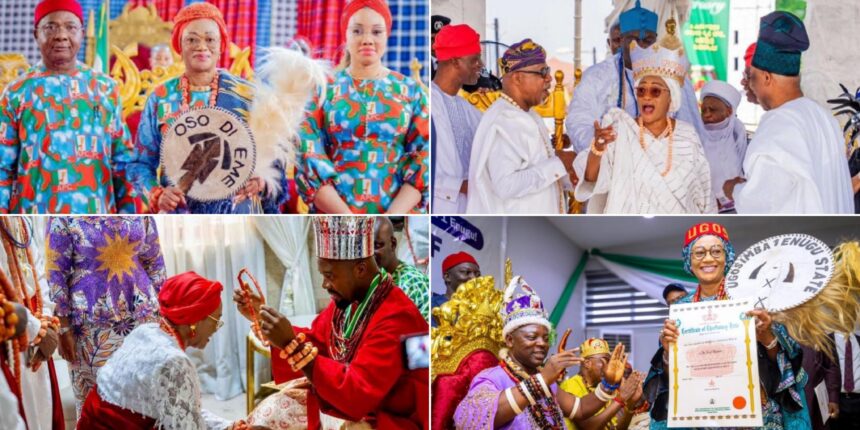
Traditional titles in Nigeria often carry meanings that go far beyond the words attached to them, with each name reflecting a community’s values, history, family ties, cultural identity or the qualities it believes a recipient represents. For First Lady Senator Oluremi Tinubu, another such recognition has now placed her name within a fresh traditional setting, this time in Imo State, where she was conferred with the title Oso Di Eme I.
The title immediately stands out because of the meaning attached to it and because of the timing of the recognition. It comes after a period in which Oluremi Tinubu has received traditional honours from different parts of the country, creating a growing record of cultural recognition that stretches beyond her political background and public position as Nigeria’s First Lady.
Oso Di Eme I is therefore not simply another name added to an already familiar public profile. It opens another part of the story surrounding Oluremi Tinubu and her relationship with traditional institutions across Nigeria. The Imo recognition also provides an opportunity to look back at some of the other titles associated with her, including honours from Yorubaland, Warri Kingdom and reports of an Igbo title connected to Enugu.
The details surrounding each recognition are not identical, and that distinction matters when looking at the titles carefully. Some have clear traditional authorities attached to them, while others have less extensive public documentation available. Taken together, however, they show how Oluremi Tinubu’s traditional honours have developed across different cultural settings.
The Latest Imo Chieftaincy Title


The latest development centres on the title Oso Di Eme I, which was conferred on Oluremi Tinubu in Imo State in September 2026. Reports surrounding the ceremony have translated the title as “she who supports her husband”, giving the recognition a meaning closely connected with her position beside President Bola Tinubu and the role she has played as First Lady.
The wording is particularly significant because traditional titles frequently communicate a person’s perceived character or contribution rather than simply identifying their political or professional position. A title can recognise service, family responsibility, leadership, generosity, cultural connection or an individual’s standing within a particular community, and Oso Di Eme I fits into that wider Nigerian tradition of giving symbolic names to people who are being welcomed or honoured.
The available reports do not provide enough detail to confidently attribute the title to every traditional ruler or traditional institution across Imo State. That makes it important to describe the recognition accurately rather than suggesting that the entire state acted as a single traditional authority. The safest description is that Oluremi Tinubu was conferred with the Oso Di Eme I title in Imo State.
That distinction may appear small, but it is important in a story dealing with traditional institutions. Imo State contains different communities, autonomous communities, traditional rulers and cultural structures, each with their own authority and history. A title conferred within one traditional setting should therefore not automatically be presented as a title bestowed by the entire state unless the formal details of the ceremony establish that fact.
The meaning attached to Oso Di Eme I is also what makes the latest recognition particularly interesting. The phrase has been rendered in reports as referring to a woman who supports her husband, giving the title a personal dimension alongside its ceremonial importance. It places attention on the role associated with Oluremi Tinubu as the wife of the President while also recognising her own public identity.
The Imo honour is the latest development in a pattern that has become increasingly noticeable since late 2025. Rather than standing alone, it joins other traditional recognitions that have connected the First Lady with different cultural institutions.
The December 2025 Recognition From Ile Ife

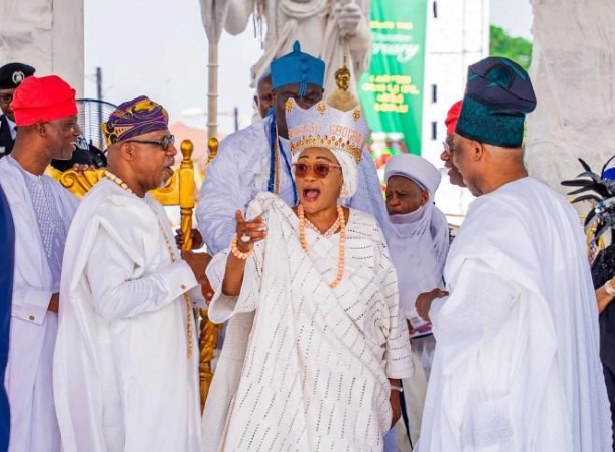
The story reaches back to December 7, 2025, when Oluremi Tinubu received the title Yeye Asiwaju Gbogbo Ile Oodua from the Ooni of Ife, Oba Adeyeye Enitan Ogunwusi, Ojaja II, in Ile Ife, Osun State.
The title carries considerable cultural significance because of its connection with the Oodua traditional sphere and the institution of the Ooni of Ife. The Ooni occupies a prominent position within Yoruba traditional affairs, making a title conferred by the palace a notable addition to Oluremi Tinubu’s traditional recognitions.
Yeye Asiwaju Gbogbo Ile Oodua can be understood within the broader tradition of honouring women whose leadership, conduct, service and commitment are considered worthy of recognition. The title therefore has a cultural meaning that goes beyond the formal ceremony itself, placing the recipient within a traditional framework where women’s leadership and influence are also acknowledged.
The December 7, 2025 ceremony was significant for another reason. Oluremi Tinubu is herself deeply connected to Yoruba heritage, and the recognition from Ile Ife therefore came from a cultural institution with a strong connection to the history and identity of the Yoruba people. It was not simply a ceremonial title attached to her public office, but a recognition situated within a particular traditional environment.
The title also attracted public recognition from prominent political figures, including Lagos State Governor Babajide Sanwo Olu, who congratulated the First Lady. The attention surrounding the ceremony reflected the importance attached to traditional titles in Nigerian public life, especially when the recipient is already a nationally recognised figure.
Yeye Asiwaju Gbogbo Ile Oodua consequently became one of the most clearly documented traditional titles associated with Oluremi Tinubu before the later recognitions in Warri and Imo.
The Reported Ugosimba I Title

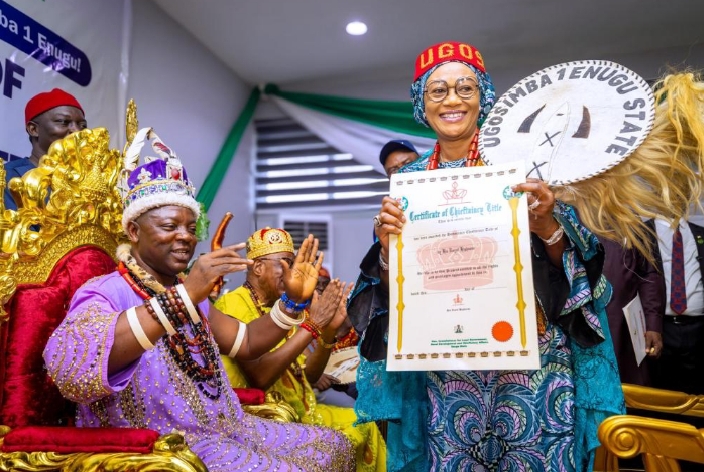
Another title linked to Oluremi Tinubu is Ugosimba I of Enugu, which has been described in available reports as an Igbo traditional title conferred on the First Lady in Enugu.
This recognition deserves to be treated with a little more caution because the publicly available documentation surrounding it is not as strong as the material connected with the Ooni of Ife or the Warri Kingdom. References to Ugosimba I appear in social media and video reports, but there is less readily available documentation from a clearly identified traditional institution that establishes the circumstances of the conferment in the same level of detail.
That does not automatically make the reported title false, but it means the wording used in a fact based article should reflect the quality of the evidence available. Presenting Ugosimba I as an established title with exactly the same level of certainty as the Warri title would go beyond what the available documentation can comfortably support.
The safer position is that reports have identified Oluremi Tinubu as Ugosimba I of Enugu. The distinction is useful because the purpose of the article is to separate documented traditional honours from claims whose supporting records are less extensive.
The reported Enugu title is nevertheless relevant to the wider story because it adds another cultural region to the list of traditional recognitions associated with the First Lady. It also becomes more interesting when considered alongside her later recognition in Warri and the latest title in Imo State.
Rather than presenting every reported title as though all the ceremonies followed the same process, the better approach is to look at each recognition according to the traditional institution involved and the level of documentation surrounding it.
February 2026 Brought the Warri Honour

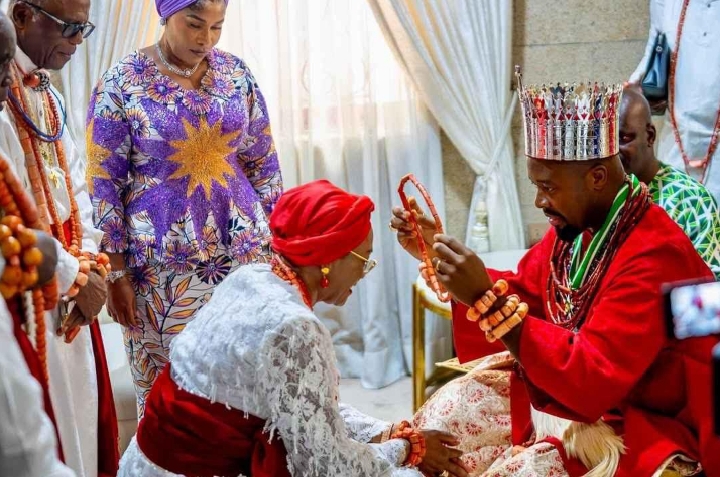
The next major traditional recognition came in February 2026, when Oluremi Tinubu visited her maternal homeland in Itsekiri land and received a significant honour from the Warri Kingdom.
She was conferred with the title Utukpa Oritse of Warri Kingdom, also described as Ugbone, by the Olu of Warri, Ogiame Atuwatse III. This recognition carries a particularly personal dimension because Oluremi Tinubu has Itsekiri maternal roots, making her connection with Warri more than a formal association created by public office.
The involvement of the Olu of Warri gives this recognition a clearly identifiable traditional authority. Unlike the less extensively documented Ugosimba I report, the Warri title is connected directly to the palace of the Olu, giving it a stronger basis for inclusion among her established traditional honours.
The February 2026 occasion was also unusual because Oluremi Tinubu received 2 forms of recognition from the Warri Kingdom during the same period. One was the Utukpa Oritse title, while the other was the Royal Order of Iwere.
The distinction between the 2 is important. Utukpa Oritse is a chieftaincy title, while the Royal Order of Iwere is a separate royal honour. They should therefore not be counted as 2 chieftaincy titles simply because both were received from the Warri Kingdom.
The Warri Kingdom described the occasion as an unprecedented double honour, with Oluremi Tinubu becoming the first individual in the kingdom’s history to simultaneously hold the chieftaincy title and the Royal Order of Iwere.
That detail gives the February 2026 recognition its own place in the story. It was not merely another traditional name added to the First Lady’s profile. It combined a traditional title with a separate royal honour and connected both recognitions to a kingdom with which she has a personal maternal link.
The Meaning Behind Utukpa Oritse
The importance of the Utukpa Oritse title becomes clearer when the circumstances of the conferment are considered. Traditional titles in the Niger Delta and across southern Nigeria can carry meanings that relate closely to community relationships, ancestry, service and belonging, and the Warri recognition placed Oluremi Tinubu within the cultural space of her maternal heritage.
Her visit to her maternal homeland gave the ceremony an emotional dimension that would not necessarily exist in an ordinary state visit or political engagement. The traditional honour connected her public position with a family and cultural background that had existed long before she became First Lady of Nigeria.
That relationship with Itsekiri heritage is an important part of understanding why the Warri honour stands out among her traditional recognitions. The title came from a traditional institution tied to a part of her maternal identity, while the recognition itself was performed by the Olu of Warri.
The Royal Order of Iwere further elevated the occasion because it represented a separate form of royal recognition. Keeping the two honours distinct allows the record to remain accurate while still showing the full importance of the Warri ceremony.
For the purposes of counting traditional titles, however, Utukpa Oritse should be the title included in the chieftaincy list, while the Royal Order of Iwere should remain under a separate category of royal honours.
The Meaning of Yeye Asiwaju Gbogbo Ile Oodua
The December 2025 title from Ile Ife provides another useful example of how Oluremi Tinubu’s traditional recognitions differ according to the cultural institution involved.
Yeye Asiwaju Gbogbo Ile Oodua is associated with the Oodua cultural sphere and was conferred by the Ooni of Ife. The title presents Oluremi Tinubu within a Yoruba traditional setting where women’s leadership and public contribution can be formally recognised through traditional nomenclature.
The timing is also worth noting. The title was conferred on December 7, 2025, only a few months before the Warri recognition in February 2026. That sequence means the First Lady moved from one major traditional institution to another within a relatively short period, receiving different forms of recognition rooted in different cultural settings.
Traditional titles often have a way of preserving cultural language that ordinary political honours cannot provide. An award can recognise an achievement, while a traditional title can create a name through which a person becomes associated with the values or identity of a particular traditional institution.
Yeye Asiwaju Gbogbo Ile Oodua therefore sits within a different cultural context from Utukpa Oritse of Warri Kingdom and Oso Di Eme I of Imo State. Each title belongs to a separate traditional environment and should be understood according to the institution that bestowed it.
That distinction makes the growing list more interesting because the recognitions are not simply repetitions of the same honour. They come from different parts of Nigeria and reflect different cultural relationships.
The Imo Title Adds Another Cultural Connection
The arrival of Oso Di Eme I in September 2026 adds another layer to that record. Imo State is part of the South East, and the latest recognition gives Oluremi Tinubu another traditional title connected to a cultural environment different from the Yoruba and Itsekiri settings represented by her earlier honours.
The reported meaning, “she who supports her husband”, gives the Imo title a particularly direct connection to her position as the President’s wife. Yet the title should still be treated as a traditional recognition in its own right rather than being reduced entirely to her role as First Lady.
The title also arrives after the recognition from Warri and the earlier title from Ile Ife, making its timing notable. It is the latest addition to a growing collection of traditional names connected with the First Lady.
The available information does not establish enough detail to say that Oso Di Eme I represents an honour from every traditional ruler in Imo State. Such a claim would require clearer information about the traditional authority, autonomous community or council responsible for the conferment.
For now, the strongest factual description remains that Oluremi Tinubu was conferred with the Oso Di Eme I title in Imo State and that reports have translated its meaning as “she who supports her husband”.
That wording gives the development the attention it deserves without extending the facts beyond the information currently available.
The Titles In Their Timeline
The sequence of Oluremi Tinubu’s recent traditional recognitions becomes easier to understand when the dates are placed together.
December 7, 2025 marked the conferment of Yeye Asiwaju Gbogbo Ile Oodua by the Ooni of Ife, Oba Adeyeye Enitan Ogunwusi, Ojaja II, in Ile Ife, Osun State.
During 2025, reports also identified her as Ugosimba I of Enugu, although the available documentation for that title remains less extensive than the evidence surrounding the Ooni and Warri recognitions.
February 2026 brought the Utukpa Oritse of Warri Kingdom title, conferred by the Olu of Warri, Ogiame Atuwatse III, during her visit to her maternal homeland in Itsekiri land.
The same Warri occasion also brought the Royal Order of Iwere, which should be treated as a separate royal honour rather than another chieftaincy title.
September 2026 then brought the latest recognition, Oso Di Eme I, conferred on Oluremi Tinubu in Imo State and reported to mean “she who supports her husband”.
Placed together, the dates show a steady development from the late 2025 recognition in Ile Ife through the Warri honour in February 2026 and now to the Imo recognition in September 2026.
Why The Imo Title Stands Out
Oso Di Eme I stands out because of the particular meaning attached to it and because it is the latest title in the sequence. It arrives at a point when Oluremi Tinubu already has traditional recognitions connected with different parts of Nigeria.
The title also carries a meaning that speaks directly to her place beside the President. “She who supports her husband” is a description that immediately connects the traditional recognition with the role she occupies in Nigeria’s highest political office.
At the same time, Oluremi Tinubu has a public identity that existed long before her current position. She served as a senator representing Lagos Central and has built a political profile of her own. Her traditional titles therefore sit alongside an established career rather than replacing it.
Her position as First Lady has also placed her in contact with traditional institutions across the country, creating occasions where cultural recognition can intersect with official engagements, community relationships and personal heritage.
The Imo title is therefore best understood as the latest chapter in a broader record rather than an isolated event. The significance comes from its place in the timeline and from the cultural setting in which it was conferred.
Her Traditional Honours Cross Different Regions
One of the clearest features of the list is its geographical spread. The recognitions connected with Oluremi Tinubu have touched Yorubaland, Itsekiri land and the South East, with each title carrying its own cultural context.
The Yeye Asiwaju Gbogbo Ile Oodua title connects her with the traditional institution of Ile Ife and the wider Oodua cultural sphere. The Utukpa Oritse title connects her with the Warri Kingdom and her maternal Itsekiri heritage. The reported Ugosimba I title places her name within an Igbo traditional setting, although its documentation requires greater caution.
Oso Di Eme I now adds Imo State to that picture. Its reported meaning also gives it a different character from the other titles because its description is directly connected with marital support.
This geographical spread is what makes the list worth examining carefully. The titles are not all from the same palace, community or cultural institution, and they should not be presented as though they are interchangeable.
Each one has its own origin, its own authority and its own meaning. That is why a careful account of the honours is more useful than simply producing a long list without explaining where the titles came from.
Chieftaincy Titles Should Be Kept Separate From Other Honours
Oluremi Tinubu’s public profile includes several recognitions beyond traditional chieftaincy titles, but those honours should not automatically be added to this list.
The Royal Order of Iwere is the clearest example. It was received alongside the Utukpa Oritse title during the Warri Kingdom recognition, but it is a royal order rather than another chieftaincy title.
The distinction matters because the purpose of this record is to establish the traditional titles associated with Oluremi Tinubu. Including every award, national honour or political recognition would make the list longer but less accurate.
Her Order of the Niger, OON, for example, belongs to the category of national honours and should not be counted as a traditional chieftaincy title. The same principle applies to other awards she may have received during her public career.
Keeping the categories separate also makes the story easier to understand. Readers can see which recognitions came from traditional institutions, which were royal honours and which belonged to the national honours system.
The strongest traditional titles currently associated with her are therefore Yeye Asiwaju Gbogbo Ile Oodua, Utukpa Oritse of Warri Kingdom and the latest Oso Di Eme I, while Ugosimba I of Enugu remains a reported title that deserves more cautious wording.
The Growing Record Of Traditional Recognition
Oluremi Tinubu’s traditional honours now form an interesting part of her public profile. The recognitions began appearing prominently across different cultural settings from late 2025, with the December 7, 2025 title from Ile Ife followed by the February 2026 Warri Kingdom honour and now the September 2026 Imo recognition.
Each occasion has its own story, and that is what makes the sequence more useful than a simple count. The Ile Ife title came from the Ooni and was rooted in the Oodua traditional sphere. The Warri title came from the Olu of Warri and carried a direct connection to her Itsekiri maternal heritage. The Imo title has now introduced another traditional setting and a meaning tied to the support of her husband.
The reported Ugosimba I title remains part of the wider picture, but its documentation should continue to be treated differently until stronger primary confirmation becomes available.
That leaves a record in which some titles can be confidently connected to clearly identified traditional authorities while others require more careful attribution. Such distinctions do not weaken the story. They make it more accurate.
What Oso Di Eme I Adds To Her Story
The latest title gives Oluremi Tinubu another traditional identity at a time when her public role already extends across politics, national representation, women’s affairs and community engagement.
Oso Di Eme I, with its reported meaning of “she who supports her husband”, adds a personal description to that public identity. It recognises her through a traditional title that directly reflects her position as the wife of President Bola Tinubu.
Its significance also comes from timing. The title follows recognitions in Ile Ife and Warri, meaning that the latest Imo honour is now part of a wider pattern of traditional institutions acknowledging the First Lady in different cultural settings.
There is no need to inflate the list or attach unsupported numbers to it. The documented recognitions already provide enough material to tell the story, particularly when each title is explained according to its own traditional background.
For now, Oso Di Eme I is the newest addition to that record, while Yeye Asiwaju Gbogbo Ile Oodua and Utukpa Oritse of Warri Kingdom remain the strongest earlier examples of clearly documented chieftaincy titles associated with Oluremi Tinubu.
The reported Ugosimba I title remains relevant but should be identified as a reported recognition rather than presented with the same level of certainty.
The Latest Chapter
The latest Imo conferment has therefore opened another chapter in the traditional honours associated with Nigeria’s First Lady. Oso Di Eme I is reported to mean “she who supports her husband”, giving the title a meaning that connects directly with Oluremi Tinubu’s role beside President Bola Tinubu.
Before that recognition came the December 7, 2025 conferment of Yeye Asiwaju Gbogbo Ile Oodua by the Ooni of Ife, followed by the February 2026 Utukpa Oritse of Warri Kingdom title from the Olu of Warri, Ogiame Atuwatse III. The Warri occasion also produced the separate Royal Order of Iwere, which belongs in the category of royal honour rather than chieftaincy title.
Reports have also linked Oluremi Tinubu with the Ugosimba I of Enugu title, although the available evidence surrounding that recognition remains less extensive and calls for more cautious presentation.
Taken together, the titles show a growing connection between Oluremi Tinubu and traditional institutions from different parts of Nigeria. The latest Oso Di Eme I title does not erase the significance of the earlier recognitions. Instead, it adds another name, another cultural setting and another chapter to the traditional honours that now form part of her public story.
For a woman whose public journey has moved from Lagos politics to the Senate and eventually to the position of Nigeria’s First Lady, the growing list of traditional titles offers another way of looking at how different communities have chosen to recognise her.
Oso Di Eme I is now the newest name on that list, and its meaning gives the latest recognition a distinctly personal place within the wider story of Oluremi Tinubu’s traditional honours.