Radiation is often associated with nuclear facilities, medical imaging and industrial accidents, but small amounts of it also occur naturally in ordinary household environments.
Known as background radiation, it is present in the air, soil, water and food, meaning everyday exposure is not limited to people who work around radioactive materials.
Some common household products and materials also contain naturally occurring or deliberately incorporated radioactive elements, although the quantities involved are generally very small.
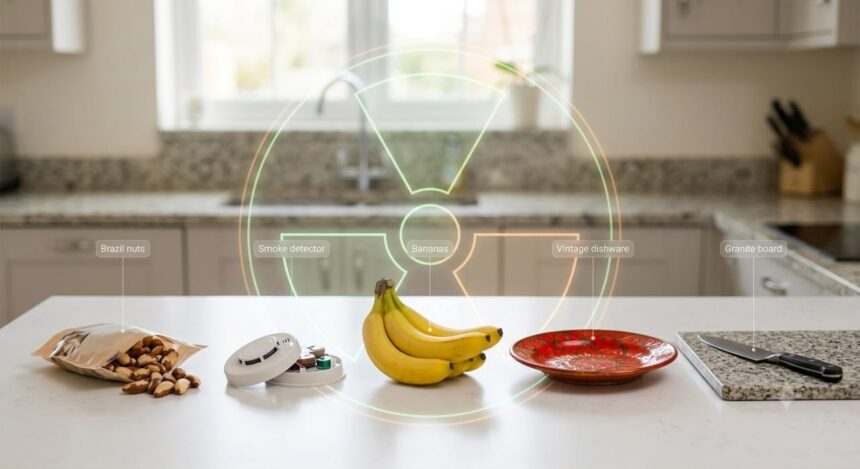
Here are five everyday items that can emit trace amounts of radiation.
Ionisation smoke detectors
Many conventional smoke detectors use a small quantity of Americium-241, a radioactive material that helps the device identify smoke and activate its alarm.
The material produces alpha particles that maintain an electrical current within the detector’s sensing chamber, while smoke entering the chamber interferes with the current and triggers the alarm.
The radioactive source is enclosed within the detector, so normal use does not expose household occupants to significant radiation from the device.
Bananas
Bananas contain potassium, an essential mineral required for functions including normal muscle activity and heart function, and a tiny proportion of naturally occurring potassium is the radioactive isotope Potassium-40.
As a result, bananas emit measurable but extremely small amounts of radiation, making the fruit a familiar example in explanations of naturally occurring radioactivity.
The body also regulates potassium levels naturally, preventing radioactive potassium from accumulating simply because a person consumes potassium-rich foods.
Granite kitchen countertops
Granite is a natural rock that can contain trace quantities of uranium, thorium and potassium because of the geological materials from which it formed.
These elements undergo natural radioactive decay, producing very small amounts of radiation and, in some circumstances, radon gas.
For ordinary granite surfaces, the radiation is generally close to natural background levels, although ventilation remains relevant wherever radon may accumulate indoors.
Brazil nuts
Brazil nuts are among the foods known to contain relatively high levels of naturally occurring radioactivity because the trees can absorb radium and other minerals from deep within the soil.
The extensive root systems of the trees take up these elements, some of which are subsequently concentrated in the nuts.
Although their radioactivity can be detected with sensitive scientific instruments, normal moderate consumption is not considered a significant source of radiation exposure.
Older ceramic tiles and vintage dishware
Some older ceramics and brightly coloured vintage dishes were produced using glazes containing uranium compounds, which were added to create distinctive red, green and yellow colours.
Such practices were particularly associated with some products manufactured during the middle decades of the 20th century.
The presence of uranium in an old ceramic item does not automatically mean that it poses a serious health risk, but unusually radioactive vintage pieces can be identified through specialised radiation measurements.
The examples illustrate that radioactivity is not necessarily synonymous with danger, since exposure depends on factors including the type, quantity and duration of radiation involved.
Nevertheless, householders who have concerns about older radioactive products or possible indoor radon exposure can seek professional assessment rather than relying solely on the appearance or age of an item.