
For Nigerians who have been looking for a way to get a laptop, smartphone or another digital device without having to raise the entire cost at once, a new Federal Government programme has started attracting attention. The figure attached to the opportunity is enough to make many people stop and take a closer look, especially at a time when the cost of reliable devices can put them beyond the reach of students, freelancers, young professionals and small business owners.
The programme has already moved beyond the stage of being discussed as a government plan, with its first beneficiaries emerging from an initiative designed to expand access to digital opportunities across Nigeria. There are also several categories of Nigerians being asked to indicate their interest, while the type of device, the reason it is needed and the applicant’s background all form part of the process.
But there is more to the opportunity than the headline figure suggests. The first rollout has its own conditions, the people already receiving devices fall within a particular group, and the application process raises questions about how Nigerians outside that group can position themselves as the programme expands.
For anyone hoping to take advantage of the opportunity, understanding those details could make the difference between simply filling out a form and knowing exactly what they are applying for. Here is what Nigerians need to know about the programme, the people currently covered, the devices involved, the application process and the details surrounding the much talked about ₦1 million figure.
What the ₦1 Million Offer Really Means
The most important point to understand about C.L.I.C.K.D. is the nature of the financial support being discussed. The programme is not designed to place ₦1 million into the bank account of every Nigerian who applies, nor does filling out the expression of interest form automatically create an entitlement to ₦1 million. The figure refers to the potential value of financing associated with the initiative, while the actual credit available to an individual will depend on the applicable assessment, device selected, participating financial institution and programme conditions.
This makes C.L.I.C.K.D. very different from a conventional government grant. A grant generally does not require the beneficiary to repay the money, while consumer credit comes with repayment obligations. Under this programme, the purpose is to help eligible Nigerians obtain productive digital equipment without having to provide the entire purchase price upfront. The borrower then repays the financing according to the terms attached to the approved credit facility.
That distinction matters because a person searching online for a ₦1 million government grant could easily misunderstand the opportunity. Someone who applies expecting free money could be disappointed when the actual process involves credit assessment and repayment. The more accurate description is that Nigerians may be able to access up to ₦1 million in device financing, subject to the applicable conditions, rather than receive ₦1 million in cash.
How C.L.I.C.K.D. Started
The Federal Government officially launched C.L.I.C.K.D. in Abuja on July 21, 2026, marking the beginning of an initiative intended to improve access to digital devices through consumer credit. CREDICORP is the organisation implementing the programme, while the Federal Ministry of Communications, Innovation and Digital Economy is involved as a government partner. The launch also brought the initiative into the wider digital skills ecosystem created around 3MTT.
The connection with 3MTT is significant because the government has spent considerable effort developing technical talent among Nigerians, but training alone does not always solve the practical problems faced by participants. Someone may complete a course in software development, data analysis, digital marketing, cybersecurity or another technology related field and still struggle to practise or earn from those skills without access to a suitable computer.
C.L.I.C.K.D. is intended to address that device access problem by connecting digital productivity with consumer credit. Instead of requiring a prospective beneficiary to find the full amount for a laptop or another qualifying device at once, the programme creates a pathway through which approved applicants can obtain equipment while paying over time. The first phase is deliberately smaller than the wider vision of the programme.
The First Phase Covers 1,000 Laptops
The initial rollout is not an unlimited device distribution exercise. The first phase involves 1,000 locally assembled laptops for eligible beneficiaries, which is a much smaller number than the impression created by some online headlines suggesting that every Nigerian can immediately access ₦1 million.
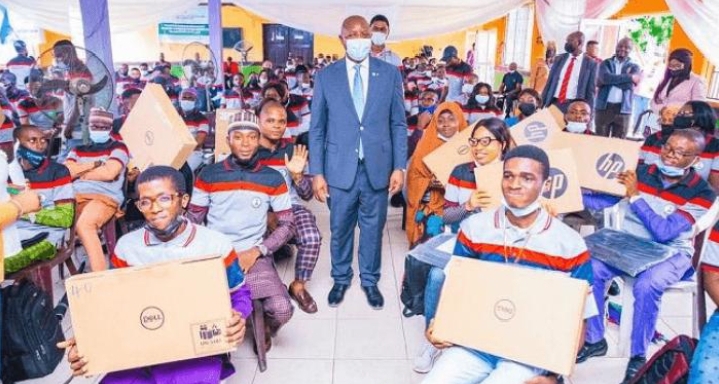
At the Abuja launch on July 21, 2026, 77 beneficiaries received laptops. The remaining devices under the initial 1,000 laptop rollout are expected to reach qualified beneficiaries across the country in phases. This means the programme has already moved from announcement to actual distribution, but it is still operating within a limited pilot structure.
The first phase is particularly connected to the 3MTT ecosystem, with confirmed beneficiaries drawn from fellows undergoing training through the Learn2Earn platform. This is important for anyone trying to understand the current stage of the programme because the broader C.L.I.C.K.D. description covers more types of devices and a wider group of Nigerians, while the initial pilot has a narrower focus.
Who Can Benefit From the Pilot
The currently confirmed focus of the initial rollout is on 3MTT fellows. The first 1,000 locally assembled laptops are being deployed through the government digital talent ecosystem, with beneficiaries connected to the 3MTT programme and the Learn2Earn platform.
That does not mean that every Nigerian who sees the C.L.I.C.K.D. application form is automatically guaranteed one of those 1,000 laptops. The expression of interest process is broader than the first pilot, and applicants can provide information about their employment status, digital programme participation, device needs and intended use.
The form includes several digital skills communities and programmes. These include 3MTT, Andela Learning Community, Learn2Earn, ALX Africa, HNG Internship, AltSchool Africa, Genesys Tech Hub and an option for other programmes. Seeing a programme listed on the form should not be interpreted as confirmation that every participant from that programme has already been approved for a device under the current pilot.
The safest way to understand the situation is to separate the wider C.L.I.C.K.D. programme from its first rollout. The wider initiative is designed to reach more working Nigerians as it expands, while the confirmed initial pilot is focused on eligible fellows within the 3MTT ecosystem.
Can Nigerians Outside 3MTT Apply
The application process contains a wider range of applicant categories than the initial pilot alone would suggest. Nigerians using the expression of interest form can identify themselves as salary earners, freelancers or self employed people, business owners, students, job seekers or NYSC members.
Applicants can also select their state of residence, with the form covering Nigeria’s 36 states plus the Federal Capital Territory. This gives the process a nationwide outlook rather than limiting the expression of interest to people living in Abuja or another particular location.
There is therefore an important distinction for people outside 3MTT. Being outside the programme does not mean a person should assume they have no place in the wider C.L.I.C.K.D. initiative, but submitting the form should also not be presented as a guarantee of immediate device allocation. The first pilot has a limited number of laptops, and future stages will depend on how the programme expands and how eligibility and financing are applied.
What Applicants Need to Provide
The expression of interest form is designed to gather information about the applicant, their economic situation, their connection to digital skills programmes and the type of device they need. Applicants are asked to provide their state of residence and employment status, allowing CREDICORP to understand the profile of people expressing interest in the programme.
Employment categories include salary earners, freelancers or self employed people, business owners, students, job seekers and NYSC members. The form also asks about income, with reported options ranging from below ₦100,000 to above ₦1 million. The income section is presented as optional in the information available about the form, but applicants should still provide accurate information wherever information is requested.
Applicants can also identify whether they belong to a digital skills programme such as 3MTT, Andela Learning Community, Learn2Earn, ALX Africa, HNG Internship, AltSchool Africa or Genesys Tech Hub. People connected to another relevant programme can use the other option where appropriate.
Another important part of the form is the device requirement. Applicants can indicate whether they need a laptop, smartphone, tablet or another digital device. They are also asked about the reason for needing the equipment, with purposes including learning, professional certification, remote work, freelancing, business growth, education, software development and content creation.
How to Apply for C.L.I.C.K.D.
The process begins through the official CREDICORP C.L.I.C.K.D. page. Nigerians interested in the programme should avoid relying on random links circulated through WhatsApp, Telegram, Facebook groups or other social media channels when they can go directly to the official CREDICORP platform.
The first step is to visit the official C.L.I.C.K.D. page and select the option marked “I’m Interested.” This leads applicants into the expression of interest process, where information about the applicant and their device needs is collected.
The next stage requires the applicant to provide personal information, including their state of residence and employment status. Applicants should ensure that the information they provide is accurate because the form includes consent relating to the use of the information for eligibility assessment and contact purposes.
Applicants can then provide information about their income bracket and identify any digital skills programme with which they are associated. They will also indicate the type of device they require and explain the purpose for which the device will be used.
The final stage involves submitting the expression of interest after confirming that the information provided is accurate. Submission of the form should not be described as final approval because C.L.I.C.K.D. involves consumer credit and participating financial institutions. An expression of interest is therefore only part of the process.
Is There a Fee to Apply
Applicants should be extremely careful about anyone asking for money simply to submit a C.L.I.C.K.D. expression of interest. The application process is presented as an expression of interest, and there is no indication that Nigerians should pay a WhatsApp agent, Telegram administrator or private individual to secure a place.
This is particularly important because government opportunities involving figures such as ₦1 million can quickly attract fraudulent claims. Someone may contact applicants privately and promise guaranteed approval in exchange for an activation fee, registration charge, processing fee or payment for a supposed government form.
Applicants should not assume that such demands are legitimate. The safest route is to use the official CREDICORP website and rely on information published through the programme’s recognised channels.
How the Credit Process Works
C.L.I.C.K.D. is built around consumer credit rather than direct cash distribution. CREDICORP describes the process around exploring available credit options, choosing a participating financial institution, applying for the credit and receiving the device if the application is approved.
This structure means the financial institution involved in the transaction matters. The applicant is not simply receiving a government payment that can be withdrawn and spent on anything. The financing is tied to the purpose of obtaining a qualifying productivity device.
Once the credit is approved, the borrower is expected to repay according to the terms agreed with the relevant financial institution. CREDICORP has also highlighted the potential benefit of responsible repayment in strengthening an individual’s credit history, which means the programme is intended to have an impact beyond simply helping someone acquire a laptop or another device.
A person who uses the facility responsibly could therefore obtain a productive device while also building experience with formal consumer credit. The responsibility remains important because credit comes with repayment obligations.
What Happens to the Interest Rate
The interest rate is one of the areas applicants should pay close attention to before accepting any financing offer. The currently available programme information does not provide enough specific detail to state a single final interest rate for every applicant.
The same caution applies to the repayment period, monthly repayment amount, down payment and possible processing charges. These terms can determine the actual cost of a device, so applicants should not make financial decisions based only on the headline figure of up to ₦1 million.
For example, if a person is approved for financing connected to an ₦800,000 device, the important figure is not simply the price displayed for the equipment. The applicant needs to understand the total amount that will eventually be repaid, the duration of the facility, the applicable interest or financing charges and the consequences of missing payments.
Those terms should be understood before accepting a credit agreement. A device may appear affordable when viewed through a monthly repayment figure, but the total repayment cost provides a much clearer picture of the financial commitment.
Is ₦1 Million Guaranteed
₦1 million is not a guaranteed payment for every person who submits an application. This is perhaps the biggest issue Nigerians need to understand before responding to social media headlines about the programme.
The phrase “up to ₦1 million” should be treated as a maximum financing reference rather than a promise that every applicant will receive the same amount. The actual facility available to an applicant can depend on the device, credit assessment, participating financial institution and the conditions attached to the programme.
Someone applying for a lower priced device should therefore not expect the government to simply transfer ₦1 million to them. The purpose is to provide financing for qualifying devices, with the amount connected to the approved transaction rather than being free spending money.
Devices Covered by the Wider Programme
The wider C.L.I.C.K.D. initiative is not limited to laptops. Its official description identifies laptops, smartphones, tablets, connectivity devices and digital learning equipment among the categories of products that can fall within the programme.
The initial pilot is narrower, with the first rollout focused on locally assembled laptops. This is why some descriptions of the opportunity can appear to give different impressions. One description may talk about laptops, phones and tablets because it is referring to the broader programme, while another may focus on laptops because it is describing the first 1,000 device rollout.
Both points can be understood when the wider programme is separated from its initial phase. The first rollout does not mean every device category will be distributed immediately to every applicant.
Why Locally Assembled Laptops Matter
The local manufacturing element is another important part of C.L.I.C.K.D. The government is not only trying to make digital equipment easier for Nigerians to obtain, it is also connecting the initiative to the development of locally assembled technology.
The first phase involves locally assembled laptops, with NASENI Innovation Hub and Imose Technologies involved in the device ecosystem. Fidelity Bank has also been identified as a financing partner in the rollout.
That approach gives the programme a broader economic purpose. Financing locally assembled devices can create demand for Nigerian technology businesses while supporting employment, production capacity and the wider domestic digital economy.
For beneficiaries, the immediate attraction remains access to a laptop or other productive equipment. For the government, the programme also creates an opportunity to connect digital inclusion with local technology production.
The 3MTT Connection
The 3 Million Technical Talent programme is central to understanding why C.L.I.C.K.D. has been introduced at this stage. The government has been developing Nigerians through digital and technical training, but access to training does not automatically provide access to the equipment required to practise those skills.
C.L.I.C.K.D. creates a connection between the training ecosystem and access to devices. The basic idea is straightforward. A person receives digital training, gains access to the equipment needed to continue learning or working, and can potentially use those skills for employment, freelancing, business or other income generating activities.
The initial pilot involving 3MTT fellows therefore makes practical sense within the wider digital talent programme. Rather than treating training and device access as completely separate issues, C.L.I.C.K.D. is being used to address one of the practical barriers that can come after training.
The July 21 Launch Already Produced Beneficiaries
The programme is not merely an online proposal waiting for its first implementation. At the official launch in Abuja on July 21, 2026, 77 beneficiaries received laptops.
Those 77 devices formed part of the wider initial target of 1,000 locally assembled laptops. The remaining beneficiaries are expected to receive devices through subsequent phases, subject to the programme’s eligibility and allocation process.
This provides an important fact for Nigerians trying to determine whether the opportunity is real. The initial distribution demonstrates that the programme has begun implementation, while the limited number of devices also shows why applicants should not assume that every person who fills out the expression of interest form will immediately receive a laptop.
Is There an Application Deadline
No publicly stated closing date has been identified on the official C.L.I.C.K.D. page. That means applicants should not rely on social media posts claiming that a particular date is the final day unless that information can be confirmed through CREDICORP.
Government programmes can change their application arrangements as new phases are introduced, so the official portal remains the appropriate place to check for updates.
Applicants should also be cautious about websites or social media accounts creating artificial urgency by claiming that people have only a few hours or days to pay for registration. A genuine deadline should be communicated through an official programme channel.
What Happens After Submission
Submitting the expression of interest does not mean the applicant has been approved. This is particularly important because the word “application” can sometimes create the impression that a device will automatically follow.
The programme involves eligibility considerations and consumer credit assessment, with participating financial institutions playing a role in the financing process. An applicant may therefore express interest without necessarily receiving the requested device.
The applicant should also understand that the device itself is connected to the credit arrangement. The purpose is to finance productive equipment, rather than provide unrestricted cash that can be spent on unrelated needs.
Anyone who submits the form should therefore keep an eye on official communication and wait for the appropriate next step instead of paying an unofficial person who claims to have access to government approval slots.
What Nigerians Should Check Before Accepting Credit
Anyone offered financing through C.L.I.C.K.D. should take the opportunity seriously but should also read the credit terms carefully. The attractive part of obtaining a laptop without paying the entire cost upfront should not distract an applicant from the repayment obligation that follows.
The first thing to establish is the total amount that will eventually be repaid. Applicants should also understand the interest rate or applicable financing charge, repayment period, monthly payment, deposit requirement and any additional charges attached to the transaction.
The consequences of late repayment are equally important. Since CREDICORP has linked responsible repayment with the development of a stronger credit history, borrowers should understand that repayment behaviour can matter beyond the particular device being financed.
A person should only accept financing after understanding the financial commitment. Getting a laptop today can be useful for learning, freelancing, work or business, but the repayment obligation remains real after the device has been received.
How to Avoid C.L.I.C.K.D. Scams
The ₦1 million figure makes the programme attractive enough for scammers to exploit. Nigerians should therefore be cautious whenever they encounter social media posts claiming that the government is giving everyone ₦1 million to buy phones or laptops.
The official programme is based on credit, not free cash. That single distinction should immediately make applicants suspicious of anyone promising to transfer ₦1 million into their bank account without repayment.
Applicants should use the official CREDICORP C.L.I.C.K.D. page, avoid unofficial agents promising guaranteed approval and refuse to pay people simply because they claim to have a special connection inside the programme.
Personal information should also be handled carefully. Applicants should not send sensitive banking details, passwords, PINs or other confidential information to random WhatsApp contacts because someone claims to be processing a C.L.I.C.K.D. application.

The safest approach is simple. Start from the official CREDICORP platform, provide accurate information through the recognised process and wait for official communication about eligibility, financing and device allocation.
What the Programme Means for Nigerians
C.L.I.C.K.D. arrives at a time when digital skills are increasingly tied to employment, business, education and remote work. A person with the right skills can still face a major obstacle if they do not have a reliable device capable of supporting the work.
The programme attempts to address that gap through a credit model. Instead of requiring every prospective beneficiary to find the full cost of a device before they can use it, the initiative creates a route through which qualifying Nigerians can obtain equipment and repay the associated financing over time.
The initial rollout is still limited, with 1,000 locally assembled laptops forming the first major target and 77 beneficiaries receiving devices at the July 21, 2026 launch in Abuja. The wider programme, however, covers a broader range of digital devices and is intended to expand beyond the first pilot.
The Important Difference Between the Headline, the Reality
The strongest headline surrounding the programme is the possibility of accessing up to ₦1 million for laptops, phones and other digital equipment. That headline is useful for Nigerians searching for the opportunity, but the details are even more important.
C.L.I.C.K.D. is not a ₦1 million cash grant. It is a consumer credit initiative designed to help Nigerians obtain productivity devices through financing. The amount available to an individual is not automatically ₦1 million, and submitting an expression of interest does not guarantee approval.
The first phase is also not an unlimited national giveaway. It involves 1,000 locally assembled laptops, with the initial pilot linked closely to 3MTT fellows and the Learn2Earn platform. The wider programme is intended to reach more Nigerians as it develops.
Applicants who understand these distinctions will have a much clearer picture of what they are applying for. The opportunity is about access to useful digital equipment, responsible financing and potentially building a formal credit history through successful repayment.
How Nigerians Can Start the Process
Nigerians interested in C.L.I.C.K.D. should begin from the official CREDICORP programme page rather than relying on third party links. The expression of interest process allows applicants to provide information about their location, employment status, income, digital programme participation, preferred device and intended use.
The official C.L.I.C.K.D. page is available through CREDICORP at https://www.credicorp.ng/clickd
Applicants should remember that the process starts with an expression of interest and does not amount to automatic approval. The relevant eligibility and credit conditions still apply, and the final financing terms should be understood before any credit agreement is accepted.
The programme was launched on July 21, 2026, the first rollout targets 1,000 locally assembled laptops, and 77 beneficiaries had already received devices at the Abuja launch. For Nigerians outside the first pilot, the wider C.L.I.C.K.D. initiative remains the part to watch as the government expands access to digital devices through consumer credit.
For anyone considering the opportunity, the most important lesson is simple. The ₦1 million figure should be viewed as a possible financing limit rather than free money, the device remains tied to the purpose of the programme, repayment terms matter, and official CREDICORP channels should be used throughout the process. With those points understood, Nigerians can approach the C.L.I.C.K.D. opportunity with a much clearer idea of what is being offered, who the first beneficiaries are, how the application process works and what they may be committing to if credit is approved.