The events that unfolded in Niger State between Tuesday, September 15, and Friday, September 18, 2026, have left behind a trail of unanswered questions, grieving families, angry residents and an investigation that has now moved far beyond the original arrests. What began as an enforcement operation against suspected illegal mining in the M.I. Wushishi and Lukoto areas of Niger State soon became a disturbing custodial death case after dozens of the people arrested during the operation were found dead in Minna. The number eventually confirmed by the Niger State Government was 37, turning an ordinary security operation into one of the most closely watched incidents in the state.
The circumstances surrounding those deaths have become increasingly complicated because several explanations have emerged, yet none has been scientifically established as the final cause. Questions have been raised about the conditions inside the detention facility, the number of people held together, access to medical attention, possible exposure to hazardous substances, the treatment of detainees and the speed with which the bodies were buried. Then came protests in Minna, a commandant’s suspension, several separate investigations and a second mining tragedy in Taraba State that pushed the wider death figure being circulated online to 57. Behind the figures, however, are individual families now waiting for answers about relatives who went into custody alive.
The operation begins in Niger State
The first sequence of events began on September 15, 2026, when personnel of the Nigeria Security and Civil Defence Corps carried out an enforcement operation against suspected illegal mining activities in parts of Niger State. The operation focused on the M.I. Wushishi and Lukoto areas, where mining activities had attracted the attention of authorities. The NSCDC described the exercise as a burst operation, with officers making arrests and recovering exhibits during the operation. More arrests followed as the enforcement exercise continued into September 16.
Those arrested were taken into NSCDC custody in Minna while authorities proceeded with their investigation into the alleged illegal mining activities. At that stage, the incident was still being treated as an enforcement matter involving suspected illegal miners. There was no public indication that the operation would soon become the centre of a major investigation involving dozens of deaths. The people arrested had been taken from mining locations and transferred into detention, where their condition would later become one of the most important parts of the investigation now unfolding.
The exact circumstances surrounding the arrest of every detainee are also expected to form part of the investigations because authorities have said they want to establish the condition of the suspects when they were arrested, how long they remained in custody and the circumstances surrounding their deaths. Those details matter because the people who eventually died had entered the custody of a government security agency as living detainees. Establishing their condition before detention, their movements after arrest and the treatment they received while being held could help investigators reconstruct the final hours of their lives.
The morning the number changed everything
The situation took a dramatic turn during the early hours of Thursday, September 17, 2026. Several detainees were found dead while in NSCDC custody in Minna, turning the enforcement operation into a major public concern. As information emerged, the number of deaths grew from an initial report involving multiple detainees to a figure that shocked the state. The Niger State Government later confirmed that 37 people had died.
The deaths immediately raised questions because of the short period between the arrests and the discovery of the bodies. The NSCDC operation had taken place on September 15 and September 16, while the deaths were discovered in the early hours of September 17. Families who had expected their relatives to face investigation over suspected illegal mining were suddenly confronted with news of their deaths. For residents of Minna, the issue quickly moved beyond illegal mining and into questions about detention conditions, responsibility, medical care and accountability.
The 37 confirmed deaths also became the central figure in reports about the incident, although another mining tragedy occurring in Taraba State around the same period later created confusion over the overall death toll. The 2 incidents were separate and happened hundreds of kilometres apart. The Niger deaths involved people held in NSCDC custody, while the Taraba tragedy involved a collapsed mining pit. Combining the figures without explaining the difference risks presenting feared casualties as confirmed deaths.
The first explanation points to disease

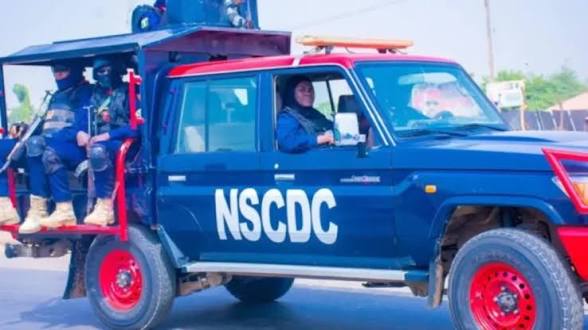
The initial explanation from the Niger State NSCDC command pointed towards a suspected disease outbreak. According to the command, the detainees had died following what officials believed could have been an outbreak inside the detention environment. The bodies were taken to the General Hospital in Minna for medical examination, with the expectation that medical professionals would establish the actual cause of death.
That explanation, however, did not settle the issue. The NSCDC national headquarters later made clear that no particular disease had been medically established as the cause of death at that point. The national command warned against treating reports identifying a specific disease as confirmed before medical and laboratory examinations had been completed. That distinction is important because the word disease can easily become accepted as an established explanation once it appears in early reports, even when the medical evidence is still being examined.
The official position therefore remained open while the investigations continued. The detainees had died, the number had been confirmed at 37, but the scientific reason for those deaths had not yet been conclusively announced. Medical examination, forensic work and other investigations were expected to provide the evidence required to establish the cause. Until those findings are made public, disease remains an initial suspected explanation rather than a confirmed medical conclusion.
A survivor gives another account
A survivor of the detention has provided another important account of the conditions inside the facility. Dauda Shehu, who survived the incident, said around 65 detainees were packed into a poorly ventilated cell. According to his account, people inside the room suddenly began experiencing difficulty breathing. He said detainees tried to get the attention of security personnel by banging on the cell door.
That account has placed overcrowding and ventilation at the centre of the questions surrounding the deaths. If the survivor’s description is accurate, investigators would need to examine the size of the room, the number of detainees held there, the available ventilation, the length of time people were confined together and the response of personnel when detainees began experiencing breathing difficulties. Those details could be compared with official detention records, physical evidence from the facility and medical findings from the deceased.
Governor Bago raises chemical exposure
Niger State Governor Mohammed Umaru Bago has also cautioned against reaching a final conclusion before the investigation is completed. At a press conference, the governor said investigators were examining possible suffocation linked to overcrowding as well as possible exposure to hazardous substances associated with illegal mining. Lead and other chemicals were among the possibilities raised during the discussion.
The governor did not declare that poisoning had caused the deaths, just as he did not declare that suffocation had been established. His position was that forensic and medical examinations should determine the scientific cause. That approach has left several possible explanations open while investigators gather evidence from the detention facility, the bodies, medical records and the circumstances surrounding the arrests.
The possibility of chemical exposure has particular relevance because the detainees were arrested during an operation connected to mining. Mining environments can expose workers to substances that may be harmful depending on the materials being extracted and the methods being used. Establishing whether any such substance played a role in the deaths would require laboratory evidence rather than assumptions based simply on the fact that the detainees had been involved in mining activities.
Families raise disturbing allegations
The deaths have also brought forward allegations from relatives of some of the detainees. One of the accounts came from Shafa’atu Suleiman, the mother of a detainee identified as Abdullahi. She said she had visited her son while he was being held and found him inside a cramped NSCDC cell. Her account has added another layer to the questions surrounding the detention conditions.
She also alleged that relatives were prevented from bringing food to detainees and that officials demanded ₦100,000 for their release. Those claims are allegations made by a relative and have not been established as facts. They are nevertheless part of the wider investigation because they raise questions about how detainees were treated, whether they had access to food and whether any financial demands were made during their detention.
Other allegations have also emerged concerning the treatment of detainees, including claims of physical abuse. Such claims require independent verification before they can be presented as established facts. The investigations now underway will therefore have to look beyond the deaths themselves and examine the entire period between the arrests and the discovery of the bodies.
The commandant is suspended
The Federal Government has now taken an administrative step that has increased the seriousness of the investigation. Suberu Siyaka Aniviye, the NSCDC Commandant in Niger State, was suspended on September 18, 2026, by the Minister of Interior, Olubunmi Tunji Ojo. The suspension is pending a full investigation into the circumstances surrounding the deaths.
The suspension does not establish that the commandant caused the deaths or personally participated in any wrongdoing. It means that the officer under whose command the incident occurred has been asked to step aside while investigators examine the circumstances. The distinction is important because an administrative suspension pending investigation is not the same thing as a finding of guilt or responsibility.
The move also shows the extent to which the incident has moved beyond a routine mining enforcement operation. The Federal Government now has to account for the circumstances under which 37 people died while in the custody of a government security agency. The investigation will have to determine whether failures occurred, whether detention procedures were followed, whether medical attention was adequate and whether any individual or institution bears responsibility for specific actions or omissions.
Multiple investigations open
The NSCDC has launched its own investigation into the deaths. NSCDC Commandant General Ahmed Abubakar ordered a high powered investigative panel led by the Deputy Commandant General responsible for intelligence and investigation. The panel is expected to examine the condition of the suspects when they were arrested, the period they spent in detention, the conditions under which they were held, the medical attention available to them and other circumstances surrounding the incident.
Governor Bago has also established a Niger State Government committee of inquiry. The committee is chaired by Deputy Governor Yakubu Garba, while Commissioner for Homeland Security Maurice Magaji serves as secretary. The state government has said forensic examinations and autopsies are being pursued as part of the effort to establish the cause of death.
The police have also been brought into the investigation. Niger State Commissioner of Police Adamu Abdullahi Elleman directed the State Criminal Investigation Department to investigate the deaths and establish the circumstances surrounding them. The Department of State Services is also involved in investigative processes mentioned by the governor. With several institutions examining different aspects of the same incident, investigators will need to reconcile their findings and establish a clear sequence of events.
The burial raises forensic questions
One of the most sensitive parts of the case concerns the burial of the deceased. The bodies were reportedly buried quickly in accordance with Islamic burial practices. While prompt burial is consistent with Islamic customs, the speed of the burials has also raised questions about the extent of forensic examinations that could be performed before burial.
That issue becomes particularly important because the central unanswered question is the medical cause of death. Investigators need evidence capable of distinguishing between disease, suffocation, chemical exposure or any other possible cause. The more time that passes and the more limited the available physical evidence becomes, the more important laboratory records, medical documentation, witness testimony and other investigative evidence may become.
Authorities have nevertheless maintained that medical examinations, autopsies and forensic processes are being pursued to establish the circumstances surrounding the deaths. The investigation will therefore have to work with the evidence available while providing families with an explanation that can withstand scrutiny.
Anger reaches the streets of Minna
Public anger grew rapidly after news of the deaths spread across Minna. Relatives, miners and residents gathered to demand answers, with the issue quickly moving from government offices into the streets. By Friday, September 18, protests had intensified as people demanded accountability over the deaths of the detainees.

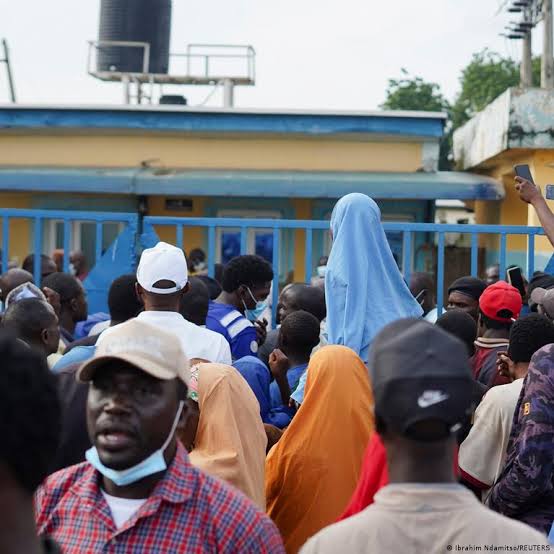
Security forces moved to disperse protesters. Tear gas was used during the demonstrations, while reports also emerged of clashes between protesters and authorities. The confrontation became more serious as the protests developed, with reports of live ammunition being used and attempts by some protesters to set fire to government buildings.
The protests added a new dimension to an already sensitive investigation. Authorities now had to manage public anger while attempting to preserve order and continue investigations into the deaths. For families who had lost relatives, however, the issue was deeply personal. Their concern was no longer simply about an enforcement operation against illegal mining but about relatives who had been arrested alive and later returned to them as bodies.
Protesters challenge the mining narrative
Some protesters also disputed the way the detainees were being described. Miner Yusuf Auwal, who participated in the protest, said the miners were trying to make a living through mining. His comments reflected the economic reality behind artisanal mining, where people may turn to mineral extraction as a source of income despite government restrictions or regulatory requirements.
The dispute over how the detainees should be described does not change the legal status of the allegations against them. They were suspected of illegal mining and had been arrested during an enforcement operation. Being suspected of illegal mining is separate from any allegation that a detainee participated in attacks against security personnel, and claims linking the deaths to retaliation over previous attacks remain unestablished.
Niger State declares 3 days of mourning
Governor Bago declared 3 days of mourning following the deaths. The state government also began compiling a register of the deceased and their families as officials attempted to establish the identities of those who died and engage their relatives.
The governor also ordered the closure of illegal mining activities around the affected M.I. Wushishi mining site. Experts from Abuja were expected to examine the site as part of efforts to understand the mining environment and address the wider issue surrounding illegal mining in the area.
The mourning period has given the state an opportunity to acknowledge the scale of the tragedy while investigations continue. For the families, however, mourning is tied closely to the search for answers. Knowing that 37 people died is only one part of the story. Families also want to know the condition of their relatives before death, the circumstances inside the facility and the medical reason those lives ended so suddenly.
Another mining tragedy unfolds in Taraba
While the Niger State incident was developing, another mining tragedy occurred in Taraba State. On Thursday, September 17, 2026, a mining pit collapsed at Mayo Kam community in Bali Local Government Area of the state. Artisanal miners were reportedly working inside the pit when the collapse occurred.
Initial reports from the community suggested that more than 20 people could have been trapped or killed. Women and children were among those reportedly feared to be affected, adding to the alarm surrounding the incident. Residents said many of those involved were from Mayo Kam, while rescue operations continued as authorities attempted to determine the actual number of people inside the pit.
The early figure of more than 20, however, was an estimate of people feared trapped or dead. It was not the same as a confirmed death toll. By Friday, September 18, Taraba police had confirmed 5 deaths while rescue operations continued. Other reports also indicated that the actual number of casualties had not yet been fully established.
Why the figure 57 became confusing
The number 57 began circulating because the 37 confirmed deaths in Niger were combined with the initial report of more than 20 people feared trapped or killed in Taraba. Mathematically, 37 plus 20 produces 57, but journalism requires more than arithmetic when the underlying figures have different levels of confirmation.
The Niger figure of 37 was confirmed by the Niger State Government. The Taraba figure of more than 20 was an initial estimate of people feared trapped or killed after the mining pit collapsed. Police in Taraba later confirmed 5 deaths while rescue operations continued. The distinction means that 57 cannot accurately be presented as the confirmed combined death toll from both incidents.
The 2 tragedies therefore need to be kept separate when reporting the story. Niger involves 37 confirmed deaths involving people who were in NSCDC custody after an illegal mining enforcement operation. Taraba involves a collapsed mining pit where an initial estimate suggested more than 20 people could have been affected, while 5 deaths had been confirmed by police as of September 18.
The wider illegal mining problem
Both incidents have placed illegal and artisanal mining under renewed attention, although the circumstances are very different. Niger involves suspected illegal miners who were arrested by security personnel and later died in custody. Taraba involves miners who were reportedly working inside a pit that collapsed. One case concerns detention after enforcement, while the other concerns the physical danger of mining operations.
Illegal mining has remained a difficult issue for authorities because mining activity provides income for communities while also creating regulatory, environmental and security concerns. Unregulated sites can lack basic safety systems, while underground or open pit operations can expose workers to serious physical dangers. The Taraba collapse demonstrates the direct danger associated with unstable mining structures, while the Niger case raises questions about the treatment of people arrested during enforcement.
Security agencies have also linked illegal mining in some parts of Nigeria to environmental damage, lost government revenue and wider security concerns. Those broader arguments, however, do not automatically establish anything about the individual detainees who died in Minna. Their deaths must be investigated on the evidence surrounding their own detention.
The timeline becomes clearer
September 15, 2026 marked the beginning of the NSCDC enforcement operation against suspected illegal mining activities in parts of Niger State. Officers operated around the M.I. Wushishi and Lukoto areas, arresting suspected illegal miners and recovering exhibits during the operation. The exercise continued into September 16 as further arrests were made.
Early on September 17, detainees in NSCDC custody in Minna were found dead. The number eventually confirmed by the Niger State Government reached 37. The NSCDC initially pointed to a suspected disease outbreak, while the national command later stressed that a specific disease had not been medically established as the cause.
September 17 also brought the separate Taraba mining disaster, when a pit collapsed at Mayo Kam in Bali Local Government Area. More than 20 people were initially feared trapped or killed, but that figure remained unconfirmed. By September 18, Taraba police had confirmed 5 deaths while rescue efforts continued.
September 18 became another major turning point in Niger State. The Federal Government suspended Niger State NSCDC Commandant Suberu Siyaka Aniviye pending investigation. Protests also intensified in Minna as relatives, miners and residents demanded answers over the deaths, with security forces using tear gas and reports emerging of more serious clashes.
The questions investigators must answer
The investigation now has several important areas to establish. One is the condition of the detainees at the point of arrest. Medical records, witness accounts and evidence from the mining sites could help determine whether any of those arrested showed signs of illness, chemical exposure or physical distress before they were taken into custody.
Another area is the detention facility itself. Investigators will need to establish how many people were held in the cell, the physical size of the space, the level of ventilation, the length of detention and the availability of water, food and medical attention. The survivor’s account of around 65 people being held in a poorly ventilated cell makes those details particularly important.
The response of personnel during the period when detainees began experiencing difficulty breathing will also require examination. Investigators can compare witness accounts with official records, duty schedules, security logs, medical reports and other evidence. The goal should be to reconstruct the sequence of events rather than rely on a single explanation before the evidence is complete.
The central question remains
The story now goes far beyond the original arrests for suspected illegal mining. It has become a question about how 37 people who were alive when taken into NSCDC custody ended up dead inside a detention facility within a matter of days. That question sits at the centre of the Federal Government investigation, the Niger State inquiry, the police investigation and the NSCDC investigation.
Several possible explanations have entered the public discussion, including disease, overcrowding, suffocation and exposure to hazardous substances. Allegations of poor detention conditions and mistreatment have also emerged from relatives and witnesses. None of those explanations should be treated as the final cause until the medical, forensic and investigative findings establish the evidence.
For the families of the 37 deceased detainees, the final answer will carry a significance that statistics cannot capture. The people who left their homes to work, earn money or pursue their daily lives were eventually placed in custody and did not return alive. Their relatives are now waiting for investigators to explain the circumstances surrounding their deaths and to determine whether any failures occurred during the period they were held.
The events of September 15 to September 18, 2026 have therefore left Niger State facing several connected but separate issues. There is the illegal mining operation that led to the arrests, the deaths of 37 detainees, the unresolved medical cause, allegations concerning detention conditions, the suspension of the state NSCDC commandant, the multiple investigations, the protests in Minna and the separate mining collapse in Taraba. The figure 57 may dominate social media discussions, but the confirmed facts require a more careful reading.


For now, 37 deaths in NSCDC custody in Niger State remain confirmed, while the cause of those deaths remains under investigation. Taraba’s separate mining collapse had 5 confirmed deaths as of September 18, with rescue operations continuing and the final casualty figure still uncertain. Those distinctions are central to understanding the story because behind every number is a family waiting for an explanation, while investigators face the difficult task of establishing exactly how the events unfolded inside the detention facility and what ultimately caused so many lives to be lost.