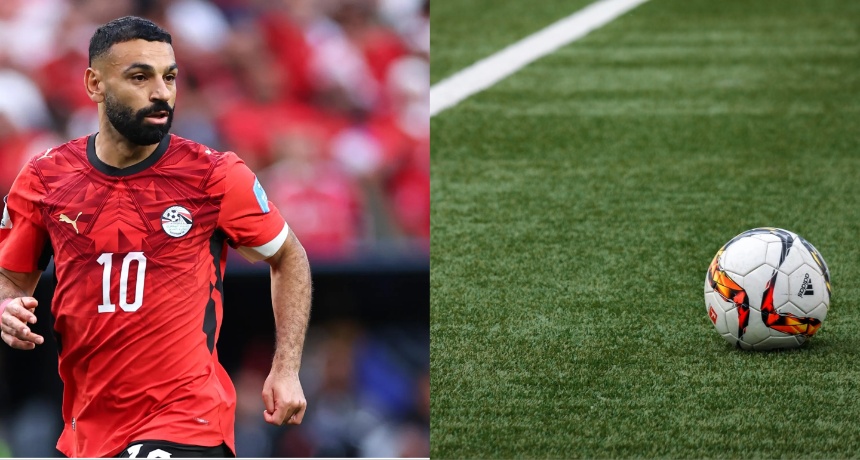
Football’s uneasy relationship with plastic pitches has followed Mohamed Salah for years, and it resurfaced again as Egypt navigated a string of fixtures on artificial surfaces during their build-up to the 2026 World Cup. The pattern is familiar by now: a qualifier is scheduled on turf, questions swirl about whether the Egyptian captain will play, and Liverpool’s medical staff quietly weigh in from Merseyside. It happened against Mauritania. It has echoed through other qualifiers since. And it keeps raising a question that goes well beyond one player — why do so many top footballers dread artificial turf, and is the fear actually backed by evidence?
The Mauritania Episode That Started the Conversation
The clearest example remains Egypt’s Africa Cup of Nations qualifying double-header against Mauritania. Salah scored in a 2-0 win in Cairo, then faced a reverse fixture in Nouakchott on a pitch at the Stade Cheikha Ould Boidiya that is not natural grass. Egypt boss Hossam Hassan didn’t dance around the issue. He told reporters plainly that he would let any player skip the game if they asked, citing both the surface and what he described as a physically aggressive Mauritanian side.
Hassan later confirmed that Liverpool’s medical team had flagged specific worries about Salah, pointing to a history of back and knee trouble that they feared could resurface on a harder, less forgiving playing surface. Liverpool subsequently released Salah early from international duty, and he returned to Merseyside ahead of a Premier League fixture against Chelsea rather than risk the trip.
It wasn’t an isolated incident dreamed up to protect one aging superstar. It fit a wider, well-documented pattern of clubs and coaches treating artificial pitches as a genuine injury risk, not just an excuse.

What the Injury Data Actually Shows
Skeptics sometimes dismiss turf concerns as player preference dressed up as medical advice. The research tells a more complicated story. Multiple studies of American football, where turf use is far more extensive and long-studied than in soccer, have found higher injury rates on certain artificial surfaces. A widely cited analysis of NFL data from 2002 to 2008 found an 88 percent higher rate of anterior cruciate ligament tears and a 48 percent jump in eversion ankle sprains on FieldTurf compared with grass, alongside a 27 percent increase in lower-extremity injuries overall.
College-level research has pointed in a similar direction. A Stanford-led study of NCAA football injuries between 2004 and 2009 found athletes were roughly 1.4 times more likely to suffer an ACL tear on modern infill turf than on grass. A separate NCAA analysis spanning a full decade found artificial surfaces were tied to significantly higher rates of posterior cruciate ligament tears, with some divisions also showing elevated ACL injury risk.
Not every study agrees. Newer-generation FieldTurf systems, tested against grass between 2010 and 2013, produced injury rates so close to natural surfaces that researchers concluded the two were effectively comparable. That inconsistency is part of the problem: turf isn’t one uniform product. Infill composition, pile height, how often a surface is maintained, and even ambient temperature all shift the risk profile, which makes it difficult for players to know exactly what they’re stepping onto from one stadium to the next.
For a player carrying an existing injury history, like Salah’s recurring lower back and knee issues, that uncertainty is reason enough to be cautious. Firmer artificial surfaces generate less shock absorption than well-maintained grass, and studs can grip a synthetic pitch differently, altering how force travels through the knee and ankle during a sudden turn or stop. Sports medicine staff tend to treat that unpredictability as a red flag rather than a minor inconvenience, particularly for a 33-year-old whose body has absorbed roughly a decade of Premier League football.

A Wider Pattern Across the Sport
Salah’s situation is a visible example of a broader discomfort players have voiced for years. FIFPro, football’s global players’ union, has repeatedly pushed FIFA and national federations to phase out synthetic pitches for top-level competition, arguing that surface inconsistency contributes to burnout and injury on top of an already packed calendar. The union’s recent warnings about the 2026 World Cup have focused mostly on extreme heat across United States venues, but the underlying message is the same: player welfare keeps getting squeezed between commercial scheduling and physical reality, and surface conditions are one more variable clubs increasingly refuse to gamble with.
Major League Soccer illustrates the tension well. Several MLS clubs still play home fixtures on turf, largely because their stadiums double as venues for American football or other events where synthetic surfaces are cheaper to maintain. Visiting European stars have grumbled about it for years, and it’s part of why FIFA invested heavily in natural grass research ahead of the 2026 World Cup, including work at the University of Tennessee’s indoor research facility aimed at keeping real turf healthy inside domed and shared-use stadiums.

Why Liverpool, and Egypt, Keep Erring on the Side of Caution
None of this means every artificial pitch is a hazard waiting to happen, and no single study proves turf caused any specific injury Salah has suffered. But when a club has already watched a player miss stretches of the season with hamstring and thigh problems, as Liverpool did through the tail end of Salah’s Anfield career, the calculation shifts. Risk doesn’t need to be certain to be worth avoiding, especially with a World Cup or a title run on the line.
That’s really the story behind every headline about Salah skipping a turf fixture. It isn’t diva behavior or a lack of commitment to the Egyptian national team. It’s a considered trade-off between one qualifier and a player’s long-term fitness, made by medical staff who have plenty of data, even imperfect data, suggesting the caution is justified. As long as synthetic pitches remain a fixture of international qualifying in parts of Africa and beyond, expect this same conversation to resurface every time Salah, or another highly valued forward, is scheduled to play on one.