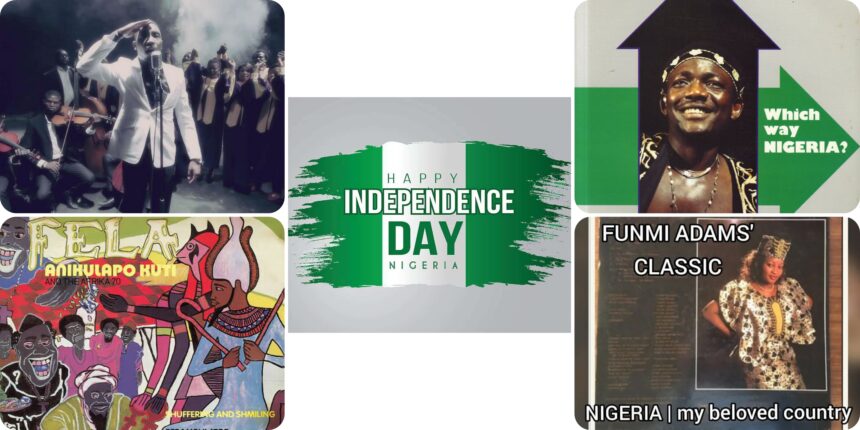
As Nigeria celebrates its 66th Independence Day on October 1, 2026, it is another opportunity to reflect on the country’s history, struggles, achievements and hopes for the future.
Over the years, Nigerian musicians have used their songs to address the country’s challenges, preach unity, celebrate its people and express hope for a better nation. Some of these songs have become timeless classics, while others continue to resonate with younger generations.
From Sunny Okosun’s thought-provoking Which Way Nigeria to Timi Dakolo’s patriotic Great Nation, Nigerian music has provided a soundtrack to different periods in the country’s history.
As the nation marks another Independence Day, here are 10 memorable Nigerian songs worth revisiting, particularly for the memories, messages and emotions they evoke even till today.
1. Sunny Okosun – Which Way Nigeria
Released in 1984, Which Way Nigeria remains one of Sunny Okosun’s most memorable songs. At a time when the country was facing political and economic challenges, the late singer used music to question Nigeria’s direction and draw attention to its problems.
The song was more than a musical performance. It was a call for Nigerians to reflect on the state of their country and consider the future they wanted. Its central question, Which way Nigeria?, captured the uncertainty many Nigerians felt at the time.
Decades later, the song remains relevant to discussions about the country’s development. For listeners who grew up during that period, it also brings back memories of an era when musicians frequently used their platforms to comment on national issues.
As Nigeria marks its 66th Independence Day, Okosun’s classic is a reminder of how music can preserve the questions and concerns of an entire generation.
2. Onyeka Onwenu – One Love
Few Nigerian songs capture the message of unity as simply as Onyeka Onwenu’s 1986 One Love. The late singer was known for her music about love, peace and national unity, and this song remains one of her most memorable contributions to Nigeria’s musical history.
Through its message, One Love encourages Nigerians to look beyond their differences and embrace one another. Its appeal lies in its simplicity, making it memorable for listeners across different generations.
Over the years, the song has remained associated with calls for peace and togetherness. It also reflects Onwenu’s longstanding interest in using music to address issues affecting Nigerian society.
With Nigeria being home to different ethnic groups, languages and cultures, the song’s message continues to feature prominently in conversations about national unity. Revisiting it on Independence Day is also an opportunity to remember the late singer and her contribution to Nigerian music.

3. Funmi Adams – Nigeria, My Beloved Country
For many Nigerians who grew up in the 1980s and 1990s, Funmi Adams’ Nigeria, My Beloved Country is a familiar patriotic song that brings back childhood memories.
The song became popular in the 1980s, when Adams was among the Nigerian singers whose music celebrated the country’s identity and cultural heritage. Its lyrics express affection for Nigeria while highlighting the country’s natural resources and potential.
Unlike songs that focus mainly on the country’s challenges, Nigeria, My Beloved Country takes a more celebratory approach. It encourages Nigerians to appreciate their homeland and recognise the importance of working together.
The song also formed part of a period when patriotic music was a familiar feature of Nigerian public life. For listeners who remember hearing it while growing up, it remains a nostalgic reminder of an earlier era.

4. Veno – Nigeria Go Survive
Veno Marioghae’s Nigeria Go Survive is another classic that has retained its place in Nigeria’s patriotic music collection.
Released in 1985, the song expressed hope in Nigeria’s ability to overcome its challenges. Sung largely in Nigerian Pidgin, it highlighted the country’s natural resources, including cocoa, timber, rubber and cotton, while encouraging Nigerians to believe in their homeland.
The song’s message was particularly significant during a period of economic uncertainty. Rather than dwell entirely on the country’s problems, Veno offered a message of resilience and survival.
Its enduring appeal lies in its simple but powerful message. Even when circumstances are difficult, there is still hope for a better future.
For Nigerians who remember the song from their childhood, it is a reminder of a time when patriotic music played a prominent role in the country’s cultural life. Its continued relevance also reflects the enduring desire for Nigeria to overcome its challenges.

5. KUSH – Let’s Live Together
For Nigerians who grew up in the early 2000s, KUSH’s Let’s Live Together is one of those songs that instantly brings back memories.
The 2003 Nigerian gospel and R&B group, which included TY Bello and Lara George, released the song during a period when Nigerian music was embracing different sounds and styles. Its message was a straightforward appeal for peace, love and unity among Nigerians.
At a time when ethnic and religious differences continued to feature in national conversations, the song reminded listeners of the importance of peaceful coexistence. Its memorable tune and simple message also helped it appeal to a wide audience.
Beyond its nostalgic value, Let’s Live Together remains a reminder that Nigeria’s diversity can be a source of strength rather than division.
For listeners who remember the early 2000s, revisiting the song is an opportunity to relive a memorable period in Nigerian music.

6. Sound Sultan – Motherland
Sound Sultan’s Motherland is a song that speaks to the strong connection Nigerians have with their homeland, regardless of where life takes them.
Known for using his music to address social issues, the late singer explored themes of identity, patriotism and belonging. Motherland celebrates Nigeria while reminding listeners of the importance of appreciating their roots.
The song also resonates with Nigerians living abroad, many of whom have left the country in search of better opportunities but remain connected to their homeland through family, culture and memories.
Its message goes beyond simply expressing love for Nigeria. It also encourages listeners to recognise the value of their country and maintain a connection with it, even when they are far away.
As Nigerians at home and abroad celebrate the country’s 66th Independence Day, Motherland is a fitting addition to a playlist of songs that evoke national pride and nostalgia.

7. TY Bello – Greenland
Before becoming widely recognised for her photography, TY Bello had already made her mark in Nigerian music. One of her memorable works is Greenland, the title track of her 2007 album.
The song celebrates Nigeria’s beauty and potential while offering a message of hope and optimism. It encourages listeners to look beyond the country’s difficulties and recognise the possibilities that lie ahead.
Released at a time when Nigerians were having conversations about the country’s development and future, Greenland offered a more inspirational perspective on national identity.
The song also reflects Bello’s ability to combine soulful music with messages that connect with listeners on a personal and national level.
Almost two decades after its release, Greenland remains a song worth revisiting, particularly on an occasion that encourages Nigerians to reflect on their country’s past and future.

8. Timi Dakolo – Great Nation
Timi Dakolo‘s Great Nation is one of the modern Nigerian patriotic songs that has become closely associated with national celebrations.
Released in 2012, the song showcases Dakolo’s powerful vocals while delivering a message about Nigeria’s potential, unity and future. Its stirring melody and patriotic lyrics have helped it find a place at public events and national celebrations.
The song was written by Cobhams Asuquo, who has worked with several Nigerian artistes. It became one of Dakolo’s signature songs, with the singer frequently performing it while waving the Nigerian flag.
Unlike older patriotic songs that reflect the political and economic concerns of their time, Great Nation places considerable emphasis on the possibilities of a better Nigeria. It celebrates the country while encouraging its people to believe in its potential.
Over the years, the song has earned a place among Nigeria’s recognisable modern patriotic anthems. Its inclusion in an Independence Day playlist also bridges the gap between older classics and contemporary Nigerian music.

9. King Sunny Ade – The Way Forward
King Sunny Ade’s The Way Forward is another important Nigerian song that reflects the relationship between music and national history.
The juju music legend brought together several Nigerian artistes for the original project in 1993, following the annulment of the June 12 presidential election. The song was performed in several Nigerian languages, including Yoruba, Igbo, Hausa and Pidgin English.
Its central message was a call for unity and cooperation among Nigerians at a period of considerable political uncertainty. By bringing together artistes from different backgrounds, the project also reflected the country’s cultural diversity.
The song was revisited in 2003, serving as a reminder of the events surrounding the annulled election and the importance of national unity.
Beyond its musical value, The Way Forward offers a glimpse into an important period in Nigeria’s political history. Its message of working together remains a significant part of its appeal.

10. Fela Anikulapo-Kuti – Suffering and Smiling
No collection of Nigerian songs reflecting the country’s social realities would be complete without Fela Anikulapo-Kuti.
The Afrobeat pioneer was known for using his music to criticise government policies, social inequality and the difficulties faced by ordinary Nigerians. One of his notable works, Suffering and Smiling, released in 1978, examined the struggles of everyday people.
In the song, Fela addresses the hardships faced by Nigerians, particularly the working class, while questioning how people endure difficult circumstances. He also explores the role of religion in people’s lives and the contrast between their struggles and the comfort enjoyed by those in positions of authority.
Unlike songs that focus on celebrating Nigeria’s beauty and potential, Suffering and Smiling offers a more critical perspective. It reflects the frustrations of ordinary citizens and raises questions about the country’s social and economic conditions.
More than four decades after its release, the song remains part of Fela’s influential musical legacy. Its inclusion in this list also shows that Nigerian patriotic music is not limited to songs that celebrate the country; it also includes music that challenges Nigerians to reflect on the nation’s problems.

Conclusion
As Nigeria celebrates its 66th Independence Day, these 10 songs offer more than entertainment. They provide a musical journey through different periods of the country’s history, from the political questions raised by Sunny Okosun to the hopeful message of Timi Dakolo’s Great Nation.
While some celebrate unity and national pride, others reflect on the struggles Nigerians have faced over the decades. Together, they capture different emotions associated with being Nigerian, including hope, frustration, love and resilience.
For those who grew up listening to these classics, revisiting them is an opportunity to relive cherished memories. For younger Nigerians, the songs offer a chance to discover the music that helped shape the country’s cultural identity.
As the nation marks another year of independence, these timeless tracks remind us that Nigeria’s story is not told only through historical events but also through the music that has accompanied its people along the way.