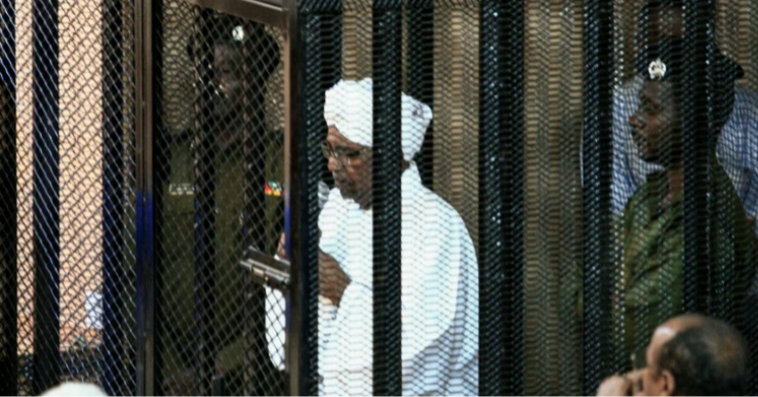
A Southern California business owner is in federal custody after prosecutors accused him of sending more than $300 million worth of restricted Nvidia-powered servers to China. The Justice Department announced the Greg Lui DOJ charges on October 1, saying Lui, who also goes by Yiu Kong Lui, and unnamed co-conspirators moved the hardware between 2023 and 2024. Prosecutors say the machines left the United States on false paperwork and passed through two Southeast Asian countries before reaching Chinese buyers.
The allegations are unproven, and Lui is presumed innocent unless convicted. The case still lands at a sensitive moment, as Washington struggles to keep its most advanced AI hardware out of Chinese data centers.
Who Is Greg Lui?
Lui is 38 and lives in San Gabriel, California. He owns Earthmade Computer Inc., a City of Industry company that the Justice Department describes as an authorized distributor of Super Micro Computer products, with a focus on high-performance Nvidia GPU infrastructure. In plain terms, his business sold the kind of server racks that AI developers and cloud providers buy by the dozen.
That background matters to the case. Prosecutors are not describing a stranger who slipped hardware out of a warehouse. They are describing a legitimate distributor who allegedly used his access to sought-after equipment to supply buyers the law says should not have received it.
What the Greg Lui DOJ Charges Say
A federal grand jury returned the indictment on September 29, 2026, and the case was unsealed after Lui’s arrest. He faces three counts:
- Conspiracy to violate the Export Control Reform Act and the Export Administration Regulations
- Outbound smuggling
- Conspiracy to commit money laundering
If convicted, the statutory maximums are 20 years for the export-control conspiracy, 20 years for the money laundering conspiracy and 10 years for smuggling. Those are ceilings, not predictions. Actual sentences depend on the counts of conviction and federal sentencing guidelines. At the time of the first reports, the court docket in Los Angeles did not yet list a defense attorney for Lui.
How the Alleged Smuggling Scheme Worked
According to the indictment, the route was designed to look routine. Prosecutors say Lui bought high-end servers fitted with Nvidia graphics processors from U.S. manufacturers and shipped them to Singapore and Malaysia, where no export license was needed, then forwarded them to customers in China. The stopover is the heart of the case. Under U.S. rules, sending these systems directly to China requires a license that is effectively unavailable for the most powerful chips. Sending them to a third country is legal in many cases, provided the paperwork is honest about where the equipment is really going.
Prosecutors say it was not. The indictment alleges the documents misstated who the end users were and where the servers were headed, so the shipments appeared eligible to leave without a license. Court filings also describe the use of “dummy servers” to mislead federal inspectors, and say false end-user paperwork was submitted to U.S. hardware manufacturers.
Money is the other thread. The indictment alleges Earthmade received more than $176 million between January and October 2024 from two Malaysia-based freight forwarding companies as part of the scheme. That flow of funds is what supports the money laundering count.
The charging papers also single out individual deals. One transaction involved 27 Nvidia H100 server systems worth about $7.6 million. The H100 is among the most sought-after processors for training large AI models, which explains the demand.
The Agencies Behind the Investigation
Three federal bodies worked the case. The FBI, the Commerce Department’s Bureau of Industry and Security and the Defense Criminal Investigative Service formed a joint task force, and the Los Angeles prosecution is led by First Assistant U.S. Attorney Bill Essayli with National Security Division prosecutors. Essayli said in the department’s announcement that the defendant used false paperwork and third-country shipments to move the servers. A DCIS official, John E. Helsing, said stopping illegal exports of controlled technology is central to protecting national security.
The presence of a defense investigative agency signals how Washington frames these cases. The Justice Department’s argument in similar prosecutions is that China is chasing American AI technology to support military modernization and surveillance, which is why the chips sit behind strict licensing rules.
Not an Isolated Case
The Lui indictment is the latest in a run of cases targeting the same pipeline. Federal prosecutors in Manhattan charged Super Micro Computer co-founder Yih-Shyan “Wally” Liaw and two others over an alleged plan to divert billions of dollars of Nvidia-equipped servers to China. Reports put that alleged diversion at more than $2.5 billion. In that case, Nvidia said strict compliance is a top priority and that illicit shipments bring no service or support.
The pressure is global. In August 2026, Taiwanese prosecutors charged nine people, including employees of Nvidia and Super Micro, over the illegal shipment of 74 Nvidia Blackwell B300 servers to mainland China. Last year, U.S. prosecutors also charged four people over a plot involving shell companies, fake invoices and covert routing, as reported at the time by The Register.
Researchers say the leakage is large. A September 2026 report from C4ADS, together with analysis from Epoch AI, concluded that roughly a third or more of China’s AI computing power may consist of smuggled U.S. GPUs, moved through drop-shipping, shell companies and Southeast Asian transshipment hubs. If that estimate is even close, the Lui case is one visible piece of a much bigger market.
For ordinary readers, the story can feel distant, but the stakes are practical. Top-end AI servers have become strategic goods, treated more like controlled defense equipment than consumer electronics. Whoever holds the most capable chips has an edge in building the next generation of AI systems, and governments know it.
For the technology industry, the message is about liability. Enforcement is reaching distributors and the people who certify end users and destinations, not only the companies that make the chips. A reseller that signs off on a customer’s paperwork without checking it now carries real legal risk. For firms across Southeast Asia that handle transshipment, the scrutiny is unlikely to ease.
Lui will move through the federal court process in Los Angeles, starting with initial appearances and pretrial proceedings. Prosecutors have not said whether the other co-conspirators or the Malaysia-based freight forwarders named in the indictment will face further charges or extradition. Any plea, motion or trial date will shape how much of the government’s account is tested in open court. Readers following the Greg Lui DOJ charges should expect more detail to emerge as the defense responds.