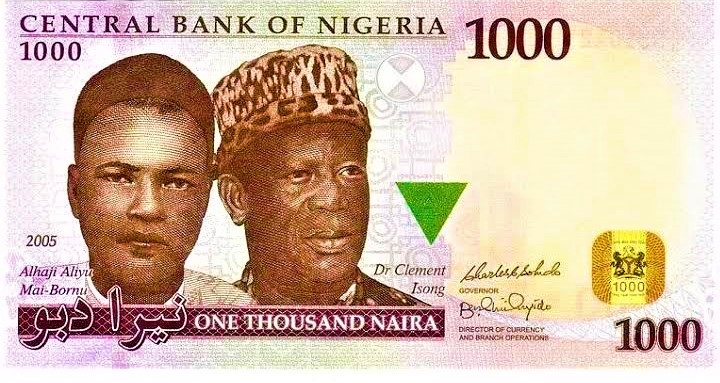
On October 12, 2005, the Central Bank of Nigeria (CBN) officially put the One Thousand Naira (N1,000) banknote into circulation for the first time in the history of the nation.
The new note, which became the highest denomination currency in the country, was unveiled in Abuja by the Governor of the Central Bank, Professor Charles Chukwuma Soludo.
Speaking at a press briefing at the CBN headquarters, Prof. Soludo said the introduction of the higher denomination was aimed at reducing the volume of cash in circulation and easing large transactions for businesses and traders.
“This is a major step forward for our banking system,” Soludo said. “The note is designed with advanced security to prevent counterfeiting and will make cash handling easier for businesses and traders.”
The CBN Governor disclosed that the N1,000 note carries several enhanced security features, including a gold-coloured security strip, watermark portrait, microprint text, and traditional Nigerian cultural motifs woven into the design border.
The front of the note features the portraits of two prominent Nigerians — Alhaji Aliyu Mai-Bornu and Dr. Clement Isong, both former governors of the Central Bank of Nigeria.
The CBN has assured that the new note will not cause inflation.
“We have mechanisms to ensure stability,” Soludo said. “The launch is purely to improve efficiency and convenience of cash transactions. Inflation is not expected as a result.”