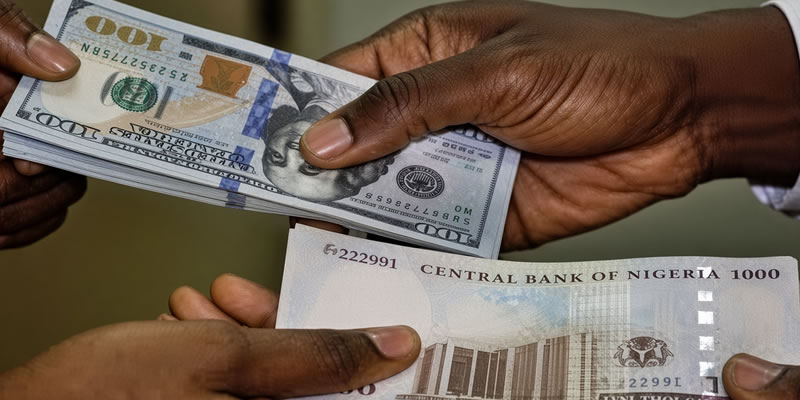
The naira opened Tuesday, October 13, 2026, much the way it has behaved all month: steady at the official window and a little weaker on the street. Anyone checking the dollar to naira rate this morning will find the official Nigerian Foreign Exchange Market (NFEM) rate sitting at about ₦1,332.49 per dollar, while Bureau De Change (BDC) operators and street dealers are selling the greenback at roughly ₦1,380.
That leaves a gap of about ₦48 between the two markets. It is a small margin by the standards of the last few years, but it is still big enough to matter if you are paying school fees abroad, settling an import invoice or sending money home.
Dollar to Naira Rate Today at a Glance
| Market | Buying rate (₦) | Selling rate (₦) | Note |
|---|---|---|---|
| Official (NFEM, CBN closing rate) | 1,332.49 | 1,332.49 | Last completed session, Friday, October 9 |
| NFEM volume-weighted average | 1,331.19 | 1,331.19 | Same session, as published by the CBN |
| Black market (parallel) | 1,370 | 1,380 | Typical quote across Lagos, Abuja, Kano and Port Harcourt |
| Black market (AbokiFx, Oct 12 evening) | 1,368.17 | 1,376.41 | BDC operators’ average |
Quotes differ from one dealer to another, and from one city to the next. Some trackers put the street selling rate as high as ₦1,390 this morning, so treat every figure here as a guide and confirm with your own dealer before you trade.
Official Market: The NFEM Rate and the CBN Figure
The Central Bank of Nigeria (CBN) published a closing rate of ₦1,332.49 per dollar for Friday, October 9, the latest completed session in the official data. The volume-weighted average for the same day was ₦1,331.19. The CBN says the NFEM rate is calculated from the volume-weighted average of transactions, which is why it often differs a little from the closing price.
The official market does not trade on weekends, so Friday’s numbers carry over until Monday’s data is out. In practice, that is why you will see slightly different “official” figures on different websites on the same day. Some quote the average, others the close.
What stands out is how little the rate has moved. Since the start of October the naira has stayed inside a band of roughly ₦1,328 to ₦1,334. On Wednesday, October 7, the closing rate was ₦1,332.75. A day later it weakened by about 80 kobo to ₦1,333.55, then ended the week at ₦1,332.49.
| Date | NFEM reference rate (₦/$) | Closing rate (₦/$) |
|---|---|---|
| Wednesday, October 7 | 1,331.77 | 1,332.75 |
| Thursday, October 8 | n/a | 1,333.55 |
| Friday, October 9 | 1,331.19 | 1,332.49 |
Figures vary slightly depending on whether a publisher uses the weighted average or the close.
Global mid-market sources tell the same story. XE had the dollar at about ₦1,323.55 on the evening of October 12. Over the last 90 days it has moved between roughly ₦1,321 and ₦1,380, a far calmer stretch than Nigerians were used to a couple of years ago.
Black Market Dollar Rate Today
On the parallel market, dealers were buying dollars at about ₦1,370 and selling at ₦1,380 as the week began. At the AbokiFx tracker, BDC operators were quoting a buy rate of ₦1,368.17 and a sell rate of ₦1,376.41 on Monday evening. The street premium works out to roughly ₦43 to ₦51 per dollar, or a little under 4 percent.
The reasons are familiar. Individuals and small businesses still need foreign exchange for travel, tuition, medical bills and imports, and not everyone can get what they need through their bank at the official rate. Demand that is not met in the formal system spills over into the parallel market, and the dealers price in that convenience.
How Much Is $100, $500 and $1,000 in Naira Today?
Here is what common dollar amounts are worth at the official rate of ₦1,332.49 and the black market selling rate of ₦1,380.
| Amount in dollars | At official rate (₦1,332.49) | At black market rate (₦1,380) |
|---|---|---|
| $50 | ₦66,624.50 | ₦69,000 |
| $100 | ₦133,249 | ₦138,000 |
| $500 | ₦666,245 | ₦690,000 |
| $1,000 | ₦1,332,490 | ₦1,380,000 |
| $5,000 | ₦6,662,450 | ₦6,900,000 |
On a $1,000 purchase, the difference between the two windows is about ₦47,510. For a student paying a few thousand dollars in tuition, that adds up quickly.
Why the Naira Has Been Steady
Several things have kept the currency calm in recent weeks.
Foreign reserves are at a multi-year high. The CBN’s Monetary Policy Committee (MPC) said gross external reserves stood at $55.25 billion on September 18, 2026, the highest level in 18 years and enough to cover about 11.3 months of imports. Reserves have grown by more than $9 billion since January 2, when they were $45.57 billion. That is well above the $51.04 billion the CBN had projected for the end of the year.
The build-up has not been a straight line. Reserves slipped from $49.18 billion on April 1 to $48.33 billion in early May, and analysts have warned that the gains depend on oil earnings and capital inflows holding up.
Interest rates have just been reset. On September 22, the MPC cut the Monetary Policy Rate (MPR) by 350 basis points, from 26.5 percent to 23 percent, and recalibrated the standing facilities corridor to +50/-300 basis points. Governor Olayemi Cardoso described it as an operational realignment meant to improve how policy signals reach the market, not a change in the bank’s stance. The committee cited easing inflation, relative exchange rate stability and higher reserves as the backdrop.
Inflation is cooling. Headline inflation eased to 15.39 percent in August 2026 from 15.43 percent in July, according to the National Bureau of Statistics (NBS). That compares with 23.14 percent in August last year. Month-on-month inflation also slowed to 0.71 percent from 1.57 percent. The September figure is due from the NBS shortly and will be one of the next signals for the market.
Foreign money is coming in. NBS data showed Nigeria attracted $10.37 billion in capital imports in the first quarter of 2026, an 83.8 percent increase on the same period of 2025. Portfolio investment accounted for nearly all of the inflows recorded in January.
Put together, these factors help explain why the naira, which traded around ₦1,346.90 in late August, now holds near ₦1,332.
| Indicator | Latest reading |
|---|---|
| Gross external reserves | $55.25 billion (September 18, 2026) |
| Monetary Policy Rate | 23% (cut from 26.5% on September 22) |
| Headline inflation | 15.39% (August 2026) |
| Import cover | About 11.3 months |
What to Expect From the Naira This Week
Traders will be watching three things: the next NFEM sessions, the September inflation report and any fresh signal from the CBN on how it plans to manage liquidity after the rate reset. A lower MPR can make naira assets less attractive to foreign investors chasing yield, so portfolio flows are worth watching. Oil prices and the situation in the Middle East, which the MPC flagged as a risk in July, remain outside Nigeria’s control.
For now, the official market looks set to keep hugging the ₦1,330 band, with the black market staying a few dozen naira above it. If you need dollars, comparing quotes from your bank, a licensed BDC and a registered fintech platform is still the sensible move.
Frequently Asked Questions
What is the dollar to naira rate today, October 13, 2026?
The official NFEM rate is about ₦1,332.49 per dollar, based on the CBN’s last published closing rate. On the black market, the dollar is selling for about ₦1,380 and being bought at about ₦1,370.
What is the CBN rate for the dollar today?
The CBN’s last published figures put the volume-weighted average at ₦1,331.19 and the closing rate at ₦1,332.49 per dollar.
Why is the black market rate higher than the official rate?
Demand for dollars outside the banking system is higher than the supply available there. Dealers charge a premium for access and convenience, which is currently about ₦43 to ₦51 per dollar.
Does the official exchange rate change on weekends?
No. The official market is closed on weekends, so the CBN rate stays at Friday’s level until trading resumes on Monday.
How much is $100 in naira today?
About ₦133,249 at the official rate, or roughly ₦138,000 at the black market selling rate.
Exchange rates change throughout the day. The figures above reflect the latest published data as of the morning of October 13, 2026, and are for information only, not financial advice.