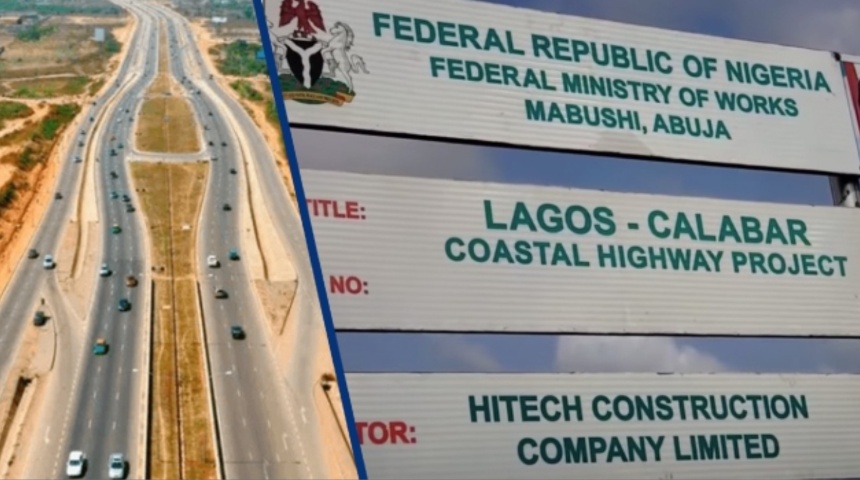
The Lagos-Calabar Coastal Highway is changing course again. On Monday, October 12, 2026, Works Minister David Umahi told reporters at the State House in Abuja that President Bola Tinubu has ordered the road to follow the existing East-West Road from the Ondo State boundary into Edo State, instead of cutting a fresh alignment through the creeks and swamps of the Ondo coast. Within hours, lawyers, opposition politicians and community leaders were asking the same questions: who approved the change, who pays for it, and was the law followed?
This report lays out what the government has said, what is genuinely new, what stays as it was, and where the procurement and appropriation arguments actually stand. Claims that have not been confirmed are labelled as such.
What the Federal Government announced
Umahi said the president’s instruction was blunt: divert, and do not do any new alignments. The coastal highway, he said, should pass through the existing East-West Road. He put the Ondo-to-Edo corridor at 104 kilometres, a figure that includes a 45-kilometre bypass around Benin City meant to ease traffic in the city.
The directive follows an earlier detour in Ondo State. That change affects Sections 4A and 4B, which cover 67 kilometres: 27 kilometres in Ogun State and about 40 kilometres in Ondo.
Umahi insisted the project has not been dropped. He said the work on the East-West Road would complement the coastal highway rather than replace it, and that the full corridor remains intact. One detail worth flagging for readers: the government describes the highway as 750 kilometres long, while BusinessDay and several commentators still use the original 700-kilometre figure.
Why the route is moving
The minister gave two reasons. The first is terrain. He told reporters the original alignment in Ondo crossed pits more than 100 metres deep, and that suitable sharp sand for filling was not available even at depths of up to 300 metres. Redesigning the route to avoid those areas, he said, meant filling works above 10 metres in some places, and that work is almost finished.
The second is flooding on the East-West Road itself. Umahi said the road was built before the effects of climate change were fully anticipated, and that sections around Ughelli in Delta State flood badly. Delta Governor Sheriff Oborevwori has intervened, and the plan is to raise the affected stretches by about two metres above existing and expected flood levels.
Not everyone buys the case for building on the coast in the first place. Donald Duke, former Cross River governor and presidential candidate of the PRP, has argued that a continuous coastal road through swampy country, Bayelsa included, would need a huge number of bridges.
What is being added
- The Ondo-Edo corridor: Roughly 104 kilometres along the East-West Road, including the 45-kilometre Benin bypass.
- Flood-raised sections at Ughelli: About two metres of extra height on the affected stretches of the East-West Road.
- A possible 400-kilometre extension: Umahi said the Ministry of Works has asked the president to approve adding about 400 kilometres from Edo State through Akwa Ibom to Cross River State. That approval was still pending at the time of reporting.
- Redesigned flyovers in Lagos: The minister said one major flyover was reworked to resolve a clash between the deep seaport railway, service routes for the Dangote Refinery and other roads, and that heavy truck traffic has also forced changes.
- A Calabar-to-Ebidi beach link: Work is ongoing on an 88-kilometre link meant to connect with the Trans-Saharan route.
What is not changing
- The Lagos end: Umahi said Section One, a 47.47-kilometre stretch from Victoria Island, is complete and ready for commissioning. Section Two, 55 kilometres ending at the Lagos-Ogun boundary, should have its dual pavement finished by mid-November. (One wire report printed the first figure as 147.47 kilometres, which looks like a typo.)
- Building from both ends: Work continues from Lagos and from Calabar at the same time, in line with the president’s instruction that the four legacy road projects start from both ends. Sections 3A and 3B at the Calabar end, covering 65 kilometres, are reported at more than 30 per cent. The Guardian reported over 40 per cent for the relevant Calabar-end section. In Akwa Ibom, Section Five has passed 20 per cent in under three months, though outlets differ on its length: 62.5 kilometres in most reports, 82 kilometres in one.
- The contractor and the money model: Hitech Construction Company Ltd remains the contractor under an engineering, procurement, construction and financing arrangement. Umahi said earlier this year the road will be tolled by the contractor once completed.
- The cost line, according to the minister: After the earlier realignment, Umahi said there would be no room for further budget increases, and that the roughly N170 billion in extra costs on the Lagos section was a risk Hitech must carry. No revised cost for the East-West works has been published.
Why coastal communities are angry
The loudest objection is about who gets left out. The Ilaje Omuro Community Connect petitioned the president, the National Assembly and anti-corruption agencies on October 11, asking for an independent engineering assessment and a cost audit of the Ondo realignment. The group wants to know what specific engineering, geological, environmental or financial reasons make the coastal route impracticable when other roads exist in the Ilaje coastal area.
That petition followed a September 19 meeting in Lagos where Ilaje and Itsekiri leaders agreed to work together to keep the original coastal route and threatened legal action. The Ugbo Development Congress has asked the government to review the shift toward the Ovia and Gelegele axis of Edo State and to test whether ground-improvement technology could handle the weak soils. Afenifere and the Human Rights Writers Association of Nigeria (HURIWA) have also pressed for explanations.
Senior Advocate of Nigeria Ebun-Olu Adegboruwa, in a statement dated October 12, asked the president to make the Ministry of Works name the communities that will be served and the ones that will be bypassed. He called for a comparative study of the old and new routes covering cost, journey time, environmental effects and jobs, a stakeholders’ meeting with Ondo and Delta governments and traditional rulers, and access roads for any settlement the highway no longer reaches.
Does the reroute breach procurement law?
The short answer is that no court has said so. The Public Procurement Act of 2007 governs how federal contracts are awarded, so the reroute itself is not what the law regulates. The fight is over how the contract was awarded in the first place, and whether the changes since then went through the right approvals.
The government’s position is that it followed the law. Umahi has said the Act allows three methods: restrictive procurement, selective bidding and open bidding. He says the project began with restrictive procurement that was sent to the Bureau of Public Procurement and the Federal Executive Council, and that Section Two was later opened to selective bidding, which Hitech won. In an interview on October 5 he also said the president never asked him to pick Hitech, and that National Assembly approval applies to a borrowing plan, not to procurement.
Critics read the Act differently. They point to its Section 16, which requires public procurement to be open and competitive, and argue that nothing in the law lets the ministry choose a contractor by skill alone. Lagos politician Funso Doherty went to the Federal High Court seeking to void the award of the first two sections and to stop further construction until the Act and the Environmental Impact Assessment Act are complied with. He has since said the matter is before the Court of Appeal. In the reports reviewed for this article, no final judgment on the award had been published. A separate suit by Winhomes over land on the Lagos route was struck out for lack of jurisdiction in July, but that case was about land, not procurement.
One infrastructure analyst told BusinessDay that proper bidding would likely have exposed the Ondo terrain problem before the contract was awarded. A public affairs analyst, Alli-Balogun Lekan, argued the opposite: that realignments are normal in projects of this size and that the real test is whether construction continues.
The open question is the variation. A change of route on a contract this large raises the matter of whether the new alignment was cleared by the Bureau of Public Procurement and the Federal Executive Council. No public record of that approval turned up in the coverage reviewed. Atiku Abubakar has demanded that the government publish the feasibility and environmental studies, bills of quantities, Bureau of Public Procurement approvals and payment certificates.
The environmental side is equally unsettled. The Environmental Impact Assessment Act requires an assessment before a project goes ahead. BusinessDay reported that the contractor’s own summary for Section One gives an approval date of November 8, 2024, even though construction had started earlier that year. Whether the Benin bypass and the raised East-West sections need fresh assessments has not been answered publicly.
And what about appropriation?
The appropriation record is patchy, and it is where the loudest claims and the thinnest evidence sit side by side.
The 2024 Appropriation (Amendment) Bill provided about N700 billion for the coastal road within a wider package of road projects. In 2025, civic-tech group BudgIT flagged that the highway seemed to be missing from the budget; Umahi said it had been listed by mistake as the Lagos-Port Harcourt coastal highway, and reporting at the time found a N100 million line under that name. For 2026, the Works Ministry’s capital estimate stood at N3.244 trillion, with the coastal highway among the legacy projects. Umahi told lawmakers then that only N210.318 billion, about 9.7 per cent of expected 2025 capital releases, had been paid.
The Constitution says money can leave the Consolidated Revenue Fund only if an appropriation law authorises it. A route change within a project that is already named and funded does not automatically break that rule. The risk shows up in two places: spending on works the appropriation line does not cover, and costs rising past approved sums with the gap met through borrowing that the National Assembly never approved.
That second point is where Atiku, the ADC presidential candidate, has aimed. In a statement on October 12, issued through his campaign spokesman Phrank Shaibu, he said his intelligence suggests a loan of up to $20 billion tied to coastal highway payments, and to Hitech, is being prepared for the National Assembly, and that lawmakers are being pressured to approve it. His line was that you cannot change the work and refuse to change the bill. He asked the Presidency to confirm or deny the loan on the record and called for a public hearing.
That claim is his and has not been independently confirmed. There was no immediate public response from the Presidency, the Ministry of Works or the National Assembly leadership. For scale, the Debt Management Office put Nigeria’s total public debt at N159.35 trillion, or $114.95 billion, at the end of March 2026, with external debt at $51.90 billion. Any new external borrowing would need National Assembly approval.