One cannot help but notice the paradox of the situation. While the victims of suicide attempts who should get therapy and counselling are incarcerated, the rampaging terrorists and agents of destruction who should be incarcerated are the ones the government mollycuddles, pacifies and puts through extended programmes of counselling and rehabilitation.
Our Nigeria is a lot like Indian rubber. A little causes it to swell, and a lot will not burst it or make it snap. This makeup is what makes Nigeria intriguing in an unsettling kind of way, and keeps the outside world on tenterhooks or in suspense. Our seeming penchant for absurdities leaves people in working and saner climes gasping for air.
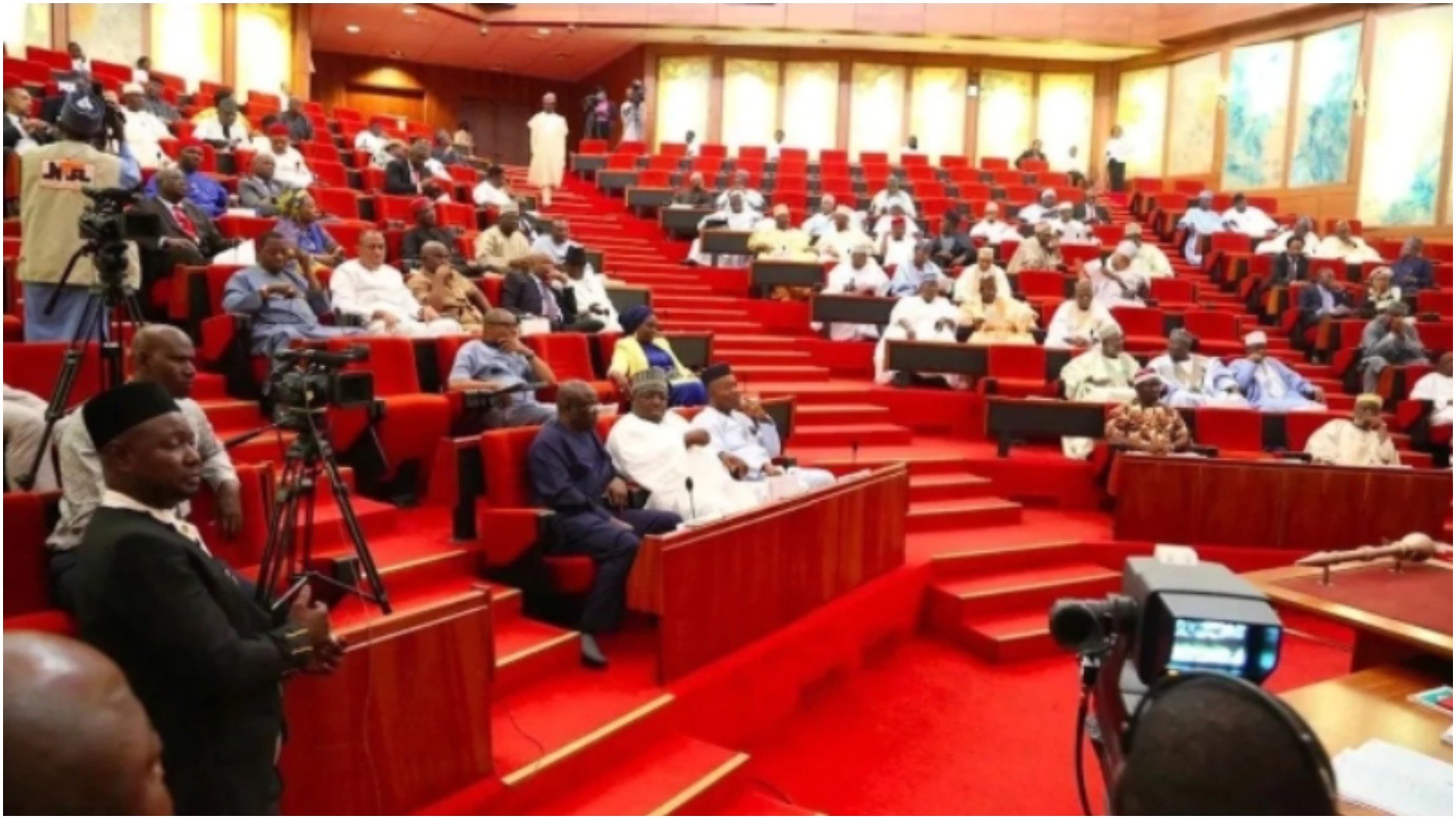
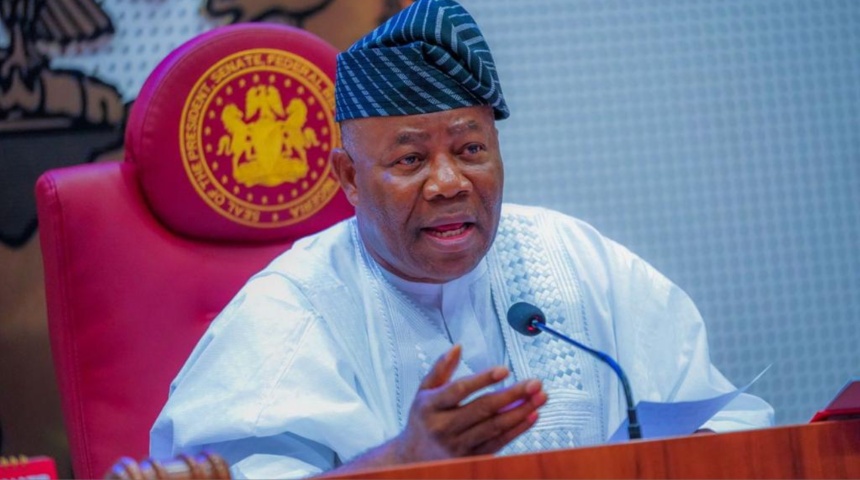
On Tuesday, Senate President Godswill Akpabio scoffed at the travails and struggles of those battling suicidal thoughts. Speaking at the plenary, he clamoured for the imprisonment of Nigerians who survive suicide attempts. “If you attempt it [suicide], you better succeed. If you don’t succeed, we will send you to prison,” he said with a sardonic laugh.
He spoke before the Senate passed the second reading of a bill by Asuquo Ekpenyong (Cross River South). The bill seeks to decriminalise attempted suicide. It now goes to the Committees on Health (Secondary and Tertiary) and Judiciary, Human Rights and Legal Matters. A public hearing will follow.
But Akpabio’s position on criminalising suicide engenders a juxtaposition with a federal government policy of clemency and integration into society for so-called insurgents, which the Senate President has never publicly condemned.
Section 327 of the Criminal Code and Section 231 of the Penal Code punish attempted suicide with up to one year in prison. The Penal Code also allows a fine, or both.
The National Mental Health Act 2021 takes a different approach. It treats attempted suicide as a psychiatric emergency. Ekpenyong says the two laws contradict each other.
He argues that the threat of incarceration instils fear in suicidal people and keeps people from seeking help. Families become worryingly discreet about cases, he said, and health workers are reluctant to publicly file them. That weakens the data used for prevention. He puts annual suicide deaths in Nigeria at about 16,000. The figure is an estimate based on WHO data.
Senator Dayo Faduyile, a medical doctor, supported the bill. He said some survivors later died by suicide in detention. “They need help,” he said.
The committees on Health and on Judiciary will now take up the bill. Akpabio has asked state Houses of Assembly to submit their views at the public hearing. No date has been announced.
The two senators understand that being suicidal is not something that should be addressed with heavy-handed and brute-force legislation that worsens the conditions that create the victim in the first place, but an affliction that must be treated with targeted socio-economic care and psychological intervention, since the majority of suicide attempts are driven by despondency and dejection that are rooted in social stagnation and economic woes.
However, Akpabio seems to think the best way to stop suicide attempts is not by addressing the socio-economic challenges and the malaise of cynicism and despair that push suicidal characters to self-murder, but by being rabidly insensitive and coming down on them using the instrument of the state. For him, showing any form of reason and consideration for the plight of suicidal Nigerians and abrogating the criminalisation of suicide attempts could encourage attempts. He asked state Houses of Assembly to take part in the public hearing, to avoid legal conflicts.
Even though some national criminal justice provisions are not automatically binding on every state, the Senate President’s disposition on the matter of how those who attempt suicide should be treated is jarring and disturbingly distasteful. He has a penchant for treating issues of national significance that affect the lives of average Nigerian with unsettling scant regard and as though they were inconsequential chatter.
The fact that Akpabio has not been seen or heard to hold similar extreme and disagreeable views on the federal government’s policy of rehabilitation of terrorists who have committed heinous and unspeakable crimes makes his latest display of utter lack of tact and sensibility more worrisome.
Operation Safe Corridor began in 2016 as a non-kinetic drive of Nigeria’s counterterrorism strategy. It provides former insurgents counselling, religious re-orientation and vocational training. The military runs the programme. State governments take over the graduates. The cost is public. Borno State reportedly spent about N7.7 billion on rehabilitating and reintegrating ex-fighters in 21 months. A Nextier report found that communities often resist taking them back.
Despite vehement opposition to the programme, the federal government has continued it. It then boggles the mind and strains credulity that an Akpabio, and by extension the Senate, that lacks the cojones and oomph to criminalise rehabilitation of terrorists is now gung-ho about sending people who are bogged down by the vicissitudes of life and see death as the only way out of their misery to prison.
One would have thought Akpabio would have used his position as the nation’s number three citizen to push for a more reasonable, dignifying and respectful treatment of suicidal people, who harm no one; instead, he is supporting laws that conceal the root cause of the issue while worsening the scourge.
Different creed, policy and legislation for two different sets of people. Insurgents are accused of killing others. Suicide survivors harmed no one but themselves. But while the government rehabilitates trained killers, current law recommends that the government imprison suicide survivors.
One cannot help but notice the paradox of the situation. While the victims of suicide attempts who should get therapy and counselling are incarcerated, the rampaging terrorists and agents of destruction who should be incarcerated are the ones the government mollycuddles, pacifies and puts through extended programmes of counselling and rehabilitation.