Recently, the Independent National Electoral Commission (INEC) said it may deploy artificial intelligence (AI) to monitor and authenticate election results for the 2027 general poll. On the surface, the news sounds like a pleasant and remarkable piece of information. Still, a little pondering raises serious concerns not just about the reliability of AI for elections, but also about the transparency and integrity of the commission in using it to ensure it is not used to undermine or compromise the electoral process.
Aside from the fact that Nigeria is still some years away from mastering the art and science of integrating advanced technology like AI into everyday life and activities of its people, let alone crucial events like elections whose processes and outcomes shape and influence the lives of millions of people, the deep historical distrust many Nigerians, particularly voters, have towards politicians and INEC has made them receive this news of AI infusion into the electoral process with a tinge of suspicion and pessimism.
There is absolutely nothing wrong with using technology to ensure that free, fair and credible elections are conducted, but the problem in Nigeria is that, more often than not, the efficiency, potency and reliability of a technology are wilfully sabotaged by those in charge of it, hence leaving the problem and challenges the technology was designed to fix unresolved. And in the last ten years in Nigeria, democracy and the electoral process are a grim testament to this reality.
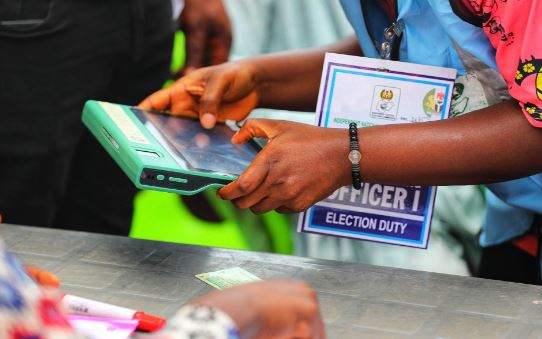
Desperate and power-hungry politicians, in cahoots with unscrupulous INEC officials, have repeatedly undermined every technology that has been introduced to engender transparent and credible elections. A prime example of this is the deliberate and criminal shutting down of the INEC results viewing (IREV) portal during the 2023 presidential election. The IREV was supposed to be the answer and solution to the brazen rigging and manipulation of election results, as it allowed people to view real-time collation of votes cast in each polling unit and the winner of a particular elective office in that particular unit. However, the IREV was shut down by INEC in the middle of the election. The commission cited a technical glitch, but those who are familiar with the shenanigans of the Nigerian state know it was not a random act of misfortune but a calculated sabotage.
Nigerian elites and the ruling class rarely embrace technology with an open mind and a sense of altruism. Where others see something that could make life a little easier, engender growth and prosperity, they see a weapon that can be used to advance their destructive interests, consolidate power, subjugate the people and subvert their will. So when INEC announced with aplomb that AI will be used in the 2027 election, the pushback and opposition were not unexpected and are valid.
On Tuesday, as part of his bid to address the concerns and pushback against AI deployment for the next general election and douse tension, the Chairman of the Independent National Electoral Commission, Prof. Joash Amupitan, SAN, said algorithms would not influence or determine the outcome of the 2027 general elections, insisting that the decision on who governs Nigeria rests solely with voters
“Algorithms will not, and must never, decide the 2027 vote. The choice of who leads Nigeria belongs exclusively to the Nigerian people.
“Algorithms may predict patterns; they may optimise routes, and they may even suggest preferences. But they do not have a conscience, they do not have a country, and they do not have a vote,” he said on Wednesday at the Artificial Intelligence and Democracy Forum 2026 in Abuja, themed “Safeguarding the 2027 General Elections in the Age of Artificial Intelligence”.
But it is not what is said but what is done. At every election cycle, INEC makes promises, pledges and assurances, but when it comes to matching their words with actions, the electoral umpire is always found wanting and leaves the people high and dry. This has made many cynical and pessimistic about elections in Nigeria. And this cynicism and pessimism are at an all-time high.
Even more worrisome is that INEC has not made public the legal framework it will use in the deployment of AI because the 2026 amended Electoral Act did not make provisions for the use of AI technologies for the 2027 election logistics. Conversely, it is amusing and worrying in equal measure that an election umpire that can conveniently and convincingly perform simple and basic electoral tasks of uploading election results at the polling unit to a publicly accessible portal for everyone to view, monitor and follow the progress of the polls in real time is now speaking about using a more advanced and sophisticated technology, which is vulnerable to manipulation by humans with vested interests, where there are no well-defined legal guardrails and structural framework. Even technologically advanced democratic countries have not incorporated AI into their electoral process.
Nigerians are not against integrating contemporary technologies into elections if it will make the exercise fast, credible and transparent, but they know that is not always the case in their country, particularly where it involves elections. In many countries of the world, incorporating technology into any national exercise or human endeavours brings about efficiency and general resolution to challenges of the past year, but in Nigeria it, at best, ushers in stagnation and at worst brings about regression. Evidence of this abounds in how the conduct of our elections has become progressively worse in the last decade despite spending a humongous amount of money on technology to make things better.
From card readers to BVAS and now AI, Nigeria is gradually morphing into a place where electoral technology goes to die, as the quality of elections painfully deteriorate because those who introduced and are in charge of this technology and equipment are not interested in conducting credible polls. So those who see INEC’s use of AI for the next general election, even though there was no test or prior use of the technology in any of the off-season elections to test its reliability and efficiency, as a ploy to rig the election, cannot be dismissed as bellyachers and conspiracy theorists.