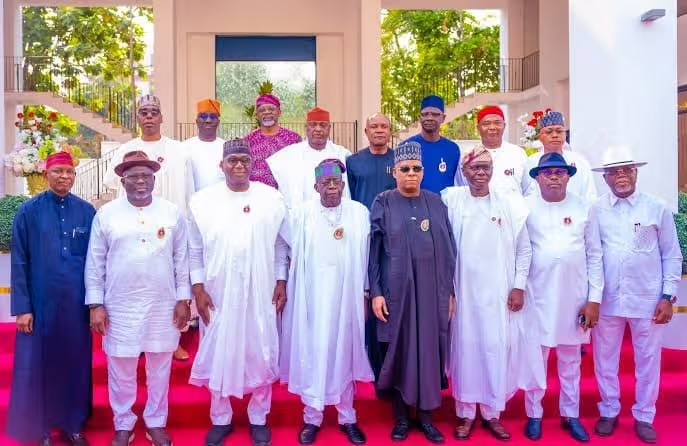
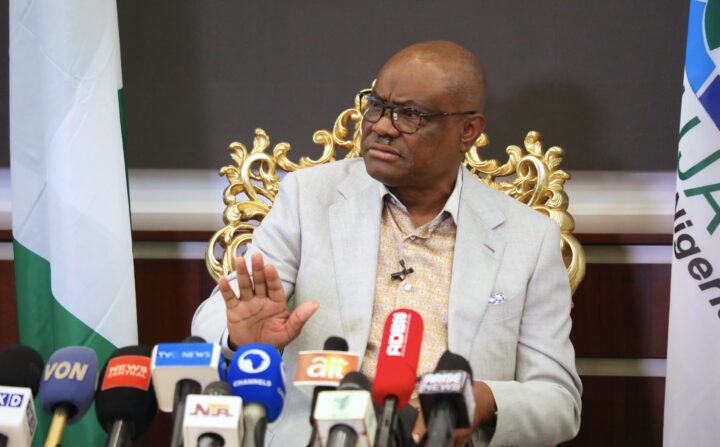
The minister of the Federal Capital Territory, Nyesom Wike, is building a cross-party political network that could shape the 2027 elections, preserve his influence in Rivers State and complicate succession plans by some All Progressives Congress (APC) governors.
Although Wike has publicly presented the controversial rainbow coalition as a platform for mobilising support for President Bola Tinubu’s re-election, the arrangement has also raised questions about his ambitions across governorship, legislative and other political contests.
The coalition brings together politicians associated with different parties, allowing Wike to maintain relationships with allies in both the APC and the Peoples Democratic Party (PDP) while seeking to influence electoral outcomes.
THE RIVERS CRISIS AND THE POLITICS OF LOYALTY
Wike’s political calculations are closely linked to his experience with his successor, Siminalayi Fubara, whose emergence as Rivers governor in 2023 was facilitated by the former governor.
After leaving office on May 29, 2023, Wike retained substantial influence over the state’s political structure, particularly through lawmakers and political appointees aligned with him.
The arrangement became a source of tension when relations between the two men deteriorated, triggering a prolonged confrontation that included repeated impeachment proceedings against Fubara.

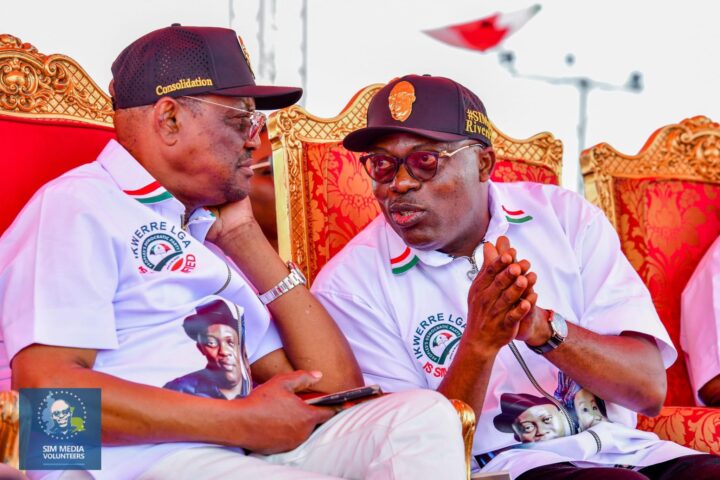
The crisis escalated in March 2025 when Tinubu declared a state of emergency in Rivers, leading to the suspension of the governor and other elected officials for six months.
Although emergency rule ended in September 2025 and Fubara returned to office, the dispute over political control continued, with the state assembly initiating another impeachment process in January 2026 before suspending it following further reconciliation efforts.
Fubara subsequently abandoned his re-election ambition and withdrew from the APC governorship primary, publicly citing the need for peace and stability.
The episode underscored the influence a politically aligned legislature can exert on a governor and the importance of legislative support in determining the balance of power within a state.
A NETWORK ACROSS PARTIES AND ELECTORAL CONTESTS
Wike’s strategy appears to extend beyond the governorship to the 32 seats in the Rivers State House of Assembly, 13 House of Representatives seats and three Senate seats.
The former governor’s allies are positioned across the APC and PDP, with politicians from both parties seeking legislative tickets in different constituencies.
At the state level, maintaining influence over the next assembly could provide Wike with considerable political leverage, given the legislature’s constitutional responsibilities, including approving budgets and passing laws.

The same approach extends to the National Assembly, where senators and members of the House of Representatives can participate in federal legislative affairs, party negotiations and wider political alliances.
For the Senate, the reported arrangement allocates Rivers East and Rivers West to APC candidates, while a PDP candidate is expected to contest Rivers South-East.
Wike’s political calculations also involve the governorship contest, with Kingsley Chinda, Sam Ejekwu and Chima Boms identified in the report as politicians associated with his wider political network.
Wike formally introduced the rainbow coalition at a stakeholders’ gathering in Asari-Toru Local Government Area in January 2026, describing it as a platform under the “renewed hope family” to support Tinubu.
“In Rivers, we don’t have any party now. What we have is the renewed hope family. It’s a rainbow coalition. If you don’t belong to this family, then forget it. After delivering President Tinubu, this family will produce everything as far as the state is concerned — governorship and assembly seats,” Wike said.
In September, he rejected suggestions that supporting Tinubu would require him and his allies to abandon PDP candidates in governorship and legislative elections, arguing that voters could support candidates from different parties on the same election day.
WHY APC GOVERNORS ARE WARY
The coalition’s implications have extended beyond Rivers, with Wike reportedly aligning with politicians whose ambitions could complicate the succession plans of incumbent APC governors.
In Kwara, he has aligned with former Senate President Bukola Saraki in backing Kale Kawu as the PDP governorship candidate, a development that could challenge Governor AbdulRahman AbdulRazaq’s reported preference for Yakubu Salihu-Danladi as his successor.

In Ogun, the PDP faction associated with Wike and recognised by the Independent National Electoral Commission produced Ladi Adebutu as its governorship candidate, potentially complicating Governor Dapo Abiodun’s reported succession preference for Solomon Olamilekan Adeola.
Wike has also reportedly backed PDP national secretary Samuel Anyanwu ahead of the November 2027 governorship election in Imo, a move that could put him at odds with Governor Hope Uzodimma.
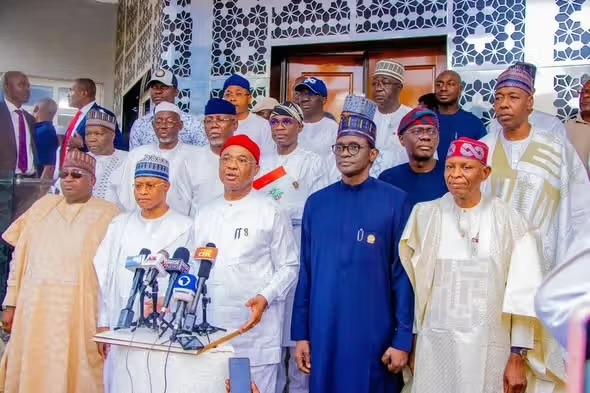
The Progressive Governors Forum said in September that it would not endorse any “alliance or political arrangements that could undermine” Tinubu’s re-election bid or the APC’s candidates in the 2027 elections.
The disagreement reflects concerns that a coalition ostensibly designed to support the president could also strengthen rival candidates and weaken the influence of sitting APC governors over succession contests in their states.
CONCERNS OVER ELECTORAL CONFUSION AND POLITICAL TENSIONS
The coalition has also attracted warnings about its potential effects on political stability and voter understanding.
Franklyn Isong, director of the Centre for Human Rights and Accountability Network, said the arrangement could reproduce the kind of political crisis witnessed in Rivers, where competing claims to influence over the state assembly contributed to the prolonged conflict between Wike and Fubara.
Isong also warned that the alliance could confuse voters by asking them to support Tinubu under the APC while backing candidates from other parties in governorship and legislative elections.
As the 2027 elections approach, the coalition’s impact will depend on whether Wike can sustain cooperation among politicians with different party affiliations and translate those relationships into electoral victories.
Its wider significance may ultimately lie in whether the arrangement remains a vehicle for Tinubu’s re-election or becomes a mechanism for reshaping political influence and succession contests across several states.