Public servants across Nigeria have been handed some relief after weeks of strike threats. The Nigeria government worker transport grant, officially described as a “transport intervention,” will pay N70,000 across all levels of the public service for six months, starting in November 2026. It was agreed in Abuja after a tense round of talks between the Federal Government and the Nigeria Labour Congress (NLC).
For workers who have spent most of the year stretching salaries over rising bus fares and fuel costs, the announcement is welcome. It also leaves several questions open, including who exactly gets paid, when the money lands, and what happens after the six months run out.
How the transport intervention was agreed
The deal came out of conciliation meetings convened by the Federal Ministry of Labour and Employment on October 22 and 27. Labour Minister Dr Muhammad Maigari Dingyadi chaired the sessions, and NLC President Joe Ajaero led the union delegation.
The talks followed mounting pressure from organised labour. The NLC had issued an ultimatum and then extended its original two-week deadline to Tuesday, October 27, warning of possible nationwide action if its demands were ignored. Union leaders had pushed for a cut in petrol pump prices, better wages, tax relief and the settlement of unpaid allowances.
The resolutions were written into a memorandum of understanding. According to reports, the document was signed by the Director-General of the Budget Office, the NLC president, a Permanent Secretary from the Office of the Head of the Civil Service of the Federation, and the Minister of Labour and Employment.
The memorandum states that the N70,000 transport intervention, beginning in November 2026, will be paid across all levels for six months. That works out to N420,000 per worker over the full period, assuming every instalment is paid in full.
The meeting also urged state and local governments to key into the intervention, and encouraged unions to push for its adoption at those levels. In other words, the federal commitment is firm, but workers employed by state governments should not assume the money is coming to them automatically.
Who qualifies for the Nigeria government worker transport grant?
The reports describe the beneficiaries as public service workers “across all levels.” That points to federal public servants from the lowest grade level to the top. Beyond that phrase, the published details are thin.
Several reports note that the document did not say on which date each month the allowance would be paid or how it would be disbursed. Another outlet flagged that more details are needed on the categories of workers covered and the agencies responsible for implementation. Until the government issues implementation guidelines, a few points remain unclear:
- Whether pensioners will receive anything.
- How workers in parastatals and agencies that fund themselves will be treated.
- Whether the allowance will be paid together with salaries or as a separate credit.
- How state and local government employees will be covered, since those governments were only urged to join in.
Workers should watch for circulars from the Office of the Head of the Civil Service of the Federation and from their own unions. Treat any “application link” or “registration portal” for the allowance with suspicion. Nothing in the agreement mentions one, and scammers tend to move quickly when money is in the news.
What else was agreed
The transport allowance was one of several resolutions. Here is a quick summary:
| Issue | What was agreed |
|---|---|
| Transport intervention | N70,000 monthly for six months from November 2026, across all levels |
| Peculiar allowance | Approved from May 1, 2026, with arrears paid in three equal monthly instalments from November |
| Health workers’ arrears | Nineteen months of arrears to be redeemed within three months, effective December 2026 |
| Minimum wage | Negotiation committee to be set up and start work immediately, but both sides disagree on the effective date |
| Agricultural officers’ hazard allowance | List of beneficiaries sent to the National Salaries, Incomes and Wages Commission for verification, expected within two weeks |
| CONHESS adjustment | The Commission to update the cost implications within three weeks, after which the Presidential Committee on Salaries will decide |
| Tax relief for workers | Referred to the NLC’s National Executive Council, since taxation is a statutory matter |
| Review | Both sides to reconvene after one month to assess implementation |
The minimum wage question is still hanging
The most sensitive item may be the one that was not settled. The government and the NLC agreed that the Minimum Wage Negotiation Committee should be constituted and begin meeting immediately. They could not agree on when a new wage would take effect.
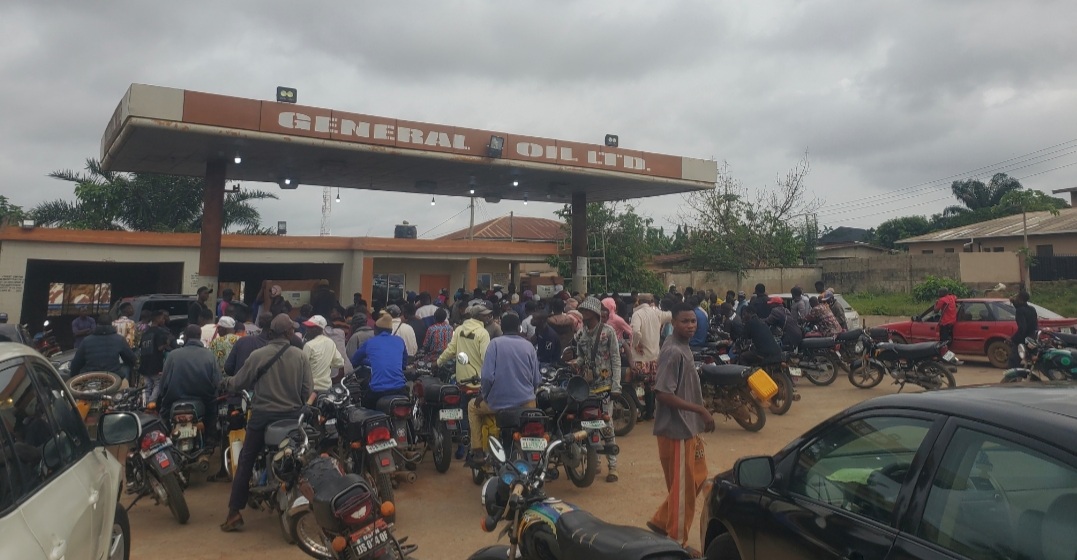
The figure matters because of history. The national minimum wage was raised from N30,000 to N70,000 after negotiations in 2024. A N70,000 transport allowance now equals that entire minimum wage, which shows how far workers say the cost of living has moved since. Labour leaders have linked those pressures to the end of the petrol subsidy in May 2023.
This is also not the first time the Federal Government has used a temporary payment to calm labour. In October 2023, President Bola Tinubu approved a N35,000 provisional wage award for treasury-paid federal workers for six months. The pattern is familiar: a short-term cushion first, with the harder wage discussion following.
What happens after six months?
If payments start in November as planned, the allowance would run through April 2027. That leaves open what happens when it ends. Workers and unions will likely want the minimum wage talks concluded before then, so the end of the allowance does not leave a gap in take-home pay.
The one-month review gives the NLC an early chance to check whether November’s payment actually arrives. Labour has said before that agreements on paper do not always translate into money in accounts, so expect close monitoring.