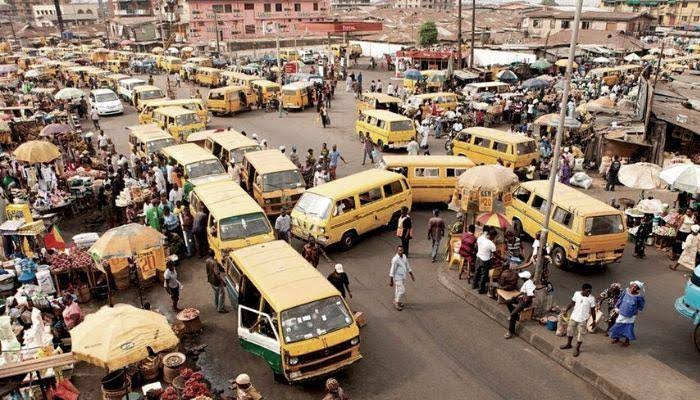
Every morning, commercial buses leave motor parks across Nigeria carrying passengers to different towns, cities and states, while drivers, conductors, park officials and transport union representatives go about their daily activities. Behind the familiar process of boarding a bus, paying fares and waiting for vehicles to fill up is an organised system that determines how commercial transportation operates, who collects money and who has the authority to manage different loading points.
For many Nigerians, the faces they encounter at motor parks are usually union officials who coordinate drivers, organise vehicle queues, settle disagreements and collect various payments. Some of these officials represent established transport organisations, while others operate under arrangements involving government authorities and private park managers.
The National Union of Road Transport Workers (NURTW) is among the most influential organisations in this system, alongside the Road Transport Employers Association of Nigeria (RTEAN) and other transport groups. Their presence has become particularly noticeable in major commercial centres, where control of a busy motor park can involve significant financial interests and influence over hundreds of drivers.
The relationship between these organisations and government authorities has also produced several disputes, court cases and changes in the administration of motor parks. Events in Lagos, Oyo, Imo, Kwara and Niger states have provided important examples of how these arrangements work and the different powers exercised by the parties involved.

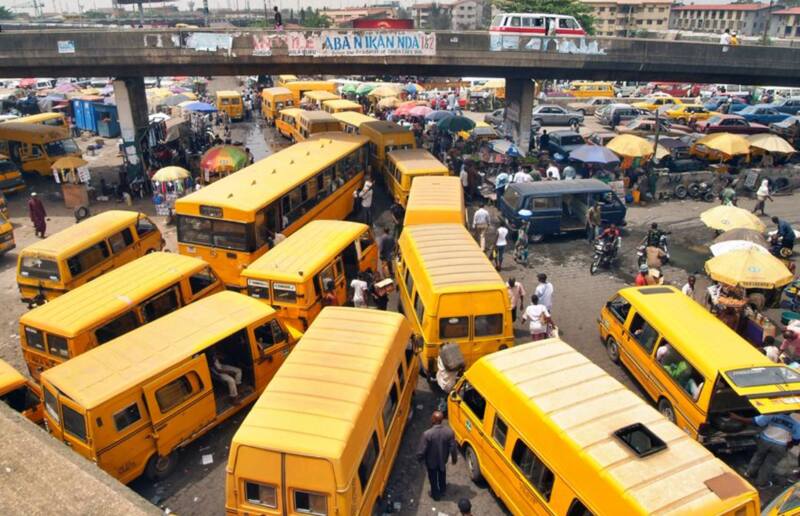
Understanding who controls motor parks in Nigeria therefore requires examining the Constitution, the responsibilities of local government councils, the activities of transport unions and the decisions that have shaped the country’s commercial transportation system.
Constitutional Authority Over Public Motor Parks
The starting point for understanding motor park administration in Nigeria is the 1999 Constitution of the Federal Republic of Nigeria, which assigns specific responsibilities to local government councils concerning public facilities within their jurisdictions.
Paragraph 1(e) of the Fourth Schedule identifies the establishment, maintenance and regulation of motor parks as one of the functions of local government councils. The same provision also covers slaughterhouses, markets and public conveniences, placing motor parks within the responsibilities of the third tier of government.
The constitutional provision states:
“Establishment, maintenance and regulation of slaughter houses, slaughter slabs, markets, motor parks and public conveniences.”
This means local government councils have constitutional responsibilities relating to the creation, maintenance and regulation of public motor parks. They are expected to provide the administrative framework for these facilities, determine applicable operating arrangements and ensure that activities within them comply with relevant regulations.
Their responsibilities can include establishing public motor parks, maintaining facilities, regulating their operations and making arrangements for authorised revenue collection. Depending on the applicable laws and administrative arrangements, councils may also engage recognised organisations or other operators to assist with managing particular facilities.
However, the Constitution does not automatically transfer ownership of public motor parks to NURTW, RTEAN or any other transport association. The fact that union officials coordinate loading activities or collect payments at a particular location does not independently establish their legal ownership of that facility.
A union may have an approved role in managing activities within a park without becoming the authority responsible for establishing and regulating public motor parks.
How Transport Unions Became Influential
Although local government councils have constitutional responsibilities over public motor parks, transport unions have developed considerable influence over the daily activities of commercial drivers across Nigeria.
One major reason is their long involvement in organising workers within the road transportation industry. Commercial transportation involves thousands of drivers, conductors, vehicle owners and other workers who need arrangements for passenger loading, route allocation, vehicle movement and the resolution of disagreements.
The National Union of Road Transport Workers was established in 1978 and gradually became one of the most recognisable organisations within the industry. Its structures expanded across different states, creating a network of officials responsible for coordinating members and representing their interests.
Research by Laurent Fourchard, published in the Swiss Journal of Sociocultural Anthropology in 2023, examined how NURTW developed its influence over motor parks in Lagos.
The study, titled In the Shadow of the State: The Making of Garage Laws in Lagos, drew on observations and 80 interviews with transport union members. It examined the development of internal regulations used by union officials to organise drivers, coordinate park activities, collect payments and discipline members.
Fourchard’s research explained that the relationship between government institutions and transport unions contributed to the development of this system. Government authorities sometimes relied on intermediary organisations to handle aspects of revenue collection, creating opportunities for union officials to become important links between public institutions and commercial drivers.
Over time, these arrangements gave transport unions considerable influence over activities within motor parks. Their officials became involved in determining loading procedures, supervising drivers and managing everyday disagreements.
The research also identified instances where charges collected by union officials were not legally authorised, illustrating why the authority behind every payment matters.
Major Transport Unions Operating in Nigeria
Nigeria’s commercial transportation industry has several organisations representing different categories of workers, vehicle owners and operators. Their activities sometimes overlap, particularly when different associations seek recognition or operating rights within the same motor park.
National Union of Road Transport Workers (NURTW)
NURTW is one of the country’s most prominent transport organisations, with structures covering commercial drivers and other workers involved in road transportation.
Its activities include organising drivers, coordinating passenger loading, representing members and resolving disagreements involving transport workers. The organisation also has internal administrative structures through which officials supervise activities at different levels.
These structures commonly include state executives, branch chairmen, park chairmen, unit leaders and other elected or appointed representatives.
An interview with Laurent Fourchard published by IFRA Nigeria explained the organisation’s extensive structure in Lagos. According to the researcher, the state had approximately 220 NURTW branches, with each branch containing between 10 and 20 units.
This structure helps explain how the organisation maintains its presence across different motor parks and garages. Branch and unit officials interact with drivers, coordinate loading arrangements, address complaints and communicate with other stakeholders within the transport sector.
Road Transport Employers Association of Nigeria (RTEAN)
RTEAN is another recognised organisation operating within Nigeria’s road transportation industry. It represents transport employers and operators, with interests covering commercial vehicle operations and the administration of transportation businesses.
Its activities include organising transport operators, representing members, coordinating commercial transport activities and participating in motor park administration where appropriate approvals have been obtained.
The association has also been involved in legal disputes over its operating rights, particularly in Lagos and Imo states. Some of these cases have examined whether government authorities or competing transport organisations can prevent it from carrying out activities for which it has obtained the necessary recognition and approval.
National Association of Road Transport Owners (NARTO)
NARTO represents road transport owners and operators, particularly businesses involved in the movement of passengers and goods.
Its interests include vehicle operations, transport business administration and issues affecting the commercial activities of road transport owners.
The organisation became particularly visible in a motor park dispute involving RTEAN in Minna, Niger State, in October 2026. The disagreement demonstrated that competition over loading arrangements and park administration can involve several transport organisations beyond the more familiar NURTW and RTEAN.
What Transport Unions Actually Do Inside Motor Parks
The influence of transport unions becomes clearer when examining the activities that take place at motor parks every day. Their responsibilities often extend beyond collecting membership dues, as officials participate in organising the movement of vehicles and managing relationships among commercial operators.
One major responsibility is coordinating vehicle loading. At many parks, drivers are expected to follow an established queue rather than independently competing to pick up passengers whenever they arrive. Union officials help organise the order, particularly where several vehicles operate along the same route.
Another activity involves collecting payments from members and commercial operators. These payments may include membership dues and other authorised charges connected to the operation of the association or an approved park management arrangement.
Transport union officials also intervene when disagreements arise between drivers, conductors and vehicle owners. Disputes over passenger fares, loading arrangements, vehicle damage and other operational matters may be taken to union representatives for settlement.
Internal disciplinary procedures are another part of their activities. Union constitutions and regulations provide mechanisms for addressing misconduct among members, including violations of agreed operating arrangements.
These responsibilities explain why union officials are often among the most visible people at commercial motor parks. Their influence comes partly from their ability to organise drivers and maintain operational structures that have developed over several decades.
Nevertheless, the responsibilities of transport unions must be distinguished from the constitutional powers of local government councils. Their involvement in everyday park activities does not automatically give them unrestricted authority over public facilities.
Who Has the Right to Collect Money From Drivers?
Revenue collection is one of the most controversial aspects of motor park administration in Nigeria because commercial drivers frequently encounter different categories of payments during their daily operations.
Depending on the location and applicable arrangements, these payments may include daily tickets, loading charges, membership dues, park maintenance fees and government approved transport levies.
The important issue is the authority behind each payment. A transport organisation can collect legitimate membership dues from its members under its constitution and applicable labour laws, but its registration does not automatically authorise it to impose government taxes or collect every fee demanded at a public motor park.
Local government councils may authorise particular revenue collection arrangements, including agreements involving recognised associations or appointed management operators. Such arrangements must be supported by the relevant authority rather than the personal instructions of an individual union official.
A significant legal clarification came from the National Industrial Court in February 2022, following a dispute involving NURTW and RTEAN in Imo State.
The case concerned Arugo Motor Park along Onitsha Road in Owerri, where RTEAN claimed it had obtained approval from Owerri Municipal Council to manage the facility and collect authorised payments.
The association alleged that members of NURTW’s Imo State branch interfered with its activities, resulting in a legal dispute over the right to operate the park.
Delivering judgment on February 25, 2022, Justice Ibrahim Galadima recognised both NURTW and RTEAN as registered trade unions. However, the court made an important distinction between recognition as a trade union and the authority to collect government revenue.
It held that the right to collect levies depended on authorisation or licensing from the relevant local government authority. The court also recognised RTEAN’s exclusive right to operate Arugo Motor Park for 2 years under its agreement with Owerri Municipal Council.
The decision established an important principle for motor park administration: transport unions can participate in managing commercial transportation activities, but they must obtain the appropriate authorisation before collecting government revenue.
Lagos Government’s Suspension of NURTW in 2022
One of the most prominent demonstrations of government intervention in motor park administration occurred in Lagos State in March 2022, when the government suspended NURTW activities across motor parks and garages.
The decision followed an internal leadership disagreement involving the Lagos chapter of the union and its national leadership. The dispute became particularly prominent after the national leadership suspended Musiliu Akinsanya, popularly known as MC Oluomo, who was then a major figure within the Lagos transport union structure.
The Lagos chapter subsequently announced its withdrawal from the national organisation, creating further tension over the union’s leadership and operations.
On March 10, 2022, the Lagos State Government announced the suspension of NURTW activities across motor parks and garages. Commissioner for Information and Strategy, Gbenga Omotoso, explained that the government was concerned about the tension surrounding the leadership disagreement.
The administration also announced plans to establish a committee to take control of activities within the affected parks and garages.
The development demonstrated how government authorities could intervene in the operation of public transportation facilities when disputes threatened public order. It also exposed the influence that union leadership disagreements could have on commercial transportation across an entire state.
However, the suspension did not permanently remove transport unions from Lagos motor parks, as subsequent legal proceedings and government decisions changed the arrangement.
RTEAN’s Legal Victory Against Lagos Government in 2023
Another significant development occurred on April 19, 2023, when the National Industrial Court in Lagos delivered judgment in a dispute involving RTEAN and the Lagos State Government.
The disagreement followed the government’s decision to suspend RTEAN activities in September 2022 after violence involving transport union members. The administration subsequently established a 35 member ad hoc committee to manage activities within commercial motor parks and garages.
RTEAN challenged the government’s action, arguing that the suspension interfered with the activities of a registered trade union.
Justice Maureen Esowe ruled in favour of the association, nullifying the Lagos State Parks and Garages Management Committee established by the government and ordering the reinstatement of RTEAN’s operations.
The court also restrained the state government from further interfering in the union’s executive activities and directed the police to remove barricades around its secretariat.
The judgment addressed the relationship between government authority and the internal administration of registered trade unions. It demonstrated that government intervention in transportation activities must still comply with applicable labour laws and judicial decisions.
The development was particularly significant because it showed that the administration of public transportation and the internal affairs of a registered union are not necessarily the same legal matter.
Lagos Government Returns NURTW to Motor Parks
The arrangement changed again in September 2023 when the Lagos State Government dissolved the Lagos State Parks and Garages Management Committee and allowed NURTW to resume coordinating activities across motor parks and garages.
The decision followed developments within the union and the resolution of disagreements that had affected its operations. MC Oluomo had also publicly returned to NURTW alongside thousands of supporters.
The government instructed the organisation to maintain peace and conduct its activities within the provisions of its constitution.
The development illustrated the changing relationship between the state government and transport unions, particularly when disagreements over leadership and park administration affect the wider transportation system.
It also demonstrated that the presence of a government appointed committee at a motor park does not necessarily represent a permanent arrangement, as subsequent government decisions and court judgments can alter the operating structure.
Oyo State’s Takeover of Motor Parks From NURTW
Oyo State provides another important example of how government decisions can affect the administration of motor parks.
On May 31, 2019, Governor Seyi Makinde announced the proscription of NURTW activities in the state. The administration subsequently announced that motor parks across Oyo State had been taken over by the government.
The decision was presented as part of efforts to restore peace following concerns involving transport union activities. A Park Management System was introduced, with government appointed managers responsible for supervising operations at different parks.
However, the arrangement eventually became the subject of a legal dispute involving Abideen Olajide, popularly known as Ejiogbe, a former NURTW chairman in the state.
The dispute was decided by an Oyo State High Court sitting in Ibadan in February 2021. The court nullified the appointment of the park managers and declared their collection of rates on behalf of the state government unconstitutional.
The judgment relied on Section 7(5) and Paragraph 1(e) of the Fourth Schedule to the 1999 Constitution, which identify motor park administration as a responsibility of local government councils.
The decision was important because it addressed the constitutional limits surrounding the administration of public motor parks. Although the state government had introduced its own management structure, the court held that the constitutional responsibilities assigned to local government councils had to be respected.
The judgment did not establish that NURTW owned the motor parks. Rather, it addressed the legality of the state government’s arrangement and the constitutional authority of local government councils.
Niger State’s Motor Park Dispute in October 2026
A more recent example emerged in Minna, Niger State, on October 4, 2026, following a disagreement involving NARTO and RTEAN over the management of Mobil Motor Park.
Reports by THISDAY indicated that members of the 2 organisations disagreed over vehicle loading arrangements. One group reportedly claimed that its members were indigenes and should therefore be allowed to load 10 vehicles before the other association.
The opposing group rejected the arrangement, leading to a confrontation that eventually escalated into violence.
2 union members reportedly sustained injuries and were taken to Minna General Hospital. Police officers subsequently deployed tear gas to disperse the groups and stationed armed personnel around the motor park.
The Niger State Police Public Relations Officer, Superintendent of Police Wasiu Abiodun, confirmed the intervention and explained that the police takeover was a preventive measure pending the resolution of the disagreement.
The incident demonstrated how competition over loading arrangements and access to commercial opportunities can generate disagreements between transport organisations.
It also highlighted the role of the police in securing motor parks when disputes threaten public safety. However, a police takeover for security purposes does not automatically transfer constitutional ownership or permanent administrative authority over the facility to the police.
Can One Transport Union Prevent Another From Operating?
The question of whether an established transport organisation can prevent another association from operating commercial vehicles or accessing public motor parks has also been addressed by the National Industrial Court.
A significant decision was delivered in March 2020 in a case involving Mallam Saka Salman and 4 others against the Commissioner of Police, Kwara State and other defendants.
The dispute involved the Nigerian Association of Cooperative Transporters Limited, NURTW and RTEAN. The cooperative association wanted to operate commercial taxi services in Kwara State without being prevented by existing transport organisations.
Some defendants argued that NURTW and RTEAN were established organisations already operating within motor parks and should not have to accommodate competing associations performing similar activities.
However, the court rejected the argument that existing transport unions had exclusive rights over commercial transportation or government owned motor parks.
Justice K.D. Damulak held that private taxi owners and drivers could operate their businesses without being compelled to join NURTW or RTEAN.
The judgment also recognised that other properly constituted transport associations could approach the relevant authorities to obtain permission to operate within government owned motor parks.
Paragraph 92 of the judgment specifically addressed the claimant association’s right to seek and obtain permission from the appropriate authorities.
This decision is important because it establishes that NURTW and RTEAN do not automatically possess exclusive control over all commercial transportation activities in Nigeria. Other operators can participate in the industry, provided they comply with applicable laws and obtain the necessary approvals for their operations.
The Role of State Governments in Motor Park Administration
State governments have important responsibilities within Nigeria’s transportation system, even though the Constitution specifically identifies local government councils as the authorities responsible for establishing, maintaining and regulating public motor parks.
Their responsibilities include developing transport policies, providing infrastructure, managing road traffic and establishing agencies responsible for implementing transportation programmes.
Lagos State provides a useful example through its relationship with the Lagos Metropolitan Area Transport Authority, popularly known as LAMATA.
The agency participates in the development and regulation of public transportation infrastructure and works with different stakeholders to improve the organisation of commercial transport services.
An important development occurred on August 5, 2026, when the Lagos State Ministry of Transportation, LAMATA, NURTW and RTEAN signed a Memorandum of Understanding to commence the Bus Industry Transition Programme.
The programme is designed to integrate informal commercial bus operators, including danfo drivers, into a more organised public transportation system.
Its framework covers operations across 8 Quality Bus Corridors and includes a cooperative society governance model for transport union members, the integration of existing commercial operators, digital fare collection and government regulatory oversight.
The programme also provides a framework for granting bus operating franchises, creating a more structured arrangement for commercial operators participating in the system.
The agreement is significant because it brings government agencies and established transport unions into a shared framework for reorganising commercial bus operations.
Rather than treating the unions as organisations completely outside the public transportation system, the arrangement recognises their existing structures and provides a framework for integrating their members into a regulated operating model.
Does the Federal Government Control Motor Parks?
The Federal Government has responsibilities concerning national transportation policies, road safety and the regulation of different aspects of road transportation.
However, these responsibilities are different from the constitutional functions assigned to local government councils concerning public motor parks.
Several federal institutions participate in the wider transportation system. The Federal Ministry of Transportation handles national transportation policy and coordination, while the Federal Road Safety Corps is responsible for road safety administration and enforcement of applicable road safety regulations.
The Federal Ministry of Labour and Employment also has responsibilities relating to trade union registration and labour administration.
These institutions have important roles within their respective areas of responsibility, but their existence does not mean the Federal Government automatically owns or directly manages every public motor park across Nigeria.
The administration of a particular park must be considered alongside its ownership, applicable local government responsibilities and any valid management arrangements.
Why Motor Parks Attract Competition
The commercial value of motor parks is one reason different organisations and individuals seek influence over their administration.
A busy park can accommodate hundreds of commercial vehicles operating along different routes, with drivers transporting passengers throughout the day. This creates regular financial transactions involving loading, parking, membership dues and other operational payments.
For transport unions, legitimate membership contributions and authorised operational charges provide resources for running their organisations and supporting their activities.
Local government councils can also generate revenue through legally authorised motor park fees, while approved management operators may receive payments under their agreements.
The financial interests become more complicated when several groups claim the right to manage the same facility or collect payments from commercial drivers.
Research by Laurent Fourchard provides useful insight into how different collections and internal regulations became intertwined with transport union activities in Lagos. His study also examines the relationship between government institutions, union officials and other influential actors within the motor park system.
However, the research does not establish a verified nationwide figure for the amount collected by NURTW or other associations from commercial drivers.
The amount generated by an individual motor park depends on its size, vehicle population, operating arrangements and authorised charges. Any claim about how much a transport union collects daily across Nigeria therefore requires specific financial records rather than unsupported estimates.
Who Has the Final Authority Over a Motor Park?
The authority involved in a motor park dispute depends largely on the nature of the disagreement and the legal arrangements governing the facility.
For the establishment, maintenance and regulation of public motor parks, Paragraph 1(e) of the Fourth Schedule to the 1999 Constitution identifies local government councils as the responsible authorities.
Transport unions manage their internal affairs through their constitutions and applicable labour laws, while their involvement in public motor parks depends on relevant approvals and operating arrangements.
State governments exercise responsibilities over wider transportation policies, infrastructure and regulatory programmes through their ministries and agencies.
The police intervene when disputes involve violence, threats to public safety or other offences requiring law enforcement action. Their intervention can secure a facility without automatically making them its permanent administrators.
Where disagreements concern operating rights, revenue collection, government approvals or the constitutional responsibilities of different authorities, the courts have the power to determine the legal position.
These different responsibilities explain why motor park administration involves several institutions rather than one organisation exercising unrestricted authority over every activity.
Understanding Who Controls Nigeria’s Motor Parks
The administration of Motor parks in Nigeria involves a combination of constitutional responsibilities, government approvals, transport union structures and practical operating arrangements.
Local government councils have constitutional responsibility for establishing, maintaining and regulating public motor parks. NURTW, RTEAN and other transport organisations participate in organising commercial drivers and coordinating daily activities where they have the necessary recognition and approvals.
State governments influence the wider transportation system through policies, infrastructure development, regulatory agencies and agreements with transport operators. The Federal Government handles national transportation responsibilities, while the police and courts intervene in matters involving public safety and legal disagreements.
The developments in Lagos, Oyo, Imo, Kwara and Niger states show how these different powers interact. A union can coordinate hundreds of drivers at a park, a local government can authorise its management, a state government can introduce transportation policies and a court can determine whether a particular administrative arrangement complies with the law.
The organisation that controls daily activities at a motor park is not necessarily the authority that legally owns or regulates the facility.
Understanding that difference is essential to examining the financial interests, government responsibilities and transport union influence that have shaped commercial motor park operations across Nigeria.