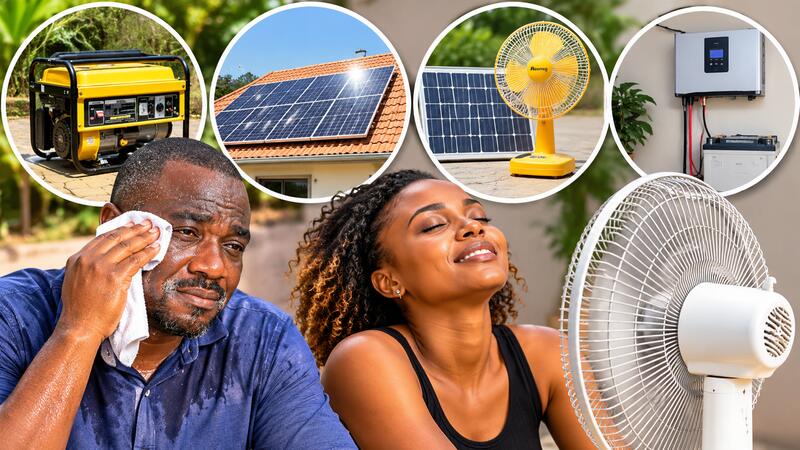
Nigeria’s rising temperatures have made access to electricity more important for households already struggling with irregular power supply, as the combination of hot weather and prolonged blackouts continues to affect sleeping patterns, businesses and everyday activities. For many residents, the challenge goes beyond switching on a fan, with refrigerators struggling to preserve food, water pumping becoming difficult and families spending additional money to keep their homes comfortable during periods without electricity. The situation has also renewed conversations about the cost of depending on petrol and diesel generators, particularly among households that already spend a considerable portion of their income on electricity and fuel.
The growing frustration has brought attention to several alternatives Nigerians can explore, depending on their financial circumstances, electricity requirements and living arrangements. While some options require substantial investments, others are relatively affordable and can provide relief without major installations. From solar energy systems and portable power stations to rechargeable fans, inverter generators and community mini grids, these alternatives offer different ways of managing electricity shortages. Understanding their costs, capabilities and limitations could help households make better decisions as excessive heat and unreliable electricity supply continue to create difficulties across different parts of the country.
Why Nigerians Are Considering Alternative Power Sources
The renewed interest in alternative electricity comes amid complaints about prolonged blackouts in parts of Lagos and Ogun State, where residents have struggled with the effects of excessive heat and inadequate electricity supply. On Thursday, November 5, 2026, residents of Somolu, Lagos State, reportedly took to the streets to protest prolonged electricity outages, expressing frustration over the difficulty of coping with hot weather without a reliable power supply. Similar complaints emerged from other parts of Lagos, including Lagos Island, Ikeja, Berger, Ifako Ijaiye, Isolo and Ikorodu, with residents raising concerns about sleeping conditions, food preservation, water supply and the additional expenses associated with alternative electricity.
The electricity supply challenges have also been linked to constraints affecting power generation across the country. On November 5, 2026, the Nigerian Independent System Operator attributed reduced electricity generation to inadequate natural gas supply to thermal power plants and reduced water inflows into hydroelectric reservoirs. These developments affected the amount of electricity available for distribution, contributing to reduced supply hours and increased load shedding across distribution networks. Nigeria relies substantially on gas fired thermal power stations and hydroelectric facilities, meaning disruptions affecting these sources can have consequences for households and businesses connected to the national grid.
For residents experiencing repeated outages, finding another source of electricity has become an important consideration, although the available alternatives come with different financial commitments. Some households can manage with rechargeable fans and portable power stations, while others require larger systems capable of operating refrigerators, pumping machines and air conditioners. The decision also depends on whether someone owns a property or rents an apartment, as certain installations require additional space, electrical modifications and permission from landlords.
1) Solar Power Systems

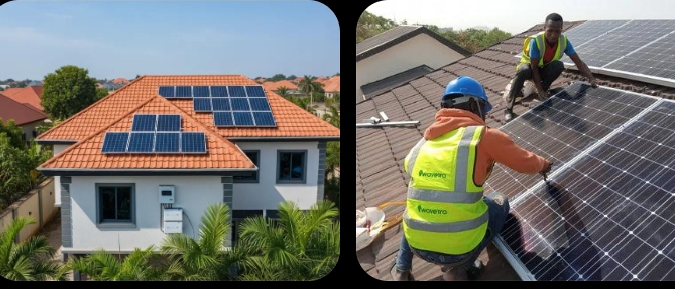
Solar power remains one of the major alternatives Nigerians can consider when seeking greater independence from the national electricity grid. The system converts sunlight into electricity through photovoltaic panels, which can supply power directly to appliances or charge batteries for use when sunlight is unavailable. A typical household installation consists of solar panels, an inverter, batteries, mounting structures, wiring and other electrical components required to distribute electricity safely throughout the property.
Depending on the installation capacity, solar systems can operate fans, television sets, lighting, refrigerators, internet routers, laptops and selected air conditioners. Households that intend to operate heavier appliances must purchase systems with sufficient generation and storage capacity, as a small installation designed for lighting and electronics may not support an air conditioner or pumping machine. The number of panels, battery capacity and inverter rating are therefore important considerations before making a purchase.
Indicative Nigerian market estimates place starter home solar installations between ₦600,000 and ₦1.2 million, while standard household systems can cost approximately ₦1.8 million to ₦3.5 million. Larger installations designed for heavier electricity consumption may range from ₦4.5 million to ₦8 million or more, depending on the equipment and installation requirements. These figures are estimates rather than fixed market prices, and prospective buyers should request detailed quotations from installers before committing their money.
One major advantage is that solar systems can reduce dependence on petrol and diesel, particularly for households that experience frequent outages. However, the initial investment can be substantial, batteries eventually require replacement and insufficient storage can leave households without electricity during extended periods of darkness. Buyers should also consider warranties, installation quality and the availability of after sales support.
2) Inverter, Battery Systems

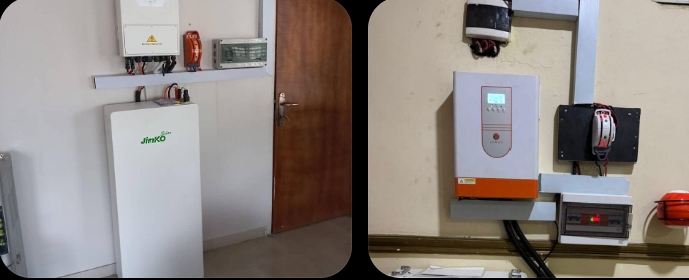
Inverter and battery systems offer another option for Nigerians who want electricity during public power outages without necessarily purchasing solar panels. The battery stores electricity obtained from the national grid, while the inverter converts the stored direct current into alternating current suitable for household appliances. Once charged, the system can continue supplying electricity when the public supply becomes unavailable, making it useful for homes that experience frequent interruptions.
Depending on their capacity, these systems can operate fans, television sets, light bulbs, laptops, routers and refrigerators. Larger installations can support additional appliances, although the total electricity consumption must remain within the inverter’s operating capacity. Some households also combine their inverter systems with solar panels, allowing the batteries to receive electricity from sunlight rather than depending entirely on the national grid for charging.
Buyers should understand the difference between inverter capacity and battery storage because both determine how effectively the system performs. A 5kVA inverter does not automatically provide electricity for longer than a 2kVA model, since the operating duration depends largely on the battery capacity and the appliances connected to the system. A household running 2 fans, a television and several light bulbs will generally consume less electricity than one operating a refrigerator and other heavy appliances simultaneously.
The absence of petrol and diesel expenses during battery operation is one of the major advantages, while quieter performance makes inverter systems suitable for residential environments. However, prolonged blackouts can prevent the batteries from recharging, and households must consider the cost of replacing batteries after their useful lifespan.
3) Portable Power Stations

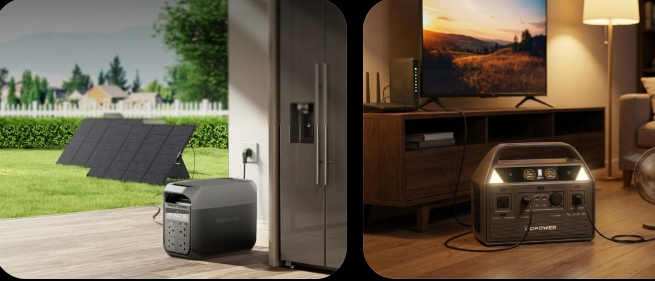
Portable power stations have become another option for people who need backup electricity without installing a complete solar system or purchasing a conventional generator. These compact devices combine rechargeable batteries, inverters and charging systems in a portable unit, allowing users to operate compatible appliances through their available electrical outlets. Some models can be charged through public electricity, while others support compatible solar panels for additional charging options.
Their portability makes them particularly useful for tenants, students, small business owners and households that cannot undertake major electrical installations. Depending on the model, a portable power station can support phones, laptops, rechargeable fans, television sets, internet routers and selected refrigerators. Larger models may operate heavier appliances, provided their continuous output and battery storage are sufficient.
Advertised Nigerian prices for selected products include approximately ₦260,000 for the EcoFlow RIVER 3, ₦372,000 for the RIVER 3 Plus, ₦615,940 for the RIVER 2 Pro and ₦1.14 million for the DELTA 2 Max. The BLUETTI EB3A has also appeared in Nigerian listings at approximately ₦272,703, although prices may change depending on availability and promotions.
Unlike fuel powered generators, portable power stations do not produce exhaust fumes during normal battery operation and are generally quieter. Their major limitation is storage capacity, meaning buyers must check the watt hour rating and maximum power output before purchasing. A smaller model designed for phones and laptops, for instance, may not have sufficient capacity to operate an air conditioner or electric iron.
4) Rechargeable Standing and Table Fans

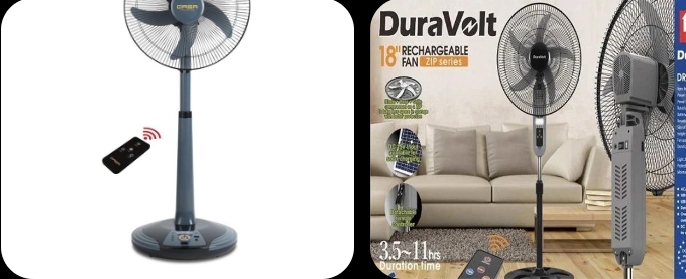
Rechargeable fans are among the more accessible options for Nigerians whose immediate concern is maintaining airflow during electricity outages. Unlike conventional fans that depend on a continuous connection to public electricity, these appliances have built in batteries that store electricity while charging. Once fully charged, they can continue operating without requiring a direct connection to the national grid, making them particularly useful during nighttime blackouts.
They are available as standing fans, table fans and wall mounted models, with some products featuring remote controls, LED lights, USB charging ports and different speed settings. Their affordability and relatively simple operation make them suitable for students, families, office workers and people living in rented apartments who may not have the resources or permission to install larger backup systems.
Indicative Nigerian retail estimates place smaller rechargeable table fans between ₦35,000 and ₦65,000, while rechargeable standing models can cost approximately ₦74,500 to ₦118,000. Larger models with additional features and higher battery capacities may cost more, depending on the manufacturer and retailer.
One advantage is that households can continue using their fans during electricity interruptions without purchasing petrol or diesel. However, the operating duration depends on the battery condition, capacity and selected speed. Buyers should check the manufacturer’s stated runtime and warranty rather than assuming every rechargeable fan can operate throughout the night.
5) Solar Powered Fans

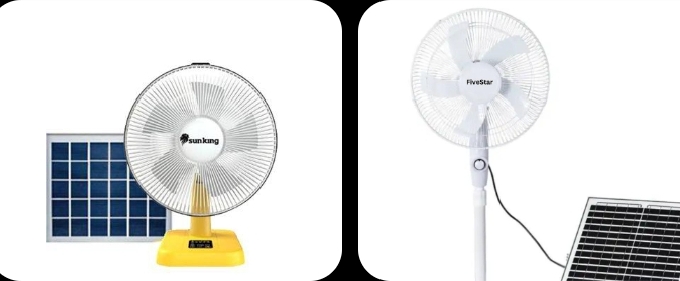
Solar powered fans provide another cooling option for households that want to reduce their dependence on public electricity. Unlike ordinary rechargeable fans that are primarily charged through electrical sockets, these products are designed to receive energy from solar panels. Some models come with dedicated panels and integrated batteries, allowing them to store electricity generated during the day for use after sunset.
Their usefulness is particularly noticeable among households whose immediate priority is ventilation rather than powering several appliances. A solar fan can provide airflow in a room during periods of electricity shortages, while some models also include lighting features and additional charging connections.
Sun King’s Nigerian solar fan specifications provide an example of the technology, with the manufacturer listing a 20W solar panel, an integrated 5,100mAh lithium ion battery and 3 operating modes. Its published specifications also indicate an airflow reach of up to 6.2 metres and a 2 year warranty.
Solar powered fans can reduce the amount of electricity households need from the national grid, but their performance depends on sunlight exposure, panel capacity and battery storage. They are not a complete replacement for household solar installations, particularly for families that need to operate refrigerators, televisions and other appliances alongside their fans.
6) Petrol Powered Generators

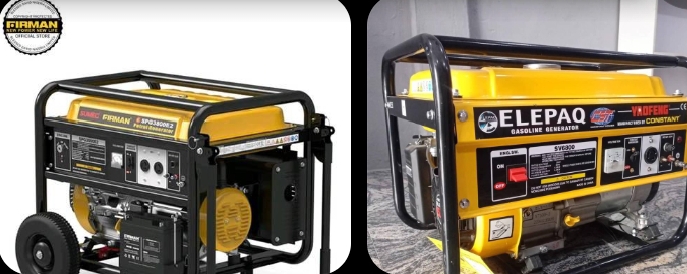
Petrol generators remain a familiar backup electricity option for Nigerian households and businesses, particularly those that require power independently of public electricity supply. These machines use petrol to operate an engine connected to an electrical generator, producing electricity that can be distributed to compatible appliances. They are available in different capacities, from smaller portable models to larger machines capable of supporting several household appliances.
Depending on their ratings, petrol generators can operate fans, television sets, lighting systems, refrigerators and selected air conditioners. Smaller models are generally suitable for basic electricity requirements, while larger units are necessary for households with heavier appliances and greater power consumption.
Indicative Nigerian retail estimates place smaller generators between ₦90,000 and ₦180,000, while models rated between 2kVA and 3.5kVA can cost approximately ₦200,000 to ₦450,000. Larger generators rated between 7.5kVA and 8kVA may cost between ₦380,000 and ₦700,000, depending on the manufacturer, condition and specifications.
Their ability to generate electricity whenever fuel is available remains a major advantage, particularly during extended blackouts. However, petrol expenses can become substantial when generators operate for several hours daily, while regular servicing and replacement parts add to the cost. Safety is also essential because generators produce carbon monoxide, a poisonous gas that can cause death. They must always operate outdoors, far away from doors, windows and ventilation openings, never inside homes, garages or enclosed balconies.
7) Diesel Powered Generators

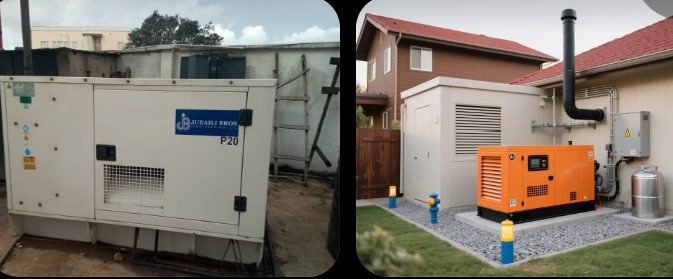
Diesel generators are another alternative for Nigerians who require backup electricity for homes, commercial buildings and businesses. They use diesel engines to generate electricity and are available in different capacities, including larger models designed to operate several appliances and industrial equipment. Some machines also come with soundproof enclosures intended to reduce operating noise, although they still require appropriate outdoor installation.
Their higher capacities make them relevant to businesses that cannot afford prolonged interruptions, including facilities that depend on refrigerators, electrical equipment and other essential machinery. Households with substantial electricity requirements may also consider diesel generators, although their purchase and operating expenses can be considerably higher than those of smaller petrol models.
Indicative Nigerian retail listings place some 5kVA soundproof diesel generators around ₦1.518 million, while generic 20kVA models can range from approximately ₦2.8 million to ₦6.2 million. Selected 20kVA Perkins models have also appeared at prices between ₦6 million and ₦8.95 million, depending on their specifications and condition.
Diesel generators can provide substantial electricity independently of sunlight and national grid availability, but the initial purchase price, fuel expenses and maintenance requirements make them a considerable investment. They also produce exhaust emissions and must be operated outdoors with appropriate precautions against carbon monoxide exposure.
8) Inverter Generators

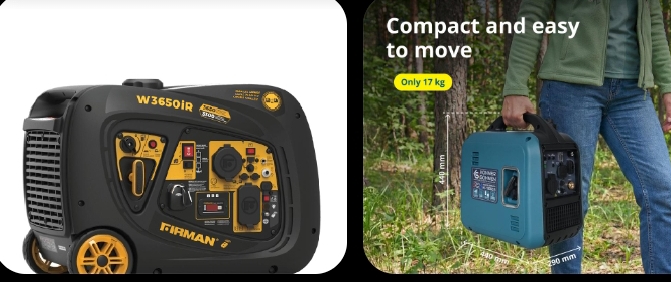
Inverter generators are another option for people who need backup electricity but prefer a machine designed to deliver regulated electrical output. Unlike conventional generators, which produce electricity through a different generation and regulation arrangement, inverter generators use electronic technology to convert and regulate their output. Some models are also designed to be more compact and quieter than conventional generators with comparable ratings.
They can support laptops, television sets, internet equipment, fans, phones and selected household appliances, depending on their rated capacity. Their regulated output can be useful for compatible electronic devices, although buyers should still check the manufacturer’s specifications before connecting sensitive equipment.
A Nigerian retail listing for the Sumec Firman FIG5880 showed an advertised price of approximately ₦510,000 for a model described as a 6,000W generator. Buyers should distinguish between continuous rated output and maximum advertised output, as the two figures are not necessarily the same.
Despite their advantages, inverter generators still require petrol, regular maintenance and safe outdoor operation. They should not be confused with battery based inverter systems because they generate electricity through fuel powered engines rather than simply converting electricity stored in batteries.
9) High Capacity Power Banks, USB Powered Fans

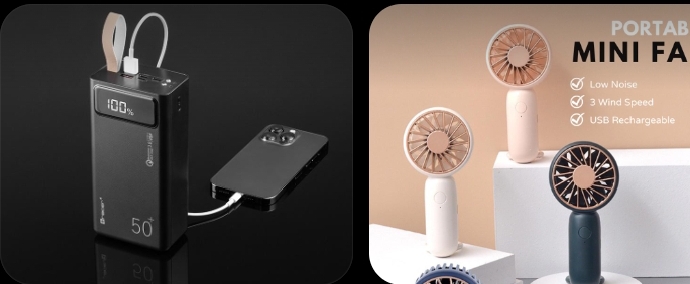
High capacity power banks and USB powered fans provide a relatively simple alternative for Nigerians who need personal cooling and electricity for essential electronic devices. They are particularly useful for students, office workers, small shop owners and people who spend considerable time outside their homes. A power bank can recharge mobile phones and compatible devices, while a USB fan can provide airflow without requiring a direct connection to a wall socket.
Their portability makes them suitable for travelling, working in shops and managing short periods without public electricity. Some portable fans also come with rechargeable batteries, adjustable speed settings and built in phone holders, giving users additional convenience during hot weather.
However, these devices have limited storage capacity and cannot replace a complete household electricity arrangement. A small power bank may be sufficient for charging phones and operating a low powered fan, but it cannot automatically power conventional standing fans, refrigerators or air conditioners. Buyers should check the actual watt hour capacity, USB output and safety specifications instead of relying solely on large milliamp hour figures advertised by manufacturers.
10) Community Solar Mini Grids

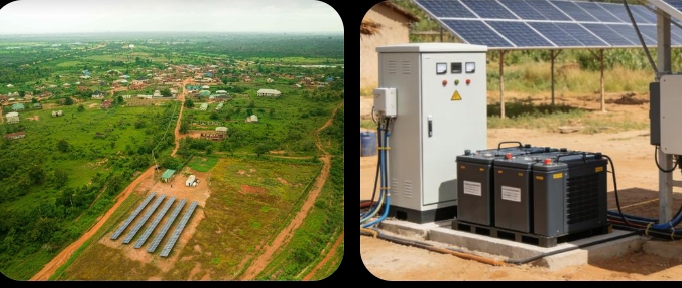
Community solar mini grids offer a different approach because residents do not necessarily have to purchase individual solar installations to access electricity. A mini grid is a local electricity network that generates and distributes power to multiple households, shops and other customers within a defined community. Such systems can combine solar panels, battery storage and other generation equipment to supply electricity to connected residents.
Customers generally pay according to the tariff and payment arrangements established by the operator under the applicable regulatory framework. This makes the arrangement different from purchasing a personal solar system, as the infrastructure is developed to serve several electricity consumers within the same area.
Nigeria’s Rural Electrification Agency is implementing the Distributed Access through Renewable Energy Scale up programme, commonly known as DARES, with $750 million in World Bank financing. The programme aims to expand electricity access to more than 17.5 million Nigerians through distributed renewable energy solutions, including standalone solar systems and solar hybrid mini grids.
Its published targets include 1,225 mini grids, 465MW of energy generation capacity and improved electricity access for approximately 3.24 million households. The initiative is relevant to communities with inadequate electricity supply, although access depends on whether a mini grid operates in the area. Residents should also examine connection charges, electricity tariffs, service reliability and customer support before signing up.
Pay As You Go Solar For Nigerians With Limited Funds

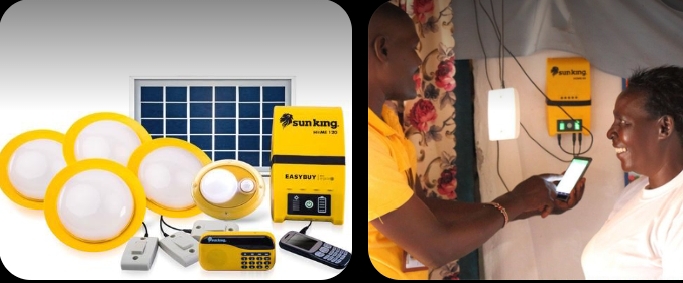
Purchasing a complete solar installation can be expensive, particularly for households already struggling with the cost of food, transportation, electricity and other essential expenses. Pay as you go solar financing provides another way of acquiring solar equipment without paying the entire purchase price upfront. Under these arrangements, eligible customers pay an initial deposit and complete the remaining cost through agreed instalments.
Sun King Nigeria’s EasyBuy arrangement is one example of this financing model. The company’s published payment information explains that customers can make an initial payment followed by weekly instalments through supported payment channels. Its system uses activation codes to keep equipment operational, while customers who complete their payment agreements can unlock their products permanently under the applicable contract terms.
The arrangement can make solar equipment more accessible to households that cannot immediately afford a full purchase, although buyers should examine the total repayment amount before accepting an offer. Deposit requirements, instalment frequency, warranty coverage, ownership arrangements and consequences of missed payments are important details to understand.
What Nigerians Should Consider Before Choosing An Alternative Power Option
The most suitable electricity arrangement depends on the appliances a household intends to operate, the number of hours backup power is required and the amount available for purchasing equipment. Someone who simply needs a fan and phone charging during nighttime blackouts may not require a multi million naira solar installation, while a family that wants to operate refrigerators, several fans and other appliances will need a system with considerably greater capacity.
Tenants should also consider their living arrangements before purchasing equipment that requires permanent installation. Portable power stations, rechargeable fans and smaller inverter systems may be more convenient for people who expect to relocate, while rooftop solar installations could require landlord approval, adequate space and professional electrical work.
Small business owners have different requirements because interruptions can affect their daily income. Barbershops, salons, provision stores, internet cafés and other businesses should calculate the electricity consumption of their equipment before choosing between solar installations, battery systems and generators. A system that can operate a fan and television may be insufficient for a business that depends on refrigerators or heavy electrical machinery.
Government Regulations, Renewable Energy Programmes
Nigeria’s renewable energy sector also has regulatory developments relevant to households and communities considering alternative electricity. On April 10, 2026, the Nigerian Electricity Regulatory Commission issued its Mini Grid Regulations 2026, providing a regulatory framework for mini grid development, including registration, permits, interconnected systems and other operational requirements. The framework is relevant to operators and communities seeking to establish or access local electricity networks.
The Federal Government’s DARES programme also represents an ongoing effort to expand electricity access through distributed renewable energy projects. Its support for standalone solar installations and hybrid mini grids provides another dimension to the country’s response to electricity access challenges, particularly in communities where extending conventional grid infrastructure may be difficult.
Staying Safe During Excessive Heat
Access to alternative electricity can improve household comfort, but Nigerians should also take practical steps to reduce their exposure to excessive heat. Fans provide airflow rather than automatically lowering room temperatures, meaning households should not rely on them as their only protection during extreme heat conditions. The World Health Organization recommends reducing direct sunlight entering homes during hot daytime periods, opening windows when outdoor air becomes cooler at night and staying adequately hydrated.
Other useful measures include wearing lightweight clothing, taking cool showers when necessary, using curtains or blinds to reduce indoor heating and checking on children, elderly people and other vulnerable residents. People should also recognise symptoms of serious heat illness and seek medical attention when necessary. Fans may become less effective at extremely high temperatures, particularly above 40°C, so households should consider moving to cooler environments when indoor conditions become unsafe.
Nigeria’s electricity challenges have made alternative power arrangements an important consideration for households and businesses trying to cope with excessive heat. From rechargeable fans and power banks to solar installations, generators and community mini grids, the available options serve different purposes and come with varying costs. The important consideration is choosing equipment that matches actual electricity needs, available funds and living arrangements rather than spending money on a system that cannot adequately support the appliances it was purchased to operate.