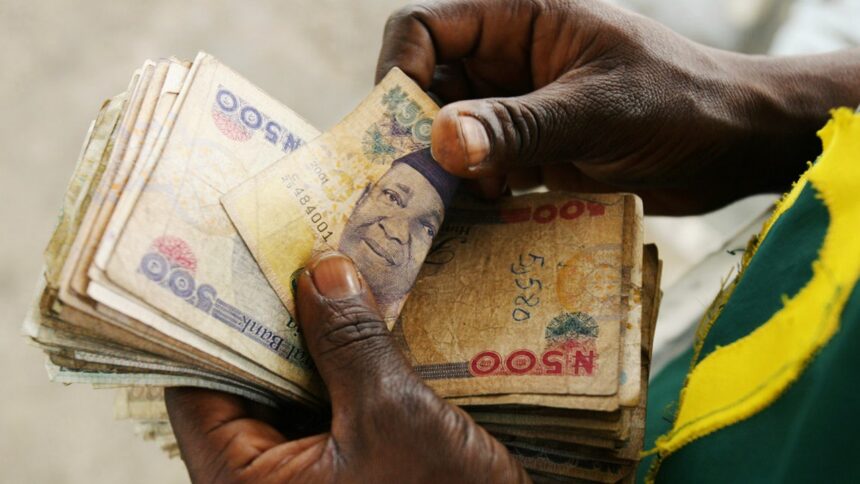
The Federal Government has outlined the procedures for confirming eligibility, accepting and withdrawing its N50,000 household relief grant, while warning recipients to be cautious of fraudsters attempting to take advantage of the intervention.
The National Emergency Relief and Stabilisation Intervention (NERSI), administered by the Federal Ministry of Humanitarian Affairs and Poverty Reduction, is intended to provide financial support to selected households facing the pressure of rising living costs.
Under the programme, beneficiaries receive N50,000 each through mobile wallets managed by five approved payment providers, with the government insisting that the money is a grant and does not have to be repaid.
Information published in the programme’s frequently asked questions section explains the selection process, payment arrangements, withdrawal options and steps recipients should take when they encounter difficulties.
Here are 13 important details Nigerians should understand about the intervention.
1. The grant is worth N50,000 and requires no repayment
The government says every selected beneficiary is entitled to the full N50,000, which will be credited to their mobile wallet without deductions.
The programme’s website states, “₦50,000. The full amount goes into your wallet. Nothing is deducted.”
Unlike a loan, the financial support carries no repayment obligation, as the FAQ explains: “No. It is a grant from the Federal Government. You do not pay it back.”
2. Beneficiaries cannot apply independently
The selection exercise is based on information from the National Social Register and verified national identity records, rather than applications submitted by individuals.
The government says the process is determined by need and covers households across Nigeria’s six geopolitical zones, without discrimination based on religion, ethnicity or political affiliation.
It stated, “You cannot apply, and no one can add you to the list.”
The FAQ further explains, “Beneficiaries are spread across all six geopolitical zones and are selected on need alone, whatever their religion, ethnic group or political affiliation.”
3. Phone numbers are obtained from existing records
The telephone numbers used to contact recipients come from the records consulted during the selection exercise, according to the programme.
Beneficiaries’ details are shared only with their assigned payment providers to facilitate disbursement, while the government says their personal information is protected under the Nigeria Data Protection Act 2023.
The FAQ states, “Your details are shared only with your payment provider, and only so they can pay you.”
The authorities also warn that officials will not request sensitive information such as personal identification numbers, one-time passwords or Bank Verification Numbers.
4. Five providers will notify successful recipients
Selected Nigerians will receive text messages from one of five approved payment providers: ALAT, MoMo PSB, NairaGram, OPay and Moniepoint.
The notification will confirm their selection and provide a USSD code through which they can accept the offer.
An example supplied by the programme reads, “Relief! FGN has selected you to receive ₦50,000 under NERSI to help with living costs. This is FREE. Enq? Call 07000222222. Dial 94523# to accept.”
Recipients can also use their assigned provider’s USSD service to check their eligibility, while genuine notifications should originate from the providers’ official sender names.
5. Recipients must accept before payment
Receiving a selection message does not automatically mean the money has been paid, as beneficiaries must first dial the supplied USSD code and follow the instructions.
The process creates a mobile wallet for the recipient, after which the grant is credited and a confirmation message is sent.
The government emphasises that “Nothing is paid until you accept.”
Those who initially reject the offer by mistakenly selecting “No” can dial the code again and choose “Yes” if they wish to accept, while selected recipients are encouraged to complete the process promptly.
6. A smartphone or internet connection is unnecessary
Beneficiaries can access the grant with an ordinary mobile phone because the approved USSD services do not require internet access.
The programme states, “No. A basic phone is enough. The codes work without the internet.”
However, customers of MoMo PSB, OPay and Moniepoint can also use their providers’ official applications to manage their wallets and carry out transactions.
7. Several channels are available for withdrawing the money
Recipients can cash out through Point of Sale agents by transferring money from their mobile wallets and collecting the equivalent amount.
Each provider also offers specific USSD options and other withdrawal channels, including transfers to personal bank accounts.
ALAT customers can dial 94523Account NumberAmount# or visit a Wema Bank branch, while MoMo PSB users can visit its agents, dial 6710# or use the MoMo NG application.
NairaGram beneficiaries can use 72600#, OPay customers can dial 95520# or use its application, while Moniepoint recipients can dial 557327# or access the service through its mobile application.
The government says beneficiaries may withdraw the entire grant or take only what they need, leaving the balance in their wallets.
The FAQ states, “Yes. You can withdraw all or part of it. The rest stays safely in your wallet.”
8. Receiving the grant is free, but POS withdrawals may attract fees
The government says there are no charges for accepting the offer, receiving the N50,000 or responding to programme messages.
However, POS operators may impose their regular withdrawal fees when beneficiaries collect cash.
The programme advises recipients to establish the applicable charges before completing a transaction, stating, “When you cash out at a POS agent, the agent may charge their usual withdrawal fee, as with any withdrawal. Ask for the fee before you withdraw.”
9. Delayed messages do not necessarily mean exclusion
The government says notifications are being distributed in batches, meaning selected recipients may not receive messages at the same time.
Consequently, the absence of an SMS should not automatically be interpreted as confirmation that someone has been excluded from the programme.
Individuals can check their status through their payment providers’ USSD eligibility options, although the government says the current phase is intended for a limited number of households.
Those who are not selected will receive the notification, “You are currently not selected to receive this relief support.”
The authorities also warn that nobody can secure inclusion or accelerate payment in exchange for money, adding, “No one can add you to the list or speed up your payment. Anyone who offers to do so for a fee is a fraudster.”
10. Fraudsters may impersonate programme officials
Beneficiaries have been cautioned against people demanding money or confidential banking details in exchange for assistance with the grant.
According to the government, legitimate messages will come from the official sender names of the five approved providers and will not contain links.
Recipients are advised against clicking unfamiliar links, installing unrecognised applications or forwarding WhatsApp messages claiming that doing so guarantees selection.
The programme warns, “Chain messages are fake. Forwarding a message does not make anyone a beneficiary. Delete it.”
It also cautions against requests to refund money supposedly transferred in error, advising recipients: “Do not send money to anyone. This is a common trick. Call your provider’s official help line to check.”
11. Lost phones or SIM cards will not erase the grant
Beneficiaries who lose their phones or SIM cards should immediately contact their payment providers to secure their mobile wallets.
They should also approach their network operators for replacement SIM cards carrying the same telephone numbers.
The government says the money remains in the wallet even when the device or SIM card is lost, explaining, “Your money stays in your wallet.”
Recipients are also advised not to disclose their PINs or one-time passwords or surrender their phones to anyone offering assistance.
12. Beneficiaries can contact providers when transactions fail
Recipients experiencing problems with USSD services should first check their network signals and try again before contacting their payment providers through official customer service channels.
The programme provides the following contact details for assistance:
– ALAT by Wema: 0803 900 3700
– MoMo PSB: 671 or 0803 106 7100
– NairaGram: 0201 330 0880 or 0201 330 0881
– OPay: 0700 888 8328 or 0201 888 8328
– NERSI programme helpline: 0700-022-2222
Questions about wallet access and transactions should be directed to the relevant payment provider, while enquiries concerning the intervention itself can be made through the programme’s helpline.
13. Only five organisations are authorised to disburse the grant
The government has approved ALAT, the digital banking platform of Wema Bank; MoMo PSB, a licensed Payment Service Bank; NairaGram, a digital money transfer service; OPay, a licensed mobile money operator; and Moniepoint, a licensed microfinance bank, to handle payments.
Beneficiaries are advised to transact only through their assigned providers and rely on their official channels for information and assistance.
The government maintains that recipients do not need to download unfamiliar applications or follow links to access the money, as the designated USSD services are sufficient to complete the process.