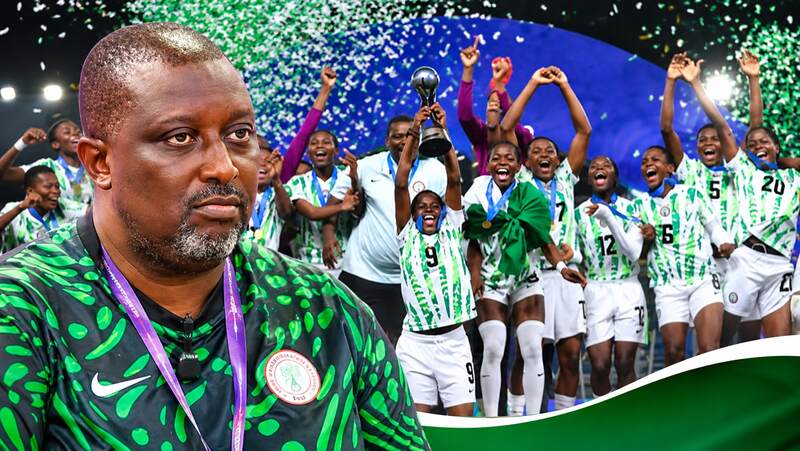
In just seven months as head coach of Nigeria’s U-17 women’s national team, Hakeem Busari achieved what no previous coach had accomplished, guiding the Flamingos to their maiden FIFA U-17 Women’s World Cup title.
The Nigerian side defeated Japan 2-1 in the final of the 2026 competition in Morocco on November 7, making Nigeria the first African country to lift the trophy.

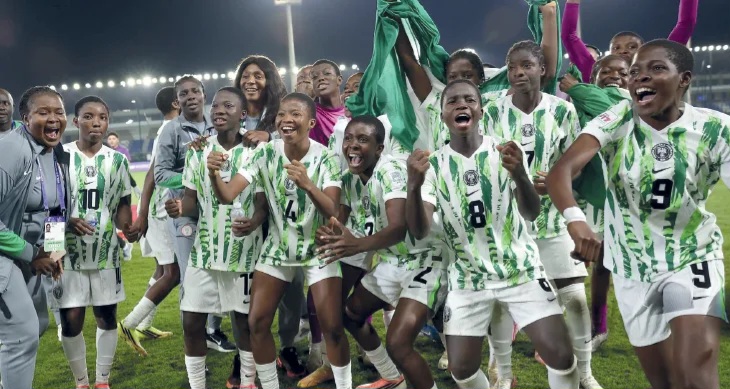
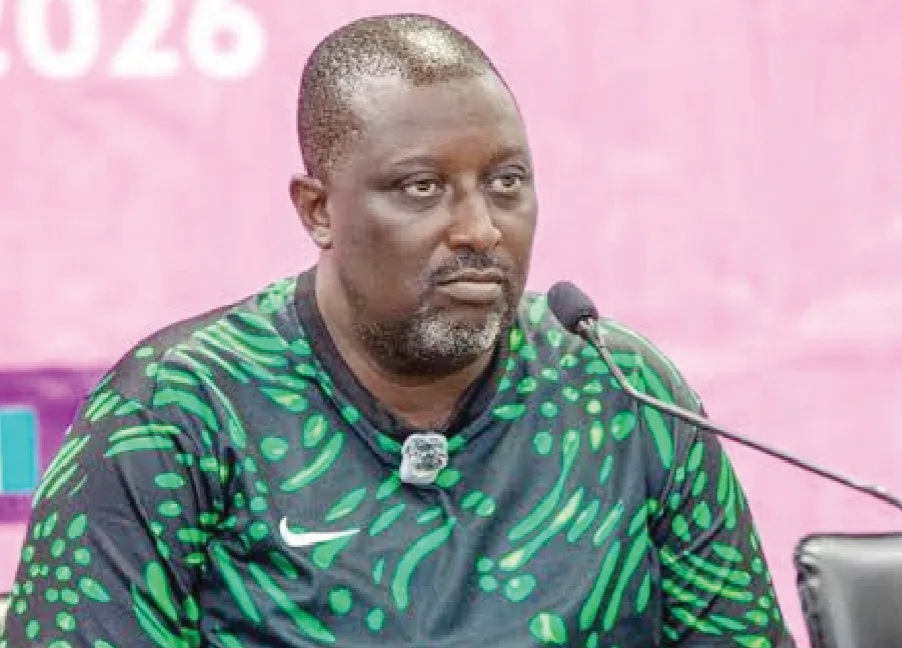
Busari’s journey to the historic achievement began on April 2, 2026, when the Nigeria Football Federation appointed him to replace Bankole Olowookere, who had led the team to a bronze medal at the 2022 edition in India.
Before taking up the national assignment, Busari was in charge of Pacesetter Queens Football Club of Ibadan, while his coaching education dated back to the late 1990s.
The Director-General of the National Institute for Sports, Philip Shaibu, disclosed that Busari obtained his initial coaching qualification at the institute in Lagos in 1999 and later attended its higher programmes between 2003 and 2006, receiving his final certificates in October of that year.
Building a team for the global stage
Barely eight days after his appointment, Busari began assembling a squad for the African qualifying campaign, inviting 36 players to camp on April 10.
The group comprised five goalkeepers, 10 defenders, 13 midfielders and eight forwards, with Fidel Pepple and Aminat Abiodun of Pacesetter Queens among those selected.
The NFF also approved Jegede-Idakwo and Omodiaghe as assistant coaches to support Busari in preparing the team for the qualifiers.
His first major test came against the Amazons of Benin Republic, whom Nigeria defeated 8-5 on aggregate to secure a place at the tournament.
After winning the first leg 3-2 in Ikenne, Ogun State, the Flamingos completed the job with a 5-3 victory in Lomé on July 11.
Mary Dustan scored early in the return fixture, while Esther Stephen and Queen Joseph also found the net, with Joseph completing her brace in the 76th minute.
Preparations and a challenging opening
Following qualification, Busari intensified preparations for the tournament, inviting 26 players for the first phase of the final camping programme in Abuja on August 28.
The coach subsequently named his final 21-player squad on October 6, with Harmony Chidi appointed captain.

Other members included defenders Elizabeth Adesuyi and Esther Stephen, midfielders Mary Dustan and Favour Nkwocha, as well as forwards Tosin Rafiu, Queen Joseph, Precious Oscar and Oluwakemi Adegbuyi.
The team travelled to Morocco on October 7 ahead of the competition, which commenced on October 17.
Nigeria’s campaign began with a 2-1 defeat to Poland, but the players recovered with a 2-0 win over Puerto Rico before overcoming defending champions North Korea 3-1 to progress from their group.
The Flamingos maintained their momentum in the knockout rounds, defeating Mexico 2-1 in the Round of 16, Venezuela 1-0 in the quarter-finals and Brazil 3-1 in the semi-finals.
Their victory over Brazil secured Nigeria’s place in the final and made the team the first from Africa to reach that stage of the competition.
Tactical decisions that shaped the campaign
Busari’s management of the squad, particularly his willingness to adjust his starting line-up, became an important feature of Nigeria’s progress.
One notable decision was giving Awawu Bashiru a starting role against Brazil after she had mainly featured as a substitute earlier in the competition.
The forward justified the selection by scoring twice in the semi-final victory, helping Nigeria secure a historic place in the final.
Japan defeated as Nigeria claims first title
The final against Japan at the Mohammed VI Football Complex in Rabat on November 7 provided the defining moment of Busari’s tenure.
Bashiru opened the scoring in the 39th minute with a long-range effort that beat Japanese goalkeeper Kou Kadowaki.
Nigeria extended its advantage shortly after the restart when Oluebube Umejiaku received a pass from Esther Stephen and lifted the ball over the advancing goalkeeper in the 47th minute.
Japan pulled one goal back through Fuki Ito in the 80th minute, but the Flamingos held on to win 2-1 and secure the championship.
FIFA named Umejiaku Player of the Tournament, while Nigeria’s victory marked the first time an African country had won the U-17 Women’s World Cup.
Reflecting on the achievement, Busari told FIFA, “This is a turnaround for Africa,”
He added, “In terms of youth-age football, it’s improving and here we could really come and compete. Being a champion is going to go a long way to really motivate us, and we are sending a signal, a message to the world that Africa is really coming.”
The Confederation of African Football also celebrated the result as a landmark moment for the continent.
From his appointment on April 2 to the final on November 7, Busari spent seven months and five days in charge before delivering Nigeria’s first title in the competition, taking the Flamingos beyond the bronze-medal finish achieved under his predecessor in 2022.