Lagos is Nigeria’s smallest state but its most populous, as millions of Nigerians have flocked to it for a better life because of its economic advantages over other states in the Federation. It is a busy, densely populated city. Known for its hustle and bustle and heavy traffic, it adds a chaotic flavour to the state.
While the influx of people to the state has its numerous advantages, it comes with severe drawbacks, one of which is noise pollution. From itinerant street vendors marketing their products with mobile megaphones to worship centres blaring their religious activities in residential areas through reverberating electronic amplifiers and loudspeakers, Lagos residents are groaning under the strain of intense noise pollution, particularly from religious houses.
Despite the frenetic and near-chaotic nature of the state, which is a feature that has been attributed to other major cities around the world, Lagos residents still deserve peace and tranquillity in their own homes. To bring about this serenity, the Lagos State Government has embarked on an aggressive campaign against noise pollution.

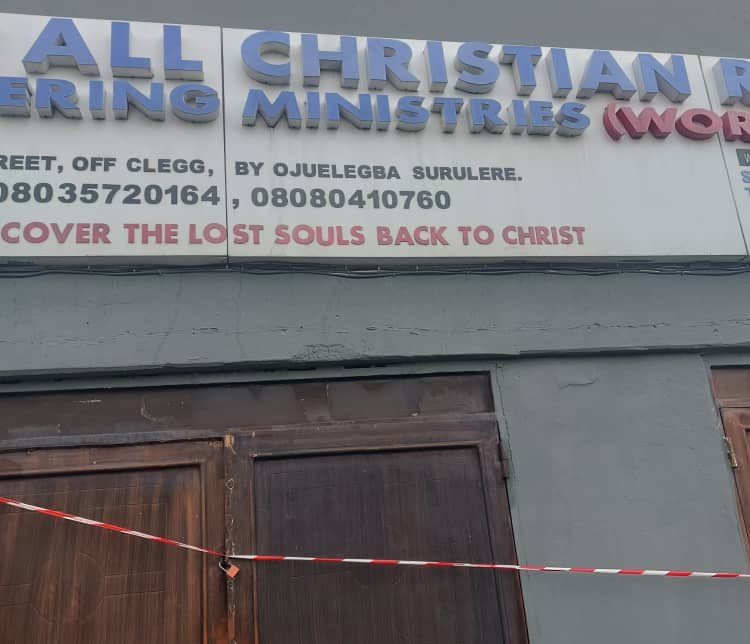
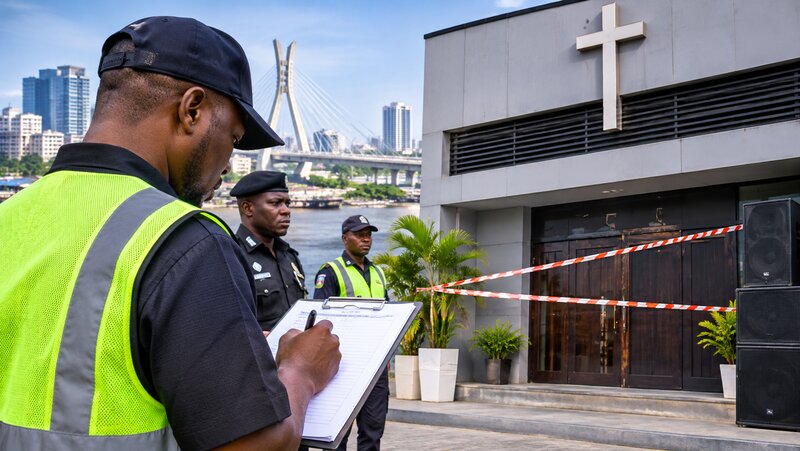
On Sunday, November 8, 2026, the government took another decisive step. Agents of the Lagos State Environmental Protection Agency (LASEPA) sealed a church known as The All Christians Gathering Ministry in the Surulere area of the state. They shut down the premises after confirming that the church was guilty of severe noise pollution.
The government’s decision was not indiscriminate or spontaneous. It followed a direct complaint by a resident on X, via @BigDavery.
The resident reported the church for causing severe public disturbance and noise pollution in the neighbourhood. Following the public complaint, the Lagos State Commissioner for Environment and Water Resources, Tokunbo Wahab, said LASEPA officials conducted a prompt and thorough investigation.
They visited the area and confirmed that the church was indeed violating environmental regulations. The officials declared that the activities of the church constituted a breach of public sanity and peace. Consequently, the church was shut down early Sunday morning. It will remain locked and under lock and key until further notice, according to the environment commissioner.
No organisation is above the Law
For years on end, residents in Lagos have had to endure the debilitating impact of excruciating noise pollution. They contend with loudspeakers from places of worship, centres, pubs, clubs and wandering vendors. Religious houses often place massive speakers outside their buildings. This practice encroaches on other people’s entitled sphere of serenity, as they are forced to listen to the religious houses’ services against their will. However, the state government now want to put an end to this culture.
In a statement on his X account, Wahab made it clear that the state will not accept any actions that disturb the peace of Lagosians.
“We will not tolerate environmental violations or any form of nuisance that disrupts the peace and well-being of residents,” he stated. “All religious institutions, businesses and other establishments are required to comply strictly with environmental regulations.”
The commissioner also read a riot act to other potential violators across the state.
“Our enforcement actions will remain firm and decisive. No individual or institution is above the law,” Wahab added.
Campaign not targeted at body of Christ
Religion is a very touchy topic in Nigeria. The closure of a church over noise pollution sparks public outcry that tends to carry the undertone of persecution. Some people often assert that the government is targeting the Christian faith. However, a close look at recent history proves this is simply not true.
The government’s war against noise pollution does not single out any religion or target any faith. The commissioner dispelled the claim of Christian persecution in its noise pollution crusade in a statement on Saturday.
In December 2023, LASEPA sealed the Ifelodun Mosque for similar environmental offences. This action was taken because the mosque was also disturbing its neighbours. During that same period, the agency shut down several other establishments. The list included a nightclub and a hotel. This clearly shows that the crackdown is not coloured by religious bias.
These past examples make one thing very clear. The government is not fighting against churches. The enforcement is simply about upholding the law. Whether it is a church, a mosque, a nightclub, or a factory, the rules remain exactly the same. Religion cannot provide immunity against law enforcement.
Giving Power Back to Residents
The most important part of this government crackdown is citizen involvement. The state is encouraging residents to report any organisation or entity that disturbs public peace. People no longer need to suffer in silence or fear intimidation from loud religious centres.
The General Manager of LASEPA, Tunde Ajayi, has urged residents to use the agency’s official reporting channels. He noted that the state has made it very easy to report any noise pollution.
Speaking on the process, Ajayi said: “All noise pollution complaints can be reported on the LASEPA portal, infraction.lasepa.gov.ng. They will be promptly attended to, and you can track progress there.”
This digital feedback mechanism puts people in control. The swift action taken in Surulere proves that the system actually works.
As Lagos grows, curtailing noise pollution is important. The sealing of the Surulere church will send a stern message to all religious leaders. Your right to worship must not be at the expense of your neighbours’ right to a calm and serene environment.