


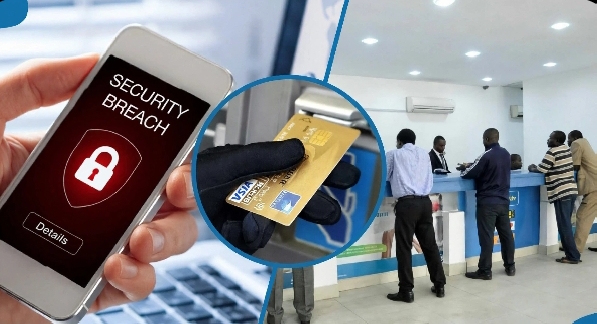
Mobile banking has become part of everyday life in Nigeria, with millions of people depending on their phones to receive salaries, transfer money, pay bills, operate businesses and manage their savings. For many customers, a banking application is now almost as important as the physical ATM card, particularly as visiting a banking hall for ordinary transactions becomes less necessary. However, a growing number of reported fraud cases have raised serious concerns about the safety of money kept in bank accounts, especially when customers discover that transactions running into millions of naira have taken place without their knowledge.
Some of the reported experiences are particularly disturbing because the victims claim they still had their phones, SIM cards and ATM cards when the money disappeared. Others involve customers who lost access to their registered telephone numbers, elderly account holders seeking assistance from bank employees and people who only discovered the transactions when they attempted to withdraw their savings. The circumstances differ, but the financial consequences have been devastating for several victims, while questions about the recovery of stolen funds have continued to follow some of the complaints.
Recent Nigerian cases involving millions of naira have brought these experiences into focus, revealing how criminals exploit mobile applications, telephone numbers, personal information and weaknesses within financial institutions. Beyond the individual losses, separate investigations have also exposed alleged insider involvement and attacks on banking infrastructure, making the problem bigger than customers simply falling for suspicious messages. Here are some of the reported cases, how the fraud happens and the measures being introduced to protect Nigerians.
The ₦2.59 Million GTBank Complaint
One of the recent cases involved Stella Adepegba, who accused GTBank of negligence after approximately ₦2.587 million allegedly disappeared from 2 accounts belonging to her and her daughter within 24 days. The first incident occurred on October 8, 2026, when she discovered that approximately ₦2.507 million had been transferred from her daughter’s Child Saver’s Account through 4 transactions. According to her account, ₦399,000, ₦398,000 and ₦220,000 were transferred to a Moniepoint account bearing the name Abdulmalik Idris, while another ₦1.49 million went to a GoMoney account bearing the name Zainab Ibrahim.
Adepegba said the transactions left less than ₦2,000 in her daughter’s account, adding that she did not receive debit alerts and only became aware of the development after a GTBank employee informed her. She subsequently visited the bank’s Kubwa branch in Abuja on October 9 to report the incident and seek assistance. However, the problem was not limited to her daughter’s account, as another ₦80,000 allegedly disappeared from her personal account on November 1, 2026, through a transfer to a FairMoney account bearing the name Jamilu Ahmad.
The combined amount brought her reported loss to ₦2.587 million, with the customer maintaining that her phone, SIM card and ATM card remained in her possession. She also insisted that she had not disclosed her banking credentials or received OTP requests before the transactions occurred. GTBank’s Chief Communication Officer, Oyinade Adegite, said the incidents had been investigated and feedback provided, attributing the compromise to customer side security vulnerabilities, particularly phishing links capable of installing malware and capturing sensitive information. She maintained that the bank’s 2 factor authentication safeguards had been applied, but Adepegba disputed the explanation and demanded a refund, leaving the central question of how the accounts were accessed unresolved in the published account.
The ₦4.6 Million GTBank Account Disappearance
Another complaint involved Onifade Isaac, a Lagos resident who alleged that ₦4.6 million disappeared from his GTBank savings account on August 22, 2026. According to his account, the money was transferred through the bank’s mobile application into a Pocket App account bearing the name Zahara’u Iliyasu. He said he discovered the loss when he attempted to withdraw money and was informed that his available balance was insufficient, prompting him to check his account activity and investigate the unexpected transaction.
The transaction appeared in his bank statement as an outward transfer of ₦4.6 million, while the statement showed a closing balance of ₦10,446.86 after the transfer and other account activity. An email from GTBank’s E Fraud, Analytics and e Channel Security Group indicated that the bank had blocked his account to prevent further unauthorised access and escalated the debit to the receiving institution. Isaac questioned how the receiving account could still be accessed after the transaction had been reported and the receiving bank notified, particularly as he wanted the money traced and recovered.
He reportedly submitted an affidavit and police report as part of his efforts to establish his complaint, but the outcome of the recovery process remained uncertain when the incident was reported. The case illustrates a major problem confronting victims of electronic banking fraud, as blocking the affected account may prevent further losses without automatically recovering money that has already been transferred. The receiving institution must also be notified, the destination account investigated and any available funds traced before recovery can be completed.
The 73 Year Old Pensioner Who Lost Approximately ₦3 Million
A particularly troubling case involved a 73 year old Lagos pensioner identified as Agnes Uwaila, a name changed to protect her identity. The woman had reportedly spent more than 40 years working at the University of Lagos before the incident that affected her savings. According to the account, she visited her bank’s customer service section because she was experiencing difficulties with its mobile banking application, hoping that the staff would help her resolve the problem.
During the visit, a customer service representative reportedly obtained her PIN to assist with the application problem, and a few weeks later, she began receiving debit alerts showing withdrawals from her account. Approximately ₦3 million reportedly disappeared within a couple of hours, representing her life savings alongside money her daughters had sent for her upkeep. A friend who spoke about the incident said the pensioner fainted after discovering the loss and was taken to hospital, although the published account did not establish that the bank employee had stolen the money or that the application itself had been hacked.
Another woman identified as Shola, who lived in the same neighbourhood, described a similar experience after visiting a different bank to complain about an application that would not open. She alleged that withdrawals began in small amounts days after the visit and said the police eventually became involved, with most of her money recovered. The experiences raise serious questions about the handling of confidential banking information during customer service interactions, particularly because customers should never be required to disclose their personal banking PINs to employees for ordinary technical assistance.
SIM Card Reassignment Leaves Another Customer Without More Than ₦3 Million
A separate case reported on October 16, 2026, involved a woman identified as Nnenna Okorie, not her real name, who allegedly lost more than ₦3 million from her Access Bank account after her telephone number was compromised. Okorie had been living in Dubai before returning to Nigeria and discovering that most of her savings had disappeared. She said she expected to find approximately ₦3 million in her account but could not find even ₦1,000 when she checked her balance.
Her explanation centred on the reassignment of her former telephone number to another subscriber after the line had remained inactive. She reportedly discovered that the number had been resold and that withdrawals of ₦20,000 were being made at a time from her account, beginning in 2024. According to her account, the telecommunications operator informed her that the number had been reassigned because it had remained inactive for more than a year.
The incident eventually attracted the attention of social media activist VeryDarkMan, and the reported documentation process led to Access Bank returning the stolen money to her account in September 2026. Her experience demonstrates how an old telephone number can become a financial security problem when it remains connected to banking services after the original subscriber stops using it. Someone who receives that number later may gain access to messages or verification processes intended for the previous owner, depending on the security arrangements still attached to the account.
How Criminals Gain Access to Mobile Banking Accounts
Phishing Links and Fake Bank Messages
Phishing is one of the methods used by criminals to obtain confidential banking information from unsuspecting customers. It usually begins with a message pretending to come from a bank, telecommunications company, payment service or government institution, with the recipient warned that an account has been restricted or requires urgent verification. The message may contain a link directing the customer to a fake website designed to resemble a legitimate banking platform, where the victim is encouraged to enter login details, card information or other sensitive credentials.
Once the information has been collected, criminals can attempt to use it to access the victim’s financial services or carry out unauthorised transactions. Some suspicious links also expose customers to malicious applications capable of collecting information from their devices. A 2026 warning by the Central Bank of Nigeria drew attention to fraudulent messages and emails impersonating the apex bank, advising Nigerians to verify official communications and avoid suspicious links that request personal information.
SIM Swap Fraud and Recycled Telephone Numbers
SIM swap fraud happens when criminals gain control of a customer’s telephone number by obtaining an unauthorised replacement SIM. Once the number is transferred to another SIM card, the criminal may begin receiving calls and messages intended for the original subscriber, including some banking verification codes. Depending on the bank’s security requirements, this information can be used alongside other compromised credentials to attempt password resets, device registration and unauthorised transfers.
SIM recycling presents a related but different problem because telecommunications operators can deactivate inactive numbers and eventually make them available to new subscribers. Under the NCC’s 2024 Quality of Service Business Rules, prepaid numbers that generate no revenue for 6 consecutive months must be deactivated, while continued inactivity for another 6 months makes the number eligible for recycling and reassignment. Customers who abandon old numbers without updating their bank records may therefore leave important financial services connected to telephone numbers that could eventually belong to someone else.
Malicious Applications and Phone Compromise
Some criminals target the devices customers use to access their accounts rather than attempting to steal their ATM cards. Malware can enter a phone through suspicious downloads, untrusted applications or links that encourage users to install software outside recognised application stores. Depending on the type of malicious programme, it may capture passwords, monitor screen activity, record keystrokes, access sensitive information or interfere with notifications.
This creates another security challenge because customers may continue using their phones without realising that information entered into banking applications is being exposed. A November 7, 2026 investigation discussed how malicious programmes could harvest personal information and remotely control certain device functions. Customers therefore need to pay attention to the applications they install, the permissions they grant and the websites they use to access financial services.
Social Engineering and Insider Involvement
Social engineering involves manipulating people into revealing confidential information or approving transactions they believe are legitimate. A fraudster may call someone pretending to be a bank security officer and claim that suspicious activity has been detected on the account. The victim may then be persuaded to provide an OTP, disclose a PIN, share a password or approve a transaction under the impression that the person is helping to protect the money.
Insider involvement presents another dimension because banking employees may have access to sensitive customer information and internal systems. Where such access is abused or shared with external criminals, confidential details and security procedures can become tools for financial theft. A November 7 investigation discussed allegations involving insiders at Nigerian financial institutions, including cases in which employees and external suspects were accused of participating in electronic financial fraud.
Major Cyberattacks on Nigerian Financial Institutions
Wema Bank’s Reported ₦8.5 Billion Attack
Mobile banking fraud is not restricted to customers whose login details have been compromised, as criminals have also been accused of attacking financial institutions directly. One major example involved Wema Bank, where fraudsters allegedly breached computer systems and servers in January 2025, manipulating financial data, authorisation protocols and internal transfer processes to divert approximately ₦8.5 billion. The Economic and Financial Crimes Commission subsequently arraigned 3 bank employees and 4 external individuals in May 2025 over their alleged involvement in the incident.
The defendants initially pleaded not guilty, but the case later produced a conviction involving one of the bank employees, Ihechukwu Asiegbu. He was sentenced to 3 years’ imprisonment in November 2025 for unauthorised access to the bank’s computer system to facilitate the theft. The incident demonstrated how electronic financial fraud can extend into a bank’s internal infrastructure, making cybersecurity and employee access controls important parts of protecting customers’ money.
First Bank’s Alleged ₦40 Billion Diversion
Another major case involved First Bank, which reportedly began legal proceedings in 2024 to recover approximately ₦40 billion allegedly diverted by an employee at its head office team in Iganmu, Lagos. The employee was accused of transferring the money into 98 accounts classified as first beneficiaries, including an account belonging to his wife. The bank reportedly notified the police on March 25, 2024, and obtained 3 court orders to block hundreds of accounts believed to have received the funds.
The allegations showed how money can be distributed across several accounts after an unauthorised transaction, potentially complicating efforts to trace and recover it. However, the reported diversion must be distinguished from a final judicial finding of guilt, as allegations presented during legal proceedings do not automatically establish conviction.
Globus Bank, SunTrust Bank and Hope Payment Service Bank
Other reported cases have also exposed the financial consequences of attacks on banking infrastructure. A former Globus Bank ICT employee and other suspects were accused of hacking the institution’s computer systems and transferring approximately ₦3.5 billion from customer accounts, with the EFCC alleging that shared employee login credentials were used to gain access. Approximately ₦1.2 billion was reportedly recovered, while the accused ICT employee denied the allegations.
SunTrust Bank Plc was also reportedly targeted in repeated cyberattacks over a 3 year period, with suspects accused of diverting more than ₦800 million. One suspect, Ugochukwu Eze, popularly known as Amazon, was arraigned before the Federal High Court in Lagos on August 6, 2026, and reportedly granted bail on September 14. Hope Payment Service Bank faced another major incident in July 2024, involving reported unauthorised transfers estimated between ₦6.5 billion and ₦10 billion, while a Federal High Court in Abuja ordered the freezing of 818 accounts in October 2024 as part of efforts to intercept and recover the funds.
How Much Money Is Lost to Electronic Banking Fraud?
Figures disclosed by the Nigeria Inter Bank Settlement System showed that electronic payment fraud losses declined from ₦52.26 billion in 2024 to ₦25.85 billion in 2025, representing a reduction of approximately 51%. The number of reported fraud incidents also declined from 123,918 in 2021 to 67,518 in 2025, although the remaining financial losses continued to represent a major concern for the country’s electronic payment industry.
Other figures showed that reported losses stood at ₦17.67 billion in 2023 before rising sharply in 2024, with a single major incident involving approximately ₦31.1 billion contributing significantly to that year’s total. Lagos accounted for 63.43% of reported fraud activity in 2025, while Abuja accounted for 3.12%. E commerce and internet banking were identified among the most affected channels, followed by POS, mobile and web platforms, meaning the figures cover electronic payment fraud generally rather than mobile banking alone.
The organisation also reported that industry collaboration prevented approximately ₦20 billion in potential fraud losses in 2025. However, concerns remained about inadequate reporting by some financial institutions, making it harder to identify criminals who move between banks and other payment service providers. The figures show that electronic fraud remains a significant problem even with the reduction recorded between 2024 and 2025.
What Banks and Regulators Are Doing
The Central Bank of Nigeria and the Nigerian Communications Commission signed a Memorandum of Understanding in April 2026 to strengthen cooperation against telecommunications related identity fraud and improve payment security. The agreement included coordination through a Telecom Identity Risk Management framework, with the aim of improving communication between banks, telecommunications operators and regulators when suspicious telephone number activity is detected.
The NCC’s Telecom Identity Risk Management System is designed to help authorised institutions identify numbers that have undergone SIM swaps, reassignment, churn or other activities that may indicate potential fraud. This can help banks establish whether a telephone number linked to a customer’s account has recently changed before allowing sensitive transactions. However, the existence of the system should not be confused with proof that every institution is already using it effectively across all banking activities.
Another major commitment came in January 2026, when the CBN disclosed that Nigerian banks had agreed to reduce fraud response times to less than 30 minutes. Deputy Governor Philip Ikeazor announced the commitment during a technical session of the Nigeria Electronic Fraud Forum in Lagos, with the objective of improving the chances of stopping suspicious transfers before the money is withdrawn or moved elsewhere. Other measures discussed included mandatory 2 factor authentication, 24 hour fraud desks, improved identity verification and stronger information sharing among financial institutions.
What Customers Should Do When Money Disappears
Customers who discover unauthorised transactions should contact their banks immediately through official customer service channels and request urgent restrictions on compromised accounts or banking applications. They should also request an investigation, provide the transaction references and ask the bank to notify the receiving institution so that available funds can be traced and potentially frozen. A formal complaint reference number should be obtained, as this provides evidence that the incident was reported and creates a record for subsequent escalation.
Victims should preserve their bank statements, debit notifications, suspicious messages, emails and other records showing when the transactions occurred. Where necessary, they should report the incident to the police or appropriate cybercrime investigation authorities and retain copies of any reports submitted. If the bank fails to resolve the complaint within the applicable period, the customer can escalate the matter to the CBN’s Consumer Protection Department through its official complaint procedure.
The CBN generally allows financial institutions up to 2 weeks to resolve ordinary consumer complaints, while complaints involving excess charges and loans have an applicable period of 30 days. Customers should provide their details, the name of the financial institution, transaction information, the disputed amount and supporting documents when escalating the matter. They must never include their banking PINs or passwords in the complaint.
Protecting Bank Accounts From Unauthorised Access
Avoiding suspicious links remains one of the most important precautions for people who use mobile banking applications regularly. Customers should download banking applications from trusted official application stores, avoid unknown APK files and never disclose their PINs, passwords or OTPs to callers claiming to represent their banks. They should also monitor account statements, activate transaction notifications and contact their telecommunications operators immediately if their SIM cards suddenly lose network service without an obvious explanation.
People who travel abroad or stop using a Nigerian telephone number for an extended period should pay particular attention to the status of the line. Updating banks when changing telephone numbers and removing old numbers from financial accounts can reduce the risks associated with SIM recycling. Business owners, POS operators and online vendors should also verify actual account credits before releasing goods or cash, rather than relying on screenshots, SMS notifications or transfer receipts presented by customers.
The recent cases show that mobile banking fraud in Nigeria involves several different methods, from stolen credentials and compromised telephone numbers to malicious applications and alleged insider involvement. While customers have a responsibility to protect their confidential information, banks and telecommunications operators also have important roles in securing their systems, investigating disputed transactions and responding quickly when fraud is reported.
For victims, the disappearance of millions of naira can mean losing years of savings, business capital or money set aside for family responsibilities. The experiences involving the GTBank customers, the elderly Lagos pensioner and the Access Bank customer whose telephone number was reassigned demonstrate how different weaknesses can produce similar financial consequences. Ultimately, the effectiveness of Nigeria’s response will depend not only on preventing unauthorised transfers but also on how quickly stolen funds are traced, how transparently banks investigate complaints and whether customers receive appropriate redress when financial institutions are found responsible.