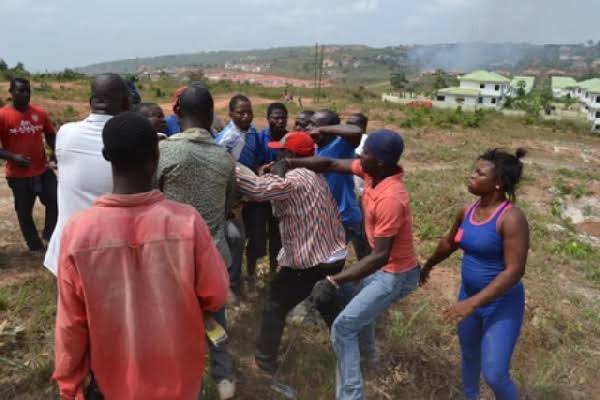
Nigeria’s land ownership disputes are taking increasingly complicated turns, with properties allocated to universities becoming subjects of government decisions, residential estates facing competing ownership claims and traditional communities challenging developments on lands they consider ancestral inheritance. Across several states, disagreements over who owns a particular parcel of land have moved beyond family meetings and community interventions, bringing government officials, private developers, security agencies, traditional rulers and the courts into prolonged confrontations. Some of the disputes involve thousands of hectares, others concern established neighbourhoods where residents have spent years building homes and businesses, while several have exposed the difficulties faced by people who purchase land only to discover that another party is claiming ownership.
The developments have brought renewed attention to the powers of government to revoke land allocations, the legal documents required to establish ownership and the responsibilities of developers before commencing construction on disputed properties. Abuja has become a major centre of these controversies, particularly following disagreements involving the Federal Capital Territory Administration and the University of Abuja, alongside lawsuits by landowners in Mpape and Maitama.
Lagos has also recorded significant confrontations involving properties in Lekki and Akowonjo, while communities in Ogun, Ondo and Anambra have raised concerns over alleged encroachment, farmland destruction, estate development and competing claims to ancestral land.
Behind these disputes are individuals and communities whose livelihoods, investments and homes are tied to the outcome of decisions that can take years to resolve. Some cases have reached the courts, others have resulted in protests or government intervention, while several remain at the stage of allegations and competing public statements. The developments recorded throughout 2026 reveal how land ownership disagreements are unfolding across Nigeria and why the outcome of these cases could have lasting consequences for property owners, investors, farmers and entire communities.
Abuja University Land Dispute Escalates Over 11,824 Hectares
The disagreement involving the University of Abuja, now known as Yakubu Gowon University, and the Federal Capital Territory Administration became one of Nigeria’s most prominent institutional land controversies in 2026. The university’s original land allocation reportedly covered 11,824.04 hectares, providing space for its academic facilities, student accommodation, research activities and future expansion. The dispute centres on the FCTA’s decision to reduce the allocation to 4,685 hectares, a development that has generated serious disagreement between university stakeholders and the administration headed by FCT Minister Nyesom Wike.
The FCTA has defended the reduction, explaining that it followed recommendations made by a joint committee established in 2016 involving representatives of the administration and the university. On November 16, 2026, Wike’s spokesperson, Lere Olayinka, defended the decision and argued that the university did not require more than 11,000 hectares. He maintained that the minister was implementing an approval made by a previous administration, placing the controversy within a longer history of government decisions concerning the institution’s land allocation.
The university’s staff unions have challenged the government’s explanation, particularly the interpretation of the 2016 committee’s recommendations. Their concerns intensified on November 18, 2026, when members of the Academic Staff Union of Universities, Senior Staff Association of Nigerian Universities, Non Academic Staff Union and National Association of Academic Technologists joined other university stakeholders in shutting the institution’s main gate. Students’ representatives also participated in the protest, which disrupted normal academic activities.
ASUU chairman Sylvanus Ugoh accused the FCTA of attempting to transfer university land to private individuals and companies. He questioned the authenticity of the committee report being relied upon by the administration and demanded the publication of its minutes, members’ signatures and relevant approvals. The union claimed that approximately 7,000 hectares were at risk, although this figure represents its allegation rather than an independently established measurement of land already transferred to private interests.
The disagreement has also entered the judicial process through proceedings instituted by the university against the FCT Minister and other authorities. On August 18, 2026, Justice F. E. Messiri of the FCT High Court issued an order directing the parties to maintain the status quo concerning Plot 1, Giri District, pending the determination of the substantive case. The proceedings were identified as Suit No. FCT/HC/CV/3500/2026. The scope of that order is particularly important because it concerns a specific plot, and it should not automatically be interpreted as an injunction covering every portion of the university’s original allocation.
More Than 50 Mpape Landowners Challenge FCTA Over Alleged Takeover
Another significant Abuja controversy emerged in October 2026 when more than 50 land allottees from Mpape II Layout approached the FCT High Court over alleged interference with their properties. The claimants accused government authorities and other parties of cancelling their allocations and allowing developers to occupy, develop or market portions of the disputed land. Their lawsuit brought renewed attention to the difficulties faced by property owners whose allocations become subjects of competing claims.
The defendants reportedly include the Federal Capital Territory Administration, Federal Capital Development Authority, FCT Minister, relevant government officials and the Director of Development Control of the Abuja Metropolitan Management Council. The landowners also raised allegations involving NAF Bomo Estate Promo, also known as NAF Bomo Hilltop Estate, and Naval Building and Construction Limited. They claimed that structures had been erected on portions of their properties, signboards installed, sections excavated and plots marketed to prospective buyers.
To support their claims, the affected allottees reportedly presented documents including Offers of Terms of Grant or Occupancy, technical data plans, Area Council receipts, regularisation documents and a confirmation letter from the Director of Urban and Regional Planning. They are seeking declarations recognising their interests in the properties, injunctions against further interference and ₦700 million in damages.
The substantive case is registered as FCT/CV/4139/2026, while an application for interlocutory injunction is identified as M/3797/2026. The allegations remain subject to judicial determination, and the existence of the lawsuit does not establish that the defendants unlawfully took over the properties. The case nevertheless highlights the importance of checking the history of an allocation, subsequent government decisions and existing court proceedings before purchasing land in a developing estate.
Nanet Hotels Challenges Wike Over Maitama Property Revocation
A separate Abuja dispute concerns Nanet Hotels Limited and a property identified as Park No. 2008, Cadastral Zone A06, Maitama District. The company challenged a purported revocation of its land by the FCTA, raising questions about the circumstances under which government authorities can withdraw an existing allocation and the protection available to affected property holders.
The revocation letter was dated July 7, 2025, although the company reportedly received it on September 24, 2025. Nanet Hotels subsequently approached the FCT High Court through Suit No. FCT/HC/M/17103/2025. On December 22, 2025, Justice Bello Kawu issued an interim order restraining Wike, the FCTA and Abuja Municipal Area Council from enforcing the disputed revocation pending the hearing and determination of the motion on notice.
The development became publicly prominent in January 2026 and remained relevant to the wider debate over land administration in Abuja. The interim order is an important part of the case, but it should not be mistaken for a final judgment establishing permanent ownership or permanently invalidating the government’s decision. The substantive proceedings remain central to determining the legal interests of the parties.
Lekki Land Dispute Pits Skyview Properties Against Akeem Ogunseye
Lagos recorded another major property controversy involving Skyview Properties Limited and businessman Akeem Ogunseye over a parcel of land at Plot 37, Block 77, Lekki Peninsula Scheme I. The property measures approximately 1,631.32 square metres, and the disagreement has attracted attention because of allegations involving police personnel, competing court claims and the enforcement of a previous judgment.
Skyview Properties maintains that it acquired its interest through a chain of transactions dating back to 2008. The company relies on a Lagos State High Court judgment delivered on June 30, 2025, by Justice K. A. Jose. According to its account, the judgment recognised its interest in the property, restrained Samuel Ajibode from trespassing and awarded ₦10 million in damages alongside ₦2 million in costs. Skyview subsequently maintained that the judgment entitled it to resume construction on the property.
Ogunseye, who claims to have acquired an interest through Ajibode, presented a different account of the dispute. He accused Assistant Inspector General of Police Jimoh Moshood and other officers of deploying armed personnel and heavy machinery to demolish structures on the property. He alleged that the action violated court orders and amounted to police assisted land grabbing. His complaints reportedly included petitions to the Inspector General of Police, the Police Service Commission and the National Assembly.
A particularly important aspect of the disagreement concerns Appeal No. CA/LAG/CV/123/2025 before the Court of Appeal, Lagos Division. Ogunseye claimed that the appellate court ordered the parties to maintain the status quo and stayed execution of the High Court judgment. Skyview rejected his allegations, maintaining that the police intervention was intended to prevent a breakdown of law and order and that the High Court judgment remained in its favour.
The central issue is the precise status of the appellate proceedings and whether the Court of Appeal actually issued an order suspending execution of the earlier judgment. The distinction matters because a High Court judgment, an order staying its execution and an injunction directing parties to maintain the status quo have different legal implications. Until the relevant appellate documents and circumstances surrounding the demolition are established, neither side’s public account should be treated as the final determination of the dispute.
Akowonjo Land Dispute Reopens Questions Over 56.570 Hectares
The Akowonjo controversy in Lagos became particularly significant in July 2026 when a family claiming ownership of approximately 56.570 hectares reportedly moved into parts of the area to enforce a judgment delivered in 2003. The operation involved armed police officers, court bailiffs and other personnel, creating uncertainty among residents and business operators whose properties were said to fall within the disputed land.
The judgment being relied upon concerns Suit No. ID/1537/90, involving Alhaji Ashafa Ogundare and 2 others against Lababedi Brothers Trading Limited. It was delivered on November 26, 2003, by Justice A. A. Phillips of the Ikeja High Court. The judgment creditors claimed that the land belonged to their family and that occupants without titles derived from them were trespassers.
The enforcement operation reportedly affected properties around Santos Phases 1 and 2, Valley Estate and sections of Akowonjo Road. Businesses, including banks, hotels, eateries and schools, were among the establishments mentioned in reports concerning the development. Swipha Pharmaceutical Company in Dopemu was also identified as one of the affected locations. Residents and business operators described disruptions to commercial activities, road access and normal movement around the area.
The major concern is the relationship between the original judgment and the rights of people who may have purchased properties years after the case was instituted. A judgment involving a family and a company can have wider consequences when the land has subsequently been sold, developed and occupied by numerous individuals. Establishing whether the 2003 judgment covered every property affected by the 2026 enforcement is therefore essential.
Further examination is also required to establish whether subsequent purchasers were parties to the original proceedings, whether the judgment was affirmed or modified on appeal and whether the enforcement complied with the applicable rules of court. The case demonstrates why property buyers need to investigate the history of land beyond the documents presented by an immediate seller.
Five Ago Iwoye Communities Challenge Alleged Acquisition of 500 Acres
Ogun State recorded a major communal land controversy in February 2026 when residents of 5 communities in Ago Iwoye, Ijebu North Local Government Area, accused the Ebumawe of Ago Iwoye, Oba Abdulrasaq Adesina Adenuga, of allegedly taking over more than 500 acres of ancestral farmland.
The communities involved are Isamuro, Imosun, Igan, Awori and Idode. Residents, including elderly farmers, protested over what they described as the acquisition and sale of their ancestral properties without their consent. They alleged that farmland used for cultivating cocoa, rubber, palm trees and kola nuts had been affected, raising concerns about the future of agricultural activities and household livelihoods.
The Baale of Isamuro, Tirimisiyu Ogunkoya, accused the traditional ruler of claiming that the land was required for government backed corporate projects. Some residents said they had borrowed money to cultivate their farms and faced financial difficulties following the alleged dispossession. They appealed to Governor Dapo Abiodun to intervene and demanded an end to the alleged acquisition.
Oba Adenuga rejected the accusations, describing them as the activities of individuals seeking to create division in the town. His denial means the central allegations remain contested, and the available accounts do not independently establish that the monarch unlawfully acquired the land.
The dispute raises important questions about communal land administration, the authority of traditional institutions and the rights of families and individual farmers. Establishing the ownership history of the affected farmland, the identity of the parties involved in any proposed development and whether government approval was actually obtained would be necessary to determine the substance of the disagreement.
Ajogbo Akia Residents Report Alleged Farmland Destruction
Another Ogun State controversy emerged in August 2026 when residents of Ajogbo Akia community in the Ado Odo area raised concerns over alleged encroachment on their ancestral land. They accused suspected land grabbers of destroying farmland and plantations, intimidating residents and preventing some farmers from accessing their means of livelihood.
The allegations prompted the Ogun State Police Command to announce an investigation into reported farmland destruction, criminal intimidation and suspected land grabbing. Commissioner of Police Bode Ojajuni reportedly ordered an immediate investigation to establish the circumstances surrounding the incident and identify anyone responsible for criminal activities.
The police intervention is significant because the dispute involves allegations beyond competing claims to ownership. Destruction of plantations, threats and intimidation are matters that may attract separate criminal investigations where evidence supports such offences. The identities of all the alleged perpetrators, the exact size of the affected land and the final findings of the police investigation require further confirmation.
Ondo Land Grabbing Case Involves Pastor, Traditional Chief, Surveyor
Ondo State recorded a notable land grabbing prosecution in June 2026 involving 3 individuals who were reportedly remanded by a magistrate court over allegations of unlawful takeover and encroachment on landed property.
The defendants were identified as High Chief Lateef Adelusi, Pastor Akintola Alaba and land surveyor Adebiyi Olanibi. According to a statement attributed to Ondo State Attorney General and Commissioner for Justice Kayode Ajulo, the allegations included the unlawful takeover of property belonging to Akinnusi Folorunsho and others, alongside the alleged illegal sale of land belonging to the Ojumu family.
The case attracted attention because the individuals involved came from different backgrounds, including traditional leadership, religious activities and land surveying. Surveyors play an important role in property transactions because survey plans, coordinates and boundary identification can become decisive evidence when ownership is contested.
The defendants’ reported remand should be understood within the context of criminal proceedings rather than treated as a conviction. Their guilt must be established through the judicial process, and the eventual outcome of the prosecution remains important to understanding the case.
Enugwu Agidi Community Disputes NAF Green Garden Estate Development
Anambra State also recorded a significant disagreement involving Enugwu Agidi community in Njikoka Local Government Area and promoters of NAF Green Garden Estate. The controversy emerged in March 2026 after the developers announced plans to establish approximately 800 housing units on a large parcel of land within the community.
The estate promoters maintained that they possessed the necessary documents to develop the property and began publicising the proposed residential project. The announcement, however, generated opposition from sections of the community, where residents questioned the legitimacy of the acquisition and raised concerns about the presence of soldiers on communal land.
The disagreement reflects a recurring challenge in property development, particularly where private estate companies acquire land in communities with established customary ownership arrangements. A developer may present allocation documents and agreements, while residents maintain that the land was never properly transferred or that the individuals who purportedly authorised the transaction lacked the necessary authority.
The central questions concern the history of the acquisition, the exact boundaries covered by the developer’s documents and whether the relevant community authorities consented to the transaction. The announcement of an 800 unit housing project does not, by itself, resolve the competing claims over the land.
Anambra Boundary Dispute Involves 3 Neighbouring Communities
Another land related development in Anambra involved Igbuala Ifitedunu in Dunukofia Local Government Area, Igbu Awkuzu in Oyi Local Government Area and Ojobi Umunya, also in Oyi. The disagreement concerns the boundaries and territorial interests of the neighbouring communities, prompting intervention by the Anambra State Boundary Committee.
On May 20, 2026, the committee held a meeting with representatives of the 3 communities as part of the state’s boundary resolution process. Officials urged the parties to avoid actions capable of escalating tensions and encouraged dialogue to address the disagreement.
Unlike the Enugwu Agidi estate controversy, this case is primarily concerned with the territorial boundaries of neighbouring communities. Such disagreements can affect farmland, settlements, access routes and the administration of land within the affected areas. The government’s mediation confirmed that the disagreement required official attention, although the final boundary determination was not established in the available account.
Umuawulu Land Dispute Divides Enugwu, Umuenu Quarters
The land controversy in Umuawulu, Awka South Local Government Area, also attracted public attention in August 2026 following disagreements between Enugwu and Umuenu quarters. Traditional ruler Igwe Joel Egwuonwu publicly addressed the dispute and blamed wealthy individuals and alleged land grabbers for contributing to the conflict.
The monarch denied accusations of personal involvement and maintained that his responsibility was to preserve peace in the community. His comments followed protests and public criticism directed at the traditional institution over the lingering disagreement.
The precise ownership claims, size of the affected land and details of any related court proceedings remain important outstanding issues. The dispute illustrates how disagreements within a single community can become prolonged when different quarters, families and individuals present competing accounts of ownership and authority over ancestral properties.
Omalima Layout Residents Allege Violent Land Takeover
Residents of Omalima Layout, Oze, Nkwelle Ezunaka, in Oyi Local Government Area, raised allegations of violent land grabbing and unlawful demolition in January 2026. The Amalgamated Landlord Association of Omalima Layout reportedly petitioned the Inspector General of Police over incidents involving suspected land grabbers and alleged participation by armed security personnel.
Residents claimed that individuals accompanied by security operatives and heavy machinery entered parts of the layout, where houses and a church were allegedly demolished. They questioned the legal authority for the operations and maintained that the affected properties were occupied and had existing owners.
The allegations raised serious questions about the use of security personnel during civil property disputes and the legal requirements for demolishing occupied buildings. A petition to the police, however, does not establish that the officers involved acted unlawfully or that every demolition allegation has been independently confirmed.
The outcome of any investigation, together with the relevant ownership documents and court orders, would be necessary to establish responsibility. The controversy also highlights the risks faced by residents when disputes over land escalate into confrontations involving machinery, security personnel and occupied buildings.
Wike’s Revocation of 1,095 Abuja Properties Remains Important Background
The FCTA’s enforcement action involving 1,095 properties, announced in November 2025, provides important background to the land controversies unfolding in Abuja during 2026. Wike announced the action against properties in the Federal Capital City over alleged defaults involving ground rent, Certificate of Occupancy bills, violation fees and land use conversion charges.
The affected properties reportedly included interests associated with prominent Nigerians and institutions. Names mentioned in connection with the enforcement included former First Lady Patience Jonathan, former Ekiti State Governor Ayodele Fayose, Iyabo Obasanjo, Theophilus Danjuma, the Emir of Ilorin and Catholic Church institutions.
The FCTA explained that 835 properties were affected by ground rent defaults, while another 260 had outstanding violation fees and land use conversion charges. The administration relied on the relevant provisions of the Land Use Act and conditions attached to the respective rights of occupancy.
The announcement was a 2025 decision rather than a fresh revocation involving all 1,095 properties in 2026. Its relevance lies in the wider debate over government powers, statutory payments, revocation notices and the responsibilities of property holders who receive official allocations.
Nigeria’s Land Use Act, Government Revocations, Property Ownership
The Land Use Act of 1978 remains the foundation of land administration in Nigeria. Under its provisions, land in each state is vested in the governor, who holds it in trust for the benefit of Nigerians. The Act recognises statutory and customary rights of occupancy, while land administration in the Federal Capital Territory operates through the President and delegated authorities.
Section 28 provides for the revocation of rights of occupancy on recognised grounds, including overriding public interest and breaches of applicable conditions. Government authorities therefore have powers to revoke certain allocations, but those powers must be exercised in accordance with the law and the procedures governing the affected property.
The possession of a Certificate of Occupancy is important, but it does not automatically settle every ownership disagreement. Where competing parties present documents relating to the same parcel, the court may examine the original title, allocation history, survey plans, deeds of assignment, registration records, evidence of possession and relevant previous judgments.
The same principle applies where developers claim to have acquired land from families, community representatives or traditional institutions. The identity and authority of the person who transferred the property, the extent of the land covered by the transaction and any existing restrictions can become decisive issues.
The 2026 controversies demonstrate why land transactions require careful examination beyond the presentation of a Certificate of Occupancy or a survey plan. Government allocations, customary ownership, court judgments and subsequent transfers may all form part of the history of a single property, making proper title verification essential before construction or purchase.
The disputes involving Abuja, Lagos, Ogun, Ondo and Anambra reveal the different ways land ownership disagreements can develop across Nigeria. A university may challenge a government decision affecting its original allocation, residents may sue over alleged reallocation of their plots, a family may seek enforcement of an old judgment, while farmers and traditional communities may contest developments on land they consider ancestral inheritance. The eventual outcomes will depend on the evidence presented, the applicable laws and the decisions of the relevant authorities and courts.