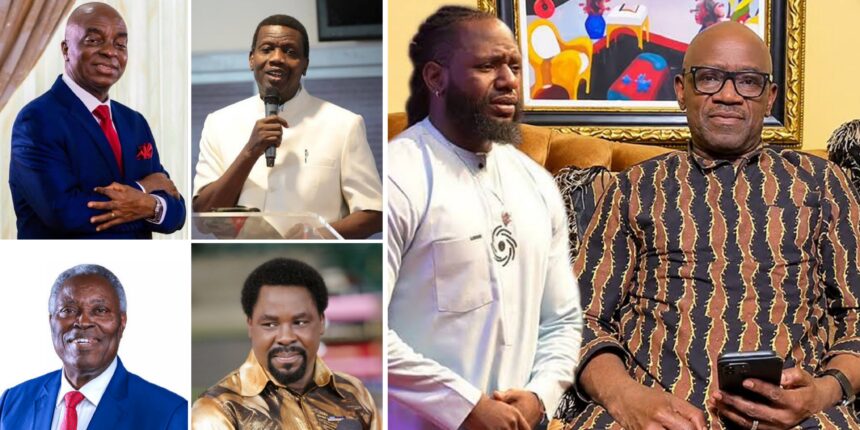
The future of a Nigerian church can become one of the most sensitive questions in its history, particularly when the person who built the ministry is no longer able to lead it. Years of preaching, building congregations, raising ministers and establishing institutions can eventually lead to a moment when another person must take responsibility for the pulpit. For some Nigerian pastors, that transition should follow a clearly documented procedure, while others have repeatedly maintained that the choice of a successor belongs to God. The question has also generated different views about the place of wives, children and other senior ministers in the leadership of established ministries.
Nigeria’s Christian community has seen different approaches to the issue, with some founders preparing their leadership structures before their deaths and others leaving succession questions to be resolved through existing church arrangements.
The controversy surrounding Pastor Jimmy Odukoya and the Fountain of Life Church has brought these positions into renewed attention, particularly following the emergence of a recording containing his late father’s instructions about the ministry’s future. Statements previously made by Bishop David Oyedepo, Pastor Enoch Adeboye, Pastor William Kumuyi, Prophet T.B. Joshua and Pastor Tunde Bakare offer important insights into how some of the country’s prominent church leaders understand succession.
David Oyedepo: Three Candidates, Church Council

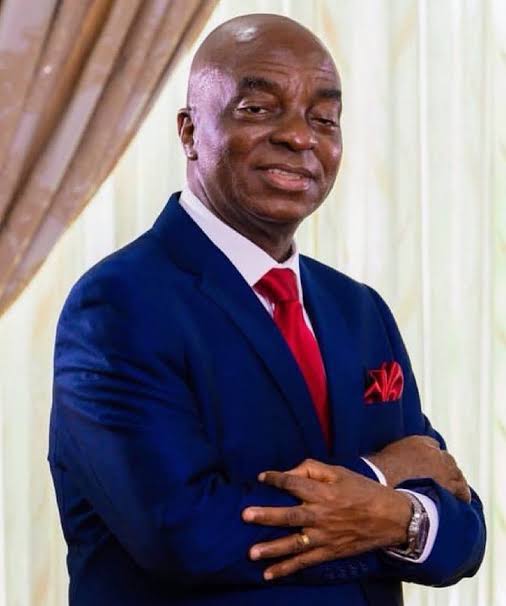
Bishop David Oyedepo, founder of Living Faith Church Worldwide, popularly known as Winners’ Chapel, has publicly explained a succession procedure designed to prevent the ministry from becoming a family inheritance. His position became particularly relevant in June 2020 when he discussed the arrangements documented in a booklet called *The Mandate*.
According to his explanation, the leadership structure provides for the presiding leader to step aside upon reaching the age of 70, with 3 candidates presented for consideration by the church council. The arrangement places responsibility on an established leadership structure rather than making the founder’s biological children automatic beneficiaries of the position.
Explaining the procedure, Oyedepo said, “In this church, the moment you’re 70 as the leader of the church, you step aside and select three people to be presented to the church council.” He continued, “The church council will pick from the three. But if they are not qualified the leader will be given another opportunity to present three people and afterwards step aside for the council to take over while they sort out the leadership issue.” His explanation also made clear that the council has a responsibility to assess the candidates rather than simply approve whoever the outgoing leader presents.
Oyedepo has also made strong statements against treating church leadership as an inheritance for biological children. He said, “When your church becomes a personal property it is dead on arrival.”
He further advised, “Don’t call your children to ministry. If you do, you will frustrate their destiny. Let them be positioned where they belong.” Another statement from the bishop was, “If you want to leave a church as an inheritance for your family, the Church has died.” His position places emphasis on the ministry’s institutional structure and the suitability of whoever eventually assumes leadership, rather than the family relationship between the founder and the next pastor.
Living Faith also experienced significant leadership changes in October 2024 when senior bishops David Abioye and Thomas Aremu retired following administrative adjustments within the ministry. Their departure provided another example of how leadership responsibilities can change within a large church organisation. Oyedepo’s 2020 explanation, however, should not be confused with an announcement naming his eventual successor. He described a procedure involving 3 candidates and the church council, but did not publicly identify the individuals who would eventually take over from him.
Enoch Adeboye: God Will Reveal My Successor

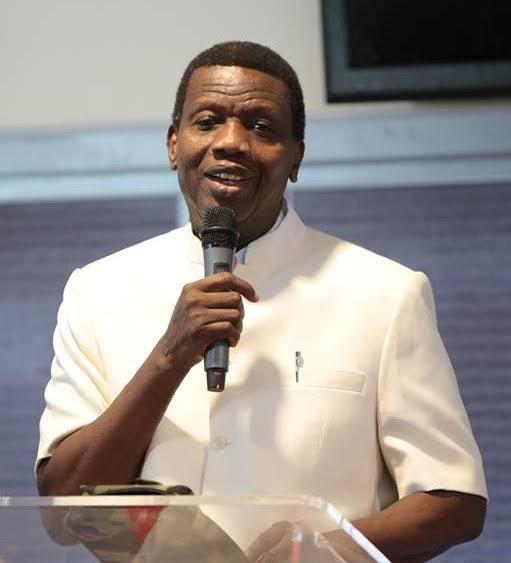
Pastor Enoch Adeboye, General Overseer of the Redeemed Christian Church of God, has approached the question from a different perspective, maintaining that God would reveal the identity of his successor before his death. On August 4, 2018, during the church’s ministers’ conference at Redemption Camp, Adeboye addressed rumours surrounding the person who would eventually take over the leadership of RCCG. Speculation had mentioned Bishop David Oyedepo, Pastor Joe Olaiya and one of Adeboye’s sons as possible candidates, but the cleric publicly rejected attempts to present any of them as his confirmed successor.
Adeboye stated, “God will tell me first before any other person about who will become my successor as a general overseer.” He also warned those spreading rumours, saying, “So, those of you who are carrying rumour of who would be my successor or claiming to be the one that God had chosen should desist from such act as God had not shown me anybody yet.” Addressing the speculation involving Oyedepo, he said, “Some even said I would hand over to Bishop David Oyedepo, some said to Pastor Joe Olaiya because the two are very close to me that they do minister during our major events such as the conventions, Holy Ghost congresses and yet another quarter said one of my sons is the one succeeding me.”
He went further to explain when he expected the revelation to come, stating, “What God had told me several years ago was that He would tell me who my successor would be at least five years before I would be called home.” Adeboye concluded, “As at this now, He had not told me anything as regards that.” His comments established that, as of August 2018, he had not received the revelation he described and that the names circulating at the time were not official selections.
There is also a historical connection between Adeboye’s position and the succession arrangement that brought him into RCCG leadership. The ministry was founded by Reverend Josiah Akindayomi, who died in November 1980. According to the church’s historical account, Akindayomi had received a revelation concerning a young educated man who would succeed him. Adeboye, who was then a university lecturer, eventually emerged as General Overseer after the founder’s death, with a sealed pronouncement reportedly read after his burial to formalise the appointment. The history illustrates how a founder’s instructions can become significant when a church faces a leadership transition, particularly where the founder has made arrangements before death.
William Kumuyi: Leadership Is Not a Family Affair

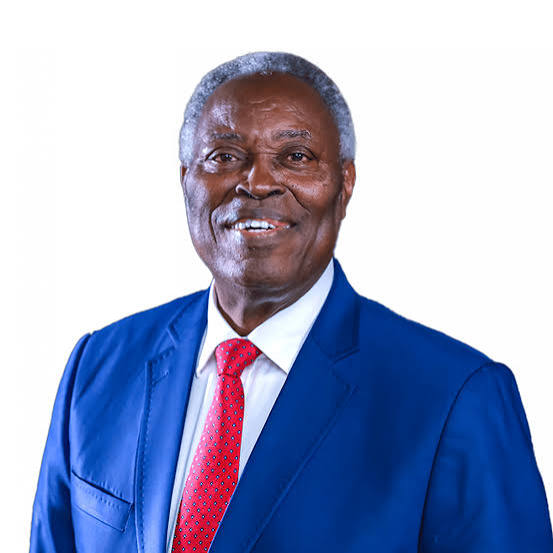
Pastor William Kumuyi, founder of Deeper Christian Life Ministry, has repeatedly rejected the assumption that a church should automatically pass to the biological children of its founder. His comments in August 2025 and June 2026 addressed both pressure surrounding his eventual retirement and speculation about whether one of his sons would take over the ministry. During a Bible study programme in August 2025, Kumuyi reportedly challenged members who appeared to be discussing his succession while he was still actively leading the church.
A young preacher had repeatedly argued that there was no leadership without a successor, prompting Kumuyi to ask the congregation, “Are you tired of me?” After receiving a negative response, he warned against attempts to pressure him into leaving his position. He reportedly stated, “I reject any member of the church, whether worker, choir, or security, who tries to control me.” He added, “Nobody will put me under pressure.” Addressing the question of who would eventually succeed him, Kumuyi said, “When the time comes, God will choose a man after His own heart. Don’t try to drive me away, even though I know you cannot.”
His June 2026 comments were more directly connected to hereditary succession. Responding to speculation that he could hand over Deeper Life to one of his sons, Kumuyi said, “My friend, it is not always the will of God that you pass it to your son.” He also declared, “Leadership in the kingdom is not a family affair.” Referring to the questions surrounding his children, he asked, “Many people were speculating, is he going to hand over the church unto his son? Won’t he search for his first son, second son, where are they? Where do they live? Is he not going to hand over the church?”
Kumuyi’s response was clear: “Well God will choose, and God will tell who is to have the kingdom.” He also referred to biblical examples, stating, “Peter did not hand over the church to his son. Paul did not have any son or wife, but Paul did not hand over the church to his son. And John did not hand over the church to his son.”
His position does not identify a particular successor but makes his opposition to automatic family inheritance clear. For Kumuyi, the eventual choice should reflect God’s direction rather than the founder’s biological relationship with a candidate.
T.B. Joshua: The Church Is Not a Family Business

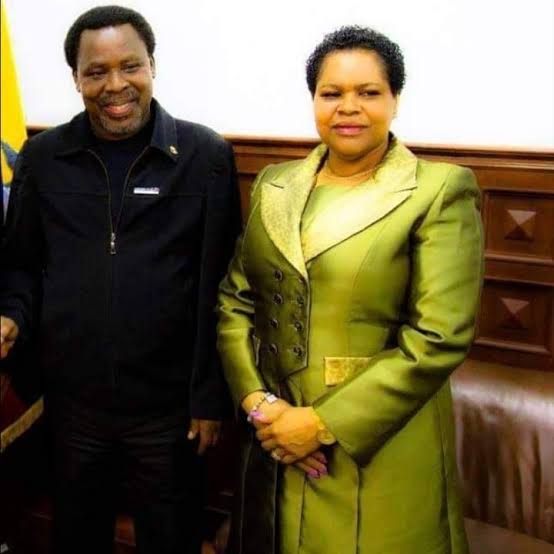
The late Prophet T.B. Joshua, founder of the Synagogue Church of All Nations, also addressed the relationship between family and church leadership shortly before his death. His final interview, published on June 13, 2021, became particularly important following his death on June 5, 2021. During the conversation, Joshua discussed his wife, Evelyn Joshua, the ministry and the people who were already carrying out responsibilities within SCOAN. His comments offered an insight into how he viewed the future of the ministry and the question of who should assume leadership.
Joshua stated, “The issue of family should not come into the issue of the church.” He described SCOAN as “This is an apostolic ministry” and explained his position concerning his wife by saying, “I would have loved my wife to be like me, but I cannot make her what I am; it is God.” He further stated, “It is not possible for me to anoint her; God is the one that anoints people.” These comments suggested that he did not consider marriage to the founder sufficient grounds for automatically assuming the same spiritual authority or position.
When asked who would take over his ministry, Joshua referred to 5 prophets and prophetesses who were working with Emmanuel TV. He said, “There are five prophets and prophetesses; they are working. They have taken over from me already.” He identified the group as including American, British, French and Nigerian members. When the question of family involvement came up again, he responded, “This is not a business venture. If it is God, then it is God and then it is true.”
Following his death, his wife, Evelyn Joshua, emerged as the leader of SCOAN. The transition generated questions about the relationship between his final interview, the 5 senior disciples he mentioned and the eventual leadership arrangement. His public comments had not explicitly named Evelyn as his successor, although she subsequently became the central figure in the ministry’s leadership. The development remains an important Nigerian example of how a founder’s statements and the actual transition after death can become separate aspects of a church succession discussion.
Tunde Bakare: Prepare Other Leaders While You Are Alive

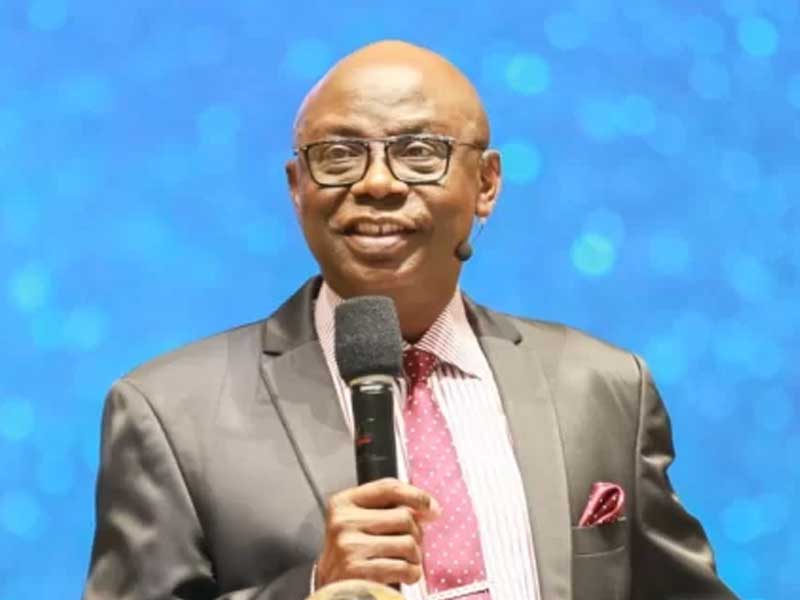
Pastor Tunde Bakare, founder of Citadel Global Community Church, has emphasised the importance of preparing other leaders before a founder eventually leaves office. His comments during an interview published on October 25, 2021, revealed that he had already transferred significant administrative responsibilities to the church’s management team. Rather than making the transition entirely dependent on a future announcement, Bakare explained that he had gradually reduced his direct involvement in the daily running of the ministry.
He stated, “I did that a while ago. I’ve stopped running that church for some years now.” Explaining the extent of the arrangement, he said, “First, it was 80 per cent of my responsibility that was dished out to the management team.” He continued, “And then the 20 per cent has become 2 per cent.” Bakare explained that his decision was influenced by the reality that every leader eventually leaves the position he occupies, saying, “I will die one day anyway.”
His most significant statement on the subject was, “If there’s going to be continued and enduring legacy, others will be empowered while I’m still alive.” He also explained, “What I carry is a pioneering vision, but that pioneering vision must empower others to become part of that vision, that’s when it becomes corporate vision.” His position focuses on developing leadership capacity and making the institution less dependent on one individual. Although transferring administrative duties is not necessarily the same as announcing a formal successor, Bakare’s approach highlights the importance of preparing a ministry for continuity before the founder is no longer available to lead it.
Benson Idahosa: Margaret Idahosa’s Leadership After His Death
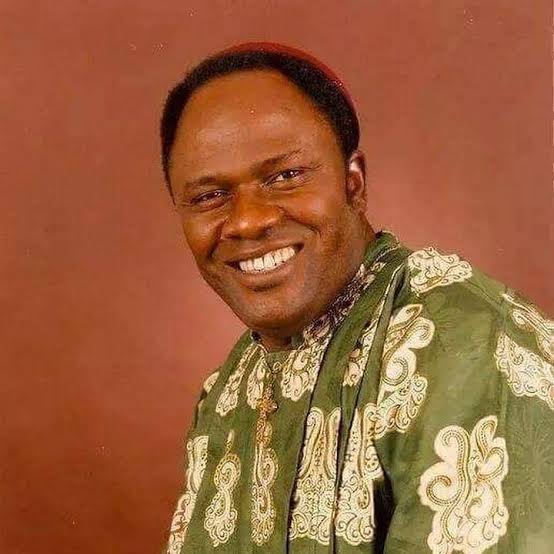
The history of Archbishop Benson Idahosa and his wife, Archbishop Margaret Idahosa, provides another important Nigerian example of succession involving a founder’s family. Benson Idahosa, founder of Church of God Mission International, died in March 1998. Following his death, Margaret Idahosa became a leading figure in the ministry and eventually headed the church’s leadership structure. Her emergence demonstrated that succession within a ministry does not necessarily involve a founder’s son taking over, as a spouse may also assume significant responsibilities depending on the circumstances and the church’s arrangements.
The transition was discussed by Archbishop JohnPraise Daniel in an interview published in October 2023. Daniel, who was identified as National Deputy President of the Pentecostal Fellowship of Nigeria at the time, explained that Margaret was consecrated a bishop and appointed to lead the ministry after her husband’s death. Defending the contribution of a founder’s wife to the continuation of a ministry, he stated, “A wife that has been with the husband from the inception of the ministry and knows inside out of the ministry can stabilise a ministry after the demise of her husband.”
Daniel further praised Margaret’s role, saying, “That woman has taken the ministry to another level because she stabilised the ministry when her husband died and took it to a higher level.” The example is significant because it places attention on experience, involvement and the ability to maintain an institution during a difficult transition. Margaret’s leadership also demonstrates why discussions about family succession cannot be limited to the assumption that a founder’s biological children are the only relatives who may become involved in a church’s future.
JohnPraise Daniel: A Qualified Family Member Can Succeed

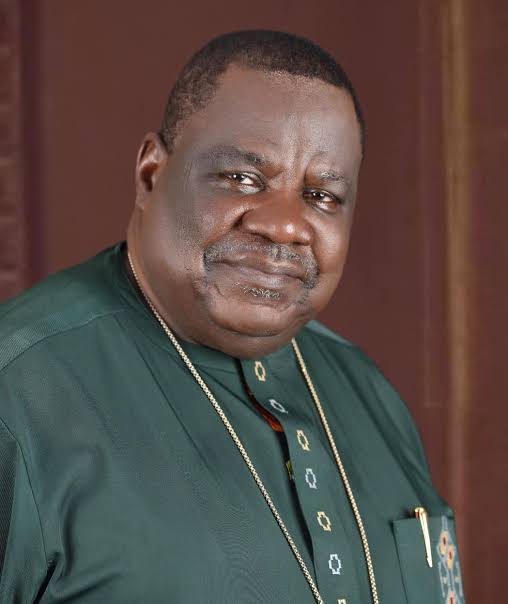
Archbishop JohnPraise Daniel, Presiding Archbishop of Dominion Chapel International Churches, offered a different perspective on hereditary succession during an interview published on October 2, 2023. His comments came at a time when questions were being raised about why some Nigerian Pentecostal founders appointed their children or spouses to lead their ministries. Daniel argued that family relationships should not automatically disqualify a candidate, particularly where the person has the necessary qualifications and is accepted through the church’s leadership arrangements.
He stated, “It is not a family thing as people say but if a family member qualifies to take over, who questions it.” He also emphasised the need for proper preparation, saying, “We have always advised people to have a succession plan, especially when we start getting old and start looking for who would take over.” Addressing situations where a founder dies unexpectedly, he observed, “Some people die unexpectedly and there arises a need for a successor.” His argument recognises that a ministry may need to make difficult leadership decisions within a short period, particularly when the founder has not completed a succession arrangement.
Daniel specifically referred to the appointment of Jimmy Odukoya as the new leader of Fountain of Life Church in 2023. He said, “The Board of Trustees of the Ministry sat and elected the son to take over.” He further maintained, “Even if someone dies and a family member takes over, it is not strange.” His explanation drew on the biblical example of Aaron and his sons, arguing that family succession is not automatically wrong simply because the incoming leader is related to the founder. These comments were made in 2023 and should be understood within that period, rather than treated as a response to the separate dispute that emerged in November 2026.
Taiwo Odukoya: The Recorded Instructions Behind the Jimmy Odukoya Dispute
The succession controversy at Fountain of Life Church took a new turn on November 17, 2026, following the release of a recording containing instructions from its late founder, Pastor Taiwo Odukoya. The recording, made in December 2021, addressed what should happen if he died or became incapacitated and was unable to communicate. Its contents became central to the disagreement because the instructions identified another minister as the person who should become the next pastor of the church.
Taiwo Odukoya stated, “In case of my demise, which I don’t expect to happen soon, or a situation where I cannot write or talk, please, the next pastor of the church should be Kunle Areogun.” He then addressed the responsibilities intended for his son, saying, “To be his immediate assistant, that is in terms of administration, is Jimmy Odukoya, who will be the head of the youth church.” The recording therefore distinguished between the position of the next pastor and the administrative responsibilities assigned to Jimmy, alongside his leadership of the youth church.
The trustees subsequently relied on the recording to challenge Jimmy’s appointment as senior pastor in September 2023. Their position was that the appointment did not reflect the instructions left by the founder. Jimmy’s camp, however, rejected the claim that he had been validly removed, maintaining that his appointment had received unanimous approval from the board and that the trustees announcing his removal lacked the constitutional authority to do so.

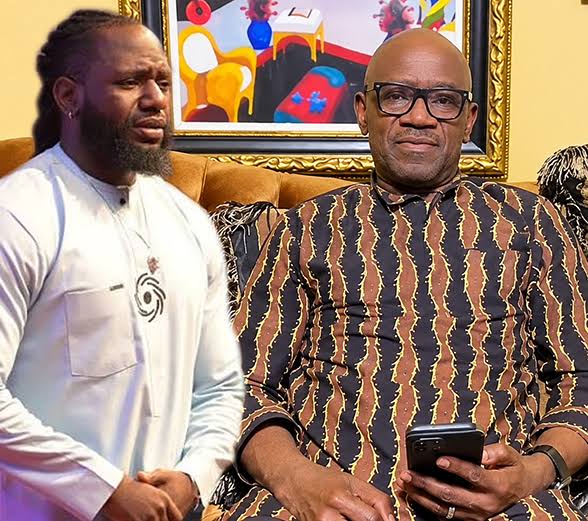
The statement released on Jimmy Odukoya’s page maintained, “For the avoidance of doubt, Pastor Jimmy Odukoya remains the duly appointed Senior Pastor and Chairman of the Board of Trustees of The Incorporated Trustees of The Fountain of Life Church.” It also stated, “The Constitution remains the governing instrument of the Church.” These competing positions have made the dispute more complicated than a straightforward disagreement over whether a founder’s son should succeed him. The recording, the church constitution, the authority of the trustees and the circumstances surrounding the September 2023 appointment are all central to the disagreement.
Different Succession Views Among Nigeria’s Prominent Pastors
The positions expressed by these Nigerian church leaders reveal different approaches to an issue that can determine the future of major Christian institutions. Oyedepo has described a procedure involving 3 candidates and a church council, while Adeboye has maintained that God would reveal his successor to him before his death. Kumuyi has rejected automatic family inheritance, insisting that God should determine the next leader. T.B. Joshua described the church as an apostolic ministry rather than a family business, while Bakare has emphasised the importance of empowering other leaders before a founder leaves office.
The experience of Margaret Idahosa provides an example of a founder’s wife assuming leadership after his death, while JohnPraise Daniel has argued that a qualified family member should not automatically be excluded from succession. Taiwo Odukoya’s December 2021 recording has now placed the importance of documented instructions and church governance at the centre of the Fountain of Life dispute.
Together, these statements and historical developments show how Nigerian church leaders have approached succession through spiritual direction, institutional procedures, leadership preparation and family involvement, with the circumstances surrounding each ministry shaping how the eventual transition is handled.