

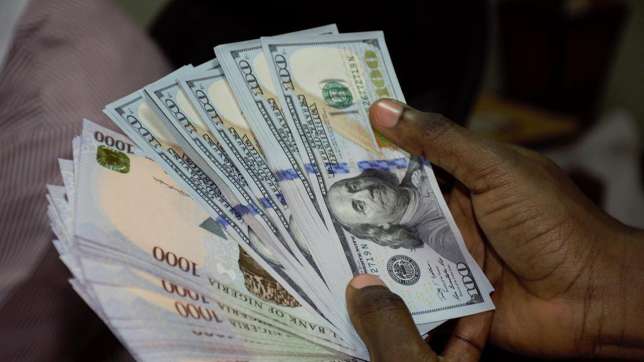
The naira starts Friday with two very different stories to tell. At the official window it has strengthened for a second straight day. On the street, where most Nigerians actually buy dollars, it has slipped again, and the distance between the two prices is now the widest it has been in weeks.
- Dollar to Naira Today at a Glance
- Official NFEM Rate: Naira Gains for a Second Day
- CBN Central Reference Rate
- Black Market Dollar to Naira Rate Today
- Why the Gap Keeps Widening
- CBN’s $1m BDC Cash Window: Will It Work?
- MPC Holds Rate at 23% as Reserves Dip
- Dollar to Naira Conversion Table Today
- Other Currencies Against the Naira
- What to Expect Today
- Frequently Asked Questions
As trading opens on Friday, November 27, 2026, the most recent official figure from the Central Bank of Nigeria (CBN) puts the dollar at ₦1,387.89 at the Nigerian Foreign Exchange Market (NFEM), Thursday’s rate. In the parallel market, Bureau De Change (BDC) operators and street dealers closed Thursday selling the dollar at about ₦1,452, with some quotes in Lagos running as high as ₦1,458.
That leaves a buyer paying roughly ₦64 to ₦65 more for every dollar bought on the street than the official rate suggests. Friday’s NFEM figures will only be published after the day’s trading, so Thursday’s close is the reference point for anyone pricing a transaction this morning.
Dollar to Naira Today at a Glance
| Market | Rate per $1 | Notes |
|---|---|---|
| NFEM (official) | ₦1,387.89 | Thursday, Nov 26; up ₦4.36 from ₦1,392.25 on Wednesday |
| NFEM intraday range | ₦1,375 – ₦1,397.50 | Thursday’s trading band |
| CBN central reference rate | ₦1,391.75 | Latest published, Wednesday, Nov 25 |
| Black market (selling) | ₦1,452 – ₦1,458 | Thursday close, Lagos dealers |
| Black market (buying) | about ₦1,440 – ₦1,445 | What dealers pay when you sell dollars to them |
| Official vs parallel gap | about ₦65 (4.69%) | Widened from ₦58 (4.17%) on Wednesday |
Black market quotes differ from one dealer and one city to the next. Treat the figures above as a guide, not a guaranteed price.
Official NFEM Rate: Naira Gains for a Second Day
The naira posted its strongest official reading of the week on Thursday. CBN data showed the dollar quoted at ₦1,387.89, down from ₦1,392.25 on Wednesday. That is a gain of ₦4.36, or 0.31 per cent, for the local currency.
It was a welcome turn after a rough start to the week. On Tuesday, November 24, the naira closed at ₦1,396.50, its weakest close in nearly nine months, and it edged lower again to close at ₦1,397 on Wednesday before recovering.
Thursday’s session was not especially busy, though. Interbank turnover fell sharply, and the number of deals executed slipped to 180 from 183, a sign that smaller tickets dominated trading. Within the day, the rate moved between ₦1,375 and ₦1,397.50. Punch, which tracks a different closing measure, reported the official close at ₦1,378.
How the official rate moved this week
| Day | NFEM rate (₦/$) | What happened |
|---|---|---|
| Monday, Nov 23 | 1,393.00 (close) | Week opens under pressure |
| Tuesday, Nov 24 | 1,394.12 (avg) / 1,396.50 (close) | Weakest close in nearly nine months; MPC holds rate at 23% |
| Wednesday, Nov 25 | 1,392.25 (avg) / 1,397.00 (close) | $1m weekly BDC cash rule takes effect |
| Thursday, Nov 26 | 1,387.89 | Naira gains ₦4.36, best reading of the week |
Note: the CBN publishes both a weighted-average rate and a closing rate. Many reports quote one or the other, which is why you may see slightly different “official” figures for the same day.
CBN Central Reference Rate
The CBN’s central reference rate, the figure many banks and businesses use as a benchmark for pricing, was ₦1,391.75 on Wednesday, November 25. A week earlier, on November 18, it stood at ₦1,362.73.
That is a rise of ₦29.02 per dollar in seven days, or about 2.13 per cent, which tells you how much ground the naira gave up in the middle of the month before this week’s partial recovery.
Black Market Dollar to Naira Rate Today
The parallel market has not followed the official window up. Dealers sold the dollar at ₦1,452 on Thursday, from ₦1,450 on Wednesday, a small but telling loss of ₦2 for the naira on the day the CBN’s new cash supply to BDCs was supposed to start biting.
On a weekly basis, the street rate is around ₦1,460, against ₦1,440 a week ago. The naira’s low point on the parallel market this month came on Thursday, November 19, when it hit ₦1,470, the weakest level since late January.
The broader trend is plain enough. A month ago the naira was changing hands at about ₦1,375 on the street. It is now roughly ₦80 weaker.
Black market rates: buy and sell
| Transaction | Rate per $1 |
|---|---|
| Dealer sells to you (you buy dollars) | ₦1,452 – ₦1,460 |
| Dealer buys from you (you sell dollars) | ₦1,440 – ₦1,445 |
Why the Gap Keeps Widening
The spread between the official and parallel rates matters because it shows how far the cash market is drifting from the CBN’s window. On Thursday it widened to about ₦65, or 4.69 per cent, from ₦58 a day earlier and ₦51 on Monday.
Three pressures are feeding it.
Festive and travel demand: December is always a heavy month for dollar demand, with school fees, travel, holiday imports and remittance timing all pulling on the cash market at once.
Election-season spending: Nigeria heads into a general election in January 2027. Operators and analysts say political spending and businesses trying to hedge against a weaker naira are pushing up demand for physical dollars.
Offshore profit-taking: Broad Street analysts said some foreign portfolio investors took profits this week, adding to dollar demand at the official end of the market.
CBN’s $1m BDC Cash Window: Will It Work?
The CBN’s main response so far is a rule that took effect on Wednesday, November 25. Banks can now sell up to $1 million in cash every week to each licensed BDC operator. Under the old arrangement the cap was $150,000, and only a quarter of that could be taken as cash.
The Association of Bureaux De Change Operators of Nigeria (ABCON), through its president Aminu Gwadabe, welcomed the change as a positive step. Some operators argue it could keep the naira from sliding much further under December pressure.
Others want to see the money reach ordinary buyers first. Economist Wale Osubi told Punch the effect would depend on how the dollars actually get to end users. Thursday’s numbers, a firmer official rate and a softer street rate, suggest the policy has not yet filtered down to the parallel market.
MPC Holds Rate at 23% as Reserves Dip
The CBN’s Monetary Policy Committee, at its 308th meeting on November 23 and 24, kept the Monetary Policy Rate at 23 per cent. It was the committee’s last scheduled meeting before the January election, and the decision matched market expectations.
Nigeria’s gross external reserves stood at $54.251 billion as of November 24, down from $54.359 billion a day earlier. The reserves have been easing since they peaked at $55.26 billion on October 27, partly reflecting the CBN’s interventions in the FX market. Even so, they remain well above where they started the year, giving the apex bank a cushion to defend the currency.
Dollar to Naira Conversion Table Today
The table uses Thursday’s NFEM rate of ₦1,387.89 and a black market selling rate of ₦1,452.
| US Dollars | Official NFEM (₦) | Black Market (₦) | Difference (₦) |
|---|---|---|---|
| $1 | 1,387.89 | 1,452 | 64.11 |
| $10 | 13,878.90 | 14,520 | 641.10 |
| $50 | 69,394.50 | 72,600 | 3,205.50 |
| $100 | 138,789 | 145,200 | 6,411 |
| $200 | 277,578 | 290,400 | 12,822 |
| $500 | 693,945 | 726,000 | 32,055 |
| $1,000 | 1,387,890 | 1,452,000 | 64,110 |
| $5,000 | 6,939,450 | 7,260,000 | 320,550 |
Put simply, someone buying $1,000 for school fees or a trip abroad pays about ₦64,000 more on the street than the official rate implies.
Other Currencies Against the Naira
| Currency | CBN rate (₦) | Parallel market (₦) |
|---|---|---|
| British Pound (GBP) | about 1,820.92 | about 1,850 – 1,883 |
| Euro (EUR) | about 1,524.51 | about 1,560 |
Figures are the latest available from CBN data and dealer quotes compiled on Thursday, November 26.
What to Expect Today
Friday’s session will be the first real test of whether Thursday’s official gain can hold. The new BDC cash window has been live for only two trading days, and dealers say it usually takes a week or more for fresh supply to show up in street prices.
If more cash dollars reach BDCs next week, the parallel rate could ease back towards ₦1,440 and narrow the gap. If December demand runs ahead of supply, the street rate could test the ₦1,470 level seen on November 19 again. At the official window, the CBN’s reserves and its 23 per cent policy rate give it room to keep the NFEM rate close to the ₦1,380 – ₦1,400 band for now.
For anyone with a dollar payment to make this month, the practical advice is simple: compare at least two or three dealer quotes before you buy, and if you have access to your bank’s FX desk, check its rate first.
Frequently Asked Questions
What is the dollar to naira rate today, November 27, 2026?
The latest official NFEM rate is ₦1,387.89 per dollar (Thursday’s figure). On the black market, the dollar sells for about ₦1,452 to ₦1,458.
What is the CBN rate for dollar today?
The CBN’s latest central reference rate is ₦1,391.75 per dollar, published for Wednesday, November 25.
How much is $100 in naira today?
$100 is about ₦138,789 at the official rate and about ₦145,200 on the black market.
Why is the black market rate higher than the official rate?
The parallel market prices cash dollars for individuals and small businesses who cannot easily access the official window. Demand for cash is high ahead of the festive season and the 2027 general election, so dealers charge a premium.
Will the naira get stronger in December?
It depends largely on whether the CBN’s new $1m weekly BDC cash allocation reaches end users quickly enough to meet seasonal demand. The official rate firmed this week, but the street rate has not yet followed.
Exchange rates in this report are drawn from CBN data and dealer quotes published between November 23 and 27, 2026. Rates change throughout the day and vary by location.