


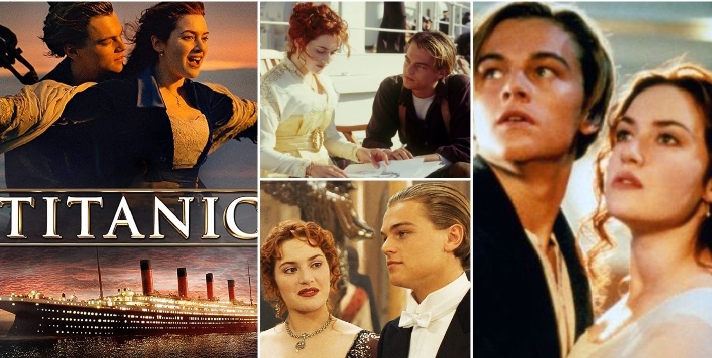
It’s been over a quarter of a century since Titanic first unfurled its tragic sails across cinema screens, and yet, the ocean it created has never dried up. Even as new love stories flood popular culture, from streaming dramas to digital fairytales, no pair has eclipsed the spectral presence of Jack and Rose. Their names, etched in saltwater and cinema, continue to define what the world imagines as love in its purest, most irreversible form. The real ship may have gone under in 1912, but the myth that rose from its wreckage has not just survived—it has evolved into something resembling cultural immortality.
The Titanic of our collective consciousness is no longer a ship. It is a symbol—of youth before tragedy, of love before cynicism, of courage before survival became complicated. Each rewatch, every meme, every anniversary screening carries a faint tremor of that first heartbreak the world felt in 1997, when James Cameron gave the century its most haunting farewell kiss. Jack’s frozen hand clutching the edge of that wooden door isn’t just a cinematic image; it’s the cornerstone of modern romantic tragedy. It endures because it speaks to something that doesn’t die with technology, trends, or time—the ache of wanting to be remembered by love.
The world may have moved from handwritten letters to instant texts, but the soul of Titanic still lingers like a hymn at the end of the night. To understand why, one must dive beneath the waves—not into the wreckage of the ship itself, but into the cultural afterlife of a story that taught every generation since what it means to love once, and forever.

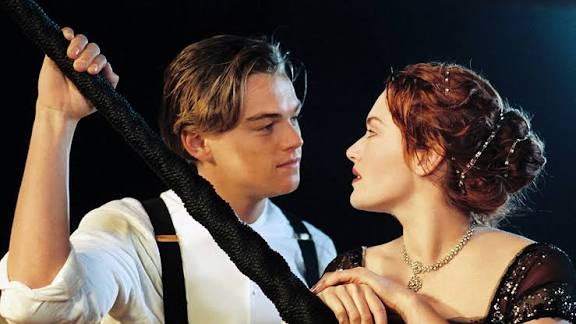
The Moment the World Stopped Breathing
When Titanic premiered on December 19, 1997, the world was not prepared for the flood it would unleash. It was not merely a film—it was a global phenomenon that merged history and heartache into a universal experience. By the time the credits rolled, audiences weren’t just crying for the lives lost at sea; they were crying for themselves, for every dream, every love, every youth they’d ever had to let go.
In that brief cinematic window, the late 1990s found a mirror to its innocence. The Cold War had ended. The Internet was new and thrilling but not yet cynical. The millennium loomed like a promise rather than a threat. In this fragile space, Titanic arrived—a story where love was sincere, death was poetic, and beauty was worth dying for. People needed something untainted to believe in, and Jack and Rose became that belief.
What James Cameron accomplished was not just cinematic mastery—it was emotional engineering. The ship was a metaphor for a world chasing luxury without realizing it was sailing toward loss. The love story, placed at the center of that doomed voyage, became a rebellion against inevitability. Every generation has its great romance—Casablanca had its goodbye at the airport, Gone with the Wind had its defiance—but Titanic had its silence: two figures floating in an ocean that looked like eternity.
For a while, nothing else existed. The movie stopped time, suspended emotion, and in doing so, sealed itself into humanity’s bloodstream. It became the universal reference point for love—not the happy kind, but the kind that demands memory.


The Universal Language of Loss
If love is the most spoken language in the world, then Titanic taught us its dialect of loss. The genius of the film lay not in its spectacle but in its sorrow. The world’s fascination with Jack and Rose was never about their perfection—it was about their impermanence. Their love was born knowing it would not last, and that awareness became the pulse that audiences could feel, even decades later.
To lose something just as it becomes perfect is one of humanity’s oldest fears. It echoes across cultures, from Shakespearean tragedy to Yoruba proverbs that warn of “love that arrives like the rain but departs like the wind.” In the film’s final act, when Rose lets go of Jack’s hand, that moment transcends language and geography. It becomes an ancestral gesture—the letting go we all must eventually do, whether of a person, a time, or a self we once were.
The cultural endurance of Titanic comes from this shared grief. Viewers around the world projected their own heartbreaks into the story. For Nigerians, Indians, South Americans, and Europeans alike, the sinking ship became an altar of emotional memory. It wasn’t about the ocean—it was about the goodbye. In every language, audiences wept the same way.
And that’s what turned Titanic into something more than a film: it became a ritual of remembering. It taught us how to mourn beauty, how to hold onto it, and how to let it go.
The Blueprint of Modern Romance
Before Titanic, romance in Hollywood had been fragmented—often witty, ironic, or bound by realism. After Titanic, love stories changed their tone. The world now wanted sincerity, intensity, and sacrifice. Jack and Rose didn’t just fall in love; they gave the world a template for how love should feel—dangerous, freeing, and devastatingly pure.
Suddenly, romantic films in the late 1990s and early 2000s bore its fingerprints: The Notebook, Moulin Rouge!, A Walk to Remember, and even Twilight. Each reinterpreted Titanic’s formula—ordinary love made extraordinary by fate. The idea that two souls could defy time, class, or death itself to be together became the emotional gold standard.

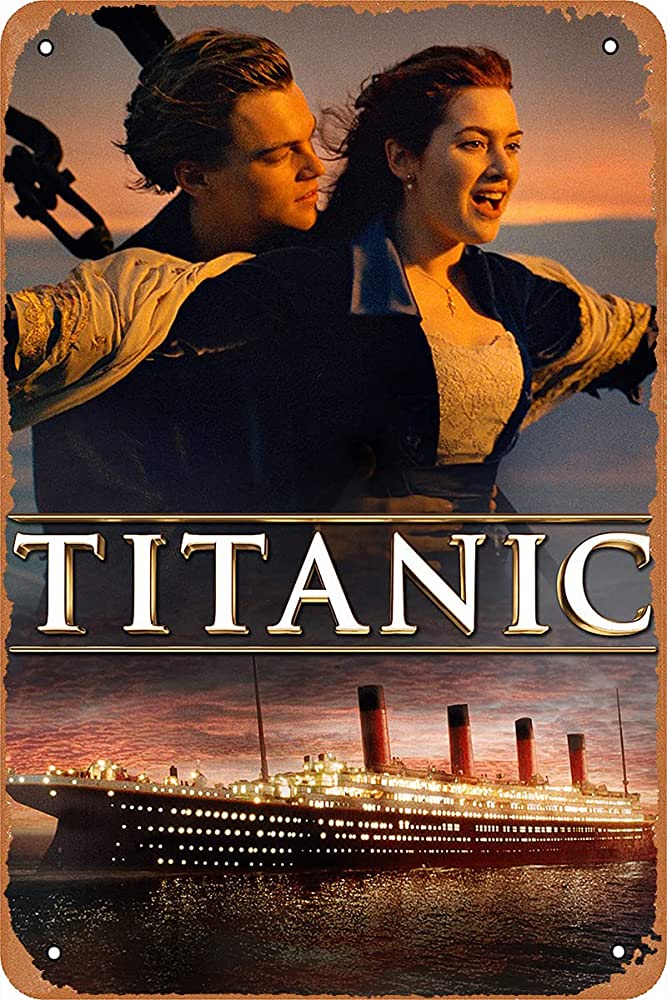
What Titanic did was democratize passion. It told every viewer, no matter their status, that love was the only ticket worth having on the ship of life. Jack, the poor artist, embodied freedom. Rose, the trapped aristocrat, embodied rebellion. Together they became the myth of love that redeems—and in doing so, they rewrote the language of cinematic romance.
Even in the social media age, their archetypes endure. Every viral couple post, every cinematic love confession owes something to that night in the freezing Atlantic. Titanic didn’t just define love for its era—it invented the emotional grammar we still speak.
When History Became a Heartbeat
The most extraordinary thing about Titanic was how it fused historical tragedy with emotional fiction so seamlessly that the world forgot where fact ended and feeling began. The real RMS Titanic, launched in 1912, was an emblem of industrial arrogance—a ship believed to be unsinkable, carrying the rich and powerful into oblivion. But when Cameron reimagined it through Rose’s eyes, it became a living memory, one the audience could inhabit emotionally.
That’s the power of narrative reincarnation. History gave the ship its bones, but cinema gave it a soul. The iceberg was real; the love was not—but together they became truth. Every time Rose whispers, “I’ll never let go,” she’s not just speaking to Jack; she’s speaking to the world’s desire to keep meaning afloat in an ocean of loss.
Over time, Titanic blurred the line between history and myth. Its visual iconography—the staircase, the ship’s bow, the locket—became relics of modern mythology. Museums still recreate them. Fans reenact them. Couples pose at weddings with arms outstretched on replica decks. The film gave the world something no historian could: a reason to feel history, not just remember it.
That emotional archaeology—where fact becomes feeling—is the secret of Titanic’s afterlife.
Jack and Rose as Cultural Archetypes
Jack Dawson was never real, yet he feels more alive in global memory than many historical figures. Rose DeWitt Bukater never existed, yet her defiance has become a feminist emblem across generations. Together, they have transcended fiction to occupy the same cultural space as Romeo and Juliet, Tristan and Isolde, or even Orpheus and Eurydice.
Jack represents the romantic ideal of freedom—the untamed dreamer who belongs to no one and gives everything. Rose represents transformation—the courage to break from societal expectations and choose the heart over the world. Their story isn’t about survival; it’s about awakening.
Every culture projects its own version of them. In Africa, Jack and Rose echo lovers divided by class or circumstance. In Asia, they embody filial defiance and personal destiny. In the West, they remain symbols of passion uncorrupted by time. This cultural elasticity is what keeps them relevant—they are everyone’s story, dressed in Edwardian clothes.

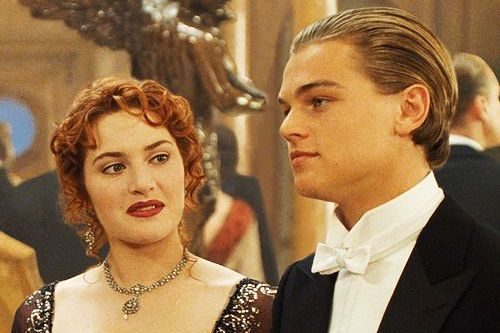
The more the world changes, the more these archetypes adapt. Even in TikTok edits, AI remixes, and meme parodies, their emotional purity survives. Titanic didn’t just give us characters—it gave us mirrors.
The Soundtrack That Became an Anthem
When Celine Dion sang “My Heart Will Go On,” she was not merely voicing a film theme; she was voicing the emotion of a century that still longed to believe in permanence. That song, written by James Horner and Will Jennings, became Titanic’s emotional oxygen—the melody that carried its soul across generations. Even people who never saw the film knew the song. It filled weddings, funerals, graduations, and lonely nights alike.
There’s a reason it refuses to fade. The song is built like a memory: soft in its opening, swelling in its middle, echoing like a heartbeat in its end. It moves like grief itself—slow, then soaring, then resigned. Celine Dion’s voice, both powerful and trembling, captured the paradox that defines Titanic: love that ends, but never dies. Every note is a tide pulling listeners back to that cold, starlit ocean.
Across continents, the song found different meanings. In Nigeria, it played at love-themed radio hours. In South Korea, it was sung at karaoke bars where hearts were too shy to confess directly. In the West, it became shorthand for tragic love. Everywhere, it transcended language. The chorus—“My heart will go on”—isn’t a lyric; it’s an incantation of endurance.
No film since has produced a song that merged so completely with its myth. Even Frozen’s “Let It Go” or Barbie’s “What Was I Made For?” captured moments—but Titanic’s anthem captured eternity. It became the background music of memory itself, looping endlessly in the collective heart of the world.


The Digital Resurrection of Titanic
As the years passed, the ship that once lived in theaters found new life in pixels. The internet, which barely existed when Titanic first premiered, became the new ocean where Jack and Rose sailed again. In the early 2000s, GIFs of the “I’m flying!” scene spread across early fan forums. By the 2010s, YouTube tributes and fan edits turned the film into digital folklore.
Then came the meme era—when Titanic became both sacred and playful. The “door debate” (“Could Jack have fit?”) became a pop culture ritual. The film was no longer just rewatched; it was dissected, reimagined, and reborn. On TikTok, Gen Z users recreated scenes with irony and sincerity blended, showing that even in the age of speed, some slow-burning stories still mattered.
This digital resurrection has done what no sequel ever could: it kept the story alive without altering its truth. In a time when everything is remade, Titanic remains untouchable because it has already achieved what modern culture craves—immortality through emotion. Each online revival becomes a small act of remembrance, a way for a new generation to touch something ancient and real.
And that’s how the film survives—not in vaults or Blu-rays, but in the living current of digital nostalgia. It has become a cultural ghost ship, sailing forever on the timelines of memory.
How Generations Relearned Love through the Film
Every generation that meets Titanic meets itself. For millennials, it was the first heartbreak they witnessed on screen. For Gen Z, it’s an archeological discovery—a window into an era that believed in love letters, slow dances, and dying for something pure. Yet each generation interprets it differently, finding in it what they most lack in their own time.
Millennials see Jack and Rose as a rebellion against conformity—a reminder of first love before screens divided intimacy. Gen Z sees them as symbols of emotional authenticity in an age of irony. Even older audiences see them as echoes of youth, a time when emotion wasn’t an algorithm. That is Titanic’s real magic: it re-teaches love every twenty years, adapting to new emotional climates like a living organism.
The film’s endurance lies in how it universalizes emotion while localizing memory. A Nigerian viewer might connect to Rose’s defiance as an act of liberation from cultural expectation. A Japanese viewer might see Jack’s humility as a lesson in quiet honor. Love, in Titanic, becomes a mirror—each culture sees its own reflection in the waves.
That’s why the film feels reborn every time a teenager discovers it. It isn’t nostalgia—it’s recognition. The ship sinks the same way, but the hearts watching it are new, and the ache feels personal all over again.
The Ocean as the World’s Memory
In most films, the sea is just a setting. In Titanic, it is the character that remembers. The Atlantic isn’t merely water; it’s the archive of every dream that has ever drowned. Cameron used the ocean not as a backdrop, but as an emotional metaphor—the silent witness to love’s persistence beyond loss. When Rose drops the Heart of the Ocean into the waves, she is giving memory back to its origin.
That gesture—so quiet, so symbolic—transcends dialogue. It tells us that the past doesn’t belong to us; it belongs to time. The ocean in Titanic became the world’s emotional repository. Every time the film is played, that ocean rises again, bringing back echoes of youth, loss, and the bravery of loving something that cannot last.

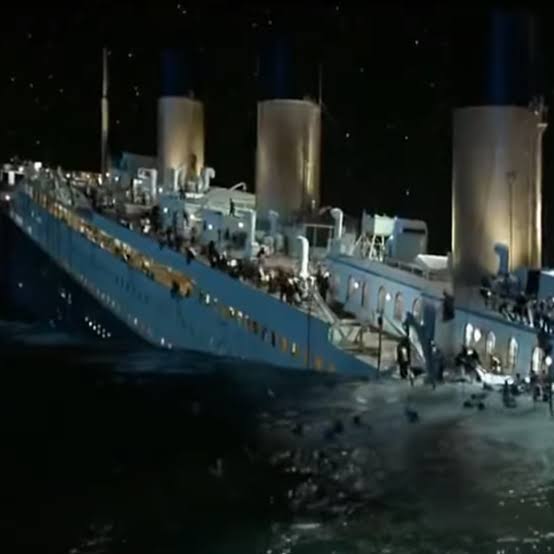
In Yoruba storytelling, water often symbolizes continuity—the meeting point between the living and the remembered. Titanic unknowingly tapped into that archetype. It turned the Atlantic into a universal symbol of remembrance. To gaze at it is to remember something or someone we’ve lost. That’s why the film’s final scenes never lose power; they operate at the level of myth, not memory.
The ocean, in the end, becomes what love itself always becomes: a vast, unending reflection that holds everything, even what it cannot save.
The Age of Love: Why Jack and Rose Still Reign
More than any cinematic couple before or after them, Jack and Rose have become shorthand for what love feels like at its most elemental. Not because they were perfect, but because they were doomed. Theirs was not a romance built to last—it was a romance built to be remembered. That distinction matters. In the era of disposable affection, their permanence comes from finality.
The world still sees Jack and Rose as the “Age of Love” because they arrived before irony. They represent the last global love story that everyone, everywhere, took seriously. No filters, no streaming algorithms, no shared cynicism—just the raw current of two souls colliding against history. Their sincerity is their immortality.
In classrooms, memes, documentaries, and retrospectives, they are studied as if they were real people—because, in a sense, they are. They live wherever the human heart insists on believing that love can still be true even when it ends in tragedy. When people say “my Jack” or “my Rose,” they’re not quoting the film—they’re invoking an emotional archetype: the one who changed everything, and then was lost.
In a century defined by impermanence, Titanic remains the one cultural story that promises permanence, not through survival, but through remembrance. And that is why the world cannot let go.
Takeaway: When the Heart Never Lets Go
Time has moved on. The world that watched Titanic in dark theaters is now scattered across streaming platforms and social feeds. The faces of DiCaprio and Winslet have aged, but the moment they shared on that sinking deck hasn’t. It still exists in its original, unbroken form—eternal, as if sealed by the cold water it depicted.
This is what gives Titanic its afterlife: it was never just a movie about a shipwreck. It was a ritual of emotion—a reminder that even when everything ends, love leaves an echo. That echo has survived recessions, pandemics, wars, and cultural shifts. It outlived its own century and keeps finding new hearts to inhabit.

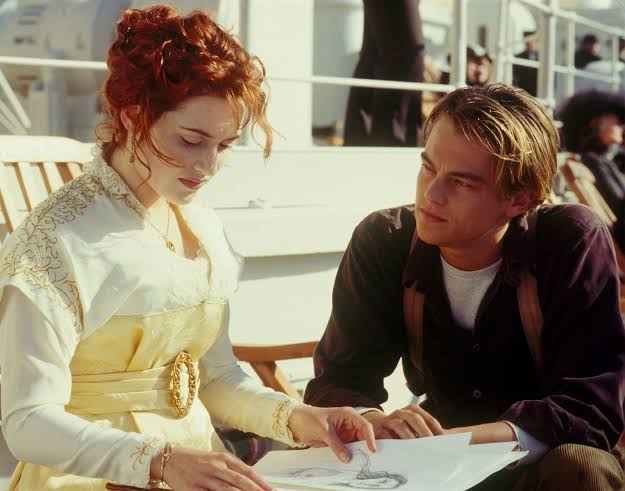
Every time “My Heart Will Go On” plays, it reawakens the part of us that believes we are capable of something selfless, something infinite. That belief—fragile but stubborn—is why Titanic still breathes. The ship sank, but the idea of love it carried did not. It floats, generation after generation, across the vast sea of human longing.
The world may change its tools for expressing love, but the ache remains the same. That ache is what Titanic preserved—an unbroken pulse beneath the ocean floor. And as long as hearts beat to remember what it felt like to lose something beautiful, Titanic will continue to sail—not as history, not as fiction, but as the world’s longest love song to itself.